✨ VS Analyze · VacuumSpain comparison technology. AI-generated explanation based on verified technical data.
Introduction
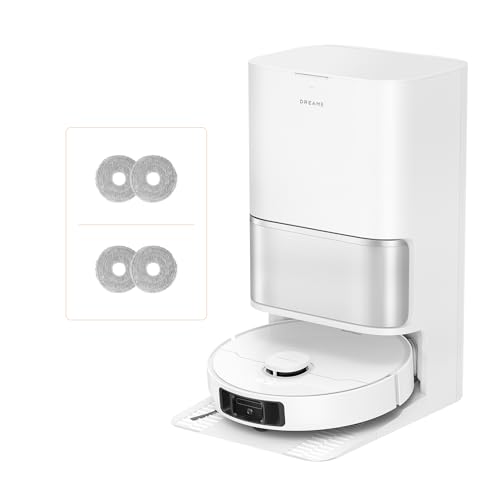
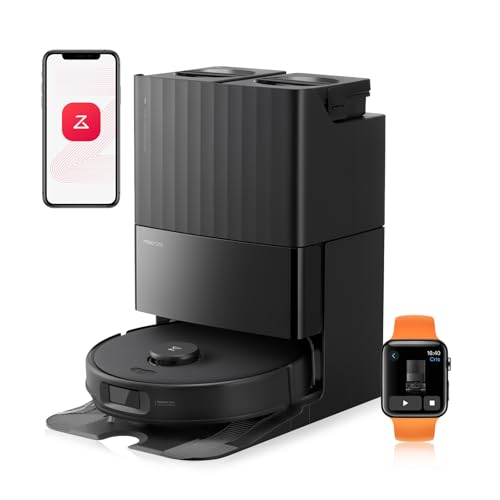
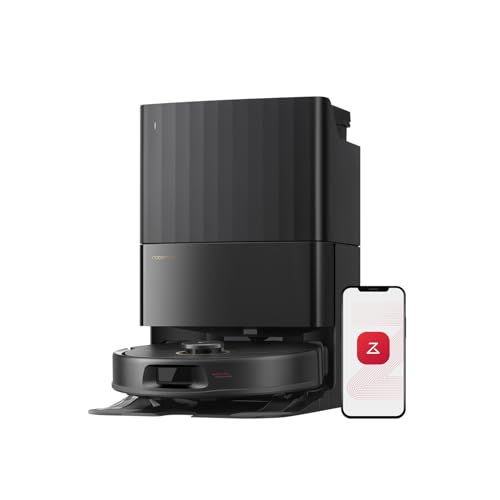
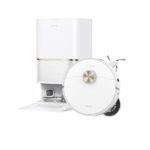
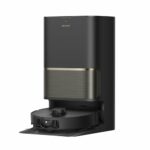
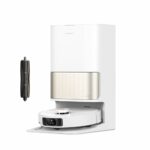
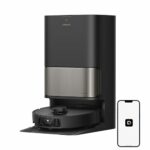
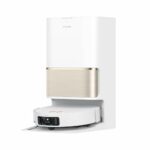
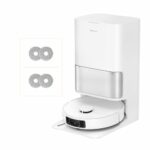
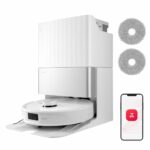
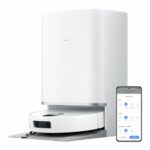
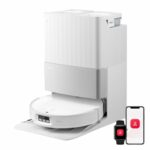
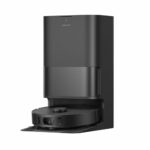
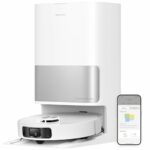
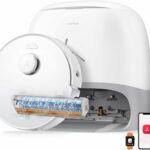
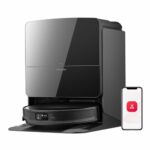
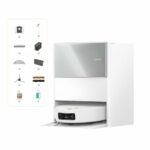
The Dreame L10s Ultra Gen 3, launched in November 2025, represents the latest generation of robots with a multifunctional base from this brand, whilst Roborock presents two options: the Qrevo Edge S5A from 2024 and the Qrevo S5V from 2025. All three units integrate an auto-empty base, mop washing and hot air drying, which guarantees practically autonomous maintenance for weeks.
These models are designed for users who want to forget about daily cleaning. The Dreame focuses on raw power and extended autonomy, whilst Roborock concentrates on cleaning intelligence and more refined anti-tangle systems. The choice will depend on the size of the home, the presence of pets and priorities regarding power versus intelligent management.
Power and Suction
The difference in power is notable. The Dreame L10s Ultra Gen 3 reaches 25,000 Pa, making it the most powerful of the three. This figure far exceeds the 18,500 Pa of the Roborock Qrevo Edge S5A and the 12,000 Pa of the Qrevo S5V. In practice, this translates to greater capacity to extract embedded dirt from carpets and vacuum heavier particles.
The brushing system also presents important differences. The Dreame features a SimpliCut anti-tangle brush, designed to reduce hair tangles. Both Roborock models are equipped with the DuoDivide system, which pushes hairs towards the central suction gap, preventing them from wrapping around the brush. Both approaches aim for the same result, but with different philosophies.
Regarding the side brush, the Dreame L10s Ultra Gen 3 and the Roborock Qrevo Edge S5A feature side extension to improve corner cleaning. The Qrevo S5V does not include this function. However, both Roborock models incorporate anti-tangle technology in the side brush, something the Dreame does not offer. This can make a difference in homes with long-haired pets.
Mopping
All three robots use two rotating mops for mopping, but with nuances. The Dreame L10s Ultra Gen 3 includes mop extension with Roboswing movement, which allows the robot to perform a wiggling motion to introduce the mop under furniture and overhangs. Both Roborock models also extend their mops to better reach edges, although without the additional movement of the Dreame.
Mop lift is practically identical: 10.5 mm on the Dreame and 10 mm on both Roborock models. This lift allows the robot to pass over carpets without wetting them when mopping other areas. All three models wash the mops with hot water in the base and dry them with hot air, which prevents bad odours and bacterial growth.
A key difference lies in dirt detection. Only the Roborock Qrevo Edge S5A detects dirt on both the mops and the floor, which allows it to go over particularly dirty areas again or return to the base to wash the mops when it detects they are saturated. The Dreame L10s Ultra Gen 3 and the Qrevo S5V lack this function, which may result in less adaptive mopping in very dirty areas.
Navigation System
All three robots use a LIDAR turret to map the home and plan efficient routes. All include obstacle avoidance, but the Dreame L10s Ultra Gen 3 adds a front 3D laser sensor that improves detection of small objects and enables more precise navigation in complex environments.
Pet recognition is only present on the Dreame. This means it can identify animals and adjust its behaviour, avoiding disturbing them or vacuuming near their resting areas. Both Roborock models do not include this capability.
Regarding cleaning intelligence, the Dreame employs CleanGenius, whilst the Roborock models use SmartPlan. The Qrevo Edge S5A incorporates the RR Mason 11.0 algorithm, which Roborock highlights as its most advanced planning system. None of the three includes a front camera or remote camera access.
Autonomy and Battery
All three robots feature 5,200 mAh batteries, but performance varies. The Dreame L10s Ultra Gen 3 offers 231 minutes of autonomy, compared to 180 minutes for both Roborock models. This difference of 51 minutes can be decisive in homes of over 150 square metres, where the robot needs to complete cleaning without returning to the base to recharge.
In practice, the Dreame's greater autonomy allows it to clean large homes in one go, whilst the Roborock models may need recharging breaks on extensive surfaces or when performing multiple passes in high-power mode.
Smart Features
All three robots overcome obstacles up to 20 mm in height, which allows them to pass over thick cables, expansion joints or small level differences between rooms. This capability is identical across all three models.
All are compatible with external voice assistants such as Alexa or Google Home, which facilitates their control via voice commands. None includes its own voice assistant or robotic arm.
Multifunctional Cleaning Base
All three bases perform auto-emptying of the dust bin, mop washing with hot water and drying with hot air. However, the Dreame L10s Ultra Gen 3 incorporates a detergent tank that dispenses product during mop washing, something neither of the two Roborock models offers. This improves washing effectiveness and helps keep the mops cleaner between cycles.
Tray self-cleaning also varies. The Dreame uses a third-generation system, the Qrevo Edge S5A employs version 2.0, and the Qrevo S5V does not include tray self-cleaning. This means that on the S5V the tray will need to be cleaned manually more frequently to avoid dirt accumulation.
Regarding capacities, the Dreame has a 3.2-litre dust bag, 4.5-litre clean water tank and 4-litre dirty water tank. Both Roborock models have a 2.7-litre bag, 4-litre clean water tank and 3.5-litre dirty water tank. These differences translate to greater autonomy for the Dreame before requiring maintenance.
The Dreame also offers an optional kit for plumbing connection, which is purchased separately. Neither of the Roborock models includes this possibility.
Dimensions
The diameter of the robots is very similar: 350 mm on the Dreame, 352 mm on the Qrevo Edge S5A and 353 mm on the Qrevo S5V. Height is also comparable: 97 mm on the Dreame, 98 mm on the Edge S5A and 96.5 mm on the S5V. This difference of millimetres may be relevant if there is very low furniture at home, although in most cases it will not be decisive.
The bases present more notable differences. The Dreame measures 340 mm wide, 590 mm high and 457 mm deep. Both Roborock models also measure 340 mm wide, but are 521 mm high and 487 mm deep. The Dreame is taller but less deep, which may facilitate its placement in narrow spaces.
Real-World User Experience
For large homes, the Dreame L10s Ultra Gen 3 is more suitable thanks to its greater autonomy and base capabilities. The 231 minutes of operation and larger tanks allow extensive surfaces to be cleaned without intervention. The 25,000 Pa power also makes a difference on thick carpets or when there is a lot of accumulated dirt.
In homes with pets, the choice is more nuanced. The Dreame offers pet recognition and greater suction power, but the Roborock models feature an anti-tangle side brush, which reduces manual maintenance. The Roborock DuoDivide system also minimises tangles on the main brush. If there are long-haired pets, it is worth considering which aspect is most important.
The Roborock Qrevo Edge S5A stands out for its ability to detect dirt and adapt cleaning. This makes it especially useful in kitchens or areas where more dirt accumulates, as it will automatically scrub until the floor is clean. The RR Mason 11.0 algorithm also provides more refined planning.
The Qrevo S5V is the most basic option of the three. It lacks an extendable side brush, dirt detection and tray self-cleaning, which means greater manual intervention. Its 12,000 Pa power also places it below the other two models. It may be sufficient for small flats without carpets and with moderate dirt.
Conclusion: Which to Choose?
Choose the Dreame L10s Ultra Gen 3 if you have a large home, seek maximum suction power and value extended autonomy. The detergent tank, larger water tanks and third-generation tray self-cleaning make it the most autonomous of the three. It is also the best option if there are pets and you want the robot to recognise them. The front 3D laser sensor improves navigation in complex environments.
Choose the Roborock Qrevo Edge S5A if you prioritise cleaning intelligence over raw power. Dirt detection on mops and floor guarantees more adaptive mopping, especially useful in kitchens or high-traffic areas. The anti-tangle side brush reduces maintenance if there are long-haired pets. The RR Mason 11.0 algorithm and Roborock's reputation as a world-leading brand also weigh in its favour.
Choose the Roborock Qrevo S5V if you are looking for a more economical Roborock option and have a small or medium-sized home without thick carpets. Its 12,000 Pa power is sufficient for daily maintenance in flats without major demands. You will have to accept greater manual intervention due to the absence of tray self-cleaning and advanced features, but it remains a competent robot for basic use.