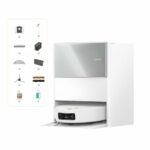
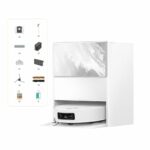
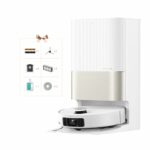
✨ VS Analyze · VacuumSpain comparison technology. AI-generated explanation based on verified technical data.
Introduction
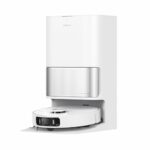
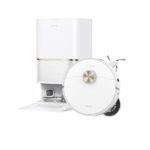
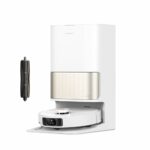
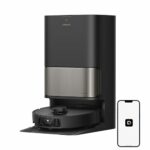
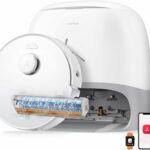
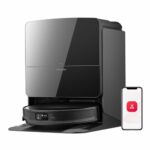
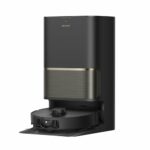
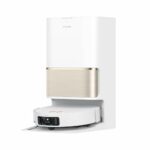
We're looking at three robots with multifunctional bases launched between 2024 and 2025 that represent quite different strategies within the mid-to-high-end segment. The Dreame L10s Ultra Gen 2 arrived in 2024 as a balanced proposition from the Chinese brand, whilst the Mova P50 Ultra lands in 2025 with aggressive specifications to position itself quickly. The Roborock QV 35A also arrives this year as a more restrained option but backed by Roborock's recognised reliability.
All three models share similar technological DNA: laser navigation, dual rotating mops and bases that wash and dry the mops with hot air. However, differences in suction power, brushing systems and base features mark quite differentiated usage profiles. We're talking about equipment designed for medium and large homes where real autonomy in vacuuming and mopping is sought.
Power and Suction
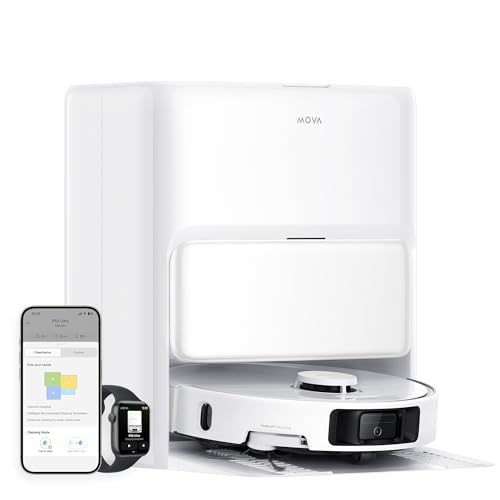
The most striking difference is in raw power. The Mova P50 Ultra reaches 19,000 Pa, almost double the Dreame L10s Ultra Gen 2 with its 10,000 Pa, and more than double the Roborock QV 35A with 8,000 Pa. This difference isn't just cosmetic: on carpets or when there's accumulated ingrained dirt, those extra pascals translate into better cleaning results.
All three use HyperStream-type main brush, a design that minimises hair tangles by having two brushes anchored at one end. Here an important advantage of the Mova appears: its main brush is liftable during mopping. This prevents it from getting unnecessarily wet and allows more efficient mopping without dragging dirt from the brush onto the damp floor.
As for the side brush, the Mova stands out again with an extendable design that allows it to sweep corners better, as well as being liftable during mopping and featuring anti-tangle technology. The Roborock QV 35A has an anti-tangle side brush but it's neither extendable nor liftable. The Dreame L10s Ultra Gen 2 lacks any of these advanced features in the side brush, which can be particularly noticeable in corners and when there's pet hair.
Mopping
All three units feature a dual rotating mop system, which is standard in this price range to achieve decent mopping. Dreame and Mova incorporate mop extension with Roboswing movement, a system that makes the robot perform a slight lateral movement to get the mops underneath ledges and furniture. The Roborock lacks this function.
Mop lift is practically identical: 10.5 mm in Dreame and Mova, 10 mm in the Roborock. Sufficient to climb onto thin carpets without wetting them, though not for medium or high-pile carpets. All three mop with cold water, both on the floor and when washing mops in the base.
Regarding mop maintenance, all wash and dry with hot air in the base. The difference lies in tray self-cleaning: the Mova P50 Ultra integrates a third-generation system that automatically cleans the tray where the mops are washed, reducing manual maintenance. Neither the Dreame nor the Roborock have this function, which means cleaning the tray periodically to avoid dirt accumulation and bad odours.
None of the three automatically removes the mops when you only want to vacuum, nor do they detect dirt on the mops or floor to adjust cleaning. These are functions reserved for higher ranges.
Navigation System
All use LiDAR turret for mapping and navigation, with obstacle avoidance systems. Dreame and Mova add a front 3D laser sensor, which improves detection of low objects and cables. The Roborock QV 35A doesn't incorporate this additional sensor, which may translate into a higher probability of getting stuck on cables or slippers.
The Dreame L10s Ultra Gen 2 recognises pets, a useful function if you have dogs or cats and want the robot to avoid them or adjust its behaviour. The Mova P50 Ultra, on the other hand, detects curtains to avoid getting tangled in them. The Roborock doesn't specify any specific recognition beyond generic obstacle avoidance.
All three integrate AI-powered intelligent cleaning: CleanGenius in Dreame and Mova, SmartPlan in Roborock. Basically they adjust routes and power according to floor type and detected dirt. None have a camera with remote access or LED for night vision.
Autonomy and Battery
Battery capacity is identical in all three: 5,200 mAh. However, declared autonomy varies considerably. The Dreame L10s Ultra Gen 2 promises 240 minutes of operation, the Roborock QV 35A stays at 180 minutes. The Mova P50 Ultra's autonomy isn't specified, although with the same battery and higher suction power it's likely to consume more energy and have shorter duration than the Dreame.
In practice, 240 minutes are enough to clean homes of up to 250-280 m² without recharging, whilst 180 minutes cover about 180-200 m². For flats under 150 m² any of the three has autonomy to spare to complete cleaning in a single session.
Smart Functions
Step-climbing capacity is slightly higher in the Mova P50 Ultra: 22 mm versus 20 mm in the Dreame and Roborock. Two millimetres may seem little, but they make the difference with certain door profiles or thick carpets.
All three are compatible with external voice assistants like Alexa or Google Home, but none integrate their own assistant or robotic arm for advanced tasks.
Multifunctional Cleaning Base
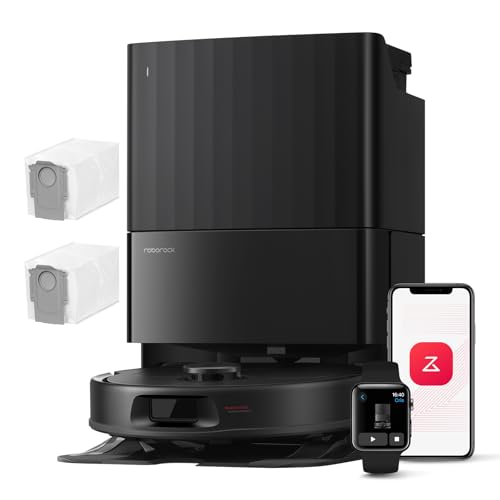
All bases perform auto-emptying of the dust bin, mop washing with hot water and drying with hot air. The dust bag in the Dreame and Mova has a capacity of 3.2 litres, whilst the Roborock's stays at 2.7 litres. This means changing the bag somewhat more frequently in the Roborock if you have pets or lots of daily dirt.
The clean water tank is 4.5 litres in the Dreame, 4 litres in Mova and Roborock. The dirty water tank is 4 litres in the Dreame and 3.5 litres in the other two. Minor differences that in practice don't affect everyday use too much.
The Dreame L10s Ultra Gen 2 includes a detergent tank as standard, which allows automatic dosing of cleaning product during mop washing. The Mova P50 Ultra offers it as an optional accessory that must be purchased separately. The Roborock QV 35A simply doesn't have this option, you'll have to add product manually to the tank if you want to use it.
Only the Dreame offers a plumbing connection kit, although it's purchased separately. It allows connecting the base directly to the drain and water supply to forget about refilling and emptying tanks. Neither Mova nor Roborock have this possibility.
Dimensions
The robots have very similar sizes. The Dreame and Mova measure 350 mm in diameter and 97 mm in height. The Roborock is slightly wider (353 mm) but somewhat lower (96.5 mm). Minimal differences that barely influence their ability to slip under furniture. At 96.5-97 mm in height, all three fit under standard beds and sofas without problem.
The bases do vary considerably. The Mova P50 Ultra's is the widest (420 mm) but the lowest (470 mm), occupying more horizontal space. The Dreame's measures 340 mm wide and 590.5 mm high, a more vertical format. The Roborock's is in between: 340 mm wide and 521 mm high. It's advisable to measure the space where you're going to place it before buying.
Real-World Usage Experience
For large homes, the Dreame L10s Ultra Gen 2 offers the greatest declared autonomy (240 minutes), which allows cleaning large surfaces without interruptions. The Mova P50 Ultra compensates with raw power and more advanced brushing systems, ideal if you prioritise cleaning results over autonomy.
If you live with pets, the Mova stands out for its 19,000 Pa power and extendable anti-tangle side brush, although the Dreame also has a HyperStream main brush that minimises tangles and additionally recognises pets to avoid them. The Roborock, with lower power and without extendable side brush, may fall somewhat short in homes with several animals.
Regarding maintenance, the Mova P50 Ultra requires less attention thanks to third-generation tray self-cleaning. The Dreame and Roborock need periodic manual cleaning of the tray where the mops are washed. The Dreame's detergent tank (as standard) facilitates mopping without having to add product manually, an advantage over the Roborock which doesn't have it and the Mova which sells it separately.
For spaces with many corners or furniture against the wall, the Mova's extendable side brush makes a difference. The Roboswing movement of the Dreame and Mova also helps get the mops underneath ledges, a function the Roborock doesn't offer.
Conclusion: Which to Choose?
Choose the Dreame L10s Ultra Gen 2 if you're looking for the greatest autonomy for large homes (240 minutes), you value having a detergent tank included as standard and want the option to connect the base to plumbing in the future. Also if you have pets and prefer the robot to recognise them specifically. It's a balanced option with good mopping thanks to Roboswing and mop extension.
Choose the Mova P50 Ultra if you prioritise maximum suction power (19,000 Pa) and want the most complete brushing system: liftable main brush, extendable and liftable side brush. Third-generation tray self-cleaning reduces manual maintenance. Ideal for those seeking the best cleaning results and don't mind the detergent tank being optional. Its capacity to overcome 22 mm is also a plus if you have thick carpets or high door profiles.
Choose the Roborock QV 35A if you trust Roborock's reliability and prefer a more restrained option in price without giving up a multifunctional base with mop washing and drying. It has lower power (8,000 Pa) and fewer advanced functions than the other two, but sufficient for medium-sized homes without pets or with little dirt accumulation. Roborock's app is a benchmark in the sector. Mind you, you'll have to do without a detergent tank, front 3D sensor and extendable brushing systems.