✨ VS Analyses · VacuumSpain comparison technology. Explanation created with AI from verified technical data.
Introduction
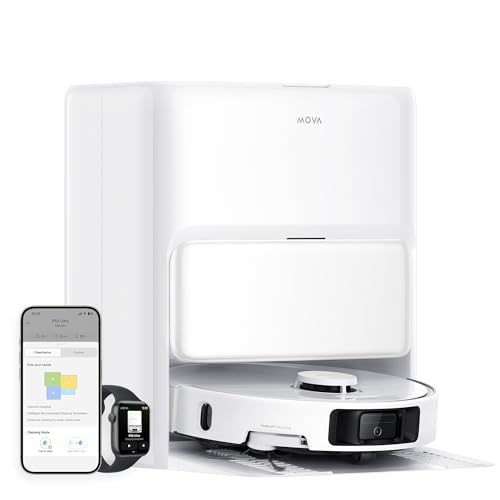
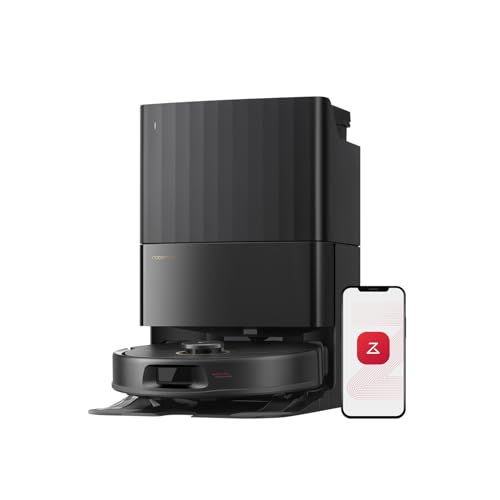
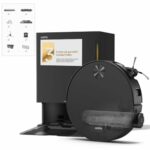
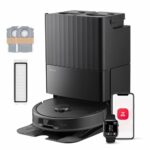
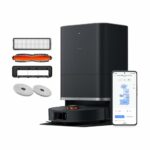
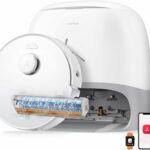
The Dreame L10s Ultra Gen 2, the Mova P50 Ultra and the Roborock Qrevo S5V represent three robot vacuum cleaner proposals with multifunctional base launched between 2024 and 2025. All three models share the philosophy of offering complete autonomous cleaning, with automatic dust emptying, mop washing and drying, but each presents technical nuances that mark important differences depending on the type of home.
The Dreame model arrived in 2024 as an evolution of its high-end range, whilst Mova and Roborock presented their options in 2025. These are devices designed for users seeking to completely delegate floor maintenance, with the capacity to manage both vacuuming and mopping without constant intervention.
Power and Suction
Suction power marks a notable difference between these three models. The Mova P50 Ultra leads with 19,000 Pa, almost double that of the Dreame L10s Ultra Gen 2 with its 10,000 Pa. The Roborock Qrevo S5V sits at an intermediate point with 12,000 Pa. In practice, this translates into greater capacity to drag ingrained dirt or heavy particles, especially relevant on carpets or tile joints.
All three devices feature anti-tangle main brushes, albeit with different designs. The Dreame and the Mova use Simple Stream brush, whilst the Roborock opts for its DuoDivide system, which pushes hairs towards the centre to prevent tangles. An exclusive advantage of the Mova P50 Ultra is the lifting of the main brush during mopping, which prevents dragging wet dirt and contaminating the mops.
Regarding the side brush, the Mova P50 Ultra stands out as the only one with extension to better reach corners and lifting during mopping. Both the Mova and the Roborock include anti-tangle side brush, a feature that does not appear in the Dreame. This can make a difference in homes with long hair or pets, where tangles in the side brush tend to be frequent.
Mopping
All three robots mop with two rotating mops and feature edge extension. The Dreame L10s Ultra Gen 2 and the Mova P50 Ultra also incorporate the Roboswing system, which allows the robot to make a lateral movement to get the mops under furniture and overhangs. Mop lifting reaches 10.5 mm in the first two, compared to 10 mm in the Roborock, minimal differences in practice.
All wash the mops with hot water and dry them with hot air, guaranteeing hygiene and preventing bad odours. Washing with hot water is more effective at removing grease and dirt adhered to the mops. However, none of the three includes hot water in the robot's tank for mopping the floor, only cold water.
An important difference appears in the self-cleaning of the washing tray. The Mova P50 Ultra integrates a third-generation system that automatically cleans the tray where the mops are washed, reducing manual maintenance. Neither the Dreame nor the Roborock offer this function, which requires periodically cleaning the tray by hand to prevent dirt accumulation.
None of the three models automatically removes the mops at the base nor detects dirt on mops or floor to adjust cleaning. These are functions that are beginning to appear in higher ranges but are not present here.
Navigation System
All three robots use LiDAR turret to map the home and plan efficient routes. Additionally, they incorporate obstacle avoidance, albeit with nuances. The Dreame L10s Ultra Gen 2 and the Mova P50 Ultra feature front 3D laser sensor, whilst the Roborock Qrevo S5V does not include it. This sensor improves detection of low objects and cables on the floor.
None features camera with artificial intelligence, so object identification is more limited than in higher-end models. However, the Dreame recognises pets, a useful function for adjusting routes or avoiding disturbing resting animals. The Mova P50 Ultra, curiously, detects curtains to avoid getting tangled, a feature absent in the other two.
All three integrate intelligent cleaning systems: CleanGenius in Dreame and Mova, SmartPlan in Roborock. These systems automatically adjust power and cleaning pattern according to the type of floor and detected dirt, although none reaches the level of stain recognition with AI.
Autonomy and Battery
Battery capacity is identical in all three models: 5,200 mAh. However, declared autonomy varies. The Dreame L10s Ultra Gen 2 offers up to 240 minutes of continuous operation, the Roborock Qrevo S5V reaches 180 minutes, and for the Mova P50 Ultra this data is not specified.
In large homes, those extra 60 minutes of the Dreame can make the difference between completing cleaning in a single run or requiring intermediate recharging. For medium or small-sized flats, the Roborock's autonomy is more than sufficient.
Smart Functions
Obstacle-crossing capacity reaches 22 mm in the Mova P50 Ultra, compared to 20 mm in the Dreame L10s Ultra Gen 2 and the Roborock Qrevo S5V. Two millimetres may seem insignificant, but in practice they determine whether the robot can climb certain door frames or transitions between floors without getting stuck.
All three models are compatible with external voice assistants such as Alexa or Google Home, facilitating control by voice commands. None incorporates its own assistant nor robotic arm for advanced tasks.
Multifunctional Cleaning Base
All three bases auto-empty the dust container, wash the mops with hot water and dry them with hot air. Dust bag capacity is 3.2 litres in the Dreame and the Mova, superior to the 2.7 litres of the Roborock. This means lower frequency of bag changes in the first two.
The clean water tank reaches 4.5 litres in the Dreame, 4 litres in the Mova and the Roborock. The dirty water tank is 4 litres in the Dreame and 3.5 litres in the other two. These differences directly impact mopping autonomy without needing to refill or empty tanks.
The Dreame L10s Ultra Gen 2 includes integrated detergent tank, which allows adding cleaning product that is dispensed during mop washing. The Mova P50 Ultra offers it as optional, and the Roborock Qrevo S5V simply does not contemplate it. For those seeking deeper mopping with detergent, this is worth considering.
Only the Dreame offers plumbing connection kit, although it must be purchased separately. None of the three integrates direct connection to the water mains. The Mova stands out for its third-generation tray self-cleaning, significantly reducing manual maintenance of the base.
Dimensions
The robot's diameter is practically identical: 350 mm in Dreame and Mova, 353 mm in Roborock. Height is also very similar: 97 mm in the first two, 96.5 mm in the Roborock. These measurements allow them to slip under most standard furniture.
The bases present greater differences. The Mova P50 Ultra is the widest at 420 mm, compared to 340 mm of the Dreame and the Roborock. However, the Mova is also the lowest at 470 mm in height, whilst the Dreame reaches 590.5 mm. The Roborock measures 521 mm tall. In depth, the Roborock occupies the most space at 487 mm, followed by the Mova at 458 mm and the Dreame at 456.7 mm.
These differences are relevant for positioning the base in confined spaces or under auxiliary furniture. The Mova, wider but lower, may fit better under shelving. The Dreame, narrower but taller, makes better use of vertical corners.
Real-world experience
For large homes, the Dreame L10s Ultra Gen 2 offers clear advantages: greater declared autonomy, larger clean water tank and 3.2-litre dust bag. It can complete extensive surfaces without interruptions. The integrated detergent tank facilitates deeper mopping without manual intervention.
In homes with pets, the Mova P50 Ultra stands out for its superior suction power (19,000 Pa), anti-tangle and extendable side brush, and capacity to lift both main and side brush during mopping. Tray self-cleaning reduces maintenance, an important aspect when mopping frequently due to the presence of animals.
The Roborock Qrevo S5V is balanced for medium-sized flats. Its DuoDivide system manages hair well, the 180-minute autonomy covers standard surfaces, and the brand enjoys a reputation for reliability and app quality. The smaller dust bag may be a minor inconvenience if not much dirt is generated.
For those seeking minimum base maintenance, the Mova P50 Ultra with third-generation tray self-cleaning makes a difference. Conversely, if pet recognition or greater autonomy is valued, the Dreame L10s Ultra Gen 2 takes the lead. The Roborock offers technical solidity without particularly excelling in any specific aspect, but with the backing of an established brand.
Conclusion: Which to choose?
Choose the Dreame L10s Ultra Gen 2 if you have a large home and value the extended autonomy of 240 minutes. Also if you live with pets and are interested in specific animal recognition. The integrated detergent tank and 4.5 litres of clean water facilitate long cleaning sessions without intervention. Ideal for those seeking to completely delegate floor maintenance.
Choose the Mova P50 Ultra if you prioritise maximum suction power (19,000 Pa) and advanced functions such as extendable and liftable side brush, or liftable main brush during mopping. Third-generation tray self-cleaning notably reduces base maintenance. Perfect for homes with long-haired pets or demanding dirt, where power and minimum manual maintenance are decisive.
Choose the Roborock Qrevo S5V if you seek technical balance backed by a world-leading brand. The DuoDivide system effectively manages hair tangles, the 180-minute autonomy covers standard flats, and Roborock's reliability provides long-term peace of mind. A sound choice for those who value technical solidity without requiring the most advanced functions of the other two models.