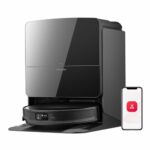
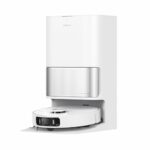
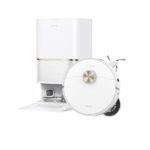
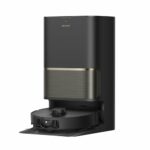
✨ VS Analyses · VacuumSpain comparison technology. Explanation created with AI from verified technical data.
Introduction
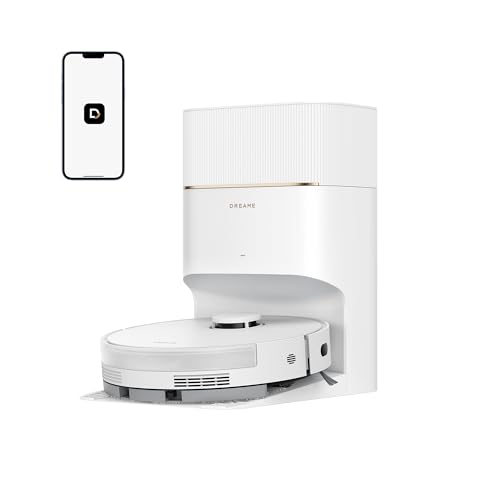
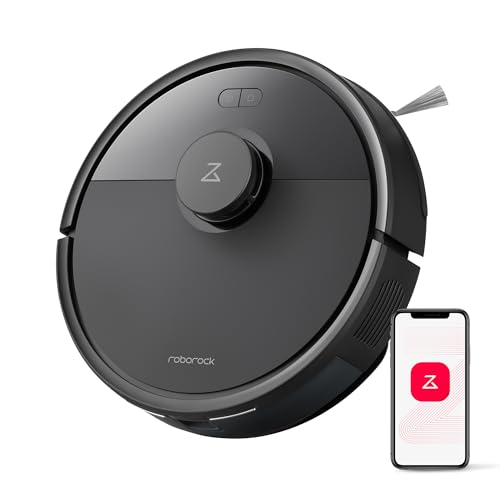
The Dreame D20 Pro Plus and the Roborock Q7 L5 o BF represent two very different propositions within the robot vacuum market, despite sharing the same launch year. Whilst the Dreame model opts for a more comprehensive configuration with self-emptying base and greater suction power, the Roborock presents itself as a more compact and straightforward alternative, without a self-emptying station.
This robot vacuum comparison is especially useful for those looking to understand which user profile is better suited to each device. The Dreame robot vacuum is designed for homes that prioritise complete cleaning autonomy, whilst the Roborock robot vacuum may be a better fit for smaller homes where the space taken up by the base is a determining factor.
Power and Suction
The difference in suction power marks one of the most notable points between these models. With 13,000 Pa, the Dreame D20 Pro Plus far exceeds the 8,000 Pa of the Roborock Q7 L5 o BF. This gap translates into greater capacity to extract ingrained dirt from carpets or vacuum heavier particles such as sand or food debris.
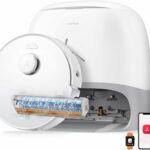
The brushing system also presents notable differences. The Dreame's dual HyperStream brush significantly reduces hair tangles, a fundamental aspect in homes with pets. The Roborock uses a conventional bristle brush, which tends to accumulate more hair and requires more frequent maintenance.
As for the side brush, the Dreame model incorporates extension to improve corner cleaning and anti-tangle technology. The Roborock lacks these functions, which may limit its effectiveness in corners and difficult areas. Neither model includes main brush or side brush lifting during mopping.
Mopping
Both devices use a static mop with cold water for mopping, without major differences in this section. They do not have mop extension for edges, mop lifting, or floor dirt detection.
The Dreame D20 Pro Plus's water tank reaches 350 ml, whilst the Roborock Q7 L5 o BF's remains at 270 ml. This difference may be particularly noticeable in large homes, where the Dreame will be able to cover more surface area without needing to refill the tank.
Neither model has a multifunction base that washes or dries the mops, nor the possibility of automatically removing them at the station. For homes where mopping is a priority, this limitation is worth bearing in mind.
Navigation System
Both robots employ a LiDAR 3.0 turret to map the home, but the Dreame D20 Pro Plus adds a front 3D laser sensor that improves obstacle avoidance. This function is absent in the Roborock Q7 L5 o BF, which does not have an obstacle avoidance system.
In practice, this means that the Dreame can navigate around cables, shoes or small objects on the floor with greater precision, reducing interruptions during cleaning. The Roborock relies exclusively on its upper laser navigation, which may generate more stops when faced with unexpected obstacles.
Neither incorporates an AI camera, pet recognition, curtain detection or night vision LED. Both are compatible with external voice assistants such as Alexa or Google Home.
Autonomy and Battery
The Dreame D20 Pro Plus's battery stands out with its 5,200 mAh and 285 minutes of declared autonomy. The Roborock Q7 L5 o BF has a 3,200 mAh battery, although its autonomy in minutes is not specified.
This difference is decisive for large homes. The Dreame can complete more extensive cleaning sessions in a single run, whilst the Roborock may need intermediate recharges in spacious areas. For medium or small-sized flats, the Roborock's battery will be sufficient.
Both models can overcome obstacles up to 20 mm in height, which allows them to navigate small level changes or moderately thick carpets without problems.
Smart Functions
The Dreame D20 Pro Plus incorporates obstacle avoidance through its front 3D laser sensor, a function that the Roborock Q7 L5 o BF does not offer. This allows the Dreame model to better anticipate objects in its path and adjust its route more efficiently.
Neither device includes a robotic arm nor its own voice assistant. Both are compatible with Alexa and Google Home for external voice control.
Multifunction Cleaning Base
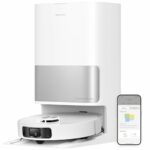
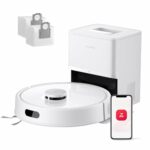
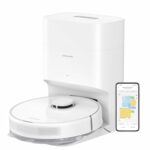
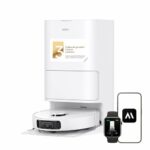
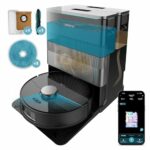
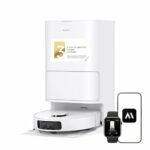
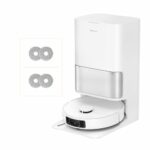
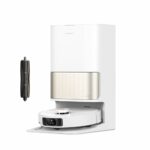
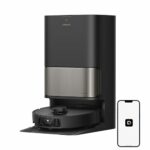
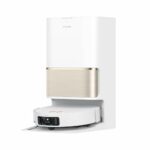
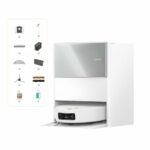
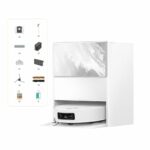
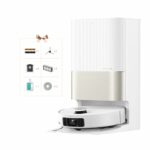
The most evident difference between these robots lies in their bases. The Dreame D20 Pro Plus includes a self-emptying base with a 5-litre bag capacity, which allows you to forget about emptying the robot's dustbin for weeks. The Roborock Q7 L5 o BF only has a simple charging base, without a self-emptying function.
This feature marks a radical difference in the user experience. With the Dreame, maintenance is practically reduced to changing the bag every month or month and a half, depending on use. With the Roborock, it will be necessary to manually empty the robot's 400 ml dustbin after each clean or every two days.
Neither model offers mop washing, drying, tray self-cleaning, UV disinfection, detergent tank or connection to plumbing. The bases focus exclusively on charging and, in the Dreame's case, on self-emptying dust.
Dimensions
The Dreame D20 Pro Plus has a diameter of 350 mm and a height of 96.8 mm. The Roborock Q7 L5 o BF is slightly more compact, with 325 mm diameter and 99 mm height. This small difference means the Roborock can access narrower spaces, although the Dreame is lower and can slip better under low furniture.
The base dimensions differ drastically. The Dreame's base measures 298 mm wide, 452 mm high and 440 mm deep, taking up considerable space due to its self-emptying system. The Roborock's base is much more discreet: 160 mm wide, 101 mm high and 70 mm deep.
For homes with limited space, the Roborock's base is much more practical. The Dreame requires a spacious corner to install its self-emptying station, something worth measuring before deciding on this model.
Real-World User Experience
The Dreame D20 Pro Plus is better suited to large homes where autonomy and minimal maintenance are priorities. Its 5,200 mAh battery and self-emptying base allow extensive cleaning without user intervention. The dual HyperStream brush and anti-tangle side brush make it a solid option for homes with pets.
The Roborock Q7 L5 o BF fits smaller flats or users who don't want to invest in a self-emptying station. Its compact base takes up little space and its reduced diameter facilitates access to narrow areas. However, it will require frequent manual emptying of the dustbin and more attention to bristle brush maintenance.
In terms of power, the Dreame offers greater suction capacity, which is noticeable on carpets and floors with heavy soiling. The Roborock performs well on hard floors and daily maintenance, but may fall short on thick carpets or spaces with heavy workload.
Conclusion: Which to Choose?
Choose the Dreame D20 Pro Plus if: you live in a large house, have pets, seek total autonomy with a self-emptying base, prioritise suction power and don't mind sacrificing space for the base. Its anti-tangle system and greater battery capacity make it ideal for those who want to forget about daily maintenance.
Choose the Roborock Q7 L5 o BF if: you live in a small or medium-sized flat, space for the base is limited, you prefer a more compact solution and don't mind emptying the dustbin manually every few days. It's a more economical and straightforward option, suitable for daily maintenance in homes without major power or autonomy demands.