✨ VS Analyses · VacuumSpain comparison technology. Explanation created with AI from verified technical data.
Introduction
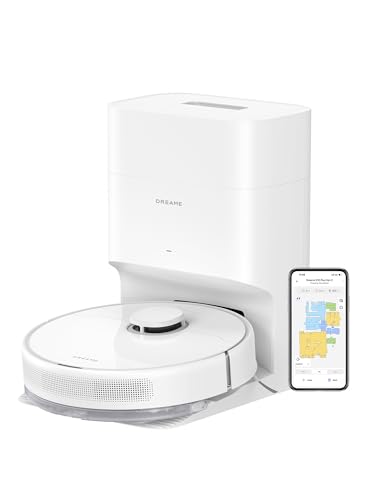
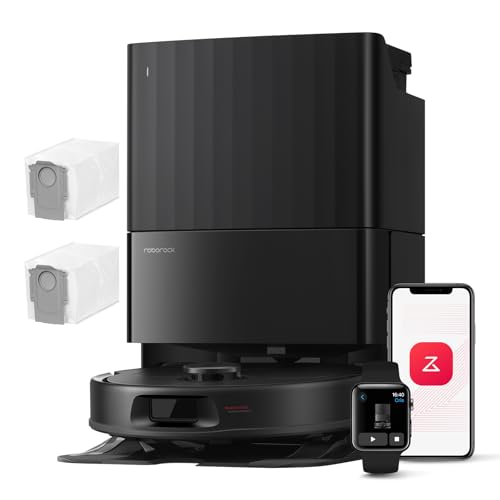
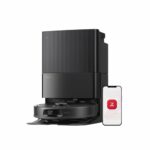
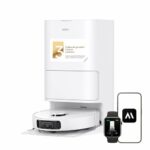
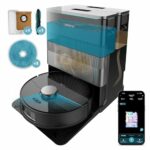
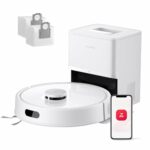
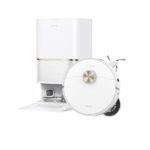
The Dreame D10 Plus Gen 2 and the Roborock QV 35A represent two distinct philosophies within the robot vacuum market. The former, launched in 2024, focuses on extended autonomy and self-emptying with a compact base. The latter, from 2025, incorporates a more comprehensive mopping system with a multifunction base that automatically washes and dries the mops.
Whilst the Dreame model is suitable for those who prioritise vacuuming and prefer a simple maintenance solution, the Roborock QV 35A is designed for users seeking more elaborate mopping without sacrificing suction power. Both integrate laser navigation and the ability to overcome small obstacles.
Power and Suction
Suction power marks a notable difference between these models. The Roborock QV 35A reaches 8,000 Pa, which represents 33% more than the Dreame D10 Plus Gen 2's 6,000 Pa. This difference translates into greater capacity to extract ingrained dirt from carpets or floor joints.
Both feature a simple silicone main brush, a design that significantly reduces hair tangles compared to traditional bristle brushes. However, the Roborock QV 35A incorporates an anti-tangle side brush, a feature absent on the Dreame model. This can make a difference in homes with long-haired pets.
Neither model includes main or side brush lifting systems during mopping, nor extendable side brushes for corners. Both manufacturers' approach in this aspect is similar, prioritising mechanical simplicity.
Mopping
Here we find the most significant difference in this robot vacuum comparison. The Dreame D10 Plus Gen 2 uses a traditional static mop, a basic system that drags the damp cloth across the floor without active movement. In practice, this limits its effectiveness against dried stains or adhered dirt.
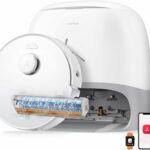
The Roborock QV 35A takes a qualitative leap with its two rotating mops that spin at 200 RPM. This circular movement allows active scrubbing of the floor, notably improving results. Additionally, it features 10 mm mop lifting, which allows the robot to climb onto carpets without wetting them during mopping.
The Roborock's multifunction base washes the mops with cold water and subsequently dries them with cold air. During a mopping session, the robot periodically returns to the base to clean the mops, ensuring it always mops with clean material. The Dreame D10 Plus Gen 2 does not include mop washing, so you'll need to clean them manually after each use.
The Roborock QV 35A's water tanks hold 4 litres for clean water and 3.5 litres for dirty water. The Dreame, lacking a mop washing system, does not have these tanks in the base. Its water tank integrated in the robot is 150 ml, compared to the Roborock's 80 ml.
Navigation System
Both robot vacuums integrate 360° LiDAR turret to map the environment and plan efficient routes. This laser technology guarantees precise navigation even in low-light conditions, creating detailed maps of the home.
The Roborock QV 35A incorporates obstacle avoidance, a function that the Dreame D10 Plus Gen 2 does not include. This allows the Roborock model to detect and avoid objects such as cables, slippers or toys without needing to pick them up beforehand. It also integrates SmartPlan 1.0, an intelligent cleaning system that optimises routes according to each room's characteristics.
Neither model has a front camera, pet recognition, curtain detection or front LED for night vision. Nor do they allow remote camera access, functions reserved for higher ranges.
Autonomy and Battery
The 5,200 mAh battery equips both models, but performance differs considerably. The Dreame D10 Plus Gen 2 achieves 285 minutes of continuous operation, an exceptional autonomy that allows cleaning large homes in a single session. The Roborock QV 35A offers 180 minutes, sufficient for most homes but notably lower.
This difference is explained by the higher energy consumption of the rotating mop mopping system and the Roborock's superior suction power. In practice, the Dreame is more suitable for extensive surfaces where autonomy is critical.
Smart Functions
Both robots can overcome obstacles up to 20 mm in height, which allows them to navigate thick cables, door frames or small level changes without getting stuck. This capability is identical on both models.
Both units are compatible with external voice assistants such as Alexa or Google Home, allowing you to start cleaning or send the robot to the base using voice commands. Neither incorporates its own voice assistant.
Multifunction Cleaning Base
Dust bin self-emptying is present on both models, freeing you from manually emptying the robot after each clean. Bag capacity marks a relevant difference: 4 litres on the Dreame D10 Plus Gen 2 versus 2.7 litres on the Roborock QV 35A. This means the Dreame requires less frequent bag changes.
The Roborock QV 35A's base goes beyond simple self-emptying. It washes the mops with cold water during and after each mopping session, and dries them with cold air to prevent bad odours. This multifunction functionality represents a clear advantage for those who value convenience and effective mopping.
Neither model includes self-cleaning of the washing tray, UV disinfection, detergent tank or plumbing connection. Nor do they have an optional kit for connecting to household plumbing.
Dimensions
The robot's diameter is practically identical: 350 mm on the Dreame D10 Plus Gen 2 and 353 mm on the Roborock QV 35A. Height also matches with barely two tenths of a millimetre difference: 96.3 mm versus 96.5 mm. Both can slide under most standard furniture without problems.
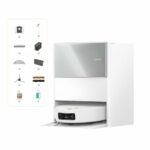
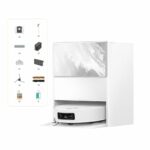
Differences appear in the bases. The Dreame's is more compact at 298 mm wide, 427 mm high and 406 mm deep. The Roborock QV 35A's multifunction base requires more space: 340 mm wide, 521 mm high and 487 mm deep. This difference is due to the water tanks and the integrated washing and drying system.
If you have limited space to position the base, it's worth considering these measurements before deciding.
Real-World Experience
For large homes where autonomy is determining, the Dreame D10 Plus Gen 2 stands out with its 285 minutes of operation. Its 4-litre bag also reduces maintenance frequency. The robot's dust bin reaches 400 ml, compared to the Roborock's 330 ml.
In homes with pets, the Roborock QV 35A's anti-tangle side brush provides a practical advantage. The greater suction power (8,000 Pa) also facilitates extraction of hair embedded in carpets and upholstery.
For those who mop frequently, the difference between both systems is evident. The Roborock's rotating mops, combined with automatic washing in the base, offer superior results without manual intervention. The Dreame requires cleaning the static mop after each use.
The Roborock QV 35A's obstacle avoidance and SmartPlan 1.0 simplify daily use by reducing the need to prepare the house before each clean. The Dreame D10 Plus Gen 2, without this function, may require removing objects from the floor beforehand.
Conclusion: Which to Choose?
Choose the Dreame D10 Plus Gen 2 if... you're looking for extended autonomy for large homes, prefer a more compact base, don't need intensive mopping or value a larger capacity dust bag. Its balance between basic features and price is well-suited for those who prioritise vacuuming over mopping.
Choose the Roborock QV 35A if... mopping forms a regular part of your cleaning routine, you value the convenience of not cleaning mops manually, need greater suction power for carpets or pet hair, or seek smart functions such as obstacle avoidance. The multifunction base justifies the additional space if you want superior results on hard floors without manual intervention.
For small or medium-sized homes where mopping is a priority, the Roborock offers a more complete solution. If the surface exceeds 150 m² and mopping is occasional, the Dreame's autonomy may be determining.