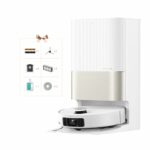
✨ VS Analyze · VacuumSpain comparison technology. AI-generated explanation based on verified technical data.
Introduction
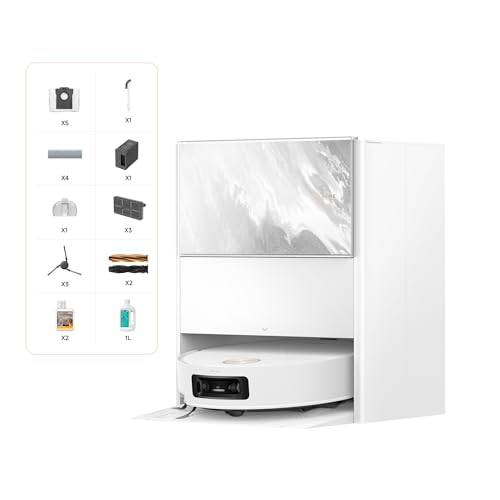
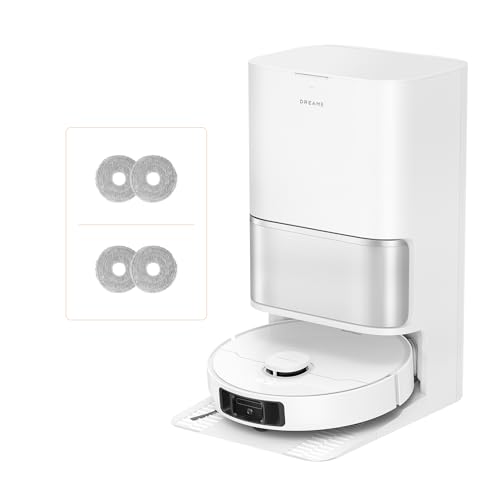
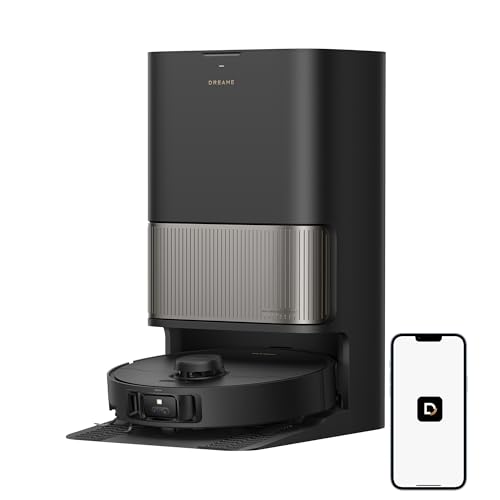
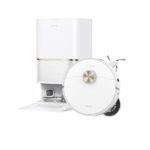
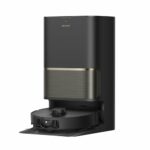
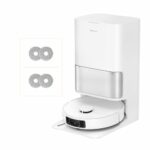
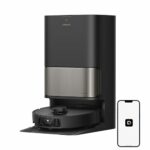
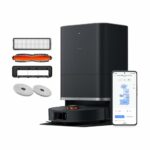
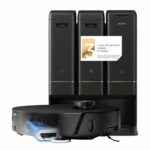
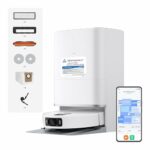
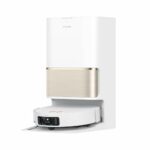
Dreame presents three proposals within its 2025 high-end range that aim to simplify home cleaning with advanced mopping systems and complete multifunctional bases. The Dreame Aqua10 Ultra Track Complete stands out by incorporating a wide roller system instead of traditional rotating mops, whilst the Dreame L10s Ultra Gen 3 and the Dreame L40s Pro Ultra opt for a two rotating mop design with side extension capability to better reach edges.
All three units share the philosophy of offering total autonomy through bases that auto-empty dust, wash and dry mops, although with important differences in drying temperature, visual recognition capability and AI functions. The choice between one or another will depend on the level of automation you're looking for and specific features such as dirt detection or remote camera access.
Power and Suction
The Dreame Aqua10 Ultra Track Complete and the Dreame L10s Ultra Gen 3 share a suction power of 25,000 Pa, superior to the 19,000 Pa of the Dreame L40s Pro Ultra. This difference can be particularly noticeable on carpets or when there's embedded pet hair, although 19,000 Pa is still more than sufficient for most domestic situations.
Regarding the brushing system, the Aqua10 and the L40s Pro feature dual brush, whilst the L10s Ultra Gen 3 incorporates a single brush. All three include an extendable side brush to improve cleaning in corners. A clear advantage of the Aqua10 and the L40s Pro is that both the main brush and the side brush are liftable during mopping, preventing them from getting unnecessarily wet. The L10s Ultra Gen 3 doesn't lift any of its brushes.
The anti-tangle side brush is present in the Aqua10 and the L40s Pro, but not in the L10s Ultra Gen 3. For homes with long-haired pets, this makes a practical difference in the robot's daily maintenance.
Mopping
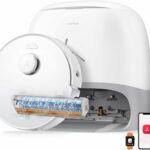
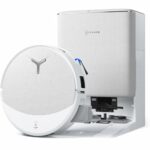
Here we find one of the most relevant differences in this robot vacuum comparison. The Dreame Aqua10 Ultra Track Complete opts for a wide roller for mopping, a system that covers more surface in one pass and proves effective on large floors. The Dreame L10s Ultra Gen 3 and the Dreame L40s Pro Ultra use two rotating mops with side extension movement, which allows them to get closer to edges and skirting boards.
Mop lifting varies: the Aqua10 can lift them between 7 and 17 mm, whilst the other two reach 10.5 mm. This capability is useful when the robot moves from hard floor to carpet, although none of the three should have problems avoiding wetting carpets if properly configured.
The Aqua10 mops with hot water from the robot itself, a function that helps to better dissolve grease and stuck-on stains. The other two models mop with cold water. For mop washing at the base, the Aqua10 uses hot water, the same as the L10s Ultra Gen 3 and the L40s Pro. However, there are differences in drying: the Aqua10 dries at 50°C, whilst the other two use hot air without specifying exact temperature.
Only the L40s Pro Ultra can automatically remove mops at the base when you only want to vacuum, a convenience that avoids having to do it manually. The Aqua10 and the L40s Pro detect dirt both on the mops and on the floor, adjusting washing or scrubbing as necessary. The L10s Ultra Gen 3 doesn't include this intelligent detection.
Navigation System
All three Dreame robot vacuums incorporate LiDAR to map the home, although with different implementations. The Aqua10 uses a retractable LiDAR, whilst the L10s Ultra Gen 3 and the L40s Pro have a fixed LiDAR turret. All integrate a front 3D laser sensor to avoid obstacles at floor level.
The most notable difference is in the cameras. The Aqua10 and the L40s Pro feature dual RGB camera with AI, which allows them to recognise objects, pets and curtains. The Aqua10 identifies up to 280 different obstacles, the L40s Pro recognises 180. The L10s Ultra Gen 3 doesn't have an AI camera, although it does recognise pets thanks to its sensors.
Remote camera access is available on the Aqua10 and the L40s Pro, allowing you to monitor the home from the app. The night vision LED is also present only on these two models, improving navigation in low-light conditions. In practice, this can be useful if the robot cleans at night or in dark rooms.
All three units include intelligent cleaning via CleanGenius, but only the Aqua10 and the L40s Pro incorporate AI stain recognition to automatically insist on dirtier areas.
Autonomy and Battery
The Dreame Aqua10 Ultra Track Complete stands out with a 6,400 mAh battery, compared to the 5,200 mAh of the L10s Ultra Gen 3 and the L40s Pro Ultra. This greater capacity should translate into more autonomy, although the exact figure in minutes for the Aqua10 isn't specified.
The L10s Ultra Gen 3 offers 231 minutes of autonomy, slightly superior to the 220 minutes of the L40s Pro. These figures allow cleaning of large homes without the need for intermediate recharges, although it's usual for the robot to return to the base several times during mopping to wash the mops.
Smart Functions
The Dreame Aqua10 Ultra Track Complete can overcome simple steps thanks to its track system, a feature it shares with the L40s Pro Ultra. The L10s Ultra Gen 3 overcomes obstacles up to 20 mm in height, sufficient for most transitions between rooms.
The built-in voice assistant is integrated in the Aqua10 and the L40s Pro, whilst the L10s Ultra Gen 3 only works with external assistants such as Alexa or Google Home. All three models are compatible with these external voice assistants.
Multifunctional Cleaning Base
All three bases auto-empty dust into a 3.2-litre bag, wash mops with hot water and dry them. The Aqua10 dries at 50°C, a temperature that helps prevent bad odours and bacterial growth. The other two dry with hot air without specifying exact degrees.
Auto-cleaning of the washing tray is present in the L10s Ultra Gen 3 and the L40s Pro (third generation of the system), but not in the Aqua10. This reduces manual maintenance of the base.
The Aqua10 incorporates a dual detergent tank, useful if you want to use different products depending on the type of floor. The other two have a single tank. UV disinfection is only available on the Aqua10, adding an extra level of hygiene at the base.
In tank capacity, the Aqua10 has 4 litres of clean water and 3.5 of dirty water. The L10s Ultra Gen 3 and the L40s Pro have 4.5 litres of clean water and 4 of dirty, greater capacity that can reduce the frequency of filling and emptying. All three offer an optional kit to connect to plumbing, although purchased separately.
Dimensions
All three robots have a 350 mm diameter. In height, the Aqua10 measures 97.5 mm, the L10s Ultra Gen 3 reaches 97 mm, and the L40s Pro is the tallest at 103.8 mm. For passing under low furniture, the L10s Ultra Gen 3 has a slight advantage.
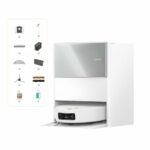
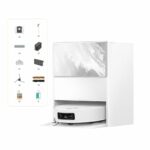
The bases present important differences. The Aqua10 has a base of 420 mm wide, 500 mm high and 440 mm deep. The L10s Ultra Gen 3 and the L40s Pro share dimensions: 340 mm wide, 590 mm high and approximately 457 mm deep. The Aqua10's base is wider but less tall, something to consider depending on available space at home.
Real-World Experience
For large homes, the Aqua10 offers greater battery (6,400 mAh) and mopping with hot water, clear advantages if you're looking for deep cleaning on large surfaces. Its dual detergent tank and UV disinfection add versatility. The wide roller system can prove more efficient in open spaces.
The L10s Ultra Gen 3 is more compact in height and has a larger dust bin in the robot (300 ml), ideal for long vacuuming sessions without returning to the base. Its autonomy of 231 minutes is excellent, although it lacks AI camera and advanced detection functions. It's a balanced option if you don't need remote access or detailed visual recognition.
The L40s Pro combines good autonomy (220 minutes), dual AI camera, recognition of 180 obstacles and automatic mop removal. For homes with pets, its anti-tangle side brush and dirt detection facilitate maintenance. The ability to remove mops automatically is practical if you alternate days of vacuum-only.
In homes with long-haired pets, the Aqua10 and the L40s Pro have an advantage due to their anti-tangle brushes and greater power (25,000 Pa in the case of the Aqua10). The L40s Pro adds the convenience of automatic mop removal. If you have mixed carpets and hard floors, the brush lifting of the Aqua10 and L40s Pro prevents wetting the brushes during mopping.
Conclusion: Which to Choose?
Choose the Dreame Aqua10 Ultra Track Complete if you're looking for the best robot vacuum with hot water mopping from the robot, dual detergent tank and UV disinfection at the base. Its 6,400 mAh battery, recognition of up to 280 obstacles and 50°C drying make it the most complete option for those who prioritise hygiene and autonomy. The wide roller system works well in large homes with extensive hard floor surfaces. Its base is wider but less tall, consider available space.
Choose the Dreame L10s Ultra Gen 3 if you prefer a model without AI camera but with excellent autonomy (231 minutes) and larger dust bin in the robot. Its base includes third-generation tray auto-cleaning, reducing maintenance. It's the most economical option of the three and proves sufficient if you don't need remote access, advanced visual recognition or dirt detection. Suitable for medium-sized homes without special surveillance or AI requirements.
Choose the Dreame L40s Pro Ultra if you value the balance between advanced functions and price. Its dual AI camera, automatic mop removal, dirt detection and anti-tangle brushes make it versatile for homes with pets. It recognises 180 obstacles, has remote camera access and night LED. The autonomy of 220 minutes covers large homes well. It's the middle ground between the Aqua10 (more complete but more expensive) and the L10s Ultra Gen 3 (more basic). Ideal if you want AI without giving up the convenience of automatic mop removal.