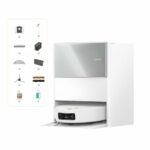
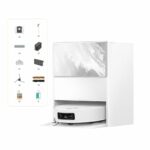
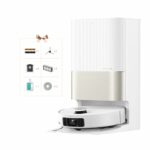
✨ VS Analyses · VacuumSpain comparison technology. Explanation created with AI from verified technical data.
Introduction
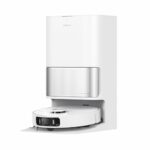
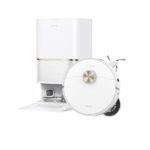
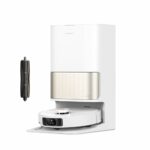
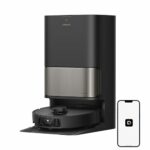
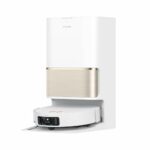
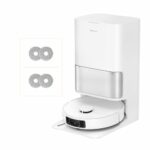
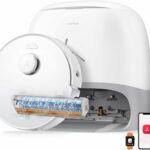
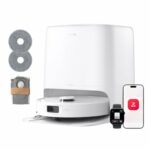
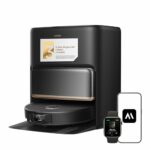
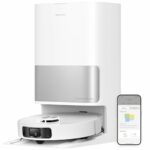
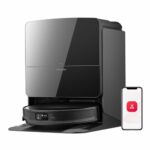
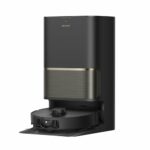
Dreame has positioned itself as a manufacturer capable of delivering advanced cleaning technology at competitive prices. The Dreame Aqua 10 Ultra Roller represents the brand's latest 2025 release, introducing innovations that push the boundaries of what robot vacuums can achieve. The Dreame L10s Ultra Gen 2, launched in 2024, established itself as a capable all-rounder with solid performance across multiple cleaning scenarios.
These two models share the same manufacturer but target distinctly different user profiles. The newer Aqua 10 Ultra Roller incorporates cutting-edge features like dual RGB cameras and a revolutionary roller mopping system, whilst the L10s Ultra Gen 2 maintains a more traditional approach with proven technologies. For anyone researching which robot aspirador Dreame suits their home best, understanding these fundamental differences becomes essential before making a purchasing decision.
Power and Suction
The suction power gulf between these models is substantial. The Aqua 10 Ultra Roller delivers 30,000 Pa, tripling the 10,000 Pa output from the L10s Ultra Gen 2. This massive difference translates directly into cleaning performance, particularly on carpets and in homes where pet hair accumulates quickly.
What sets the Aqua 10 Ultra Roller apart is its dual HyperStream brush configuration. This design uses two brushes anchored at one end, specifically engineered to prevent hair tangles. The L10s Ultra Gen 2 employs a single standard brush, which handles everyday debris adequately but lacks the same anti-tangle capabilities. For households with long-haired residents or multiple pets, this distinction matters considerably.
The side brush systems differ markedly. The Aqua 10 Ultra Roller features an extensible side brush that reaches into corners more effectively, plus it can elevate during mopping to avoid cross-contamination. The L10s Ultra Gen 2 lacks both extension and elevation capabilities. The newer model also incorporates anti-tangle technology in its side brush, reducing maintenance frequency.
Brush elevation during mopping appears only on the Aqua 10 Ultra Roller. This allows the main brush to lift clear of wet floors, preventing the spread of dirty water back onto cleaned surfaces.
Mopping
The mopping approaches couldn't be more different. The Aqua 10 Ultra Roller abandons traditional mop pads entirely, instead using a rotating roller system that applies 12N of downward pressure. This roller continuously rotates whilst cleaning, mimicking the action of a traditional mop bucket and wringer. The L10s Ultra Gen 2 sticks with dual rotating mops, a proven technology that works well but requires the pads to remain in contact with the base for washing.
Both models extend their mopping systems to reach edges, though the Aqua 10 Ultra Roller achieves this through its roller design whilst the L10s Ultra Gen 2 uses a swinging motion. Mop elevation differs: 14 mm on the Aqua 10 Ultra Roller with additional corner lifting functionality, compared to 10.5 mm on the L10s Ultra Gen 2.
The Aqua 10 Ultra Roller introduces dirt detection for both mops and floors. When sensors identify heavily soiled areas, the robot automatically adjusts its cleaning pattern, making additional passes or increasing pressure. The L10s Ultra Gen 2 lacks this adaptive capability, following predetermined cleaning patterns regardless of floor condition.
Base washing temperature represents another significant split. The Aqua 10 Ultra Roller cleans its roller with hot water, helping to break down stubborn residues and reduce bacterial growth. The L10s Ultra Gen 2 washes mops with cold water, which remains effective for routine cleaning but doesn't offer the same sanitising benefits. The L10s Ultra Gen 2 dries mops using cold air, though drying times weren't specified for the Aqua 10 Ultra Roller.
Navigation System
Navigation technologies diverge considerably. The Aqua 10 Ultra Roller uses a retractable LiDAR system combined with dual RGB cameras, creating a comprehensive environmental map. This dual-camera setup enables remote viewing, turning the robot into a mobile home monitor when you're away. The L10s Ultra Gen 2 relies on a traditional LiDAR turret with 3D sensors but includes no camera functionality.
Object recognition capabilities differ dramatically. The Aqua 10 Ultra Roller identifies 240 distinct obstacles, including specific detection for curtains and detailed pet recognition. The L10s Ultra Gen 2 recognises pets but doesn't specify how many total objects it can identify, nor does it detect curtains specifically.
LED lighting appears exclusively on the Aqua 10 Ultra Roller, enabling navigation in complete darkness whilst providing illumination for its cameras. This proves particularly useful for evening cleaning sessions or homes with limited natural light.
Processing power shows a clear advantage for the Aqua 10 Ultra Roller, which runs AI Sage 15.0 with an octa-core processor. Both models feature CleanGenius AI for intelligent cleaning patterns, but the Aqua 10 Ultra Roller adds AI-powered stain recognition, automatically adjusting cleaning intensity when it encounters visible marks.
Autonomy and Battery
Battery capacity favours the Aqua 10 Ultra Roller with 6,400 mAh versus 5,200 mAh in the L10s Ultra Gen 2. Paradoxically, runtime tells a different story: 160 minutes for the Aqua 10 Ultra Roller compared to 240 minutes for the L10s Ultra Gen 2. The newer model's substantially higher suction power and additional sensors consume more energy, reducing overall runtime despite the larger battery.
In practical terms, the L10s Ultra Gen 2 can cover larger areas on a single charge, though the Aqua 10 Ultra Roller's superior suction means it cleans more thoroughly in less time. For smaller homes, the runtime difference becomes negligible. Larger properties might see the L10s Ultra Gen 2 complete cleaning in one session where the Aqua 10 Ultra Roller requires a mid-clean recharge.
Intelligent Functions
Obstacle climbing abilities differ slightly but meaningfully. The Aqua 10 Ultra Roller manages simple steps without specifying exact height, whilst the L10s Ultra Gen 2 explicitly handles 20 mm thresholds. This suggests the older model might navigate certain doorway transitions more reliably.
Voice control takes different forms. The Aqua 10 Ultra Roller incorporates its own voice assistant, allowing direct communication without external devices. The L10s Ultra Gen 2 requires Alexa or Google Home for voice commands. For users who prefer minimising connected devices, the integrated assistant offers genuine convenience.
Multifunctional Cleaning Base
Both stations provide auto-emptying with identical 3.2-litre dust bags. Water tank capacities run close: 4 litres clean and 3.5 litres dirty for the Aqua 10 Ultra Roller, versus 4.5 litres clean and 4 litres dirty for the L10s Ultra Gen 2. These minor differences rarely impact daily use.
The Aqua 10 Ultra Roller includes dual detergent tanks, potentially allowing different cleaning solutions for various floor types. The L10s Ultra Gen 2 offers a single detergent reservoir. Neither model automatically cleans its washing tray, requiring occasional manual maintenance.
Both support optional plumbing connection kits purchased separately, eliminating manual water refills for those willing to install permanent connections. This remains an accessory rather than a core feature.
Dimensions
Robot heights measure nearly identically: 97.5 mm for the Aqua 10 Ultra Roller versus 97 mm for the L10s Ultra Gen 2. Both share a 350 mm diameter. These marginal differences won't affect furniture clearance in any meaningful way.
Base footprints vary more substantially. The Aqua 10 Ultra Roller's station measures 420 mm wide, 440 mm deep, and 500 mm tall. The L10s Ultra Gen 2 occupies less width at 340 mm but extends deeper to 456.7 mm and towers higher at 590.5 mm. The Aqua 10 Ultra Roller's base suits spaces with limited vertical clearance, whilst the L10s Ultra Gen 2 fits better in narrow alcoves.
Real-World Usage Experience
The Aqua 10 Ultra Roller suits homes demanding maximum cleaning power. Its 30,000 Pa suction tackles ground-in dirt that lesser robots leave behind, whilst the roller mopping system provides genuinely deep floor cleaning rather than mere damp wiping. The dual anti-tangle brushes make it particularly suitable for pet owners tired of constant brush maintenance.
For larger properties, the L10s Ultra Gen 2's extended 240-minute runtime proves advantageous, potentially covering entire homes without recharging. Its simpler feature set translates to fewer components requiring attention, appealing to users who prioritise reliability over cutting-edge capabilities.
The camera system on the Aqua 10 Ultra Roller adds genuine utility beyond cleaning. Remote viewing provides peace of mind when checking on pets or monitoring home security. The L10s Ultra Gen 2 offers no visual feedback beyond mapping.
Maintenance requirements differ. The Aqua 10 Ultra Roller's roller system needs periodic cleaning but avoids the mop pad washing and replacement cycle. The L10s Ultra Gen 2's traditional mops eventually wear out and require replacement, though they're simpler to understand and service.
Conclusion: Which Should You Choose?
Choose the Dreame Aqua 10 Ultra Roller if: You want the most advanced robot aspirador available in 2025. The triple suction power, roller mopping system, and dual cameras justify the investment for homes with pets, heavy foot traffic, or anyone who values thorough cleaning above all else. The integrated voice assistant and remote camera access add convenience beyond basic floor cleaning. Homes with varied flooring benefit from the dual detergent tanks and intelligent dirt detection.
Choose the Dreame L10s Ultra Gen 2 if: You need proven performance without complexity. The longer runtime suits larger homes better, whilst the narrower base fits tighter spaces more easily. The 10,000 Pa suction handles typical household dirt effectively, and the traditional mopping system works reliably without introducing unfamiliar maintenance routines. This represents a sensible choice for anyone seeking capable cleaning without paying for features they won't use regularly.
The better robot aspirador 2025 depends entirely on your priorities. The Aqua 10 Ultra Roller pushes technological boundaries, whilst the L10s Ultra Gen 2 delivers dependable results with extended battery life. Consider your home size, cleaning demands, and whether advanced features like cameras and voice control matter to your daily routine.