✨ VS Analyze · VacuumSpain comparison technology. AI-generated explanation based on verified technical data.
Introduction
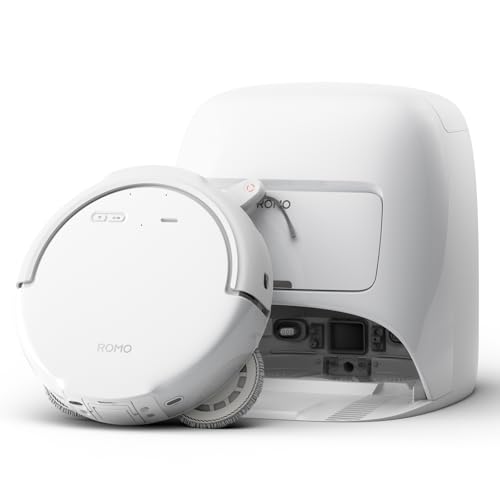
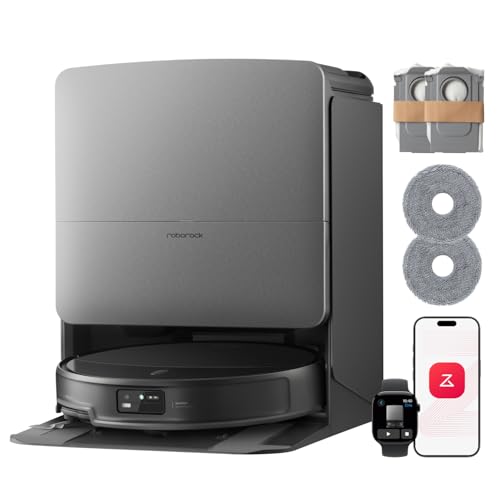
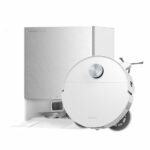
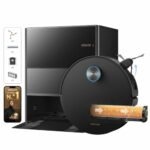
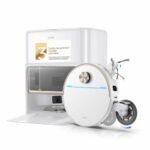
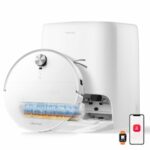
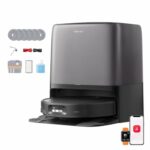
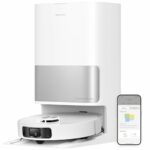
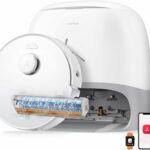
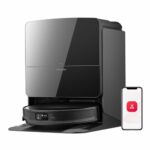
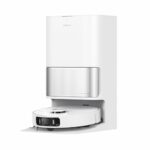
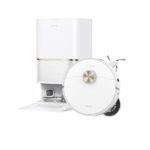
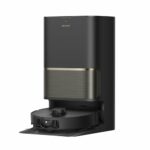
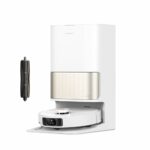
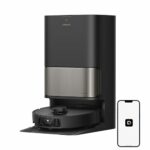
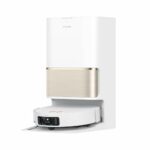
This comparison brings together three flagship models from leading manufacturers in the robotic vacuum market. The Dreame Aqua 10 Ultra Roller represents the Chinese brand's innovative approach with its distinctive roller mopping system, whilst the DJI Romo S marks the drone manufacturer's ambitious entry into home cleaning robotics. The Roborock Saros 20, launching in February 2026, showcases the industry leader's latest technological advancements.
All three devices feature multifunctional bases that handle both vacuuming and mopping tasks, making them suitable for households seeking comprehensive automated cleaning. The key differences lie in their suction power, mopping mechanisms, and intelligent features, which determine their suitability for different home environments and cleaning requirements.
Power and Suction
The Roborock Saros 20 leads this category with 36,000 Pa of suction power, providing substantial cleaning force for embedded dirt and debris. The Dreame Aqua 10 Ultra Roller follows with 30,000 Pa, whilst the DJI Romo S delivers 25,000 Pa. In practical terms, these differences become noticeable when tackling ground-in dirt on hard floors or extracting dust from carpet fibres.
Each model employs different brush technology. The Dreame features a dual brush configuration designed to prevent hair tangles, whilst DJI implements a Divide Anti-Tangle system. Roborock's DuoDivide Anti-Tangle brush pushes hair towards the central suction point, actively reducing maintenance requirements for pet owners.
All three robots can elevate their main brushes during mopping operations. However, the DJI Romo S cannot raise its side brush when mopping, potentially leading to wet brush contact with carpets or rugs. Both Dreame and Roborock address this with elevating side brushes. Each model includes an extendable side brush for improved corner coverage, and all feature anti-tangle designs on their lateral brushes.
Mopping
The most striking difference lies in mopping methodology. The Dreame Aqua 10 Ultra Roller uses a rotating roller mop with 12N downward pressure, mimicking traditional manual mopping with constant contact and scrubbing action. The DJI Romo S and Roborock Saros 20 both employ dual rotating mop pads, which spin to agitate dirt whilst moving across floors.
All three extend their mopping systems to reach edges and skirting boards more effectively. Mop elevation varies: Dreame lifts its roller 14 mm plus features automatic retraction, DJI provides elevation without specified height, and Roborock offers adjustable lift between 12-22 mm depending on surface type.
The Roborock Saros 20 distinguishes itself with warm water mopping, heating the cleaning solution to improve grease removal and sanitisation. Both Dreame and DJI use cold water only. This becomes particularly relevant in kitchens or high-traffic areas where stubborn marks accumulate.
Another significant difference: the Roborock automatically removes its mops at the base when switching to vacuum-only mode, preventing any moisture transfer to carpets. The Dreame lacks this capability entirely. Each model detects dirt on both the mops themselves and the floor surface, triggering additional cleaning passes when needed.
Navigation System
The Roborock Saros 20 employs its StarSight 2.0 navigation architecture, whilst Dreame uses retractable LiDAR and DJI implements a state-of-the-art LiDAR system. All three combine laser mapping with dual RGB cameras and frontal 3D sensors for comprehensive environmental awareness.
Object recognition capabilities differ measurably. The Roborock Saros 20 can identify up to 300 different obstacles, compared to 240 for the Dreame Aqua 10 Ultra Roller. DJI doesn't specify its recognition count. Both Roborock and Dreame explicitly recognise pets and can detect curtains to avoid entanglement; DJI's curtain detection isn't confirmed in available specifications.
All three provide remote camera access through their respective apps, allowing users to monitor their homes whilst away. LED lighting enables navigation in dark conditions across all models. The Dreame runs on AI Sage 15.0 with a 6 TOPS NPU processor for intelligent cleaning decisions, whilst specific CPU details for DJI and Roborock aren't disclosed.
Battery and Autonomy
Battery capacity directly influences cleaning coverage. Both Dreame and Roborock pack 6,400 mAh batteries, whilst the DJI Romo S contains 5,000 mAh. Despite this difference, the DJI achieves 180 minutes of runtime compared to Dreame's 160 minutes, suggesting more efficient power management. Roborock doesn't specify runtime duration.
For larger homes, the extended capacity of Dreame and Roborock provides reassurance that entire floor plans can be completed without recharging interruptions. The DJI's smaller battery might require mid-clean charging in properties exceeding 150 square metres, though its efficient operation partially compensates.
Intelligent Functions
Obstacle climbing ability varies between models. The Dreame can manage simple steps, Roborock handles simple steps as well, whilst DJI specifies 20 mm clearance. This affects navigation over door thresholds, thick rugs, and minor floor level changes common in older properties.
Both Dreame and Roborock include proprietary voice assistants alongside compatibility with Alexa and Google Home. DJI's built-in assistant isn't confirmed, though external voice control works with the device. None of these models incorporate robotic arms for additional functionality.
Multifunctional Base Station
All three bases automatically empty the robot's dustbin into larger bags: 3.2 litres for Dreame, 2.4 litres for DJI, and 2.5 litres for Roborock. This translates to roughly 60-90 days between bag changes in typical households.
Mop washing differs in execution. The Dreame uses warm water for cleaning its roller, whilst specific temperatures aren't detailed for DJI. Roborock also employs warm water for mop maintenance. Drying methods include hot air for DJI and Roborock, though Dreame's drying temperature isn't specified. Hot air drying accelerates the process and reduces bacterial growth compared to ambient air.
Base self-cleaning separates these models significantly. The DJI features a dedicated nozzle system to clean its washing tray, and Roborock uses warm water for tray maintenance. The Dreame lacks automatic tray cleaning, requiring manual intervention to prevent residue buildup.
Each base includes a detergent dispenser, with Dreame offering dual compartments for different cleaning solutions or floor types. Water tank capacities are similar: 4 litres clean water across all models, with dirty water tanks ranging from 3 litres (Roborock) to 3.5 litres (Dreame).
Only Dreame offers an optional plumbing connection kit, purchased separately, which eliminates manual water refilling and emptying. Neither DJI nor Roborock provide this option.
Dimensions
Robot height proves crucial for under-furniture access. The Roborock Saros 20 measures just 79.8 mm tall, allowing it to navigate beneath low-profile sofas and beds that the taller Dreame (97.5 mm) and DJI (98 mm) cannot reach. This 18 mm difference determines whether significant floor areas remain inaccessible.
Diameters are nearly identical: 350 mm for Dreame, 351 mm for DJI, and 353 mm for Roborock. These minimal variations don't meaningfully affect manoeuvrability in tight spaces.
Base station footprints differ more substantially. The Roborock measures 381 mm wide, 488 mm tall, and 475 mm deep. The Dreame spans 420 mm wide, 500 mm tall, and 440 mm deep. DJI's base is 453 mm wide, 440 mm tall, and 425 mm deep. The Roborock's narrower width may suit tighter installation spots, whilst the DJI's lower height fits under shelving more readily.
Real-World Usage Experience
For homes with multiple pets, the Roborock Saros 20's superior 36,000 Pa suction and DuoDivide brush design handle embedded fur most effectively. Its 79.8 mm profile reaches under furniture where pet hair accumulates, and the warm water mopping helps sanitise areas where animals rest.
The Dreame Aqua 10 Ultra Roller suits households prioritising mopping performance. Its roller system with 12N pressure scrubs floors more aggressively than spinning pads, beneficial for kitchens with sticky spills or muddy footprints. The dual detergent compartments allow separate solutions for different rooms. However, the lack of automatic mop removal means carpeted areas require zone restrictions.
Large properties benefit from the extended battery capacity in Dreame and Roborock models. The DJI's smaller 2.4-litre dust bag fills more quickly in spacious homes, increasing maintenance frequency. Conversely, the DJI's compact base dimensions suit flats or utility cupboards with limited floor space.
The Roborock's automatic mop removal and warm water capabilities make it ideal for mixed flooring with both hard surfaces and carpets, eliminating concerns about moisture transfer. Its recognition of 300 objects provides superior navigation in cluttered environments with children's toys or complex furniture arrangements.
Conclusion: Which to Choose?
Choose the Dreame Aqua 10 Ultra Roller if you prioritise intensive mopping performance and have predominantly hard flooring. The roller system excels at stubborn marks, and the dual detergent system offers flexibility. The optional plumbing kit suits those wanting minimal intervention. Best for single-level homes without low-clearance furniture.
Choose the DJI Romo S if space constraints matter and you need a compact base station. Despite its smaller battery, the efficient runtime handles medium-sized properties adequately. The hot air mop drying and automatic tray cleaning reduce maintenance compared to Dreame. Suitable for apartments or homes with limited storage.
Choose the Roborock Saros 20 if you want the most powerful suction and lowest profile for comprehensive coverage. The warm water mopping, automatic mop removal, and recognition of 300 objects deliver premium performance. Ideal for large homes with pets, mixed flooring, and furniture that standard-height robots cannot access. The February 2026 launch means it represents the latest technological refinements in this comparison of robot aspirators.