✨ VS Analyze · VacuumSpain comparison technology. AI-generated explanation based on verified technical data.
Introduction
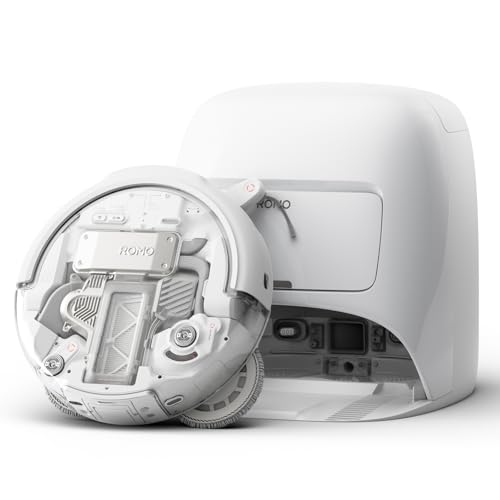
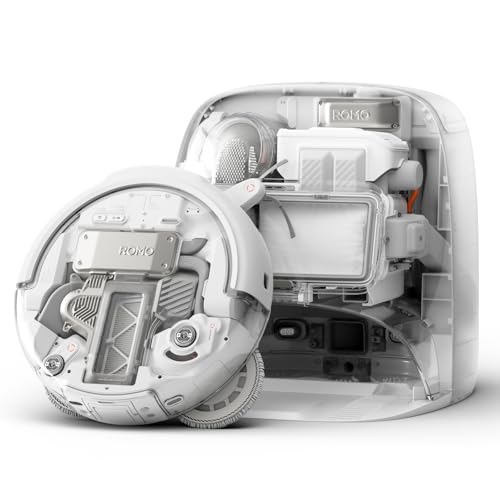
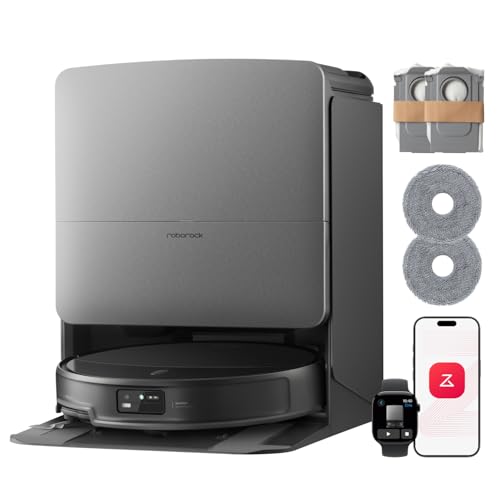
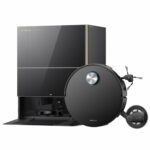
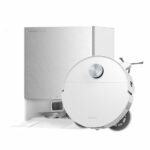
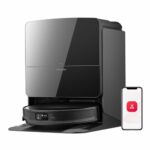
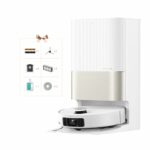
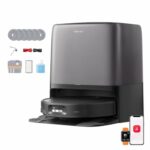
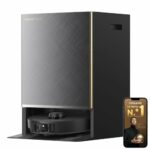
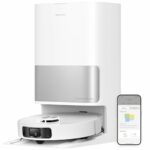
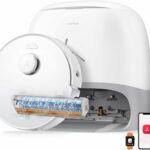
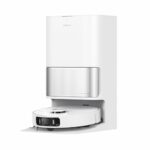
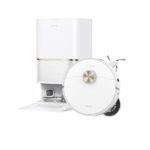
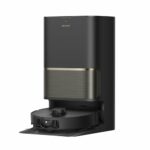
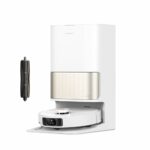
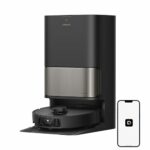
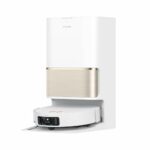
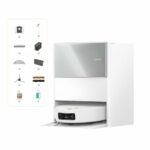
DJI has entered the robot vacuum market in 2025 with two offerings that share much of their technology: the Romo A, which includes only the robot with a transparent design, and the Romo P, which adds a transparent base with UV disinfection. Facing them, Roborock presents the Saros 20 from 2026, a model that represents the evolution of the world's leading brand in this segment.
All three units are designed for demanding users seeking advanced performance in vacuuming and mopping. The main difference between the DJI models lies in the base, whilst the Saros 20 positions itself as an alternative with greater suction power and some specific Roborock functions.
Power and Suction
The power difference is notable. The Roborock Saros 20 reaches 36,000 Pa of suction, whilst the DJI Romo A and Romo P remain at 25,000 Pa. This difference of 11,000 Pa can make a difference on medium or long pile carpets, where greater power helps extract more embedded dirt.
All three models incorporate an anti-tangle main brush. The DJI models use the Divide system, designed to minimise hair tangles, whilst Roborock opts for its DuoDivide Antienredos, which pushes hairs towards the central gap to facilitate suction. In practice, both systems reduce brush maintenance.
All include an extendable side brush to improve corner cleaning. However, the Roborock Saros 20 adds side brush lifting during mopping, preventing it from interfering with the wet mops. The DJI Romo A and Romo P do not lift the side brush in this situation. All three feature anti-tangle side brushes; the DJI models specify dual side brushes.
The main brush is liftable on all three units, which allows mopping to be optimised by preventing the brush from touching the wet floor.
Mopping
All three robots employ a system of two rotating mops with edge extension, ensuring more complete mopping right up to the corners. All lift the mops when they detect carpets or rugs, although the Roborock Saros 20 specifies a lift of 12-22 mm.
Water temperature marks an important difference. The Roborock Saros 20 washes the mops with hot water at the base, whilst the DJI Romo A and Romo P use cold water. Hot water helps dissolve grease better and disinfects the mops more effectively. For floor mopping, the Saros 20 uses warm water, compared to the cold water of the DJI models.
The Roborock Saros 20 can automatically remove the mops at the base when only vacuuming is needed, something the DJI models do not specify. This function proves useful in homes where mopping is not always required in all rooms.
All three units detect dirt both on the mops and on the floor, adjusting the cleaning process as necessary. Mop drying is carried out with hot air in all cases, preventing bad odours and bacterial growth.
Navigation System
The DJI Romo A and Romo P feature solid-state LiDAR, whilst the Roborock Saros 20 uses its StarSight 2.0 system. All three include an AI camera for obstacle recognition, although the Saros 20 specifies dual cameras. All incorporate a front 3D laser sensor, night vision LED and remote camera access.
The Roborock Saros 20 recognises up to 300 different types of obstacles and confirms specific recognition of pets and curtains. The DJI models do not specify the number of recognised obstacles nor detail these specific capabilities.
Regarding intelligent cleaning, all feature AI-based systems. The Roborock incorporates its SmartPlan technology, whilst the DJI models also offer intelligent planning. All three recognise stains using AI to focus on areas that require it.
Autonomy and Battery
The Roborock Saros 20 is equipped with a 6,400 mAh battery, superior to the 5,000 mAh of the DJI Romo A and Romo P. This difference of 1,400 mAh translates into greater autonomy, especially relevant in large homes.
The DJI models specify 180 minutes of autonomy, a figure that the Saros 20 does not detail in the table. It should be noted that actual autonomy depends on the cleaning mode, suction power and floor type.
Smart Functions
All three robots can overcome obstacles, although with differences. The DJI Romo A and Romo P overcome thresholds of up to 20 mm, whilst the Roborock Saros 20 specifies capability for simple thresholds without detailing exact height.
The Roborock Saros 20 integrates its own voice assistant, a feature not specified in the DJI models. All three are compatible with external assistants such as Alexa or Google Home.
Multifunction Cleaning Base
All three bases perform auto-emptying of the dust bin, washing and drying of mops with hot air. Self-cleaning of the washing tray is also present in all: the DJI models via washing nozzle and the Roborock with hot water, which improves system hygiene.
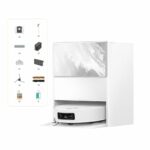
The main difference between the DJI models is here. The Romo P incorporates UV disinfection in the base, absent in the Romo A and in the Roborock Saros 20. Additionally, the Romo P features a dual detergent tank, compared to the single tank of the Romo A and the Saros 20. The dual tank allows different products to be used depending on floor type or cleaning needs.
The dust bag capacity is similar: 2.4 litres in the DJI models and 2.5 litres in the Roborock. The clean water tank is identical at 4 litres in all three units. Dirty water is stored in 3.2 litres in the DJI models and 3 litres in the Roborock.
None of the three models includes a plumbing connection kit or integrated connection.
Dimensions
The Roborock Saros 20 stands out for its height of just 79.8 mm, compared to the 98 mm of the DJI Romo A and Romo P. This difference of almost 2 centimetres allows the Saros 20 to access under lower furniture, such as some sofas or beds with little clearance from the floor.
The diameter is practically identical: 351 mm in the DJI models and 353 mm in the Roborock, so manoeuvrability will be similar.
The bases have different dimensions. The DJI models measure 453 mm wide, 440 mm high and 425 mm deep. The Roborock Saros 20 has a narrower base at 381 mm wide, but taller (488 mm) and deeper (475 mm). This may influence base placement depending on available space.
Real-World Usage Experience
For large homes, the Roborock Saros 20 offers advantages with its 6,400 mAh battery and greater suction power. Its lower height facilitates cleaning under low furniture, something to consider depending on the home's layout.
In homes with pets, the greater power of the Saros 20 may prove more effective for vacuuming hair embedded in carpets. Its DuoDivide Antienredos brush is specifically designed for this use. The DJI models also incorporate anti-tangle brushes with their Divide system and dual anti-tangle side brushes.
The hot water mopping of the Roborock Saros 20 represents an improvement over the cold water of the DJI models, especially in kitchens or areas with more grease. The automatic mop removal adds versatility if mopping is not always needed.
The DJI Romo P provides UV disinfection and a dual detergent tank, unique features amongst these three models. They prove interesting for those who prioritise hygiene or need to use different cleaning products.
The Roborock's liftable side brush during mopping prevents interference, optimising the result. The DJI models do not include this function, although their overall mopping performance is advanced.
Conclusion: Which to Choose?
Choose the DJI Romo A if you're seeking a competitive entry into high-end robots without needing extras such as UV disinfection or dual detergent tank. It's suitable for medium-sized homes where 180 minutes of autonomy is sufficient and you don't have particularly low furniture.
Choose the DJI Romo P if you value the additional hygiene provided by UV disinfection and need flexibility with the dual detergent tank for different floor types. It maintains the same performance as the Romo A in vacuuming and navigation, adding these specific functions in the base.
Choose the Roborock Saros 20 if you prioritise maximum suction power with its 36,000 Pa, especially useful in homes with carpets or pets. Its lower height allows access under low furniture, and mop washing with hot water improves hygiene and mopping effectiveness. The greater battery capacity proves advantageous in large homes. Automatic mop removal adds versatility, and its navigation system with recognition of 300 obstacles offers precision backed by Roborock's experience in the sector.