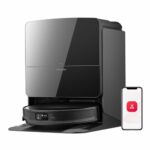
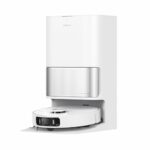
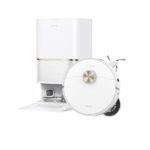
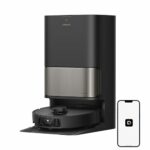
✨ VS Analyze · VacuumSpain comparison technology. AI-generated explanation based on verified technical data.
Introduction
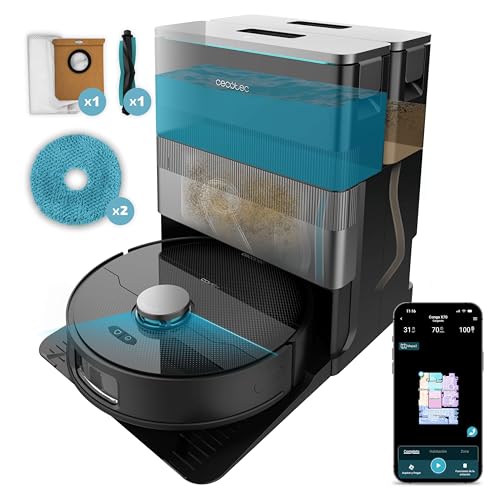
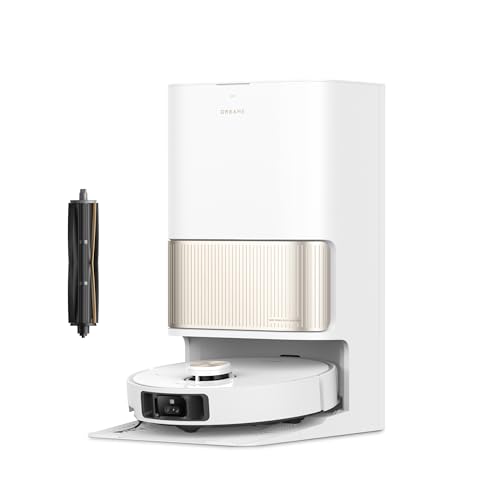
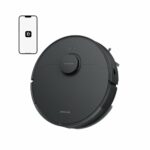
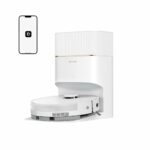
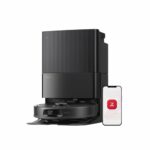
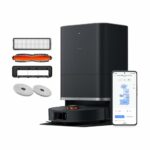
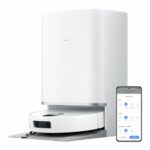
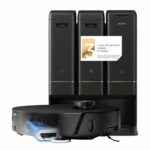
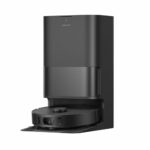
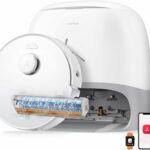
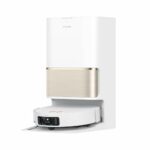
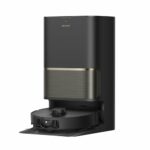
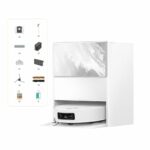
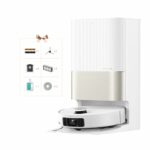
The Cecotec Conga X70 and the Dreame L40 Ultra represent two different propositions within robot vacuum cleaners with multifunctional base stations. The former arrives in 2025 as a renewed offering from the Spanish brand, whilst the latter has been available since 2024 as part of Dreame's established catalogue. Both units share the philosophy of offering a complete cleaning experience that includes vacuuming, mopping and automatic maintenance at the base, albeit with different technical approaches.
The Conga X70 seeks to stand out particularly in raw suction power, reaching 15,000 Pa, a figure higher than most models on the market. The Dreame L40 Ultra, with 11,000 Pa, compensates for this difference with an arsenal of intelligent functions and advanced navigation and adaptive cleaning systems. We're talking about two robots designed for medium-to-large homes that seek to maximise automation of cleaning tasks.
Power and Suction
The most striking difference in this section is found in suction power. The Cecotec Conga X70 reaches 15,000 Pa, a figure that clearly exceeds the 11,000 Pa of the Dreame L40 Ultra. This advantage can translate into greater capacity to lift ingrained dirt or heavy particles on carpets.
However, raw power isn't everything. The Dreame L40 Ultra is equipped with the TriCut 3.0 brush, specifically designed to reduce hair tangles through integrated blades that cut them during brushing. The Conga X70 features a conventional bristle brush, more prone to accumulating hair and pet fur.
Regarding the side brush, the differences are notable. The L40 Ultra includes an extendable side brush that deploys to better reach corners, as well as being able to lift during mopping to avoid dispersing dirt. It also features an anti-tangle design. The Conga X70 maintains a fixed side brush without these functionalities. For homes with pets or a tendency to accumulate hair, this can make an important practical difference in daily maintenance.
Mopping
Both models use a dual rotating mop system and feature extension to better reach edges. The Dreame L40 Ultra also adds the RoboSwing system, which allows the robot to perform a lateral movement to introduce the mop under furniture and overhangs.
Mop lift also presents differences: 8 mm on the Cecotec Conga X70 and 10.5 mm on the Dreame L40 Ultra. Those additional 2.5 mm can prove decisive in preventing wet mops from touching short-pile carpets or doormats.
Mop washing at the base operates with cold water on the Conga X70, whilst the L40 Ultra uses hot water, which improves the removal of grease and adhered dirt. Both dry the mops with hot air, although the Dreame adds second-generation self-cleaning to the washing tray, reducing the need for manual maintenance.
An exclusive function of the Dreame L40 Ultra is automatic mop removal at the base when only vacuuming is desired. The Conga X70 requires manual intervention to remove them. Additionally, the L40 Ultra detects dirt both on the mops and on the floor, adjusting mopping intensity or returning to areas it considers insufficiently clean. The Conga X70 does not have this adaptive capability.
Navigation System
Both robots employ a 3D LiDAR turret with front laser sensor to avoid obstacles. However, camera equipment marks a substantial difference. The Cecotec Conga X70 integrates an AI camera, whilst the Dreame L40 Ultra features dual cameras with the capacity to recognise up to 100 different types of obstacles.
The L40 Ultra recognises pets and curtains, adjusting its cleaning behaviour accordingly. It includes LED for night vision and allows remote access to the camera from the app, a function that can serve for home surveillance. The Conga X70 lacks these features.
Regarding artificial intelligence, the Dreame L40 Ultra incorporates the CleanGenius system with AI Sage 11.0 Qualcomm processor, which manages stain recognition and adaptive cleaning. The Conga X70 does not specify a processor nor offers intelligent cleaning functions based on AI.
Autonomy and Battery
Both robots feature a 5,200 mAh battery. The Dreame L40 Ultra declares an autonomy of 194 minutes, data that the Cecotec Conga X70 does not specify. This information is relevant for large homes where the robot needs to complete long cycles without returning to the base to recharge.
Intelligent Functions
Obstacle climbing capacity presents inverted figures: the Cecotec Conga X70 can overcome height differences of up to 30 mm, whilst the Dreame L40 Ultra reaches 22 mm. Those additional 8 mm of the Conga X70 can facilitate passage over certain thresholds or thick carpets.
The Dreame L40 Ultra includes its own voice assistant in addition to compatibility with Alexa and Google Home. The Conga X70 does not offer any of these voice control options.
Multifunctional Cleaning Base
Both bases perform auto-emptying, mop washing and drying. The Dreame L40 Ultra's adds second-generation self-cleaning to the tray, integrated detergent tank and optional kit for connection to water pipes (purchased separately).
In terms of capacities, the L40 Ultra base has a slight advantage: 3.2-litre dust bag versus 2.5 litres, 4.5-litre clean water tank versus 4 litres, and 4-litre dirty water tank versus 3.5 litres. These differences can translate into greater autonomy between manual emptying and filling, especially in large homes or with intensive use.
Dimensions
The Dreame L40 Ultra is lower at 103.8 mm versus the 110 mm of the Cecotec Conga X70. Those 6.2 mm can determine whether or not the robot accesses under certain low furniture, sofas or beds. The diameter is similar: 350 mm on the Dreame and 340 mm on the Cecotec.
The Conga X70 base is more compact in height (450 mm versus 590.5 mm) and depth (425 mm versus 456.7 mm), occupying less vertical space. This can be relevant if located under worktops or in spaces with limited height.
Real-World User Experience
For homes with pets, the Dreame L40 Ultra offers clear advantages: TriCut anti-tangle brush, specific animal recognition and also anti-tangle side brush. The Conga X70, with conventional bristle brushes, will require more manual maintenance to remove tangled hair.
In large houses, the declared autonomy of the L40 Ultra (194 minutes) and its greater tank capacities at the base provide peace of mind. The superior power of the Conga X70 can compensate in homes with thick carpets or more demanding dirt.
If you're looking to pass under low furniture, the 103.8 mm of the Dreame L40 Ultra makes a difference versus the 110 mm of the Cecotec. For overcoming obstacles such as high thresholds, the Conga X70 has the advantage with its 30 mm capacity.
The L40 Ultra's dirt detection and adaptive cleaning prove especially useful in kitchens or high-traffic areas where stains require greater persistence. Mop washing with hot water also improves the final mopping result.
Conclusion: Which to Choose?
Choose the Cecotec Conga X70 if: You prioritise maximum suction power, need to overcome obstacles of up to 30 mm, are looking for a more compact base in height or prefer a robot that excels in intensive vacuuming on carpets and hard floors. Also if the budget is tighter and you can do without advanced AI functions.
Choose the Dreame L40 Ultra if: You have pets and need anti-tangle brushes, value artificial intelligence for adaptive cleaning and obstacle recognition, want remote camera access with night vision, prefer mop washing with hot water and advanced base self-cleaning, need a lower robot to access under furniture, or are looking for greater autonomy and tank capacities for large homes with intensive use.