✨ VS Analyses · VacuumSpain comparison technology. Explanation created with AI from verified technical data.
Introduction
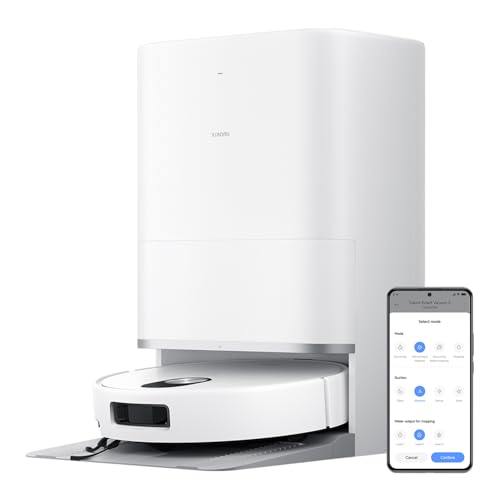
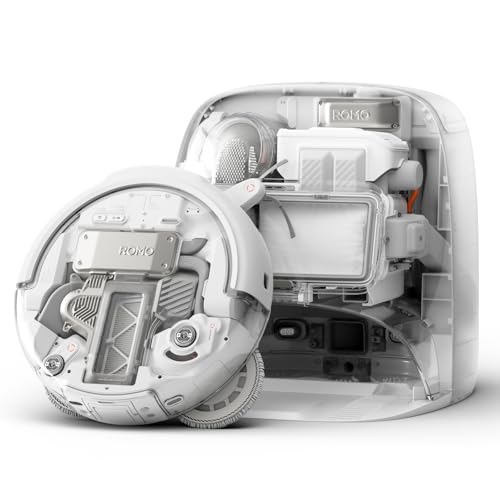
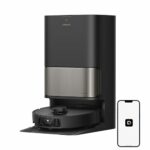
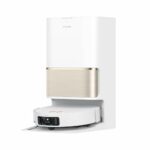
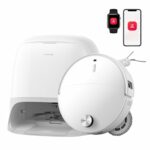
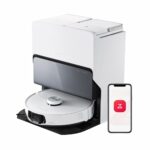
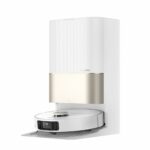
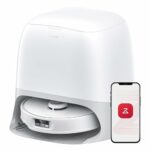
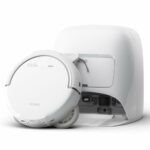
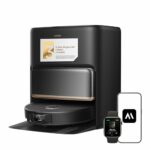
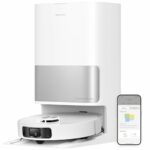
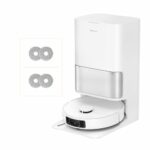
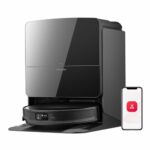
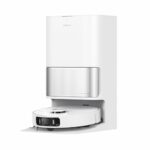
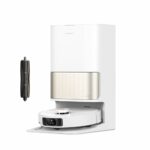
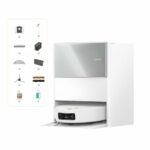
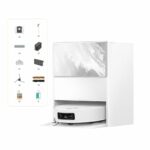
The Xiaomi Robot Vacuum 5 and the DJI Romo P (Robot y Base Transparente) represent two compelling entries from 2025 in the robot vacuum market. Xiaomi brings its established expertise in home robotics, whilst DJI enters this segment with its background in advanced imaging and navigation technology. The Xiaomi model delivers 20,000 Pa of suction power paired with TriCut 3.0 brush technology, whereas the DJI Romo P pushes suction to 25,000 Pa and incorporates a divided brush system alongside AI-powered camera navigation.
These machines target users seeking comprehensive floor cleaning with minimal intervention. The presence of multifunctional bases in both models means they handle dust disposal, mop washing, and drying automatically. Homes with mixed flooring, pets, or those simply wanting to reduce cleaning routines will find value here, though the specific features differ enough to make the choice depend on individual priorities.
Power and Suction
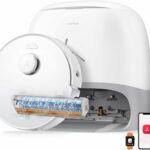
The DJI Romo P delivers 25,000 Pa of suction, giving it a noticeable edge over the Xiaomi Robot Vacuum 5's 20,000 Pa. In practice, this translates to stronger pickup on carpets and better performance with embedded debris. The Xiaomi employs a TriCut 3.0 brush, which combines bristles with cutting blades to reduce hair tangles. DJI opts for a divided brush design that channels hair towards the central suction path, minimising wrapping around the roller.
Side brush configuration shows similarities: both feature extensible side brushes that reach into corners more effectively, and both include anti-tangle technology. The DJI model specifies a double side brush system, which can improve edge cleaning coverage.
A crucial difference emerges during mopping. The DJI Romo P lifts its main brush when the mops are deployed, preventing the roller from getting wet or dragging dirt across damp floors. The Xiaomi Robot Vacuum 5 lacks this lift mechanism, meaning the brush remains in contact with the floor throughout the mopping cycle. For households that mop frequently, this detail matters.
Mopping
Both machines use dual rotating mops with edge extension, allowing them to reach skirting boards and corners more thoroughly. Mop elevation is present on both, with the Xiaomi specifying 15 mm of lift—useful when transitioning from hard floors to carpets or rugs.
The DJI Romo P incorporates dirt detection for both mops and floors. When sensors identify heavily soiled areas, the robot adjusts its cleaning pattern, re-mopping or increasing pressure as needed. The Xiaomi does not offer this adaptive cleaning, relying instead on preset mopping routines.
Water temperature during floor mopping remains cold on both models. The bases wash the mops with hot water—the Xiaomi explicitly states this, whilst the DJI also provides mop washing. Drying uses hot air on both, accelerating the process and reducing odours. The Xiaomi base includes a self-cleaning tray, and the DJI adds a dedicated nozzle for this task, alongside UV disinfection to sanitise the washing area.
Detergent dispensing is exclusive to the DJI Romo P, which features a dual tank system. This allows for separate cleaning solutions or different concentrations, something the Xiaomi cannot match. Automatic mop removal at the base is not confirmed for the Xiaomi, and the DJI data is unclear on this feature.
Navigation System
The Xiaomi Robot Vacuum 5 uses a retractable LiDAR system, which lowers when not needed to reduce the robot's profile. The DJI Romo P employs a solid-state LiDAR, a newer technology that typically offers faster scanning with no moving parts. Both include 3D laser sensors at the front for obstacle detection.
The standout difference lies in AI vision. The DJI integrates a front-facing camera with artificial intelligence, enabling it to identify objects, recognise floor types, and adjust cleaning strategies accordingly. Remote access to this camera is possible, and an LED provides night vision, allowing the robot to navigate and stream video in low light. The Xiaomi does not include a camera, relying purely on LiDAR and sensors.
Pet recognition is not confirmed for the Xiaomi, and the DJI data doesn't clarify this either. Neither model detects curtains specifically. Intelligent cleaning routines are present on both, using mapping and room recognition to optimise paths.
Battery and Runtime
The Xiaomi Robot Vacuum 5 packs a 5,200 mAh battery, slightly larger than the DJI's 5,000 mAh. Despite this, the DJI Romo P achieves 180 minutes of runtime compared to the Xiaomi's 140 minutes. This suggests more efficient power management or lower consumption during operation on the DJI.
For larger homes, the extra 40 minutes can mean the difference between completing a full clean in one session or requiring a mid-clean recharge. Neither manufacturer specifies charging time, but the runtime advantage makes the DJI more suited to extensive floor areas.
Smart Features
Both robots can climb obstacles up to 20 mm high, handling thresholds, thick rugs, and minor floor transitions without getting stuck. Neither model includes a robotic arm, and the Xiaomi does not feature a proprietary voice assistant. The DJI data is unclear on this point. External voice control via Alexa and Google Home works with both machines, allowing basic commands and scheduling.
Multifunctional Base
The Xiaomi base holds a 2.5-litre dust bag, whilst the DJI uses a 2.4-litre bag. Water tank capacities are 4 litres for clean water on both, but the Xiaomi offers a 3.8-litre dirty water tank compared to the DJI's 3.2 litres. In practice, this means slightly fewer refills and empties on the Xiaomi if you mop large areas regularly.
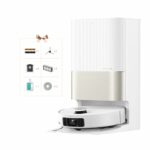
The DJI Romo P includes UV disinfection within the base, sanitising the mop washing area to reduce bacteria. The Xiaomi does not offer this. The DJI's dual detergent tanks allow for flexibility—perhaps one for general cleaning and another for tougher stains or different floor types. The Xiaomi lacks any detergent dispenser.
Both bases feature self-cleaning trays, with the DJI specifying an automatic nozzle for this task. Neither model supports connection to household plumbing, nor do they offer optional kits for this purpose. Maintenance involves manually refilling clean water and emptying dirty water, as well as replacing dust bags when full.
Dimensions
The Xiaomi Robot Vacuum 5 measures 350 mm in diameter and stands 88 mm tall. The DJI Romo P is fractionally wider at 351 mm but noticeably taller at 98 mm. That 10 mm difference can determine whether the robot fits beneath low furniture like sofas or bed frames. If you have tight clearances, the Xiaomi has the advantage.
Base dimensions diverge more significantly. The Xiaomi base is 360 mm wide, 572 mm tall, and 470 mm deep. The DJI base is wider at 453 mm, shorter at 440 mm, and less deep at 425 mm. The Xiaomi base takes up more vertical space but less width, whilst the DJI spreads out horizontally. Consider your available floor space and whether you prefer a taller, narrower footprint or a wider, lower profile.
Real-World Use
For larger homes, the DJI Romo P's 180-minute runtime and 25,000 Pa suction make it the stronger choice. It covers more ground per charge and handles embedded dirt more effectively. The AI camera adds versatility, particularly for households wanting remote monitoring or adaptive cleaning based on floor type and dirt levels.
Pet owners benefit from the anti-tangle brush systems on both models, but the DJI's divided brush design and higher suction give it an edge with pet hair. The dual detergent tanks also allow for enzyme-based cleaners that tackle pet stains more effectively.
If your furniture sits low to the ground, the Xiaomi's 88 mm height becomes critical. It slips under obstacles the DJI cannot reach, reducing the need to move furniture manually. The larger dirty water tank also means less frequent emptying during extensive mopping sessions.
The Xiaomi base washes mops with hot water, and whilst the DJI also provides mop washing, the Xiaomi's larger dirty water capacity suits homes where mopping covers substantial floor areas. The lack of a camera on the Xiaomi simplifies privacy concerns but removes the option for remote viewing or AI-driven floor analysis.
Conclusion: Which to Choose?
Choose the Xiaomi Robot Vacuum 5 if: you have low-clearance furniture and need a robot that can navigate beneath sofas and beds without getting stuck. The 88 mm height is a practical advantage in such homes. The larger dirty water tank suits those who mop frequently across large hard floor areas, and the absence of a camera may appeal if you prefer not to have imaging technology in your home. The TriCut 3.0 brush handles hair well, and the hot water mop washing in the base ensures hygienic maintenance. This model offers solid performance without the premium features, making it a sensible choice for straightforward cleaning needs.
Choose the DJI Romo P (Robot y Base Transparente) if: you want the highest suction power available between these two models, along with the longest runtime. The 180 minutes of operation and 25,000 Pa suction make it ideal for large homes or those with deep-pile carpets. The AI camera, dirt detection, and remote access add layers of intelligence and convenience, particularly if you want the robot to adapt to different floor types or monitor your home remotely. The dual detergent tanks and UV disinfection in the base elevate maintenance hygiene, and the divided brush design excels with pet hair. If your furniture clearance allows for the 98 mm height, and you value advanced features over a slimmer profile, the DJI delivers a comprehensive cleaning solution.