✨ VS Analyze · VacuumSpain comparison technology. AI-generated explanation based on verified technical data.
Introduction
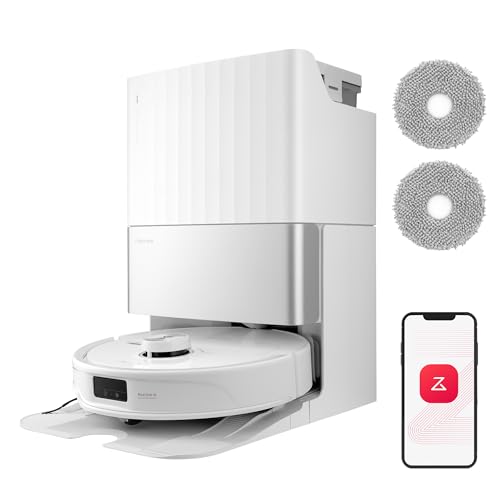
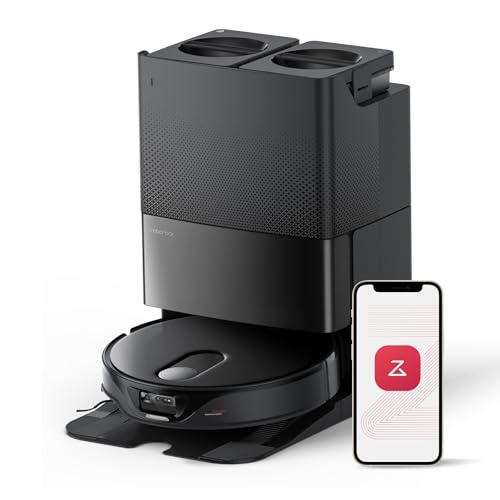
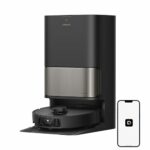
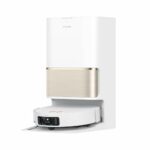
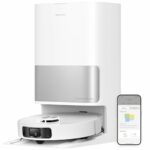
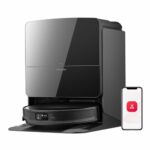
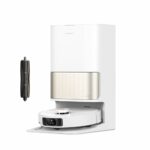
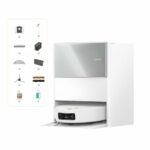
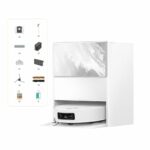
The Roborock Qrevo Master and the Roborock Qrevo Slim are two models launched in 2024 that share the philosophy of the world's leading robot vacuum brand. Both units integrate a multifunctional base with auto-emptying, hot water washing and hot air drying of the mops, which guarantees almost autonomous maintenance and quality mopping. The fundamental difference between them lies in the navigation system, chassis height and some nuances in power and water capacity, aspects that determine their suitability depending on the type of home and cleaning needs.
The Qrevo Master features a traditional LiDAR 3.0 turret, whilst the Qrevo Slim opts for the StarSight 1.0 system, which dispenses with a raised turret. This explains the notable difference in height: 103 mm versus 82 mm. For those seeking a robot capable of slipping under low furniture, sofas or beds with little space, the Qrevo Slim is particularly interesting. The Qrevo Master, with greater volume in the upper part, offers classic laser navigation and slightly lower suction power, although it remains more than sufficient for most homes.
Power and Suction
The Roborock Qrevo Slim reaches 11,000 Pa of suction, surpassing the 10,000 Pa of the Qrevo Master. This difference can be particularly noticeable on medium or long pile carpets, where each additional Pascal contributes to extracting more embedded dust and allergens. On hard floors the difference is less perceptible, but in homes with pets or daily-use carpets, the Slim has a slight advantage.
Both models incorporate the DuoDivide dual brush system, designed to push hair and dirt towards the central suction gap, minimising tangles. This type of brush is especially useful in homes with animals, as it reduces manual maintenance and prevents hair from wrapping around the bristles. Both units raise the main brush during mopping, which prevents it from getting wet and drags less dirt from the already vacuumed floor.
The side brush is extendable in both cases, which improves cleaning in corners and edges. However, neither features side brush lifting nor specific anti-tangle technology for this component. In practice, this means it's advisable to check the side brush from time to time if there's long hair at home, although Roborock's general design usually minimises these problems.
Mopping
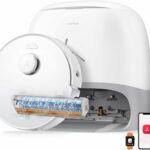
Both robots feature rotating mops that extend to better reach edges and skirting boards. The 10 mm lift allows the robot to climb onto thin carpets without wetting them, although it typically detects carpets and avoids passing over them with the mops lowered. Mopping is carried out with cold water in the robot's tank, but the base washes the mops with hot water, which improves the removal of grease and adhered dirt.
Both models feature dirt detection on both the mops and the floor. When the robot detects that the mops are dirty, it returns to the base to wash them. If it detects a particularly dirty area on the floor, it scrubs that area automatically. This intelligent behaviour makes the difference compared to robots that simply pass the mop without adapting the cleaning intensity.
Mop drying is carried out with hot air in both units, which speeds up the process and prevents bad odours or bacterial growth. The base also includes self-cleaning of the washing tray, version 1.0 in both cases, which reduces manual intervention. Neither allows automatic removal of the mops at the base to perform vacuuming only, so if you wish to vacuum without mopping you must remove them manually or configure the app so that the robot doesn't wet the mops.
Navigation System
The Roborock Qrevo Master uses a LiDAR 3.0 turret, a rotating laser system that scans the environment in 360 degrees and generates precise maps. This type of navigation is very reliable, fast and works well even in total darkness, as it doesn't depend on cameras. The trade-off is that it adds height to the robot, placing it at 103 mm.
The Qrevo Slim opts for StarSight 1.0, a system that combines dual AI camera and front 3D laser sensor without the need for a raised turret. Thanks to this, the robot measures only 82 mm in height, which allows it to access under furniture where the Master cannot enter. StarSight 1.0 recognises up to 73 different obstacles, compared to the Master's 62, which suggests a more refined and updated AI algorithm.
Both units integrate dual AI camera, pet recognition, remote camera access and night vision LED. This allows you to monitor the home from the app, identify objects in real time and avoid cables, slippers or toys. The ability to recognise pets is useful for scheduling cleaning when the dog or cat isn't at home, or for the robot to adjust its behaviour when detecting an animal.
Both robots use the RR Mason 11.0 processor and the SmartPlan 1.0 intelligent cleaning system, which analyses the type of room, the level of dirt and adapts the power and cleaning pattern. Neither includes specific AI stain recognition, but the dirt detection on the floor partly compensates for this absence.
Autonomy and Battery
The battery capacity is identical: 5,200 mAh in both models, with a declared autonomy of 180 minutes. This figure is sufficient to clean medium or large-sized homes in a single session, although actual autonomy depends on the suction mode, floor type and whether simultaneous mopping is activated. In turbo mode or with intensive mopping, autonomy is reduced, but the robot automatically returns to the base to recharge and then continues where it left off.
Having the same battery and autonomy, the difference between both models in this section is non-existent. Both can cover large surfaces without problems, and intelligent charge management ensures that the robot completes the cleaning even if it needs to recharge mid-cycle.
Smart Features
Both units overcome obstacles up to 20 mm in height, which allows them to navigate thick cables, rugs or small level differences between rooms. This capability is especially useful in homes with different types of flooring or transitions between rooms.
Both robots include their own voice assistant, in addition to compatibility with Alexa and Google Home. The built-in voice assistant allows you to give commands directly to the robot without needing to use the app or a smart speaker, which adds convenience in daily use.
Multifunctional Cleaning Base
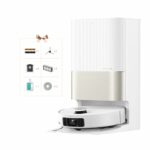
The base is practically identical in both models. Both perform auto-emptying of the dust container into a 2.7-litre bag, wash the mops with hot water and dry them with hot air. The clean and dirty water tanks have a capacity of 4 and 3.5 litres respectively, sufficient for several mopping sessions without intervention.
The self-cleaning of the washing tray, version 1.0 in both cases, reduces the need to manually clean the base. Neither includes a detergent tank, UV disinfection, integrated plumbing connection nor optional kit for plumbing connection. They also don't offer automatic mop changing.
In practice, this means you need to refill the clean water tank and empty the dirty water tank from time to time, although the 4-litre capacity allows several cleanings before intervening. The absence of automatic detergent isn't a serious problem, as hot water washing is usually sufficient to keep the mops clean.
Dimensions
The diameter is identical in both robots: 353 mm. The key difference is in the height. The Roborock Qrevo Master measures 103 mm, whilst the Qrevo Slim stays at 82 mm. This 21 mm difference may seem small, but in practice it marks the boundary between being able to clean under certain furniture or getting blocked.
If you have sofas, beds or furniture with low legs, the Qrevo Slim has a clear advantage. The Master, with its raised LiDAR turret, is limited to spaces with greater clearance. The weight and measurements of the base are identical: 340 mm wide, 521 mm high and 487 mm deep. It's advisable to ensure you have sufficient space for the base, as it occupies considerable volume and needs lateral clearance so that the robot can enter and exit without obstacles.
Real-World Usage Experience
In large homes, both robots perform well thanks to the 5,200 mAh battery and 180-minute autonomy. The multifunctional base with hot water and hot air washing and drying of mops ensures that mopping is effective even on large surfaces, as the robot returns to wash the mops several times during the session.
For homes with pets, the DuoDivide dual brush system reduces hair tangles, and the suction power of both models is sufficient to pick up dog or cat hair. The Qrevo Slim, with 11,000 Pa, has a slight advantage if there are carpets where a lot of hair accumulates. Pet recognition allows the robot to avoid areas where the animal is or adapt its behaviour.
On hard floors, parquet or tiles, both units offer quality mopping thanks to the extendable rotating mops and hot water washing at the base. Dirt detection on the floor makes the robot automatically scrub the dirtiest areas, which improves the result without manual intervention.
The Qrevo Slim stands out in homes with low furniture. Its 82 mm height allows it to access spaces where the Master cannot enter, which expands cleaning coverage and reduces inaccessible areas. If you have sofas with legs of 9 or 10 cm, the Slim can clean underneath without problems, whilst the Master will remain outside.
Conclusion: Which to Choose?
Choose the Roborock Qrevo Master if: you prefer a traditional laser navigation system with LiDAR 3.0 turret, value the proven reliability of this type of navigation and don't have height issues with furniture. It's a solid option for homes without space restrictions under sofas or beds, and offers all of Roborock's advanced features with 10,000 Pa suction power more than sufficient for most homes.
Choose the Roborock Qrevo Slim if: you need a robot that can slip under low furniture, value the ability to access areas inaccessible to other models and prefer a navigation system without a raised turret. With 11,000 Pa of suction, 82 mm height and recognition of 73 obstacles, the Slim combines greater power, lower height and a more refined AI algorithm. It's ideal for homes with low-legged sofas, beds with little space or contemporary design furniture where every centimetre counts.
Both robots share a multifunctional base with hot water and hot air washing and drying of mops, DuoDivide dual brush, extendable mops, dirt detection and 180-minute autonomy. The choice depends mainly on the height available under your furniture and whether you prefer traditional laser navigation or a turret-free system with greater obstacle recognition capability.