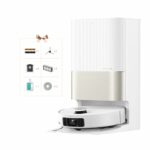
✨ VS Analyses · VacuumSpain comparison technology. Explanation created with AI from verified technical data.
Introduction
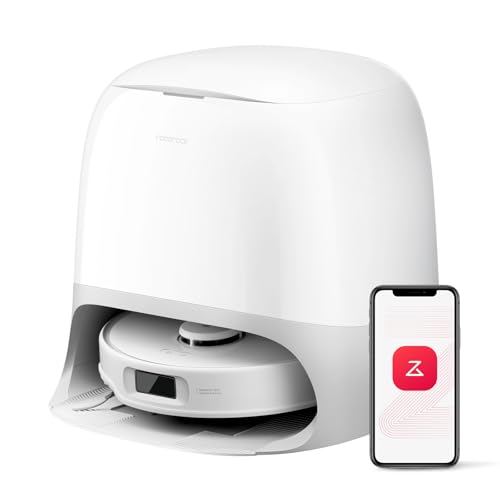
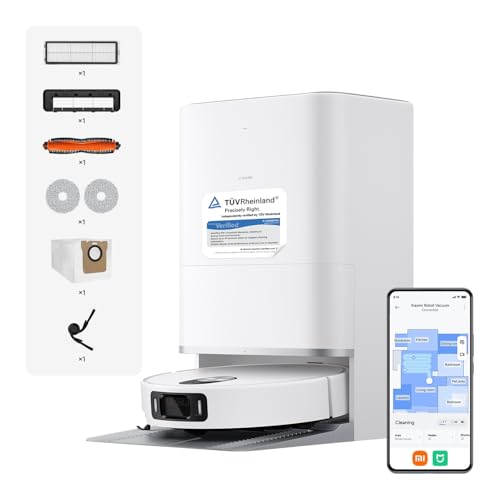
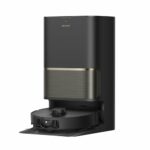
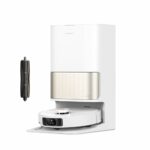
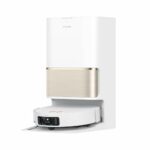
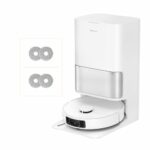
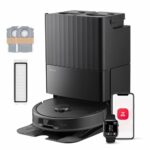
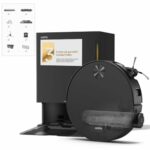
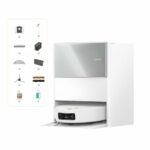
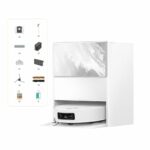
The Roborock Qrevo Curv S5X and the Xiaomi Robot Vacuum 5 Pro represent two distinct approaches to high-end robotic cleaning. The Roborock model, launched in 2024, comes from a brand widely recognised for its reliability and robust app ecosystem. Xiaomi's 2025 release brings fresh technology to the table, particularly in navigation and AI capabilities. Both units feature multifunctional bases that handle automatic dust emptying, mop washing with hot water, and hot air drying—essential for maintaining genuinely clean floors without constant manual intervention.
These aren't entry-level devices. They're designed for users who want comprehensive cleaning automation, including proper mopping performance rather than just token damp wiping. The choice between them hinges on specific technical differences that affect daily use in meaningful ways.
Suction Power and Brushing
The Xiaomi Robot Vacuum 5 Pro edges ahead in raw suction with 20,000 Pa against the Roborock's 18,500 Pa. In practice, this difference matters most on thick carpets or when dealing with stubborn debris embedded in textile fibres. For hard floors and low-pile rugs, both deliver more than adequate performance.
Where brush design diverges significantly: the Roborock employs its DuoDivide anti-tangle brush, which channels hair towards the central suction inlet to minimise tangling. The Xiaomi opts for TriCut 3.0, combining bristles with integrated cutting blades that slice through tangled hair. Both approaches work, though the DuoDivide system tends to require less frequent manual cleaning in homes with long hair or pets.
A notable functional difference emerges during mopping. The Xiaomi lifts its main brush entirely when the mops are deployed, preventing the brush from spreading moisture or getting unnecessarily wet. The Roborock keeps its brush in contact with the floor throughout. This means the Xiaomi can transition more cleanly between pure mopping and vacuuming modes without cross-contamination.
Both models feature extendable side brushes that reach into corners more effectively, and both include anti-tangle features on these lateral brushes. Neither lifts the side brush during mopping, which is standard across this product category.
Mopping Performance
Both robots use dual rotating mops that extend to reach edges more thoroughly. The Xiaomi lifts its mops 15 mm when crossing carpets or returning to the base, whilst the Roborock manages 10 mm. That extra 5 mm can make the difference between safely crossing a medium-pile rug or leaving damp marks.
Their bases wash mops with hot water and dry them using heated air, which helps prevent bacterial growth and eliminates the musty smell that plagues cheaper models with cold-air drying. Neither unit automatically detaches mops at the base for vacuum-only sessions, so you'll need to remove them manually if you want pure vacuuming without any mopping hardware attached.
Both detect dirt on the mops themselves and on the floor, triggering additional cleaning passes or mop washes when needed. This adaptive behaviour means heavily soiled areas get extra attention without manual intervention. The Roborock benefits from its SmartPlan 2.0 system, whilst the Xiaomi's AI includes dedicated spot recognition for stains—a feature the Roborock lacks.
Neither offers hot water mopping directly onto floors; both use cold water on the floor itself, with heat reserved for the mop-washing process at the base. This is typical for this generation of robot vacuum technology.
Navigation System
Here the differences become substantial. The Roborock Qrevo Curv S5X uses a traditional 3D LiDAR turret paired with its RR Mason 11.0 processing system. It navigates accurately, maps reliably, and avoids obstacles effectively—but without visual intelligence.
The Xiaomi Robot Vacuum 5 Pro integrates a retractable LiDAR system with an AI camera and a frontal 3D laser sensor. This combination allows it to recognise up to 200 different obstacle types, far beyond simple bump-and-retreat behaviour. The camera enables remote access, letting you check on your home via the robot's viewpoint. It also includes LED lighting for night vision, useful in dim hallways or under furniture.
For households concerned about privacy, the Roborock's camera-free approach may appeal. For those who value advanced object recognition—distinguishing shoes from cables from pet toys—the Xiaomi's visual intelligence offers tangible benefits. Neither model specifically recognises pets or curtains as distinct categories, despite their broader obstacle databases.
Battery and Autonomy
Both robots carry identical 5,200 mAh batteries, but runtime differs markedly. The Roborock achieves 180 minutes of operation, whilst the Xiaomi manages 140 minutes. That 40-minute gap likely stems from the Xiaomi's higher suction power and additional AI processing drawing more current.
For larger homes, the Roborock's extended runtime means fewer mid-clean returns to recharge, which translates to faster overall completion times. The Xiaomi's shorter autonomy won't trouble smaller flats but could extend cleaning sessions in sprawling layouts where the robot must recharge and resume multiple times.
Smart Features
Both robots can climb obstacles up to 20 mm high, sufficient for most door thresholds and typical floor transitions. Neither includes a robotic arm for manipulating objects, nor a proprietary voice assistant. Both integrate with external voice ecosystems like Alexa and Google Home for basic commands.
The Xiaomi's AI-driven spot recognition and broader obstacle database give it an edge in intelligent decision-making. It can identify specific types of dirt and adjust cleaning intensity accordingly. The Roborock's SmartPlan 2.0 offers intelligent scheduling and room-specific strategies but lacks the visual stain detection the Xiaomi provides.
Multifunctional Base
Both bases handle automatic dust emptying into 2.5-litre bags, hot water mop washing, and hot air mop drying. Both carry 4 litres of clean water. The Xiaomi's dirty water tank holds 3.8 litres versus 3 litres in the Roborock—a modest difference that means slightly fewer manual emptying trips.
The Roborock features a second-generation self-cleaning tray system, labelled 2.0, which presumably improves on earlier iterations. The Xiaomi includes self-cleaning for its washing tray but without version numbering. Neither offers UV disinfection, detergent dispensers, or automatic mop swapping. Neither supports plumbing connection, either integrated or via optional kit.
In practical terms, both bases require similar maintenance: refilling clean water, emptying dirty water, and replacing dust bags periodically. The hot washing and drying cycles mean mops stay hygienic between uses, a critical feature that separates serious mopping robots from basic models.
Physical Dimensions
The Xiaomi measures 88 mm tall, a full centimetre lower than the Roborock's 98 mm height. This difference matters under low-clearance furniture—sofas, beds, or cabinets where that extra 10 mm determines whether the robot can access the space or not. Diameter is virtually identical: 350 mm for the Xiaomi, 352 mm for the Roborock.
Base dimensions diverge more noticeably. The Roborock's base forms a 450 mm cube, compact and symmetrical. The Xiaomi's base measures 360 mm wide, 572 mm tall, and 470 mm deep—narrower but taller. Depending on your available floor space, one footprint may suit better than the other. The Roborock's square profile tucks neatly into corners; the Xiaomi's taller profile demands more vertical clearance but occupies less floor width.
Real-World Use Scenarios
For homes with abundant low furniture, the Xiaomi's 88 mm height grants access where the Roborock cannot venture. This becomes especially relevant in bedrooms with platform beds or living rooms with minimalist sofas on short legs.
In larger properties, the Roborock's 180-minute battery proves advantageous, completing extensive floor plans in fewer charging cycles. Smaller flats won't notice the Xiaomi's shorter 140-minute runtime, as it completes typical layouts comfortably within that window.
Households prioritising advanced obstacle recognition—families with children who scatter toys, or those with complex floor layouts—benefit from the Xiaomi's camera-based AI and 200-object recognition. The remote camera access also serves as a basic home monitoring tool, though privacy-conscious users may prefer the Roborock's camera-free design.
The DuoDivide brush on the Roborock suits homes with long-haired occupants or shedding pets, reducing the frequency of manual brush cleaning. The Xiaomi's TriCut 3.0 handles hair competently but may require slightly more frequent maintenance depending on hair volume.
The Xiaomi's higher suction and brush-lifting during mopping make it marginally better for mixed-surface homes with thick carpets and hard floors. The Roborock's longer runtime and proven reliability appeal to users who value consistent performance over cutting-edge features.
Conclusion: Which to Choose?
Choose the Roborock Qrevo Curv S5X if: you have a larger home where extended battery life reduces cleaning time; you prefer a camera-free device for privacy reasons; you value the brand's established reputation and refined app experience; you deal with significant hair accumulation and want the DuoDivide anti-tangle system; or you need a compact, symmetrical base that fits neatly into corners.
Choose the Xiaomi Robot Vacuum 5 Pro if: you have low-clearance furniture and need the slimmer 88 mm profile; you want advanced AI obstacle recognition and remote camera monitoring; you prioritise maximum suction power for deep carpet cleaning; you value the main brush lifting during mopping for cleaner transitions; or you're comfortable with a taller base footprint in exchange for slightly larger dirty water capacity.
Both represent solid investments in automated cleaning with proper mopping capability. The Roborock leans on proven engineering and endurance. The Xiaomi pushes forward with visual AI and physical versatility. Match the technical strengths to your home layout and cleaning priorities rather than chasing specifications alone.