✨ VS Analyses · VacuumSpain comparison technology. Explanation created with AI from verified technical data.
Introduction
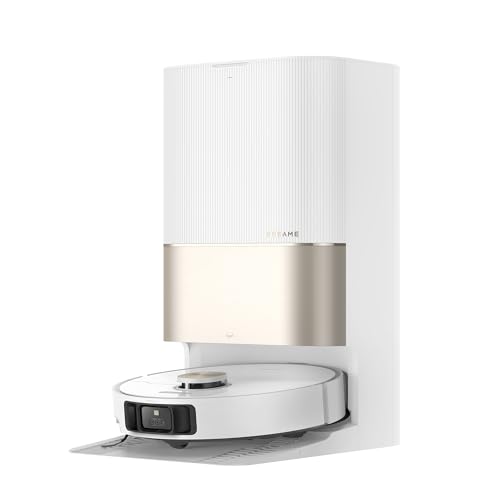
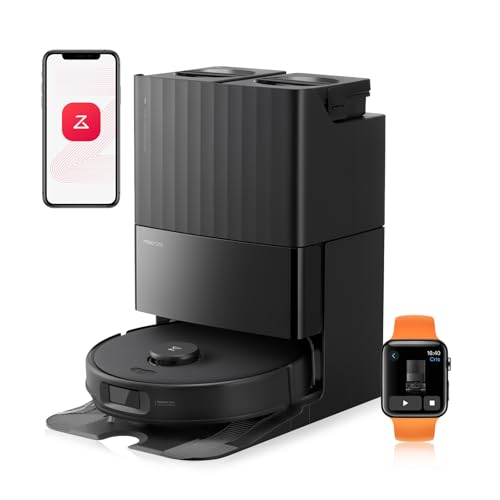
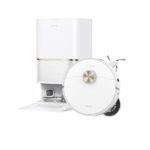
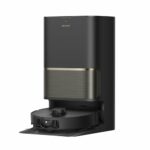
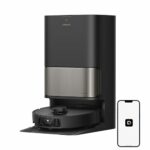
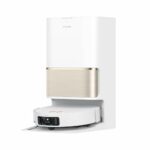
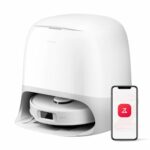
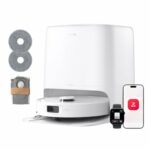
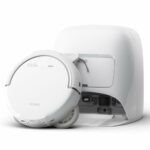
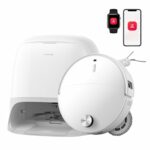
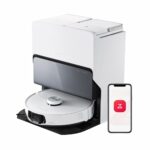
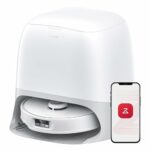
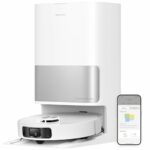
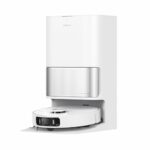
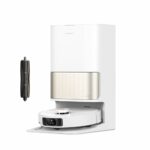
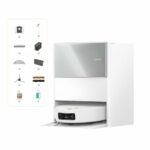
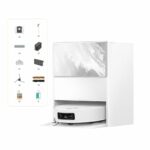
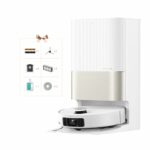
The Dreame X40 Ultra and the Roborock Qrevo Edge S5A represent two of the most advanced robot vacuum cleaners launched in 2024. Both models feature comprehensive multifunctional bases that handle everything from automatic dust emptying to mop washing and drying. These are premium solutions designed for users who want minimal intervention in their cleaning routine.
The Dreame X40 Ultra stands out with its dual AI camera system and advanced object recognition capabilities, whilst the Roborock Qrevo Edge S5A brings impressive suction power and the proprietary DuoDivide anti-tangle brush system. Each model targets households looking for high-end automation, though their approaches differ in meaningful ways.
Power and Suction
The Roborock Qrevo Edge S5A takes a commanding lead in raw suction power, delivering 18,500 Pa compared to the Dreame X40 Ultra's 12,000 Pa. That's a substantial difference that becomes noticeable when tackling deeply embedded dirt in carpets or picking up heavier debris. For homes with thick rugs or pet hair challenges, this advantage matters.
Where the Dreame pulls ahead is in brush management during mopping. Its main brush lifts automatically when the robot switches to wet cleaning, preventing the roller from getting soaked or spreading dirty water across floors. The Roborock lacks this feature, which means the brush remains in contact with damp surfaces during mopping sessions.
The Roborock employs its DuoDivide anti-tangle brush system, which channels hair and fibres towards the central suction point to minimise tangling. The Dreame uses a simpler anti-tangle design. Both models feature side brushes that extend to reach corners and lift during mopping to avoid dragging wet debris around.
Mopping
Both robots use dual rotating mops that spin to scrub floors rather than just dragging a damp cloth behind them. The Dreame X40 Ultra adds its Roboswing function, which shifts the robot's rear end slightly to push the mop under furniture edges and skirting boards. The Roborock extends its mops to clean right up to edges but doesn't include this swivelling movement.
Mop lifting capabilities are nearly identical. The Dreame raises its mops 10.5 mm whilst the Roborock manages 10 mm. In practical terms, this allows both models to transition onto low-pile rugs without dragging wet mops across them, though neither will handle thick carpets without manual intervention.
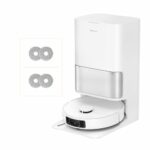
A significant operational difference lies in the Dreame's ability to automatically detach its mops at the base. When you want a vacuuming-only session, the robot returns to the station, removes the mop pads, and heads out to clean without any dampness. The Roborock requires manual removal of the mops for this scenario.
Both bases wash mops with hot water and dry them using heated air, which helps prevent odours and bacterial growth. The Dreame's base includes a detergent dispenser that adds cleaning solution during mop washing, something the Roborock station lacks. This means the Dreame can maintain fresher mops without you having to manually add detergent to the water tank.
Navigation System
The Dreame X40 Ultra features a comprehensive navigation setup with dual AI cameras, a 3D laser sensor at the front, and LiDAR mapping from its top-mounted turret. This combination allows it to recognise 120 different objects, including pets, curtains, and various household items. The robot can identify your dog or cat and adjust its behaviour accordingly, and it detects curtains to avoid tangling itself.
The Roborock Qrevo Edge S5A takes a more streamlined approach with LiDAR navigation and obstacle avoidance sensors but without AI cameras or 3D laser detection. It doesn't offer pet recognition or curtain detection, and you won't find LED lighting for night vision. The Dreame allows remote camera access through its app, letting you check on your home whilst the robot cleans—a feature absent from the Roborock.
Both models run sophisticated AI cleaning algorithms. The Dreame uses CleanGenius AI whilst the Roborock employs SmartPlan 2.0. The Dreame's system includes AI-based stain recognition that can identify dirty patches and focus extra cleaning effort on them. The Roborock relies on its dirt detection sensors but doesn't offer the same visual stain recognition capability.
Battery and Autonomy
The Dreame X40 Ultra packs a larger 6,400 mAh battery compared to the Roborock's 5,200 mAh cell. Despite this difference, the actual runtime figures show the Dreame achieving 194 minutes versus 180 minutes for the Roborock. That's only a 14-minute difference in real-world operation, which suggests the Roborock manages its power more efficiently despite the smaller battery.
For most homes, both runtimes provide ample coverage. The extra capacity in the Dreame becomes more relevant in larger properties where the robot might need to complete extensive cleaning cycles without returning to recharge midway through.
Smart Functions
The Dreame X40 Ultra can climb obstacles up to 22 mm high, whilst the Roborock Qrevo Edge S5A manages 20 mm. This 2 mm difference might seem trivial, but it can determine whether a robot successfully mounts thick door thresholds or gets stuck. In homes with varied flooring levels or substantial transition strips, the Dreame holds a slight edge.
Both models integrate with Alexa and Google Home for voice control, though neither includes a proprietary voice assistant built into the robot itself.
Multifunctional Base Station
The base stations handle similar core tasks: automatic dust emptying, hot water mop washing, and hot air mop drying. Both feature second-generation self-cleaning systems for the wash tray, which keeps the base itself hygienic without manual scrubbing.
The Dreame's base holds a 3.2-litre dust bag compared to the Roborock's 2.7-litre capacity. That translates to less frequent bag changes, particularly useful in homes with pets or high dust accumulation. Water tank sizes also favour the Dreame slightly, with 4.5 litres of clean water versus 4 litres, and 4 litres of dirty water versus 3.5 litres.
The Dreame offers an optional plumbing connection kit that you can purchase separately to hook the base directly to your water supply and drainage. The Roborock doesn't provide this option at all. Whilst the kit isn't included as standard, it represents a path towards even greater automation for those willing to invest in the installation.
Base dimensions differ notably. The Roborock station stands 521 mm tall and extends 487 mm deep, whilst the Dreame measures 590.5 mm in height but only 456.7 mm deep. The Dreame's taller, shallower profile might fit better against walls in tight spaces, whilst the Roborock's lower height could suit placement under shelving.
Dimensions
The robots themselves are virtually identical in size. The Dreame measures 350 mm in diameter and stands 97 mm tall. The Roborock comes in at 352 mm diameter and 98 mm height. That single millimetre difference in height is irrelevant in practical terms—both robots will fit under the same furniture.
The Dreame's dust bin holds 300 ml whilst the Roborock offers 325 ml. Both carry 80 ml water tanks onboard. These onboard capacities matter less than they might on budget models, since both robots return to their bases regularly during cleaning to empty dust and refresh mop water.
Real-World Use
For households with pets, the Roborock's higher suction power and DuoDivide brush give it an advantage in picking up hair and preventing tangles. The Dreame counters with pet recognition capabilities that help it navigate around animals more intelligently, plus the detergent dispenser keeps mops fresher when dealing with paw prints and accidents.
In larger homes, the Dreame's greater battery capacity and bigger water tanks reduce interruptions during extended cleaning sessions. The ability to automatically remove mops makes it more convenient if you prefer separate vacuuming and mopping cycles rather than combined cleaning.
The Dreame's camera system and remote viewing appeal to users who want security monitoring alongside cleaning, or those who like checking on pets whilst away. The Roborock takes a more privacy-focused approach without cameras, which some households prefer.
For homes with varied flooring heights or thick carpets, the Dreame's 22 mm obstacle climbing and 10.5 mm mop lift provide marginally better versatility. The Roborock's extra suction power becomes more valuable on deep-pile carpets where raw vacuum performance matters most.
Conclusion: Which to Choose?
Choose the Dreame X40 Ultra if you want the most comprehensive AI features with dual cameras, pet and curtain recognition, and remote viewing capabilities. It suits larger homes thanks to the bigger battery and water tanks, and the automatic mop removal system adds genuine convenience. The detergent dispenser and optional plumbing kit point towards maximum automation. Homes with multiple floor transitions benefit from the slightly better obstacle climbing.
Choose the Roborock Qrevo Edge S5A if raw suction power matters most, particularly if you have thick carpets or heavy pet shedding. The DuoDivide brush system excels at managing hair without tangles. It's the better choice for users who prefer a camera-free robot for privacy reasons, and the more compact base height helps in tighter spaces. The Roborock brand's reputation for reliability and app stability makes it a safer bet for those prioritising proven performance over cutting-edge features.