✨ VS Analyze · VacuumSpain comparison technology. AI-generated explanation based on verified technical data.
Introduction
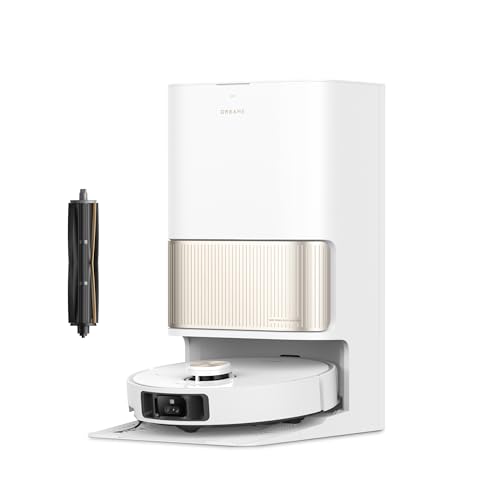
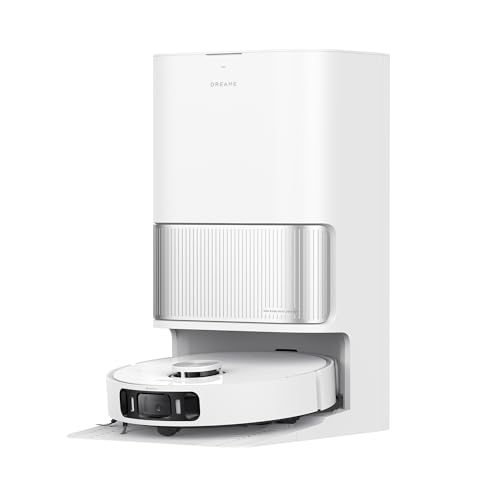
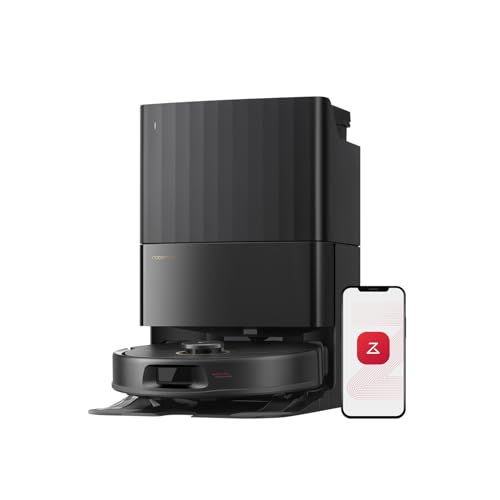
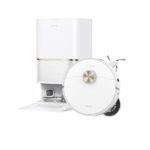
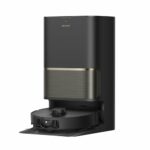
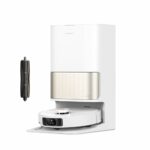
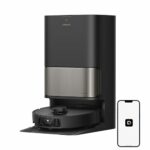
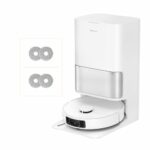
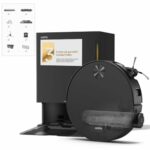
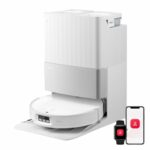
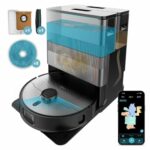
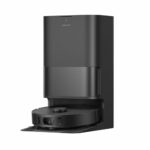
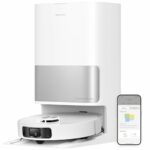
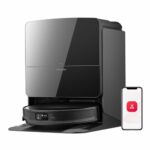
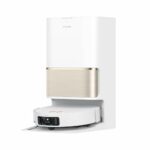
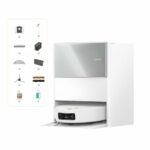
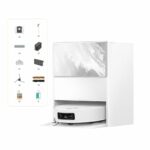
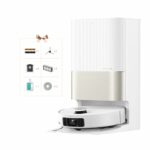
The Dreame L40 Ultra, Dreame L40 Ultra AE, and Roborock Qrevo S5V represent the latest generation of premium robot vacuum cleaners, each launched between 2024 and 2025. These three models share a common foundation—all feature multifunction bases with automatic emptying, mop washing, and hot air drying—but diverge significantly in their approach to navigation, obstacle detection, and cleaning intelligence.
The L40 Ultra arrived in 2024 as Dreame's flagship, packed with dual AI cameras and advanced sensors. The L40 Ultra AE followed in 2025 with a power boost and streamlined design, whilst Roborock's Qrevo S5V entered the market in 2025 with its signature DuoDivide brush system and a more compact base. Understanding which features matter most for your home will guide you towards the right choice.
Power and Suction
Suction performance varies dramatically across these three models. The L40 Ultra AE leads with 19,000 Pa—a substantial leap over the original L40 Ultra's 11,000 Pa and the Qrevo S5V's 12,000 Pa. In practical terms, this extra power becomes noticeable when tackling ground-in dirt on hard floors or extracting debris from medium-pile rugs.
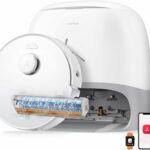
All three robots feature anti-tangle main brushes, but the technology differs. The Dreame pair use the TriCut 3.0 system, which combines bristles with integrated cutting blades to slice through hair before it wraps around the roller. The Qrevo S5V employs Roborock's DuoDivide design—a split brush configuration that channels hair towards the central suction point rather than letting it wind around the roller. Both approaches work well for pet owners, though the mechanisms differ fundamentally.
The L40 Ultra stands alone with its extensible side brush, which swings outward to reach deeper into corners and along skirting boards. This same model also elevates its side brush during mopping to prevent the bristles dragging through wet areas. The AE and Qrevo S5V lack these refinements, though the Qrevo S5V does feature anti-tangle technology on its side brush. Meanwhile, all three models can lift their main brushes when mopping, ensuring the roller doesn't interfere with the mop pads.
Mopping
Each robot uses dual rotating mop pads that extend towards edges, though the implementation varies. The Dreame models incorporate the RoboSwing system—a hip-swaying motion that pushes the mop slightly under furniture edges and toe kicks. The Qrevo S5V extends its mops without this articulated movement.
Mop elevation reaches 10.5 mm on both Dreame units and 10 mm on the Qrevo S5V. These measurements allow the robots to climb onto low-pile rugs without dragging wet pads across carpet fibres, though none of these models will tackle thick shag carpets whilst mopping.
The base stations wash mops with hot water at 60°C across all three models and dry them using hot air. The Dreame pair include second-generation automatic tray cleaning, which scrubs the washing basin itself to prevent residue buildup. The Qrevo S5V lacks this self-cleaning tray feature. Additionally, both Dreame models offer detergent dispensers built into their bases, automatically adding cleaning solution during mop washing—something the Roborock doesn't provide.
A standout feature of the L40 Ultra is its ability to automatically detach its mop pads at the base when you only need vacuuming. The robot recognises when mopping isn't required and removes the pads entirely, preventing any moisture contact with carpets. Neither the AE nor the Qrevo S5V offer this function.
Both Dreame models detect dirt on mops and floors, triggering additional washing cycles or repeat passes when sensors identify persistent grime. The Qrevo S5V doesn't include this dirt detection capability, relying instead on preset cleaning patterns.
Navigation System
All three robots use LiDAR turret navigation for room mapping and route planning, but their obstacle avoidance systems diverge significantly. The L40 Ultra features dual AI cameras plus a front-mounted 3D laser sensor, creating a comprehensive view of floor-level hazards. The L40 Ultra AE simplifies this to a single AI camera whilst retaining the 3D laser sensor. The Qrevo S5V omits cameras entirely, relying on its 3D structured light sensors for obstacle detection.
Object recognition varies accordingly. The L40 Ultra identifies 100 different obstacle types, the AE recognises 120, and the Qrevo S5V's recognition database isn't specified. In practice, this affects how reliably the robot navigates around shoes, cables, pet toys, and other common floor clutter. The Dreame models can identify pets specifically and adjust their cleaning approach, whilst the L40 Ultra also detects curtains to avoid tangling in hanging fabric—a feature absent from both the AE and Qrevo S5V.
The camera systems on both Dreame models include LED illumination for night-time operation and allow remote access through the app, effectively turning your robot into a home monitoring device. The Qrevo S5V doesn't offer this functionality.
Processing power differs too. The L40 Ultra runs on the AI Sage 11.0 chip with CleanGenius AI software, whilst the AE and Qrevo S5V don't specify their processors. The original L40 Ultra includes AI-powered stain recognition, automatically intensifying cleaning over visible marks—a capability the AE and Qrevo S5V lack.
Battery and Autonomy
All three models share identical 5,200 mAh battery capacities, but runtime data varies. The L40 Ultra provides 194 minutes of operation, the Qrevo S5V offers 180 minutes, and the L40 Ultra AE's runtime isn't specified. These figures represent vacuum-only operation; mopping reduces autonomy due to the additional weight of water and the energy required for pad rotation.
For most homes under 200 square metres, any of these robots will complete a full clean on a single charge. Larger properties may require the robot to return midway for recharging before resuming, which all three handle automatically.
Smart Functions
Obstacle-climbing ability differs slightly. The L40 Ultra can scale thresholds up to 22 mm high, whilst the AE and Qrevo S5V manage 20 mm. That extra 2 mm occasionally makes the difference between smoothly transitioning between rooms and getting stuck on particularly tall door strips.
The L40 Ultra includes its own voice assistant built into the robot, allowing you to issue commands directly without relying on external smart home systems. The AE and Qrevo S5V don't have onboard assistants but integrate with Alexa and Google Home for voice control through those platforms.
Multifunction Base
Base functionality overlaps considerably, with all three offering automatic dustbin emptying into 3.2-litre bags (Dreame models) or a 2.7-litre bag (Qrevo S5V). The larger capacity means less frequent bag changes—roughly every two months for typical households.
Water tank sizes favour the Dreame pair, which carry 4.5 litres of clean water and 4 litres of dirty water. The Qrevo S5V holds 4 litres clean and 3.5 litres dirty. These differences become relevant when mopping large floor areas, as smaller tanks require more frequent refilling.
The Dreame models support an optional plumbing connection kit, purchased separately, which allows the base to refill clean water and drain dirty water automatically. The Qrevo S5V doesn't offer this option. Whilst convenient for those who want truly hands-off operation, this remains an aftermarket addition rather than a built-in feature.
Dimensions
Height matters when navigating under furniture. The L40 Ultra measures 103.8 mm tall—noticeably taller than the AE's 97 mm and the Qrevo S5V's 96.5 mm. That 7 mm difference determines whether the robot fits beneath certain sofas, beds, and cabinets. Homes with low-clearance furniture will find the slimmer AE or Qrevo S5V more capable.
Diameters remain nearly identical at 350 mm for the Dreame models and 353 mm for the Roborock, making no practical difference in manoeuvrability.
Base dimensions affect placement options. The Dreame bases stand 590.5 mm tall and extend 456.7 mm deep, whilst the Qrevo S5V's base measures a more compact 521 mm tall but reaches 487 mm deep. The Roborock's lower profile fits more easily under counters or shelving, though it requires slightly more floor depth.
Real-World Use
For homes with pets, the L40 Ultra's combination of pet recognition, dual cameras, and automatic mop removal creates the most adaptive cleaning experience. It identifies animals, adjusts its approach to avoid startling them, and removes mops entirely when pet areas need vacuuming only. The higher suction of the AE makes it effective for pet hair collection, though it lacks the original's automatic mop detachment.
Larger properties benefit from the Dreame models' bigger water tanks and detergent dispensers, which reduce maintenance frequency. The L40 Ultra's 194-minute runtime also provides a buffer for expansive floor plans, though the Qrevo S5V's 180 minutes suffices for most homes.
Homes with varied lighting conditions favour the Dreame models' LED-equipped cameras, which maintain obstacle detection accuracy even after dark. The Qrevo S5V's camera-free approach works reliably but doesn't adapt to changing light levels in the same way.
The L40 Ultra's extensible side brush and corner-focused cleaning suit homes with complex floor plans featuring lots of furniture edges and tight corners. The AE and Qrevo S5V handle corners adequately but don't reach quite as aggressively into recessed areas.
Conclusion: Which to Choose?
Choose the Dreame L40 Ultra if you want the most comprehensive feature set and don't mind the taller profile. Its dual cameras, automatic mop removal, curtain detection, and built-in voice assistant make it ideal for tech enthusiasts with pets, complex home layouts, and furniture that provides adequate clearance. The extensible side brush and dirt detection create the most thorough clean, particularly in homes with children or pets that track in mess.
Choose the Dreame L40 Ultra AE if maximum suction power and a slimmer profile matter more than advanced AI features. The 19,000 Pa suction outperforms both alternatives, making this the strongest choice for deep-pile rugs and embedded dirt. The reduced height fits under more furniture, and you still benefit from hot water mop washing, detergent dispensing, and dirt detection. It suits homes prioritising raw cleaning power over smart home integration.
Choose the Roborock Qrevo S5V if you prefer Roborock's reputation for reliability and want a more compact base station. The DuoDivide brush excels with pet hair, the lower robot height navigates under most furniture, and the shorter base fits neatly under counters. Whilst it lacks cameras and detergent dispensing, it delivers dependable cleaning for straightforward home layouts without excessive obstacle complexity. It's the sensible choice for those who value proven performance over cutting-edge AI features.