✨ VS Analyze · VacuumSpain comparison technology. AI-generated explanation based on verified technical data.
Introduction
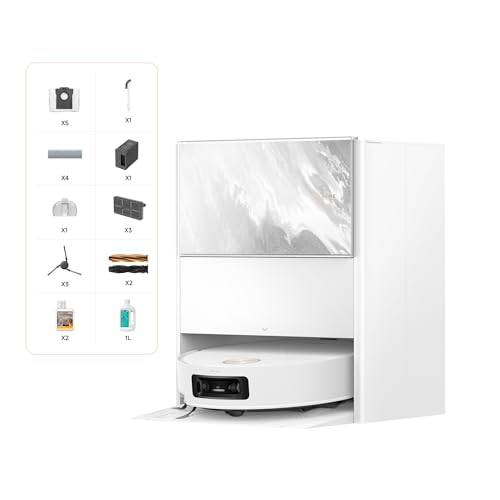
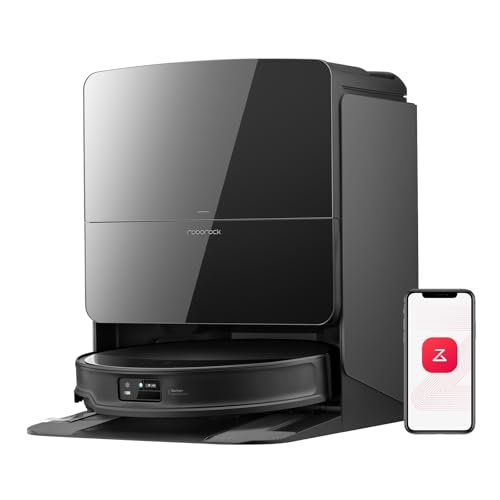
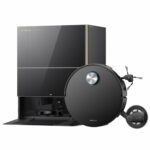
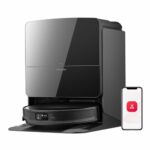
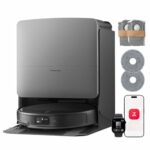
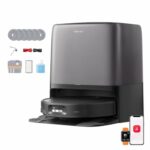
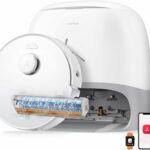
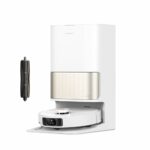
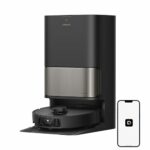
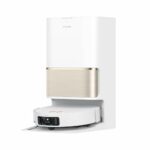
We're looking at three high-end robot vacuum cleaners launched in 2025 that represent the best from each manufacturer. The Dreame Aqua10 Ultra Track Complete opts for a wide roller system for mopping, whilst the Roborock Saros 10R and the Roborock Saros Z70 maintain the dual rotating mop system characteristic of the brand. The differences between these models go beyond design: we're talking about suction power, robot height, navigation capabilities and advanced functions that define distinct usage profiles.
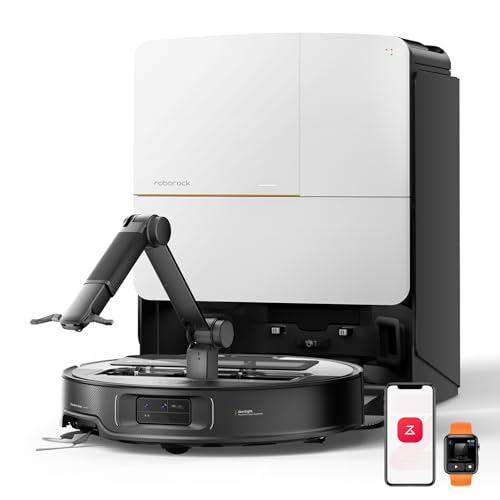
The Saros Z70 stands out particularly by incorporating a robotic arm that sets it apart from the rest, whilst the Dreame model boasts being the most powerful in suction. For homes with pets, thick carpets or the need to pass under low furniture, these differences can prove decisive.
Power and Suction
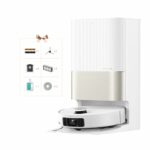
Suction power marks a notable difference between these three units. The Dreame Aqua10 Ultra Track Complete reaches 25,000 Pa, making it the most powerful in this robot vacuum cleaner comparison. The Roborock Saros Z70 stays at 22,000 Pa, whilst the Saros 10R offers 18,500 Pa. In practice, this translates to greater capacity for high-pile carpets and floors with ingrained dirt.
The brushing system also presents important variations. The Dreame incorporates a dual brush with HyperStream technology, specifically designed to prevent hair tangles. The Saros 10R features Roborock's DuoDivide anti-tangle system, which pushes hairs towards the central gap to facilitate suction. The Saros Z70 is equipped with an anti-tangle brush without specifying the exact system, although it maintains the performance of the brand's high-end range.
All three models share advanced features: main brush that lifts during mopping, extendable side brush to better reach corners and side brush elevation. This guarantees effective sweeping at edges without interfering with the mopping system. For households with pets, any of the three options proves valid, although the Dreame's greater power can make the difference on carpets.
Mopping
Here we find one of the most significant differences. The Dreame Aqua10 Ultra Track Complete opts for a wide roller for mopping, a system that covers more surface area with each pass. Both Roborock models maintain the dual rotating mop design, a proven solution that offers good results on edges and corners.
Mop elevation varies between models. The Dreame lifts between 7 and 17 mm, sufficient for thin carpets and transitions. The Saros 10R and Z70 go further, with an elevation of 12 to 22 mm that allows them to overcome larger obstacles and thicker carpets without wetting them.
Regarding temperature, the Dreame robot vacuum mops with hot water, which improves the dissolution of grease and stuck-on dirt. The Roborock models use warm water, an intermediate solution that also offers good results. The bases of all three models wash the mops with hot water, guaranteeing a deep clean of them during the process.
Mop drying presents technical differences. The Dreame dries at 50°C, a specific temperature that speeds up the process and reduces odours. The Saros models dry with hot air without specifying exact temperature. An exclusive advantage of the Roborock Saros 10R and Z70 is the automatic removal of mops at the base, allowing the robot to vacuum without dragging the mops when mopping isn't necessary.
All three units incorporate dirt detection both on the mops and on the floor, adjusting the cleaning process according to the actual needs of each area.
Navigation System
The Dreame Aqua10 Ultra Track Complete features a retractable LiDAR combined with dual RGB camera. This system allows it to recognise up to 280 different obstacles, a figure far superior to the competition. Additionally, it detects curtains, something the Roborock models don't do.
The Roborock Saros 10R robot vacuum and the Z70 use the StarSight 2.0 system with dual camera and front 3D laser sensor. They recognise 108 obstacles, a quantity more than sufficient for most homes. The difference in the number of recognised obstacles doesn't necessarily mean better navigation, but it does mean greater precision in very complex environments.
All three models feature remote camera access, pet recognition and LED for night vision. The CPU varies: the Dreame is equipped with AI Sage 15.0, whilst the Saros 10R has RR Mason 11.0 and the Z70 updates to RR Mason 12.0. Each manufacturer implements its own intelligent cleaning algorithms: CleanGenius in Dreame and SmartPlan in Roborock.
Autonomy and Battery
Battery capacity is identical in all three robots: 6,400 mAh. However, we only know the specific autonomy of the Roborock Saros 10R, which offers 180 minutes of continuous operation. This figure proves more than sufficient for medium-large sized homes, allowing cleaning to be completed without intermediate recharges.
Actual autonomy will depend on the selected cleaning mode, floor type and whether simultaneous mopping is activated. In practice, with 6,400 mAh, any of these models should cover between 200 and 300 square metres in a single cycle.
Smart Functions
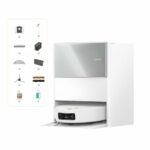
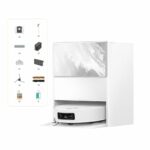
All three robots can overcome simple steps, facilitating transitions between rooms and small level changes. This is where the Roborock Saros Z70 sets itself apart: it incorporates an OmniGrip robotic arm that allows it to manipulate small objects. This function isn't present in the Saros 10R or the Dreame, making it a differentiating element for those seeking the best robot vacuum with expanded capabilities.
All three models integrate their own voice assistant and are compatible with Alexa and Google Home, allowing voice control without complications.
Multifunction Cleaning Base
All three bases perform auto-emptying of the dust container, mop washing with hot water and drying. The differences appear in the details. Only the Roborock Saros 10R and Z70 include tray self-cleaning 2.0, a system that keeps the washing area more hygienic without manual intervention. The Dreame doesn't incorporate this function.
UV disinfection is exclusive to the Dreame Aqua10 Ultra Track Complete, adding an extra layer of sanitisation that may prove interesting for homes with young children or allergy sufferers.
Regarding detergent tanks, the Dreame offers a dual system that allows using two different products depending on floor type. The Roborock models have a single detergent tank, sufficient for most users.
Dust bag capacity favours the Dreame with 3.2 litres versus the 2.5 litres of the Saros models. This means fewer bag changes throughout the year. The clean water tank is identical in all three (4 litres), whilst the dirty water tank reaches 3.5 litres in the Dreame and 3 litres in the Roborock models.
The Dreame includes a plumbing connection kit as an optional accessory that must be purchased separately, something worth bearing in mind if you value this option for the future.
Dimensions
Robot height marks an important practical difference. The Dreame Aqua10 Ultra Track Complete measures 97.5 mm, whilst the Roborock Saros 10R and Z70 stay at 79.8 mm. Almost 18 mm of difference can determine whether or not the robot passes under certain furniture, sofas or low beds.
Diameter is practically identical: 350 mm in the Dreame versus 353 mm in the Roborock models. A minimal difference that doesn't affect manoeuvrability.
The bases also present variations. The Dreame's measures 420 mm wide, 500 mm high and 440 mm deep. The Saros bases are narrower (381 mm), slightly lower (488 mm) but deeper (475 mm). It's advisable to measure available space before deciding, especially if the gap is tight.
Real-World Usage Experience
For large homes, the Dreame's greater bag capacity and superior power make it a solid option. However, its greater height may limit access under furniture, something that doesn't occur with the Saros models.
If you live with pets, all three models are prepared. The Dreame offers more raw power for hair embedded in carpets, whilst Roborock's anti-tangle systems facilitate brush maintenance. Automatic mop removal in the Saros models prevents the robot from dragging the mops when vacuuming, something appreciated in homes where mopping isn't always done.
The Roborock models' tray self-cleaning 2.0 reduces manual base maintenance, a detail that adds long-term convenience. The Dreame's wide roller system may prove more effective in large, open spaces, whilst Roborock's rotating mops excel in corners and complex spaces.
The Saros Z70's robotic arm expands the robot's possibilities, although its real usefulness will depend on the type of objects that habitually remain on the floor. For those seeking cutting-edge technology, it's a clear added value.
Conclusion: Which to Choose?
Choose the Dreame Aqua10 Ultra Track Complete if you're looking for maximum suction power, you value UV disinfection in the base, you prefer a wide roller system for mopping and you're not concerned about the robot measuring almost 10 cm in height. Also if you want the greatest dust bag and dirty water tank capacity, reducing maintenance frequency. The dual detergent tank may prove practical if you alternate different cleaning products.
Choose the Roborock Saros 10R if you need a robot that passes under low furniture thanks to its 79.8 mm height, you value tray self-cleaning 2.0 that reduces maintenance and you prefer automatic mop removal for vacuuming without dragging them. It's a balanced option within the Roborock range, with good power and confirmed autonomy of 180 minutes. Ideal for those who trust Roborock's reliability without needing the robotic arm.
Choose the Roborock Saros Z70 if you want the most advanced robot in this comparison thanks to its OmniGrip robotic arm, which expands its capabilities beyond vacuuming and mopping. It maintains the advantages of the Saros 10R in terms of reduced height, tray self-cleaning and mop removal, but adds 22,000 Pa of power and the more updated RR Mason 12.0 CPU. For those seeking which robot to choose with the most cutting-edge technology, this is the answer.