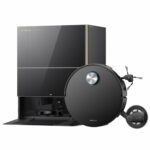
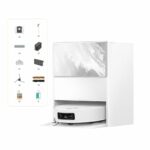
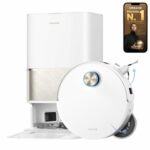
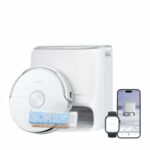
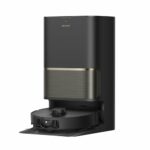
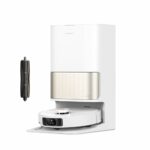
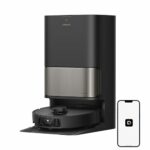
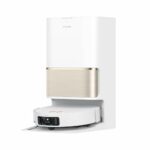
✨ VS Analyses · VacuumSpain comparison technology. Explanation created with AI from verified technical data.
Introduction
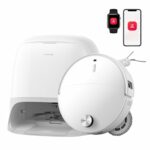
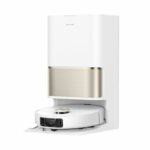
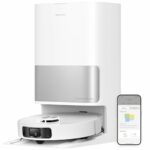
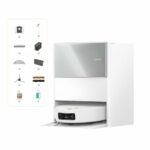
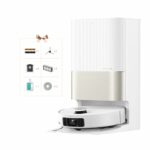
When choosing a high-end robot vacuum in 2025 and beyond, these three models represent the cutting edge of cleaning technology. The Dreame Aqua10 Ultra Track Complete and Dreame Matrix10 Ultra both launched in 2025, whilst the Roborock Saros 20 arrived in February 2026 as one of the latest releases from the world's leading robot vacuum manufacturer. All three feature multifunctional bases that handle both vacuuming and mopping with automatic mop washing and drying, making them suitable for homeowners who want minimal maintenance.
The Dreame models share considerable DNA but differ in their approach to cleaning. Meanwhile, the Roborock Saros 20 brings a different engineering philosophy to the table. Each is designed for medium to large homes where automated cleaning can genuinely replace manual work.
Power and Suction
The suction power hierarchy places the Roborock Saros 20 firmly at the top with 36,000 Pa, a substantial advantage over the Dreame Matrix10 Ultra's 30,000 Pa and the Aqua10's 25,000 Pa. In practical terms, this translates to better performance on carpets and more effective pickup of embedded dirt and pet hair.
All three robots feature dual brush systems designed to minimise hair tangles. The Aqua10 and Matrix10 share Dreame's double brush configuration, whilst the Saros 20 employs Roborock's DuoDivide anti-tangle system. This design channels hair towards the central suction point rather than wrapping it around the brush bar.
Each model lifts its main brush during mopping to prevent wet carpet contact, and all three extend their side brushes to reach into corners more effectively. The side brushes also elevate during mopping and incorporate anti-tangle features. Battery capacity is identical across the board at 6,400 mAh, though only the Matrix10 specifies autonomy at 260 minutes.
Mopping Performance
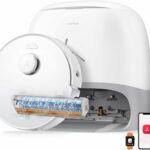
The mopping systems reveal fundamental design differences. The Dreame Aqua10 Ultra Track Complete uses a wide roller mop that resembles a miniature floor scrubber, continuously rotating against the floor. The Matrix10 Ultra and Roborock Saros 20 both employ dual rotating circular mops that spin independently.
Mop extension for edge cleaning is present across all models, though the Matrix10 adds a movement feature to its extension mechanism. Mop lift varies considerably: the Aqua10 raises mops between 7-17mm, the Matrix10 achieves 10.5mm, and the Saros 20 offers the greatest range at 12-22mm. This matters when transitioning from hard floors to rugs or carpets.
Water temperature during floor mopping differs slightly. The Aqua10 and Matrix10 both use hot water for floor cleaning, whilst the Saros 20 employs warm water. All three detect dirt on both the mops themselves and the floor surface, triggering additional cleaning passes when needed.
A significant functional difference: the Matrix10 Ultra and Saros 20 can automatically detach their mops at the base, allowing pure vacuum operation without manual intervention. The Aqua10 cannot do this, meaning you'll need to remove the roller manually if you only want to vacuum.
Navigation System
Navigation technology is sophisticated across the range. The Dreame models feature retractable LiDAR systems, whilst the Saros 20 uses Roborock's StarSight 2.0 navigation. All three incorporate dual RGB cameras for artificial intelligence-based object recognition, complemented by 3D laser sensors at the front.
The Roborock Saros 20 recognises up to 300 different obstacles, compared to 280 for the Aqua10 and 240 for the Matrix10. Each model can identify pets and curtains, adjust behaviour accordingly, and all provide remote camera access through their respective apps. LED lighting enables night-time navigation and monitoring.
Dreame's CleanGenius AI powers the Aqua10 and Matrix10, running on the AI Sage 15.0 chip. The Saros 20 uses SmartPlan AI, though the specific processor isn't detailed. In practice, all three can create detailed maps, recognise room types, and adjust cleaning intensity based on detected dirt levels.
Battery and Autonomy
With identical 6,400 mAh batteries fitted to all three robots, energy capacity isn't a differentiator. The Dreame Matrix10 Ultra specifies 260 minutes of runtime, which should comfortably cover most homes in a single session. The Aqua10 and Saros 20 don't provide runtime figures, but similar battery capacity suggests comparable performance.
None of the manufacturers specify charging times or maximum recommended floor areas in the available data. What matters more in daily use is that all three will return to base when needed, recharge automatically, and resume cleaning where they left off.
Smart Features
All three robots can climb single-step obstacles, useful for transitioning between rooms with slight level changes or crossing over door thresholds. Each model includes its own voice assistant alongside compatibility with external services like Alexa and Google Home.
The robots lack robotic arms, which some ultra-premium models use for object manipulation. For most households, the combination of obstacle avoidance and intelligent navigation proves sufficient without this additional complexity.
Multifunctional Base Station
The base stations handle the heavy lifting of maintenance. All three automatically empty the robot's dust container, wash mops with hot water, and dry them afterwards. The Aqua10 dries mops at 50°C, whilst the Matrix10 and Saros 20 use hot air drying without specifying exact temperatures.
Base self-cleaning separates the models. The Matrix10 Ultra washes its own drip tray at a 3.5-degree angle to ensure thorough coverage. The Saros 20 also self-cleans its tray with hot water. The Aqua10 lacks this feature, requiring occasional manual cleaning of the base's internal components.
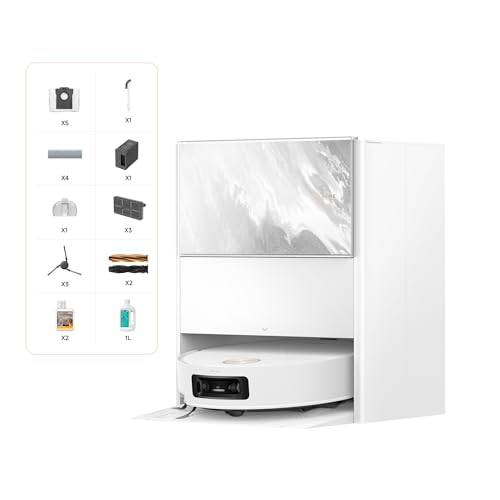
Detergent storage differs notably. The Aqua10 includes two detergent tanks, the Matrix10 offers three, and the Saros 20 has a single tank. Multiple tanks allow different cleaning solutions for various floor types or cleaning tasks. Only the Aqua10 features UV disinfection within the base.
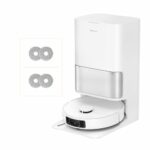
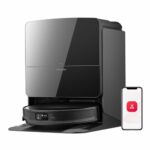
The Matrix10 Ultra stands alone with automatic mop replacement, storing three spare mop pairs that the system swaps in when the current set becomes excessively soiled. This extends cleaning sessions without intervention.
Dust bag capacity favours the Dreame models at 3.2 litres each versus 2.5 litres for the Saros 20. Clean water tanks measure 4 litres (Aqua10), 5.5 litres (Matrix10), and 4 litres (Saros 20). Dirty water capacity is 3.5, 4, and 3 litres respectively. Larger tanks mean fewer refills during extended cleaning sessions.
Both Dreame bases offer optional plumbing connection kits sold separately, eliminating manual water tank maintenance entirely. The Saros 20 doesn't offer this option.
Physical Dimensions
Robot height proves crucial for cleaning under furniture. The Roborock Saros 20 measures just 79.8mm tall, making it the slimmest option. The Matrix10 stands at 89mm, whilst the Aqua10 reaches 97.5mm. That 17.7mm difference between the shortest and tallest can determine whether a robot fits beneath sofas, beds, or cabinets.
Diameter varies minimally: 350mm for both Dreame models and 353mm for the Saros 20. These measurements won't significantly affect navigation through doorways or around furniture legs.
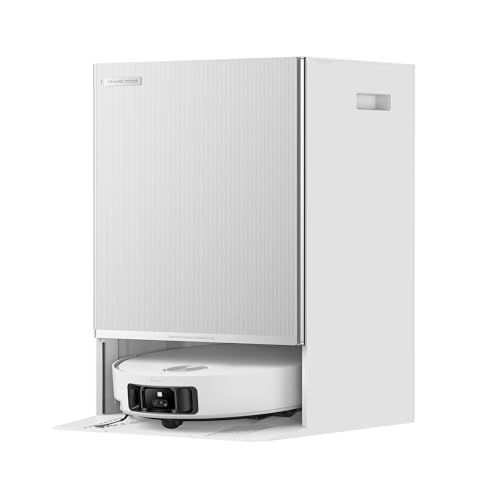
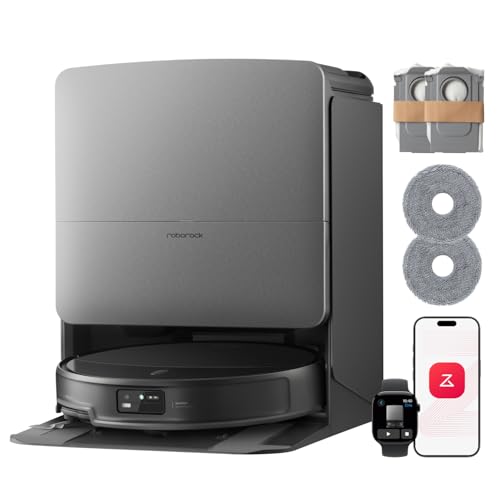
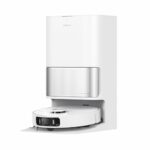
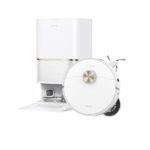
Base station footprints differ more substantially. The Aqua10's base measures 420mm wide, 500mm tall, and 440mm deep. The Matrix10 is slightly larger at 416mm wide, 590mm tall, and 457mm deep. The Saros 20 base is the most compact horizontally at 381mm wide but extends 475mm deep, with a height of 488mm. Consider available floor space when positioning the base station.
Real-World Usage Considerations
For homes with low-clearance furniture, the Roborock Saros 20's 79.8mm height provides the best access underneath beds and sofas. The 36,000 Pa suction also makes it the strongest choice for deep carpet cleaning or homes with shedding pets.
The Dreame Matrix10 Ultra's automatic mop changing and base self-cleaning reduce maintenance frequency, ideal for busy households or those who travel regularly. The triple detergent tank system allows customised cleaning for different floor types without manual intervention.
The Aqua10's roller mop system offers a different mopping experience that some users prefer for larger open floor areas. The UV disinfection feature provides additional hygiene reassurance, particularly relevant for households with young children or allergy concerns. However, the lack of automatic mop removal means you'll need to manually detach the roller for vacuum-only sessions.
All three handle hard floors, parquet, and carpets effectively, with their brush lift systems preventing carpet wetting during mopping cycles. The larger water tanks on the Matrix10 suit bigger homes where extended mopping sessions would otherwise require refills.
Conclusion: Which to Choose?
Choose the Dreame Aqua10 Ultra Track Complete if you prefer roller mop technology for large open floor areas, want UV disinfection in the base, and don't mind manually removing the mop for vacuum-only cleaning. The dual detergent system and hot water mopping deliver thorough floor cleaning, though you'll need to clean the base tray yourself occasionally.
Choose the Dreame Matrix10 Ultra if you want maximum automation with automatic mop changing and base self-cleaning. The triple detergent tank system suits homes with varied flooring, and the ability to automatically remove mops at the base means truly hands-free operation. The 30,000 Pa suction handles most situations well, and the larger water tanks reduce refill frequency in bigger properties.
Choose the Roborock Saros 20 if you need the absolute strongest suction at 36,000 Pa for deep carpet cleaning or heavy pet hair. The slimmest profile at 79.8mm accesses more under-furniture areas than its competitors. Superior obstacle recognition with 300 objects and the greatest mop lift range make it the most technically advanced option, though you'll sacrifice automatic mop changing and need to manage with a single detergent tank. The compact base footprint suits smaller utility spaces.