✨ VS Analyze · VacuumSpain comparison technology. AI-generated explanation based on verified technical data.
Introduction
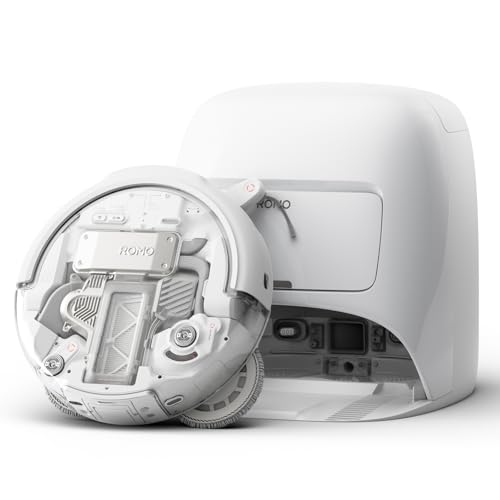
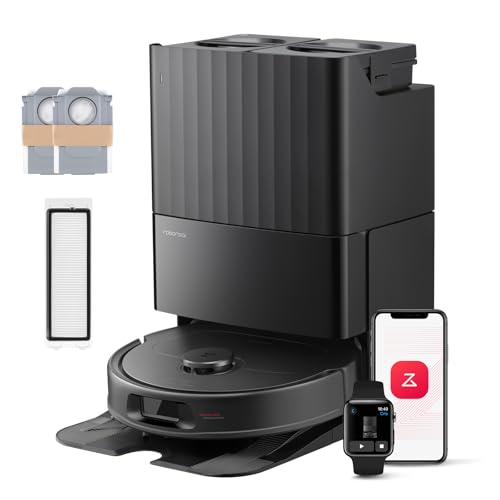
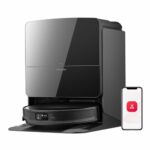
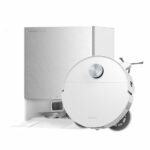
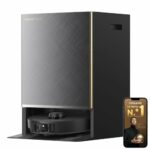
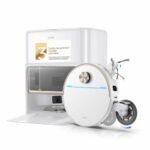
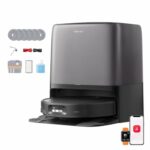
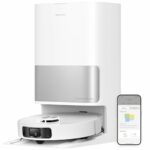
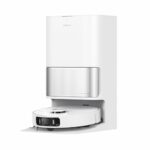
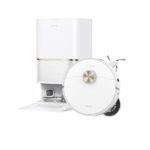
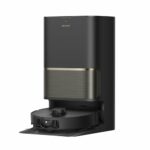
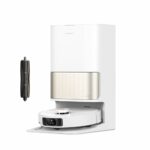
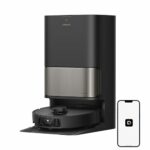
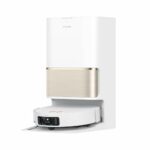
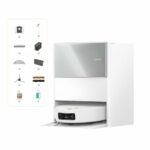
The DJI Romo A (Robot Transparente) and the Roborock QV 35S represent two distinct approaches within the range of robot vacuum cleaners launched in 2025. DJI, known until now for its drones and imaging technology, makes the leap into the domestic cleaning sector with a model that bets heavily on artificial intelligence and raw power. Roborock, a global benchmark in this segment, presents a more balanced and consolidated proposition.
We're talking about two robots with multifunction bases that vacuum and mop, designed for users seeking complete automation. However, the technical differences between them are notable and define quite different usage profiles.
Power and Suction
The difference in suction power is brutal. The DJI Romo A offers 25,000 Pa, more than double the 10,000 Pa of the Roborock QV 35S. In practice, this translates into greater capacity to extract embedded dirt from carpets or vacuum heavy particles without needing additional passes.
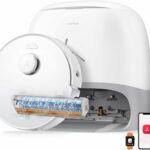
The brushing system also marks distances. The DJI Romo A mounts a Divided-type main brush (similar to the DuoDivide from Roborock in other models) that pushes hair towards the centre to prevent tangles. This brush can be lifted during mopping, something the Roborock QV 35S cannot do. Lifting the main brush whilst mopping prevents it from getting unnecessarily wet and helps maintain it in better condition.
As for the side brush, the DJI includes an extendable system that allows it to sweep corners better, in addition to featuring a double anti-tangle brush. The Roborock QV 35S has an anti-tangle side brush but it's not extendable. Neither model lifts the side brush during mopping.
Mopping
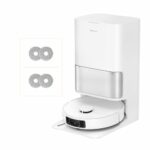
Both robots employ a two rotating mop system, but the DJI Romo A adds lateral extension to better reach skirting boards and corners. This feature makes a difference in homes where edge mopping is a priority.
Both lift the mops, although the Roborock specifies that it does so up to 10 mm. This lifting allows the robot to transit over carpets without wetting them when in mixed vacuuming and mopping mode.
Where the DJI Romo A excels is in intelligence applied to mopping. It incorporates dirt detection on both the mops themselves and the floor, which allows it to decide when it needs to rewash the mops or go over a particularly dirty area again. The Roborock QV 35S lacks these detection functions.
The DJI base washes the mops with cold water and dries them with hot air, an important detail because it speeds up drying and reduces the risk of bad odours. The Roborock also washes with cold water but dries only with cold air, which lengthens the process. Additionally, the DJI base features self-cleaning via a pressurised water nozzle, whilst the Roborock's doesn't have this function. The DJI includes a detergent tank in the base; the Roborock doesn't incorporate one.
Navigation System
This is where the DJI Romo A shows its technological heritage. It mounts a solid-state LiDAR system combined with an AI camera, front 3D laser sensor and night vision LED. This combination allows it to recognise obstacles with precision, even in low-light conditions, and offers remote camera access for home surveillance.
The Roborock QV 35S uses a more conventional 3D LiDAR turret with an obstacle avoidance system, but without a camera or additional imaging sensors. It's a proven and reliable system, although less versatile than the DJI's.
The DJI incorporates AI stain recognition, which allows it to identify specific dirt and act accordingly. The Roborock features SmartPlan 1.0 to optimise cleaning routes, but doesn't have visual stain recognition.
Autonomy and Battery
The battery capacities are very similar: 5,000 mAh in the DJI Romo A versus 5,200 mAh in the Roborock QV 35S. Both offer 180 minutes of autonomy, sufficient for medium-to-large homes in a single run.
With this autonomy, both models can cover large surfaces without needing intermediate recharges, provided the suction power isn't constantly configured at maximum.
Smart Functions
Both robots overcome obstacles up to 20 mm in height, which allows them to cross transitions between rooms or small level changes without problem. This capability is standard in mid-to-high-range models.
Both are compatible with external voice assistants such as Alexa or Google Home, facilitating voice control from the usual domestic ecosystem.
Multifunction Cleaning Base
Both bases offer auto-emptying of the dust bin, washing and drying of mops. The DJI's dust bag has a capacity of 2.4 litres; the Roborock's, 2.7 litres. These are sufficient capacities for several weeks without manual intervention.
In water tanks, the DJI has 4 litres of clean water and 3.2 litres of dirty water. The Roborock maintains the 4 litres of clean water but slightly increases the dirty water tank to 3.5 litres. The differences are minimal in real use.
As already mentioned, the big difference lies in the DJI's hot air drying versus the Roborock's cold air, in the DJI's tray self-cleaning via pressurised nozzle, and in the detergent tank that only the DJI model incorporates. Neither offers plumbing connection nor an optional kit for it.
Dimensions
The Roborock QV 35S is slightly lower: 96.5 mm versus the 98 mm of the DJI Romo A. Barely a millimetre and a half difference that in practice can be relevant if you have very low furniture. The diameter is practically identical: 351 mm on the DJI and 353 mm on the Roborock.
The bases present different proportions. The DJI's is wider (453 mm versus 340 mm) but less deep (425 mm versus 487 mm) and lower (440 mm versus 521 mm). It's worth measuring the available space before deciding, because the Roborock base takes up more height and depth, whilst the DJI's needs more width.
Real-World Usage Experience
The DJI Romo A is designed for users who value cutting-edge technology and want a robot capable of making intelligent decisions. Its 25,000 Pa power makes it especially suitable for homes with thick carpets or pets that shed a lot of hair. The dirt detection on mops and floor, together with the mop extension for edges, make it a solid option if you're looking for more complete and autonomous mopping. The remote camera access adds a surveillance bonus that may interest some users.
The Roborock QV 35S offers a more classic but equally effective experience. With 10,000 Pa of suction it's sufficient for most hard floors and medium-thickness carpets. Its base with greater dust bag capacity and dirty water tank can prove practical in large homes. It's a reliable robot, with a consolidated app and the backing of a brand with years of experience in the sector.
For homes with lots of low furniture, the Roborock wins by millimetres in height. If you have pets, the DJI offers more suction power and a better anti-tangle brush system. For demanding mopping, the DJI also has the advantage with its extendable mops and dirt detection.
Conclusion: Which to Choose?
Choose the DJI Romo A (Robot Transparente) if... you're looking for the highest available suction power, you want intelligent mopping with dirt detection and mop extension for edges, you value quick drying with hot air, you're interested in the camera with remote access or you simply want to try the technological proposition of a brand that's arriving strongly in the sector.
Choose the Roborock QV 35S if... you prefer an established brand with a proven app, you need a slightly lower robot to pass under tight furniture, you value having greater capacity in the dust bag and dirty water tank, or you're simply looking for a balanced option without needing advanced AI functions. It's a safe bet for those seeking effectiveness without complications.