✨ VS Analyses · VacuumSpain comparison technology. Explanation created with AI from verified technical data.
Introduction
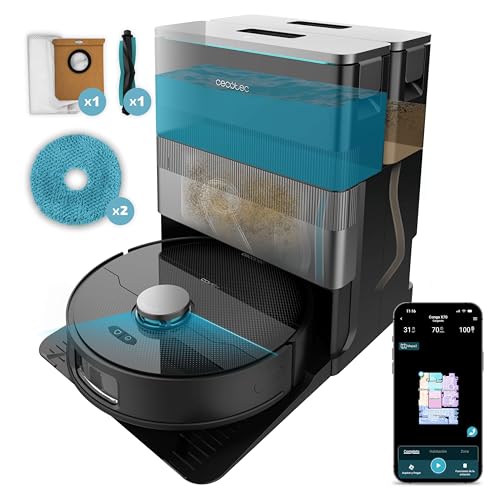
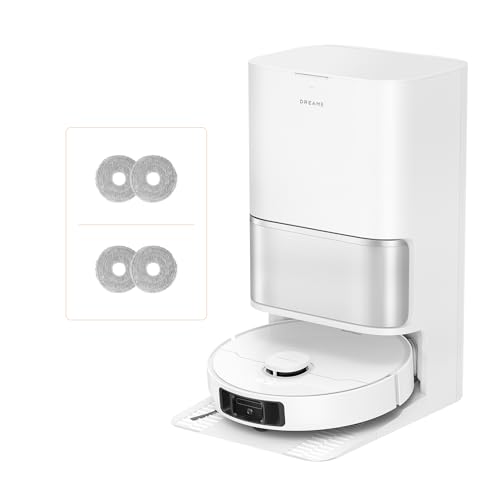
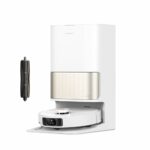
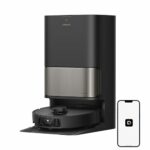
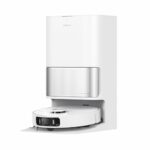
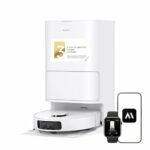
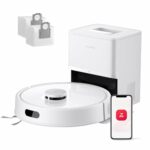
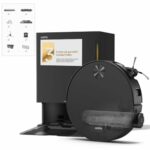
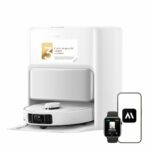
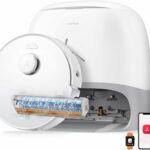
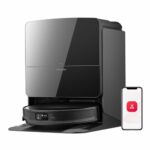
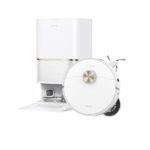
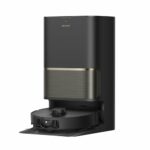
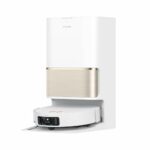
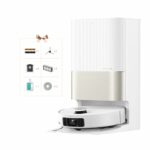
The Cecotec Conga X70 and the Dreame L10s Ultra Gen 3 represent two 2025 proposals focused on users seeking complete home maintenance automation. Both units incorporate a multifunction base with mop washing and drying, as well as automatic dust bin emptying, which places them in a segment designed for those who prioritise convenience and don't want to deal with daily maintenance. The Cecotec model opts for a compact design and greater obstacle-climbing capability, whilst the Dreame unit stands out for its superior suction power and more advanced intelligent functions.
We're talking about two robots with technical characteristics that make them suitable for medium-to-large homes, although they present notable differences in several areas worth analysing before making a decision.
Power and Suction
The most evident difference in this section is marked by suction power. The Dreame L10s Ultra Gen 3 reaches 25,000 Pa, a figure that far exceeds the Cecotec Conga X70's 15,000 Pa. In practice, this translates to greater capacity for dislodging ingrained dirt from carpets and for picking up heavier particles or those adhered to the floor.
Regarding the brushing system, the Conga X70 mounts a traditional bristle brush, whilst the Dreame equips a simple brush that reduces tangles. Neither offers main brush lifting during mopping, something common in this price range.
The side brush marks another important difference. The Dreame incorporates an extendable side brush, which improves cleaning in corners and edges by being able to extend beyond the robot's diameter. The Conga X70 doesn't have this function. Neither lifts the side brush nor includes specific anti-tangle technology in this component.
Mopping
Both robots mount a dual rotating mop system, a design that guarantees better results than conventional drag mops. Both models include mop extension to better reach edges, although the Dreame adds specific movement for this task, which optimises results in perimeter areas.
Mop lifting presents differences: the Dreame L10s Ultra Gen 3 raises them up to 10.5 mm, compared to the Conga X70's 8 mm. Whilst it may seem a small difference, those additional 2.5 mm can make the difference when passing over short-pile carpets or thin mats. Neither automatically removes the mops at the base for vacuum-only sessions, nor incorporates dirt detection for automatic re-mopping.
Both mop with cold water, both on the floor and when washing mops at the base. Drying is carried out with hot air in both cases, which helps prevent bad odours and bacterial growth on the mops between cleans.
Navigation System
Both units use a 3D LiDAR turret to map the home and plan efficient routes. Both have a front 3D laser sensor to avoid obstacles, but here the differences in artificial intelligence begin.
The Cecotec Conga X70 integrates an AI camera, whilst the Dreame L10s Ultra Gen 3 does without it. However, the Dreame model compensates for this absence with its CleanGenius AI system, which intelligently optimises cleaning, and with specific pet recognition, a function the Conga X70 doesn't offer. This can be especially useful in homes with dogs or cats, as the robot adapts its behaviour to avoid interfering with them.
Neither allows remote camera access, nor incorporates LED for night vision or curtain detection.
Autonomy and Battery
Both robots are equipped with a 5,200 mAh battery, a generous capacity that guarantees extended cleaning sessions. The Dreame L10s Ultra Gen 3 declares 231 minutes of autonomy, data that the Conga X70 manufacturer doesn't specify in the analysed technical sheet.
With that autonomy, the Dreame can cover large surfaces in a single session before needing to return to the base. The identical battery capacity suggests that the Conga X70 should offer similar figures, although the Dreame's greater suction power could consume more energy in maximum mode.
Intelligent Functions
The Cecotec Conga X70 stands out in obstacle-climbing capability: it reaches 30 mm, compared to the Dreame L10s Ultra Gen 3's 20 mm. This one-centimetre difference can be decisive in homes with thick carpets, raised door thresholds or small level changes between rooms.
The Dreame, however, offers compatibility with external voice assistants such as Alexa or Google Home, a function the Conga X70 doesn't include. This facilitates voice control and integration into home automation ecosystems. Neither incorporates a robotic arm nor its own voice assistant.
Multifunction Cleaning Base
The bases of both robots perform automatic dust bin emptying, cold water washing and hot air drying of the mops. Here relevant differences appear in capacity and additional functions.
The Dreame L10s Ultra Gen 3 incorporates third-generation wash tray self-cleaning, a system that maintains the base itself in better hygienic conditions without manual intervention. The Conga X70 doesn't include this function. Additionally, the Dreame adds a detergent tank, which allows dispensing cleaning product during mop washing for a deeper result. The Conga X70 lacks this tank.
Regarding capacities, the Dreame offers a 3.2-litre dust bag compared to the Conga X70's 2.5 litres. The clean water tank reaches 4.5 litres in the Dreame and 4 litres in the Conga X70; the dirty water tank is 4 litres and 3.5 litres respectively. These differences translate to greater autonomy between emptying and refilling in the Dreame model.
The Dreame has an optional kit for plumbing connection, which is purchased separately. Neither includes this connection integrated as standard, nor UV disinfection.
Dimensions
The Cecotec Conga X70 measures 340 mm in diameter and 110 mm in height. The Dreame L10s Ultra Gen 3 has 350 mm in diameter and 97 mm in height. Those 13 mm difference in height can determine the ability to slip under low furniture, sofas or beds with little ground clearance. The Dreame accesses tighter spaces.
The bases present similar dimensions in width (340 mm both), but differ in height and depth. The Conga X70 base measures 450 mm high and 425 mm deep; the Dreame's reaches 590 mm in height and 457 mm in depth. The Dreame base occupies more vertical space, something to consider if you intend to place it under furniture or shelving.
Real-World User Experience
For homes with pets, the Dreame L10s Ultra Gen 3 presents clear advantages: greater suction power to pick up hair, a brush designed to reduce tangles and specific animal recognition. The extendable side brush also helps collect hair accumulated in corners.
In homes with carpets or level changes, the Conga X70 offers better obstacle-climbing capability (30 mm), which can be determining depending on the home's configuration. However, the Dreame compensates with greater suction power on carpets and superior mop lifting.
The Dreame requires less base maintenance thanks to tray self-cleaning and offers greater autonomy between emptying due to its more generous tanks. The detergent tank adds a bonus in mopping quality without manual intervention.
For spaces with low furniture, the Dreame's more reduced profile (97 mm) facilitates access to areas that the Conga X70 (110 mm) wouldn't reach. This can represent notable differences in actual cleaning coverage.
Conclusion: Which to Choose?
Choose the Cecotec Conga X70 if: your home has thick carpets, raised thresholds or level changes up to 3 cm that you need the robot to overcome without problems. Also if you value a more compact base profile in height or if the budget is tighter. The AI camera may be interesting although it doesn't offer remote access.
Choose the Dreame L10s Ultra Gen 3 if: you're looking for the greatest suction power available in this comparison, you have pets at home, you need the robot to access under low furniture or you prioritise base autonomy with larger tank capacities. The detergent tank, tray self-cleaning, extendable side brush and compatibility with voice assistants make it a more complete option for those seeking maximum automation and less maintenance. Its CleanGenius AI system and pet recognition add practical intelligence to daily life.