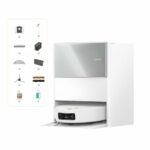
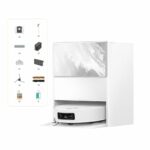
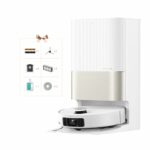
✨ VS Analyses · VacuumSpain comparison technology. Explanation created with AI from verified technical data.
Introduction
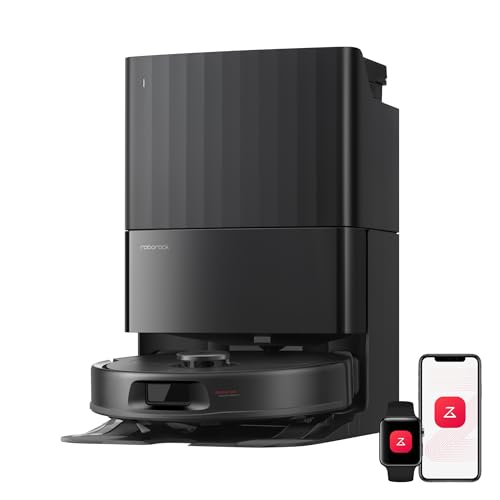
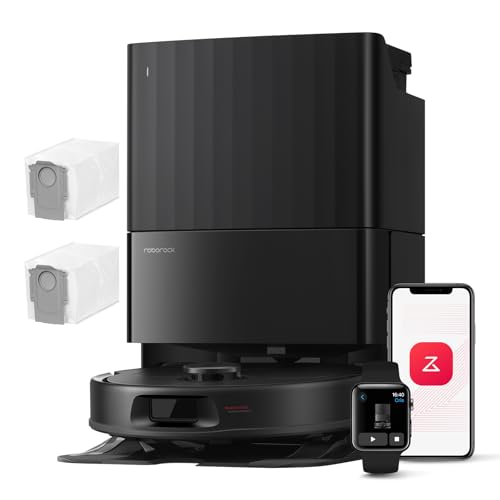
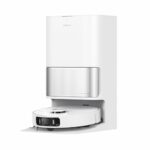
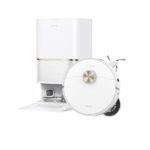
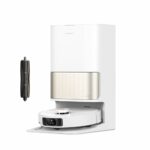
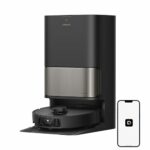
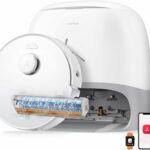
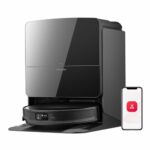
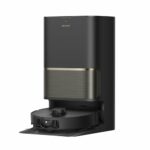
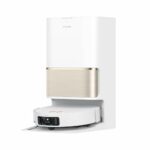
Roborock maintains its leadership in the robot vacuum market with two models that share the same architecture but differ in specific technical aspects. The Roborock Qrevo S Pro, launched in 2026, represents the evolution of an established line, whilst the Roborock QV 35A arrived in 2025 as an alternative within the same family. Both units are designed for homes seeking complete cleaning automation, with a multifunctional base that manages both dust and mopping.
The fundamental difference between these two robots lies not in the design or general structure, but in performance details that can influence the user experience depending on the type of home. We're talking about suction power, mop treatment and intelligent planning capabilities.
Power and Suction
Here we find the most notable difference in this robot vacuum comparison. The Roborock Qrevo S Pro more than doubles the power of the QV 35A: 18,500 Pa compared to 8,000 Pa. This figure isn't just a number on the spec sheet. In practice, it means the Qrevo S Pro can extract embedded dirt from medium-pile carpets, vacuum heavier debris and better manage fine dust in tile joints.
The QV 35A, with its 8,000 Pa, remains competent for daily maintenance on hard floors and short-pile carpets, but falls short if there are pets that shed a lot of hair or if the home frequently accumulates sand or dirt.
Regarding the brushing system, both models share the same configuration: single main brush and anti-tangle side brush. Neither lifts the main brush during mopping nor features an extendable side brush. This means corner cleaning depends solely on the standard side brush design, without extension to improve reach in corners.
Mopping
Both Roborock robot vacuums use a dual rotating mop system, with the ability to lift them up to 10 mm to avoid wetting carpets. The robot's water tank is 80 ml in both cases, and neither incorporates mop extension for edges nor automatically removes the mops at the base when only vacuuming is desired.
The difference appears in the treatment the mops receive at the multifunctional base. The Qrevo S Pro washes them with hot water, which helps eliminate grease and adhered dirt more effectively. The QV 35A performs washing with cold water, sufficient for regular maintenance but less effective against persistent stains.
Drying also varies: the Qrevo S Pro uses hot air, speeding up the process and reducing the risk of bad odours or bacterial growth. The QV 35A dries with cold air, which lengthens the time required and may leave the mops slightly damp if the cycle is interrupted.
Neither includes dirt detection on mops or floor, so they don't perform automatic re-scrubbing of particularly dirty areas.
Navigation System
Both robots employ LiDAR 3D turret to map the home and plan efficient routes. They feature obstacle avoidance, but neither integrates AI camera, front 3D laser sensor nor night vision LED. They also don't offer pet recognition, curtain detection or remote camera access.
The difference lies in planning intelligence. The Qrevo S Pro incorporates SmartPlan 2.0, an improved version of the algorithm that optimises routes, adjusts the cleaning sequence according to floor type and learns usage patterns. The QV 35A uses SmartPlan 1.0, functional but less adaptive.
Autonomy and Battery
There are no differences here. Both units feature a 5,200 mAh battery with a declared autonomy of 180 minutes. This capacity allows covering large surfaces without the need for intermediate recharging, although actual autonomy will depend on suction mode and floor type.
Smart Functions
Both models overcome obstacles up to 20 mm in height, useful for crossing small level differences between rooms or the edge of thick carpets. Neither has a robotic arm nor its own voice assistant, but they are compatible with Alexa and Google Home for voice command control.
Multifunctional Cleaning Base
Both bases perform auto-emptying of the dust container into a 2.7-litre bag, wash and dry the mops, and feature 4-litre clean water and 3.5-litre dirty water tanks. They don't include self-cleaning of the washing tray, UV disinfection, detergent tank or plumbing connection (nor optional kit).
The Qrevo S Pro's advantage lies in using hot water for washing and hot air for drying, improving hygiene and reducing maintenance times. The QV 35A, with cold water and air, requires greater attention to prevent mops remaining damp between cycles.
Dimensions
The robot measures 353 mm in diameter and 96.5 mm in height in both cases, allowing access under furniture with clearance height greater than 10 cm. The bases are practically identical: 340 mm wide and 487 mm deep. Height varies minimally: 519 mm on the Qrevo S Pro and 521 mm on the QV 35A, an irrelevant difference in practice.
Real-world user experience
The Roborock Qrevo S Pro adapts better to large homes with medium or long-pile carpets, where the 18,500 Pa power makes a clear difference. If there are pets, the greater suction facilitates the collection of embedded hair. Washing and drying with hot water and air reduce manual intervention and keep the mops in better condition.
The QV 35A works well in medium-sized flats with hard floors or thin carpets, where 8,000 Pa is sufficient for daily maintenance. Cold water washing suffices if mopping frequently and there are no difficult stains. It's advisable to check the mops after cold air drying to ensure they're completely dry.
In both cases, the absence of mop extension limits the ability to mop right to the edge of walls, something to consider if seeking thorough perimeter mopping.
Conclusion: Which to choose?
Choose the Roborock Qrevo S Pro if: you live in a large house with carpets, have pets that shed hair or are looking for the best robot vacuum in terms of power and mop treatment. Temperature-controlled washing and drying improve hygiene and reduce maintenance. SmartPlan 2.0 optimises routes more intelligently.
Choose the Roborock QV 35A if: your home is medium-sized, hard floors or thin carpets predominate, and you prefer to save money without giving up a multifunctional base. The 8,000 Pa power covers routine maintenance needs, although you'll need to monitor the mops' condition after cold air drying.
The differences between these two Roborock models are specific and measurable. The choice depends on floor type, presence of pets and the level of automation you're seeking in day-to-day use.