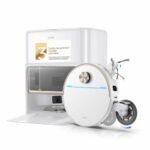
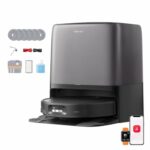
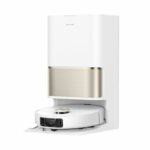
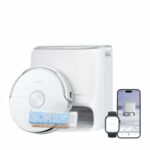
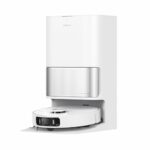
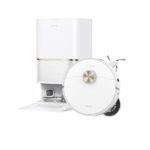
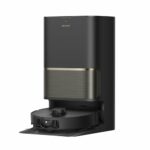
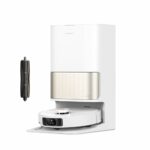
✨ VS Analyses · VacuumSpain comparison technology. Explanation created with AI from verified technical data.
Introduction
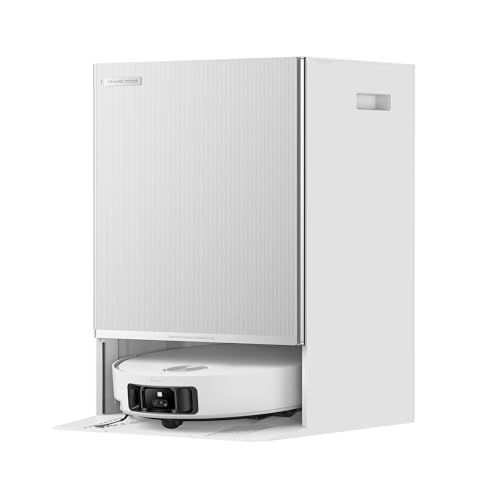
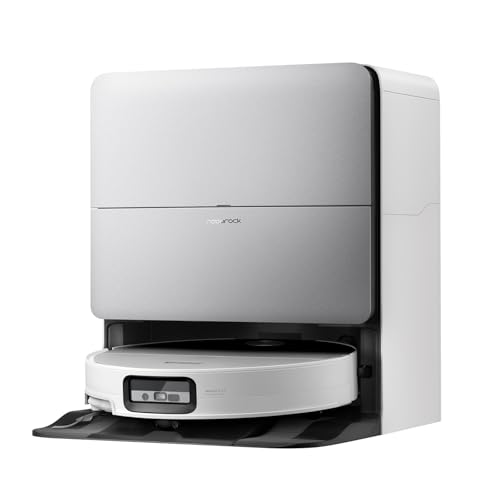
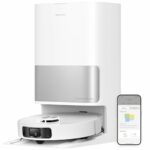
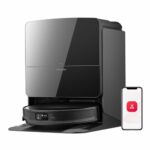
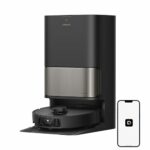
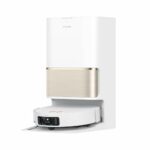
The Dreame Matrix10 Ultra and Roborock Saros 20 Sonic represent two premium approaches to automated home cleaning in 2025 and 2026 respectively. Both manufacturers have equipped these models with multifunctional bases that handle washing and drying mops, alongside auto-emptying dust containers. These aren't entry-level devices; they're designed for users who want comprehensive cleaning automation without daily intervention.
The Matrix10 Ultra brings Dreame's latest innovations including a triple detergent system and automatic mop changing capabilities. The Saros 20 Sonic, launching in March 2026, showcases Roborock's refined engineering with enhanced suction power and a more compact base design. Both models target households seeking thorough floor care across mixed surfaces, though their technical approaches differ in meaningful ways.
Suction Power and Brush Systems
The Roborock Saros 20 Sonic delivers 36,000 Pa of suction compared to the Matrix10 Ultra's 30,000 Pa. That's a 20% increase in raw power, which becomes relevant when dealing with embedded dirt in carpet fibres or particularly stubborn debris. Both models share identical 6,400 mAh batteries, though only the Dreame unit specifies 260 minutes of runtime.
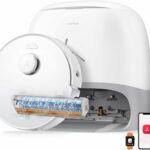
Where things get interesting is the main brush design. Dreame employs its Double HyperStream brush configuration, whilst Roborock uses the DuoDivide Anti-tangle system. The DuoDivide design channels hair towards the central suction point rather than wrapping it around the roller—a practical advantage for homes with long-haired occupants or pets. Both manufacturers have implemented anti-tangle technology in their side brushes as well.
Each robot can elevate its main brush and side brush during mopping, preventing wet rollers from touching carpets. The side brushes extend outward to reach corners more effectively, a feature both models share.
Mopping Performance
The mopping systems reveal fundamentally different philosophies. The Matrix10 Ultra uses two rotating mops that extend outward for edge cleaning, enhanced by the Roboswing movement that angles the mop slightly under furniture edges. It heats water to 55°C for floor mopping, which helps dissolve grease and sticky residues more effectively than cold water.
Roborock's approach centres on sonic vibration technology—the mops oscillate rapidly rather than rotate. The system also extends for borders and uses warm water, though the exact temperature isn't specified as precisely. What the Saros 20 Sonic offers instead is an adjustable mop lift between 8-18 mm, giving more clearance flexibility compared to the Matrix10 Ultra's fixed 10.5 mm lift.
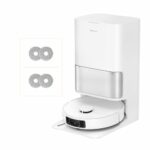
Both bases wash mops with hot water and dry them using heated air to prevent odours. The Matrix10 Ultra includes an automatic mop-changing system with three pairs of mops that the robot swaps out when they become too soiled—a genuinely hands-off feature the Roborock lacks. This could mean less frequent manual intervention during deep cleaning sessions.
Soil detection works on both models, identifying dirty areas on floors and checking mop cleanliness to trigger rewashing cycles. Both can automatically remove mops at the base when switching to vacuum-only mode.
Navigation Systems
Navigation hardware looks nearly identical on paper. Each robot uses retractable LiDAR for room mapping, dual RGB AI cameras, and frontal 3D laser sensors for obstacle detection. Both feature LED illumination for low-light operation and allow remote camera access through their respective apps.
The Saros 20 Sonic recognises 300 different obstacle types compared to 240 on the Matrix10 Ultra. In practice, both numbers exceed what most households contain, but the broader recognition database theoretically reduces the chance of confusion when encountering unusual objects.
Pet detection and curtain recognition appear on both models. The Matrix10 Ultra runs Dreame's CleanGenius AI system powered by the AI Sage 15.0 Octa-core processor, whilst Roborock employs SmartPlan 3.0. Both systems adapt cleaning patterns based on room usage and dirt levels.
Battery Life and Coverage
With matching 6,400 mAh batteries, these robots sit in the upper tier for capacity. The Matrix10 Ultra's stated 260-minute runtime should comfortably handle large homes in a single session, though actual runtime varies depending on suction settings and floor type. Roborock hasn't published specific autonomy figures for the Saros 20 Sonic, though the identical battery capacity suggests comparable performance.
Smart Features
Both robots can climb obstacles up to 4 cm high—enough to transition between rooms with different flooring levels or navigate over door thresholds without assistance. Neither model includes a robotic arm for additional object manipulation.
Each unit features its own voice assistant alongside compatibility with external systems like Alexa and Google Home. This allows for voice commands both through the robot itself and integrated smart home ecosystems.
Multifunctional Base Station
The base stations handle the heavy lifting of maintenance. Both auto-empty dust into sealed bags (3.2 litres for Dreame, 2.5 litres for Roborock), wash mops with hot water, and dry them with heated air.
The Matrix10 Ultra's base includes three detergent tanks, allowing different cleaning solutions for various floor types or cleaning tasks. The Saros 20 Sonic has a single detergent reservoir. Both bases feature self-cleaning wash trays—Dreame's system operates at 3.5° generation technology, whilst Roborock uses hot water for tray sanitation.
Water capacity differs notably. The Matrix10 Ultra holds 5.5 litres of clean water and 4 litres of dirty water. The Saros 20 Sonic carries 4 litres clean and 3 litres dirty. For larger homes or extended cleaning sessions, the extra capacity means fewer refills.
Dreame offers an optional plumbing connection kit purchased separately, eliminating manual water tank management entirely. Roborock doesn't provide this option for the Saros 20 Sonic.
Physical Dimensions
The robots themselves measure similarly—350 mm diameter for the Matrix10 Ultra versus 353 mm for the Saros 20 Sonic. The meaningful difference is height: 89 mm versus 79.8 mm. That extra centimetre of clearance on the Roborock model can determine whether it fits under certain furniture pieces, particularly low-profile beds or sofas.
Base station footprints differ more substantially. The Matrix10 Ultra's base stands 590 mm tall compared to 470 mm for the Saros 20 Sonic—a 12 cm reduction that makes Roborock's station less visually imposing and easier to tuck under counters or shelving. Width and depth measurements are comparable, with Roborock slightly more compact overall.
Real-World Usage Scenarios
For households with pets that shed heavily, the DuoDivide brush on the Saros 20 Sonic offers a tangible advantage in reducing hair tangles. Combined with higher suction power, it's better equipped for homes where pet hair accumulates quickly.
The Matrix10 Ultra's automatic mop-changing system suits users who want maximum autonomy during deep cleaning sessions. If you're cleaning a large, heavily soiled area, the robot can swap out dirty mops without human intervention. The larger water tanks support extended mopping coverage as well.
In homes with varied furniture heights, the Saros 20 Sonic's lower profile helps it access more spaces. The adjustable mop lift also provides better carpet protection when transitioning between hard floors and thick rugs.
Both models handle mixed flooring well, with hot water mopping and heated drying ensuring proper sanitation. The Matrix10 Ultra's 55°C mopping temperature may prove more effective on greasy kitchen floors.
Conclusion: Which One to Choose?
Choose the Dreame Matrix10 Ultra if: you want maximum water capacity for extended mopping sessions, appreciate the convenience of automatic mop changing with three spare pairs included, or need the triple detergent system for different floor types. The optional plumbing kit also appeals if you're willing to invest in permanent installation. It's well-suited to larger homes where reducing manual intervention matters most.
Choose the Roborock Saros 20 Sonic if: you prioritise stronger suction power for carpet cleaning and pet hair removal, need a robot that fits under low furniture, or prefer a more compact base station that occupies less vertical space. The DuoDivide brush system and broader object recognition database add refinement that benefits households with complex floor plans and multiple pets. For those seeking the most advanced cleaning technology from an established market leader, this represents Roborock's latest engineering.