✨ VS Analyses · VacuumSpain comparison technology. Explanation created with AI from verified technical data.
Introduction
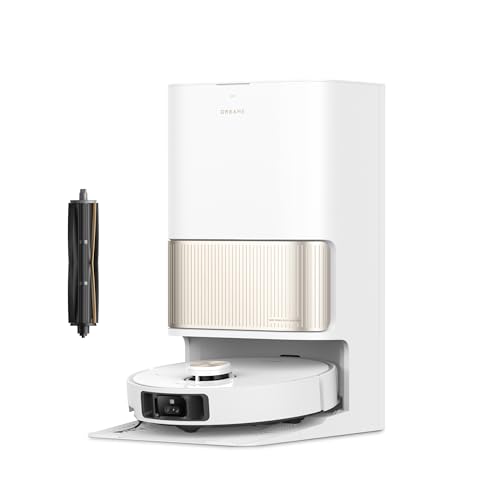
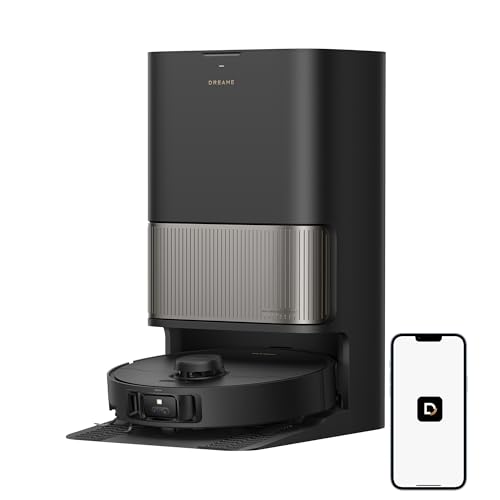
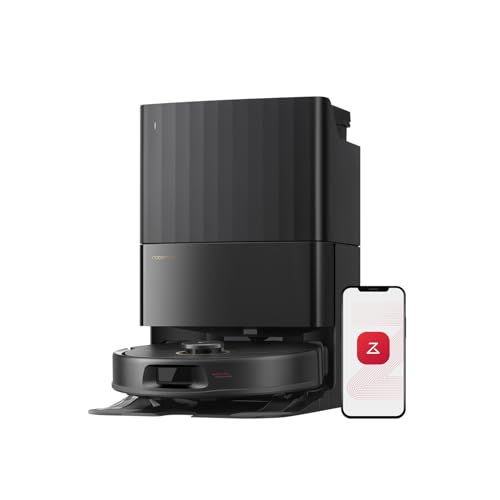
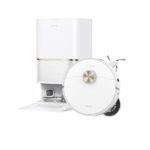
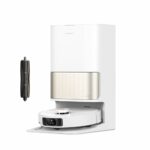
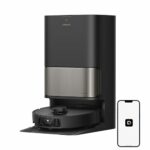
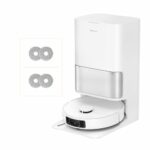
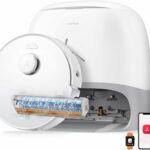
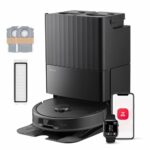
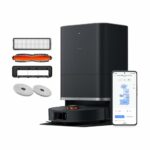
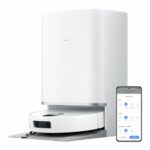
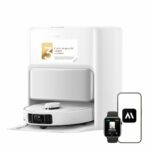
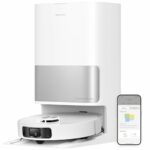
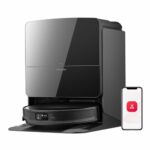
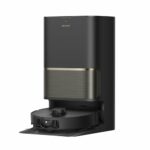
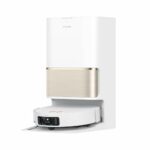
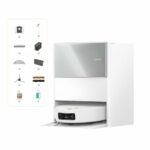
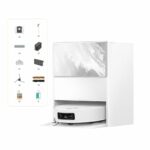
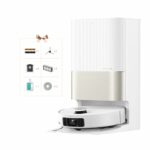
We're looking at three high-end robots from 2024 and 2025 that represent different approaches to automated cleaning. The Dreame L40 Ultra arrived in 2024 as a feature-packed option, whilst Dreame's own L40s Pro Ultra launched in 2025 with enhanced capabilities. Roborock enters the comparison with the Qrevo S5V, also from 2025, bringing its reputation for reliability to the table.
All three come equipped with multifunctional bases that handle mop washing and drying alongside automatic dust emptying. They're designed for homeowners who want minimal intervention in their cleaning routines, though the extent of automation varies between them.
Power and Suction
The suction power gap here is substantial. Whilst the L40 Ultra provides 11,000 Pa and the Qrevo S5V reaches 12,000 Pa, the L40s Pro Ultra jumps to 19,000 Pa. In practical terms, this matters most on carpets and rugs where embedded dirt requires more extraction force.
Brush design differs noticeably. The L40 Ultra uses Dreame's TriCut 3.0 system, which combines bristles with cutting elements to tackle hair tangles. The Qrevo S5V employs Roborock's DuoDivide brush that channels hair towards the central suction point. The L40s Pro Ultra features a dual-brush configuration, though the exact mechanism isn't detailed in the specifications.
Both Dreame models lift their main brushes during mopping to avoid dragging debris across wet floors. The Qrevo S5V doesn't offer this feature. Similarly, the Dreame pair elevate and extend their side brushes to reach into corners more effectively, capabilities absent from the Roborock. All three include anti-tangle technology on their side brushes.
Mopping System
Each robot uses dual rotating mops, but the Dreame models add a movement system called RoboSwing that allows them to reach slightly under furniture edges. The Qrevo S5V extends its mops for border cleaning without this swinging motion.
Mop lift height sits at 10.5 mm for both Dreame robots and 10 mm for the Qrevo S5V. These small differences rarely matter in real-world use, though the extra half-millimetre might help on thicker carpet transitions.
A significant distinction emerges with mop removal. The Dreame L40 Ultra and L40s Pro Ultra automatically detach their mops at the base when you want to vacuum without mopping. The Roborock requires manual removal if you prefer vacuuming alone. This becomes relevant in homes where some rooms need only vacuuming whilst others require both functions.
Dirt detection separates these models further. Both Dreame robots monitor mop cleanliness and floor dirtiness, adjusting their cleaning intensity accordingly. The Qrevo S5V lacks these sensors, following predetermined cleaning patterns regardless of actual soil levels.
Navigation System
All three navigate using LiDAR turrets for room mapping. The divergence comes with additional sensors. The Dreame L40 Ultra and L40s Pro Ultra incorporate dual AI cameras, frontal 3D laser sensors, and LED lighting for night-time vision. They can access their cameras remotely, turning the robot into a mobile home monitor.
The Qrevo S5V takes a more traditional approach without cameras or 3D sensors. It still avoids obstacles effectively but doesn't identify what those obstacles are. The Dreame models recognise specific items—the L40 Ultra knows 100 different objects, whilst the L40s Pro Ultra extends this to 180. This includes pets and curtains, allowing the robots to adjust behaviour around animals or avoid getting tangled in drapes.
For households with pets, the camera-based recognition on the Dreame models means they'll work around sleeping animals rather than bumping into them. The Roborock will avoid them as obstacles but won't specifically identify them as pets.
Battery and Autonomy
Each robot carries a 5,200 mAh battery, yet runtime varies. The L40s Pro Ultra achieves 220 minutes of operation, the L40 Ultra manages 194 minutes, and the Qrevo S5V runs for 180 minutes. These differences stem from efficiency variations in motors, suction levels, and software optimisation.
In practical application, the L40s Pro Ultra's longer runtime helps in larger homes where the robot might need to cover extensive areas without returning to recharge mid-session. The gap between 180 and 220 minutes can mean the difference between completing a whole-house clean in one go or requiring a charging break.
Smart Features
Obstacle climbing capability shows minor variation. The Dreame L40 Ultra crosses 22 mm thresholds, the Qrevo S5V handles 20 mm obstacles, and the L40s Pro Ultra manages simple steps without a specific height listed. For most UK homes with standard door thresholds, all three cope adequately.
Voice assistant integration differs between brands. Both Dreame robots include their own voice assistant alongside compatibility with Alexa and Google Home. The Qrevo S5V works with external assistants but doesn't have a proprietary system. This matters little if you already use Alexa or Google, but Dreame's built-in assistant responds to commands without requiring internet connectivity.
Multifunctional Base
All three bases automatically empty dust, wash mops with hot water, and dry them with warm air. The core functionality remains consistent across the range.
Base cleaning technology progresses through generations. The L40 Ultra features second-generation self-cleaning for its washing tray, the L40s Pro Ultra advances to third-generation, and the Qrevo S5V doesn't specify automatic tray cleaning. In the long term, this affects how often you'll need to manually clean the base itself.
Detergent dispensing appears only on the Dreame models. Their bases include dedicated tanks that add cleaning solution during mop washing. The Roborock requires you to add detergent manually to the water tank if desired. For those who prefer automated maintenance, the Dreame approach eliminates another manual step.
Storage capacity favours Dreame. Their dust bags hold 3.2 litres versus 2.7 litres in the Roborock. Clean water tanks measure 4.5 litres on Dreame units compared to 4 litres on the Qrevo S5V, whilst dirty water capacity sits at 4 litres versus 3.5 litres. These differences mean the Dreame bases require emptying and refilling less frequently.
Both Dreame models offer optional kits for connecting to household plumbing, though these require separate purchase. The Roborock doesn't provide this option. Plumbing connection eliminates manual water management entirely, though it's worth noting this remains an additional investment rather than a standard feature.
Dimensions
The Qrevo S5V measures 96.5 mm tall, making it the shortest of the three. Both Dreame robots stand at 103.8 mm. This 7.3 mm difference determines whether the robot fits under certain furniture. Low-clearance sofas and bed frames benefit from the Roborock's reduced height.
Diameter varies minimally—350 mm for Dreame models, 353 mm for the Roborock. This won't affect manoeuvrability in standard UK homes.
Base dimensions show the Qrevo S5V measuring 521 mm tall versus 590.5 mm for Dreame units. The Roborock base is wider at 487 mm depth compared to 456.7 mm for Dreame. All measure 340 mm wide. The Dreame bases occupy less floor space but require more vertical clearance, whilst the Roborock spreads out more but sits lower.
Real-World Usage
For larger homes exceeding 150 square metres, the L40s Pro Ultra's extended runtime and higher suction prove advantageous. Its 220-minute battery handles extensive floor plans without interruption, whilst the powerful suction maintains performance across multiple rooms.
Pet owners face a choice between navigation sophistication and physical dimensions. The Dreame robots identify and work around animals whilst offering dirt detection to tackle pet-related mess more thoroughly. However, the Qrevo S5V's lower profile reaches under more furniture where pet hair accumulates.
Homes with varied flooring benefit from the automatic mop removal on Dreame models. You can designate carpeted areas for vacuuming only whilst mopping hard floors, with the robot handling mop attachment automatically. The Roborock requires manual intervention to switch between modes.
Maintenance frequency differs based on base capacity. The Dreame models' larger tanks suit households that prefer weekly rather than twice-weekly refilling. The detergent dispensing adds convenience for those who want consistent mopping results without remembering to add solution manually.
Low-furniture environments favour the Qrevo S5V. Its reduced height accesses spaces the taller Dreame robots cannot reach, which matters particularly in homes with platform beds or low-clearance sofas.
Conclusion: Which to Choose?
Choose the Dreame L40 Ultra if you want advanced AI features and dirt detection without paying for the absolute highest specifications. It suits medium to large homes where camera-based navigation and automatic mop removal simplify daily cleaning. The 11,000 Pa suction handles most situations adequately, though homes with thick carpets might notice limitations.
Choose the Dreame L40s Pro Ultra if you need maximum suction power and the longest runtime available here. The 19,000 Pa extraction suits homes with deep-pile carpets or multiple pets. Extended battery life supports larger properties, whilst the third-generation base cleaning reduces maintenance intervals. This represents the most capable option for those wanting cutting-edge specifications.
Choose the Roborock Qrevo S5V if fitting under furniture matters more than camera-based navigation. Its lower profile accesses spaces the Dreame models cannot reach. The proven reliability of Roborock's systems appeals to those who prioritise dependable operation over advanced AI features. It's well-suited to homes with straightforward layouts where obstacle recognition beyond basic avoidance isn't essential, particularly where budget considerations favour the established Roborock ecosystem.