✨ VS Analyses · VacuumSpain comparison technology. Explanation created with AI from verified technical data.
Introduction
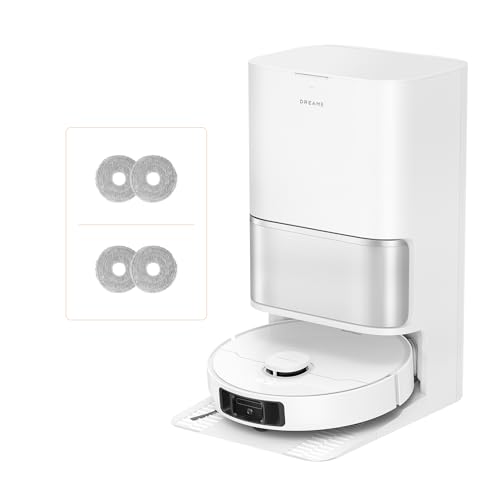
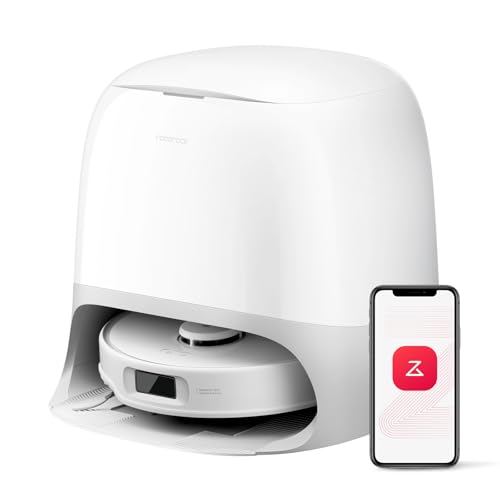
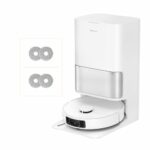
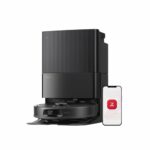
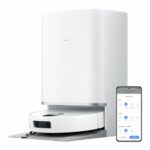
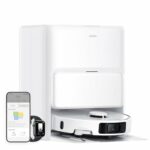
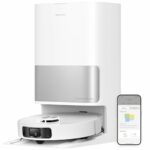
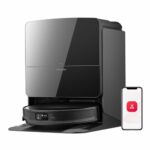
The Dreame L10s Ultra Gen 3 arrives in November 2025 as one of the latest additions to the premium robot vacuum market, whilst the Roborock Qrevo Curv S5X has been establishing itself since 2024. Both machines represent flagship offerings from two manufacturers known for their multifunctional bases and advanced mopping capabilities. These aren't entry-level devices—they're designed for users seeking comprehensive floor care with minimal intervention.
The Dreame model brings fresh engineering to the table with notable improvements in suction power and battery runtime. The Roborock, meanwhile, leverages the brand's established reputation for reliability and refined software. Both robots target medium to large homes where automated mopping and vacuuming can genuinely reduce household workload, particularly for families dealing with daily dirt accumulation or pet owners managing shedding.
Power and Vacuuming Performance
The Dreame L10s Ultra Gen 3 pushes suction to 25,000 Pa, a significant step up from the Roborock Qrevo Curv S5X's 18,500 Pa. In practical terms, this translates to better pickup on carpets and more effective debris removal from textured floors. For homes with rugs or high-pile carpeting, that extra power can make a noticeable difference when dealing with embedded dirt or pet hair.
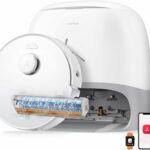
Where the models diverge most is in brush design. The Roborock employs the DuoDivide anti-tangle system, which channels hair towards the centre suction point to minimise wrapping around the roller. This matters enormously if you live with long-haired pets or family members, as maintenance intervals stretch out considerably. The Dreame uses a simpler brush design without specific anti-tangle features on the main roller, though it does include a side brush that extends to reach corners more effectively—a feature both robots share.
Interestingly, the Roborock also incorporates anti-tangle technology into its side brush, whilst the Dreame does not. Neither robot lifts its main brush during mopping, and neither raises the side brush either. For households prioritising low-maintenance vacuuming, especially with pets, the Roborock's dual anti-tangle approach offers a tangible advantage.
Mopping Systems
Both machines use dual rotating mop pads and can extend them to reach edges. The Dreame L10s Ultra Gen 3 adds a movement mechanism to its mop extension, which allows the pads to manoeuvre slightly under furniture edges and skirting boards. The Roborock Qrevo Curv S5X offers edge extension without this additional articulation.
Mop lift height differs marginally: 10.5 mm on the Dreame versus 10 mm on the Roborock. Whilst half a millimetre sounds negligible, it can determine whether the robot successfully clears certain low-pile rugs or transitions between rooms without dragging damp mops across carpets.
A critical distinction emerges in dirt detection. The Roborock identifies soiling both on its mop pads and on the floor itself, triggering additional cleaning passes or mop rewashes as needed. The Dreame lacks this capability, relying instead on scheduled or manual intervention. For kitchens prone to spills or homes with muddy paw prints, the Roborock's adaptive response can improve cleaning outcomes without user input.
Mop washing happens differently too. The Roborock heats water for washing the pads, which helps dissolve grease and sanitise fabric more effectively than cold water. The Dreame washes with cold water but compensates with a third-generation self-cleaning tray system, compared to the Roborock's 2.0 version. Both dry mops with hot air, reducing odour and bacteria growth between cleaning sessions.
The Dreame includes a detergent dispenser in the base, allowing automated dosing during mop washes. The Roborock does not offer this feature, requiring manual addition of cleaning solution if desired. For those who prefer a fully hands-off experience, the Dreame's detergent tank adds convenience.
Navigation and Intelligence
Both robots navigate using LiDAR 3.0 turrets and incorporate obstacle avoidance systems. The Dreame L10s Ultra Gen 3 adds a frontal 3D laser sensor, which enhances precision when detecting low-lying objects or furniture legs. The Roborock relies on its core LiDAR without this supplementary sensor.
Pet recognition appears exclusively on the Dreame, useful if you want the robot to avoid disturbing sleeping animals or navigate around pet bowls more intelligently. The Roborock does not identify pets specifically, though its obstacle avoidance still functions effectively in their presence.
AI-driven cleaning strategies differ: the Dreame uses CleanGenius, whilst the Roborock employs SmartPlan 2.0 alongside its RR Mason 11.0 processing algorithm. Both systems adapt routes and cleaning intensity based on room layout and usage patterns, though implementation details vary between manufacturers. Neither robot includes a camera for remote monitoring or LED lighting for low-light navigation.
Battery and Runtime
Battery capacity sits at 5,200 mAh for both models, yet the Dreame L10s Ultra Gen 3 achieves 231 minutes of runtime compared to the Roborock's 180 minutes. That's nearly an hour's difference, attributable to software optimisation and component efficiency rather than raw cell capacity.
For larger homes or multi-storey properties, the Dreame's extended autonomy reduces the likelihood of mid-clean returns to the base for recharging. The Roborock's 180 minutes still covers most single-level homes comfortably, but the gap becomes relevant in sprawling layouts or when combining vacuuming with intensive mopping cycles.
Smart Features
Both robots manage 20 mm obstacles, sufficient for standard door thresholds and minor floor transitions. Neither employs a robotic arm, and neither includes a proprietary voice assistant, though both integrate with external platforms like Alexa and Google Home for voice control.
Multifunction Base Station
The base stations handle dust collection, mop washing, and mop drying on both models. The Dreame's dust bag holds 3.2 litres versus the Roborock's 2.5 litres, extending intervals between bag replacements—particularly useful for heavy shedding seasons or dusty environments.
Water tank capacities favour the Dreame as well: 4.5 litres clean and 4 litres dirty, compared to 4 litres and 3 litres respectively on the Roborock. Larger tanks mean fewer refills and empties, which matters during whole-home mopping sessions or when running multiple cleaning cycles before maintenance.
The Dreame offers an optional plumbing connection kit for purchase separately, enabling direct water supply and drainage. The Roborock does not provide this option. Whilst the kit isn't integrated from the factory, it appeals to users wanting to eliminate manual tank handling entirely. Neither base includes UV disinfection or automatic mop pad changing.
Dimensions and Footprint
The robots themselves measure nearly identically: 350 mm diameter and 97 mm height for the Dreame, versus 352 mm diameter and 98 mm height for the Roborock. These millimetre differences won't affect clearance under furniture in any meaningful way.
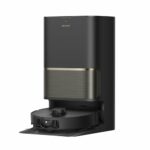
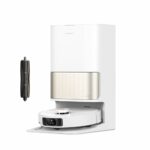
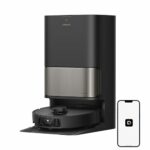
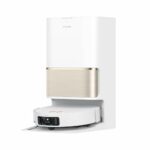
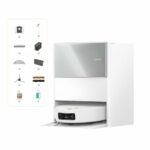
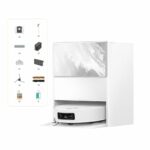
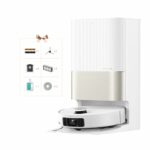
Base dimensions tell a different story. The Dreame measures 340 mm wide, 590 mm tall, and 457 mm deep—a taller, narrower profile. The Roborock base forms a more compact cube at 450 mm in all three dimensions. The Dreame's slimmer width may suit tighter alcoves or corners, whilst the Roborock's lower height fits more easily under counters or shelving. Consider your intended placement when weighing these differences.
Real-World Use Scenarios
For homes with pets, the Roborock Qrevo Curv S5X's DuoDivide brush and side brush anti-tangle systems reduce maintenance frustration significantly. The Dreame's higher suction compensates somewhat, but hair management still requires more frequent roller cleaning. If you're dealing with golden retrievers or Persian cats, the Roborock's design saves time.
In larger properties, the Dreame L10s Ultra Gen 3's 231-minute runtime and bigger tanks reduce interruptions. The extra suction also helps on thicker carpets or when transitioning between hard floors and rugs. The detergent dispenser and third-generation tray cleaning add convenience for those who prefer minimal intervention.
For kitchens and high-traffic areas prone to spills, the Roborock's dirt detection on floors and mops triggers adaptive cleaning, whilst its hot water mop washing tackles grease more effectively. These features suit families with young children or active cooking routines where messes happen unpredictably.
The Dreame's pet recognition and 3D laser sensor enhance navigation around toys, cables, and resting animals. If your home has variable clutter or pets that lounge in doorways, these sensors improve route efficiency and reduce stuck incidents.
Conclusion: Which Should You Choose?
Choose the Dreame L10s Ultra Gen 3 if: you have a large home where extended runtime matters, prefer the convenience of an integrated detergent dispenser, want higher suction power for carpets, or plan to add the optional plumbing kit later. It suits users prioritising raw performance and tank capacity over anti-tangle maintenance.
Choose the Roborock Qrevo Curv S5X if: you live with long-haired pets and want minimal brush maintenance, value adaptive dirt detection for responsive mopping, prefer hot water mop washing for better hygiene, or need a more compact base footprint. It's ideal for pet owners and those seeking refined automation with proven reliability from an established brand.