Introduction
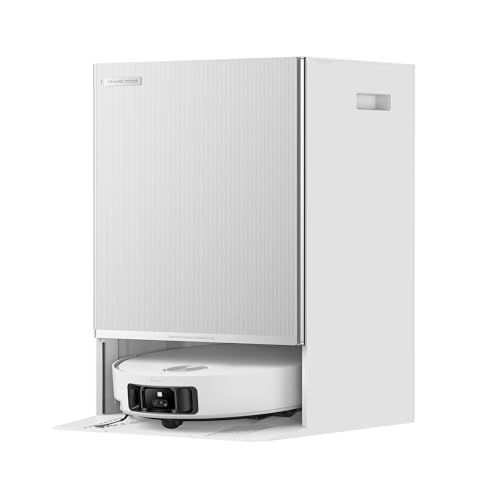
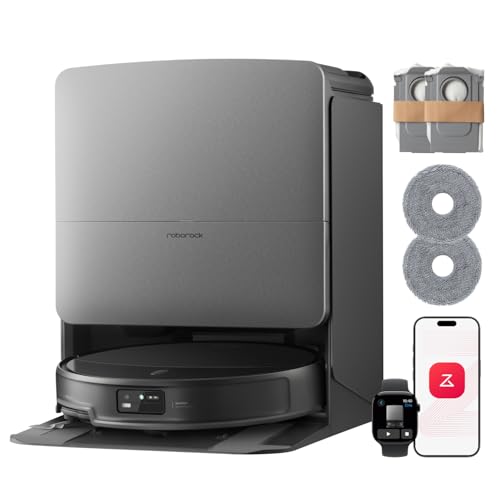
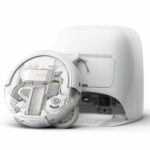
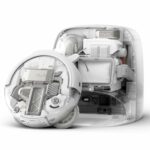
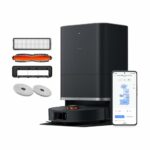
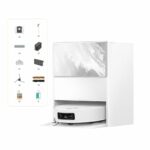
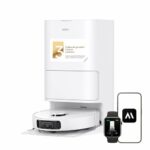
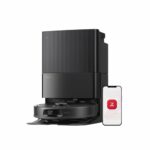
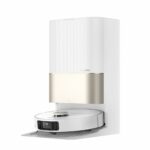
This comparison brings together three premium robot vacuum cleaners from two of the industry's most respected manufacturers. The Dreame Matrix10 Ultra and Dreame X50 Ultra Blanca represent the Chinese brand's 2025 lineup, whilst the Roborock Saros 20 is the latest February 2026 release from the world's leading robot vacuum brand. All three models feature comprehensive multifunctional bases with automatic mop washing and drying capabilities, making them suitable for households seeking a truly hands-off cleaning experience.
The Matrix10 Ultra sits at the top of Dreame's range with advanced features like automatic mop replacement and triple detergent dispensing. The Roborock Saros 20 brings StarSight 2.0 navigation and an impressive 36,000 Pa suction power. Meanwhile, the X50 Ultra Blanca offers UV disinfection and represents a more accessible entry point into Dreame's premium ecosystem. Each model targets users with medium to large homes who want minimal intervention in their cleaning routines.
Key Differences at a Glance
- Suction power varies significantly: 36,000 Pa (Saros 20), 30,000 Pa (Matrix10 Ultra), 20,000 Pa (X50 Ultra)
- The Matrix10 Ultra includes automatic mop changing with 3 pairs stored in the base
- Only the X50 Ultra Blanca features UV disinfection in its base station
- The Saros 20 offers the greatest mop lift height at 12-22 mm versus 10.5 mm on both Dreame models
- Water heating differs: Matrix10 Ultra uses hot water for mopping floors, Saros 20 warm water, X50 Ultra cold water
- The Matrix10 Ultra has triple detergent dispensing versus single on the other two models
- Dust bag capacity: 3.2 L (both Matrix10 and X50 Ultra) versus 2.5 L (Saros 20)
- The Saros 20 is notably slimmer at 79.8 mm height compared to 89 mm on both Dreame models
- Object recognition: 300 items (Saros 20), 240 (Matrix10 Ultra), 200 (X50 Ultra)
Power and Suction
The suction power hierarchy is clear here. Roborock's Saros 20 leads with 36,000 Pa, giving it a substantial advantage for deep carpet cleaning and extracting debris from textured surfaces. The Matrix10 Ultra delivers 30,000 Pa, which remains excellent for most household scenarios. The X50 Ultra Blanca sits at 20,000 Pa, still perfectly adequate for hard floors and low-pile carpets but less suited to thick rugs.
Where the brush systems differ is in their approach to hair management. The Saros 20 employs Roborock's DuoDivide anti-tangle design, which channels hair towards the central suction point rather than wrapping it around the roller. The two Dreame models use a dual-brush anti-tangle system. Both approaches work well in practice, though the DuoDivide has earned particular praise from pet owners.
All three robots raise their main brushes during mopping to avoid dragging debris across wet floors. They also feature extendable side brushes for reaching into corners and can lift these brushes when mopping to prevent flicking water onto carpets. The side brushes incorporate anti-tangle technology across all models.
Mopping
Each robot uses dual rotating mopads, but the implementation details reveal important distinctions. The Matrix10 Ultra and X50 Ultra both include Roboswing, Dreame's system that shifts the robot's rear end slightly to push mops under furniture overhangs and cabinet toe kicks. The Saros 20 achieves edge coverage through mop extension alone.
Mop lift height matters when transitioning between hard floors and carpets. The Saros 20 manages 12-22 mm of lift, ensuring mops stay well clear of most carpet surfaces. The Dreame models lift 10.5 mm, which handles standard transitions but might occasionally brush against thicker rugs.
Water temperature creates a noticeable performance gap. The Matrix10 Ultra heats water to genuinely hot temperatures for floor mopping, which helps dissolve grease and stubborn marks more effectively. The Saros 20 uses warm water for its mopping routine. The X50 Ultra sticks with cold water, which works fine for maintenance cleaning but won't tackle dried-on spills as aggressively.
When it comes to mop maintenance, the Matrix10 Ultra stands alone with its automatic mop changing system. It stores three pairs of mops in the base and swaps them during cleaning sessions, ensuring consistently fresh pads throughout large homes. The other two models use fixed mops that wash at the base station but don't get replaced mid-clean. All three detect dirt on mops and adjust their washing cycles accordingly, and they can detect soiled areas on floors to trigger additional passes.
Base station mop washing uses hot water on the Matrix10 Ultra, warm water on the Saros 20, and cold water on the X50 Ultra. Hot air drying features on all three models, accelerating drying times and reducing bacterial growth. The Matrix10 Ultra's base self-cleans at 3.5° intervals, the Saros 20 uses hot water for self-cleaning, and the X50 Ultra self-cleans every 3° of operation.
Navigation System
Navigation technology is sophisticated across the board. The Dreame models use retractable LiDAR systems, whilst the Saros 20 features StarSight 2.0. All three incorporate dual RGB cameras for AI-powered object recognition and 3D laser sensors for close-range obstacle detection.
The Saros 20 recognises up to 300 different object types, the Matrix10 Ultra handles 240, and the X50 Ultra identifies 200. In practical terms, this means the Roborock model has slightly better odds of correctly identifying unusual items and adjusting its behaviour appropriately. All three detect pets and curtains specifically, and provide remote camera access through their respective apps.
LED lighting enables night-time navigation without relying solely on infrared sensors. The Matrix10 Ultra runs AI Sage 15.0 with CleanGenius intelligence, whilst the X50 Ultra uses the earlier AI Sage 13.0 with CleanGenius. The Saros 20 employs SmartPlan AI but Roborock hasn't publicly detailed the underlying processor architecture.
Battery and Autonomy
All three robots share identical 6,400 mAh battery packs, but runtime figures tell different stories. The Matrix10 Ultra achieves 260 minutes of operation, sufficient for approximately 300 square metres in a single session. The X50 Ultra manages 180 minutes, suitable for homes up to around 200 square metres. Roborock hasn't published specific runtime data for the Saros 20, though its higher suction power typically correlates with slightly reduced autonomy compared to lower-powered alternatives.
The practical implication is that the Matrix10 Ultra handles larger properties without needing to recharge mid-clean. The X50 Ultra works well for average-sized homes but might require a top-up charge in particularly spacious layouts. The Saros 20 will likely fall somewhere between these extremes, though its powerful motor could edge it towards the shorter end of the spectrum during intensive cleaning modes.
Smart Features
Each robot climbs simple obstacles up to 20 mm, allowing them to mount standard door thresholds and carpet edges without assistance. None includes a robotic arm for manipulating objects, which remains a feature reserved for experimental models rather than mainstream releases.
Voice assistant support appears on all three, both through proprietary systems and integration with Amazon Alexa and Google Home. This allows hands-free control and scheduling through voice commands, though the sophistication of responses varies between manufacturers' own assistants.
Multifunctional Base Station
The base stations handle automatic dust emptying, mop washing, and mop drying across all models. Where they diverge is in capacity and additional features.
The Matrix10 Ultra's triple detergent dispenser accommodates different cleaning solutions for various floor types or cleaning scenarios. The Saros 20 and X50 Ultra each provide single detergent reservoirs, which works perfectly well if you're using one universal floor cleaner.
Dust bag capacity sits at 3.2 litres for both Dreame models versus 2.5 litres for the Saros 20. This translates to roughly two months between bag changes for the Dreame units in typical households, compared to perhaps six to seven weeks for the Roborock.
Clean water tanks measure 5.5 litres (Matrix10 Ultra), 4.5 litres (X50 Ultra), and 4 litres (Saros 20). Dirty water capacities are 4 litres for the Dreame models and 3 litres for the Roborock. Larger tanks mean less frequent refilling, particularly relevant for homes exceeding 150 square metres of hard flooring.
The X50 Ultra Blanca uniquely offers UV disinfection in its base, targeting bacteria and odours in the wastewater system. The Matrix10 Ultra and X50 Ultra both support optional plumbing connection kits purchased separately, automating water supply and drainage. The Saros 20 doesn't offer this option.
Dimensions
Robot height proves critical for accessing furniture. The Saros 20 measures just 79.8 mm tall, allowing it to slip under sofas and bed frames that the 89 mm Dreame models cannot reach. This 9 mm difference might seem trivial but frequently determines whether a robot can clean an entire room or must skip the areas beneath low-clearance furniture.
Diameter varies minimally: 353 mm for the Saros 20, 350 mm for both Dreame models. All three navigate standard doorways and furniture arrangements without difficulty.
Base station footprints differ more substantially. The X50 Ultra's base is most compact at 340 mm wide, whilst the Matrix10 Ultra spans 416 mm and the Saros 20 381 mm. Height ranges from 488 mm (Saros 20) to 590.5 mm (X50 Ultra), with depth between 456.7 mm and 475 mm. The Saros 20 presents the lowest profile, potentially fitting under counters or shelving that would block the taller Dreame bases.
Real-World Usage
For large homes exceeding 200 square metres, the Matrix10 Ultra's extended battery life and substantial water tanks reduce interruptions. Its hot water mopping and automatic mop changing suit households with children or pets where floors accumulate sticky residues and require genuinely deep cleaning rather than surface maintenance.
The Saros 20's slim profile makes it ideal for homes with low furniture, and its powerful suction excels with thick carpets and pet hair. The warm water mopping strikes a reasonable balance between cleaning efficacy and energy consumption. Its smaller base footprint helps in compact utility rooms or kitchens where floor space is limited.
The X50 Ultra Blanca works well for medium-sized homes prioritising hygiene, thanks to its UV disinfection system. Cold water mopping suits properties with predominantly sealed hard floors that don't accumulate heavy soiling. Its battery life handles typical three-bedroom layouts comfortably, though larger properties might see it returning to base for a recharge.
Pet owners benefit from the anti-tangle brush systems across all models, though the Saros 20's DuoDivide design and higher suction give it a slight edge with long-haired breeds. The detection of 300 objects helps it navigate around pet toys and food bowls more reliably.
Conclusion: Which to Choose?
Choose the Dreame Matrix10 Ultra if you want the most comprehensive automated cleaning system available. Its automatic mop changing, hot water floor mopping, triple detergent system, and excellent battery life make it the top choice for large homes or families seeking minimal manual intervention. The higher price buys genuine convenience rather than marginal improvements.
Choose the Roborock Saros 20 if your home features low furniture that rules out taller robots, or if you have substantial carpeted areas and pets that demand maximum suction power. Its slim 79.8 mm profile and 36,000 Pa suction address specific needs that the Dreame models cannot match. Roborock's reputation for reliability and app quality provides additional reassurance.
Choose the Dreame X50 Ultra Blanca if you want premium features at a more accessible price point and hygiene is a priority. The UV disinfection, generous dust bag capacity, and solid all-round performance suit medium-sized homes without the budget for the Matrix10 Ultra. It's particularly sensible for households with predominantly hard floors where cold water mopping remains effective.