Introduction
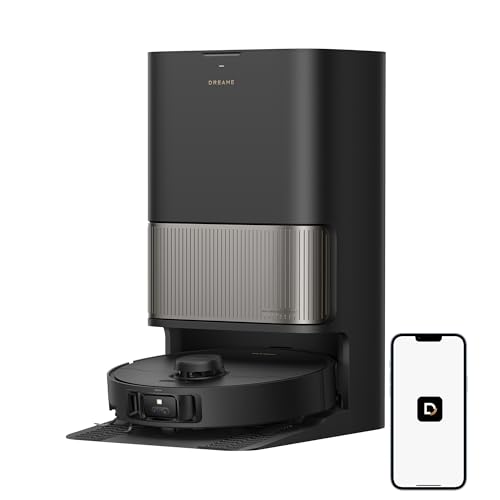
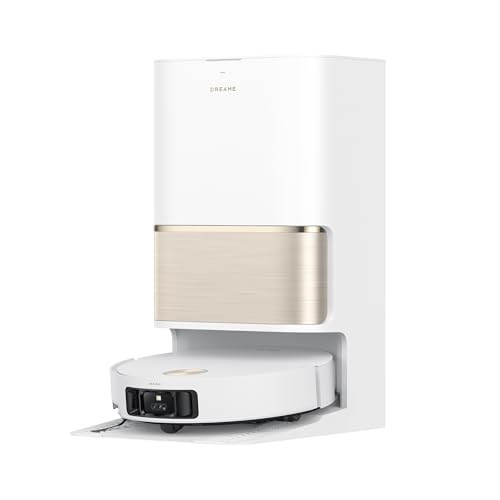
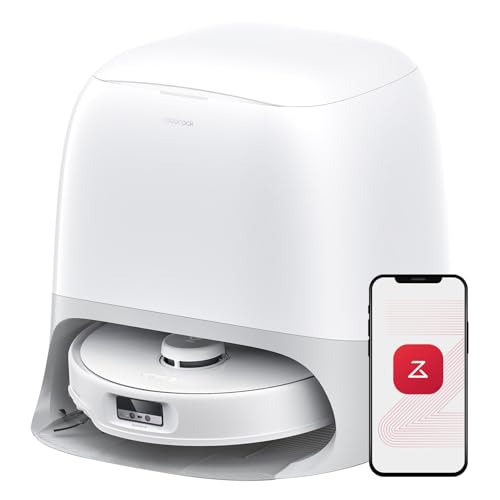
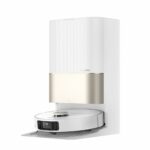
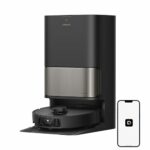
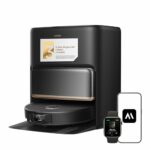
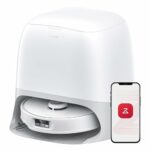
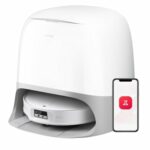
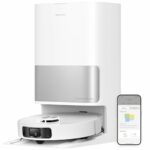
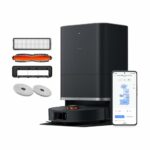
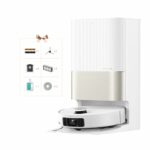
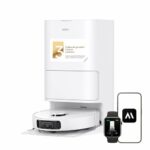
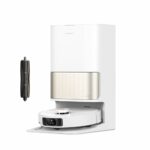
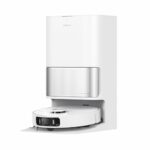
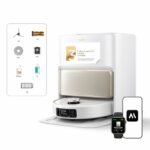
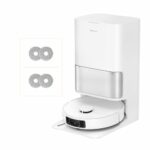
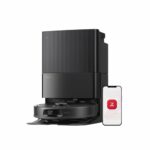
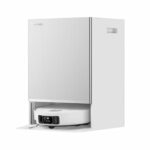
When looking at premium robot vacuum cleaners launching in 2025, the Dreame L40s Pro Ultra and Dreame L50 Pro Ultra represent the latest evolution from a manufacturer that's been pushing hard against established leaders. Both are high-end models with multifunctional bases, dual rotating mopas, and sophisticated AI navigation systems. The Roborock Qrevo Curv, released in 2024, brings the experience of the world's leading robot vacuum brand to this comparison, featuring its own set of advanced technologies and a proven track record.
These aren't entry-level devices. Each one targets households that want comprehensive automation: powerful suction, intelligent mopping with automatic mopa washing and drying, and navigation that can handle complex floor plans. The differences between them might seem subtle on paper, but in daily use, those variations can significantly affect cleaning performance and convenience.
Key Differences at a Glance
- The Dreame L50 Pro Ultra features a retractable LiDAR system, whilst the L40s Pro Ultra and Qrevo Curv use traditional turret-mounted LiDAR
- Battery capacity differs substantially: 6,400 mAh in both the L50 Pro Ultra and Qrevo Curv versus 5,200 mAh in the L40s Pro Ultra
- Suction power ranges from 18,500 Pa in the Qrevo Curv to 19,500 Pa in the L50 Pro Ultra
- The Dreame models can automatically dismount their mopas at the base for vacuuming-only sessions; the Qrevo Curv cannot
- Only the Dreame robots include a detergent dispenser and can recognise curtains as obstacles
- The Qrevo Curv offers greater mopa lift (10-20 mm versus 10.5 mm) and longer autonomy (240 minutes)
- Roborock's base is noticeably more compact with a cubic design (450x450x450 mm) compared to Dreame's taller stations
- The L50 Pro Ultra has the lowest profile at 89 mm height, making it better for sliding under furniture
Suction Power and Brushing
The Dreame L50 Pro Ultra edges ahead with 19,500 Pa of suction, followed closely by the L40s Pro Ultra at 19,000 Pa. The Roborock Qrevo Curv delivers 18,500 Pa. In practical terms, all three provide more than enough power for embedded dirt in carpets and debris on hard floors. The differences become relevant mainly on thick rugs or when dealing with ground-in mess.
Brush technology diverges between manufacturers. The Dreame models use a dual-brush system called HyperStream, which anchors two brushes at one end to minimise hair tangling. Roborock employs its DuoDivide design, which pushes hair towards the central suction gap rather than wrapping it around the roller. Both approaches work well for pet owners, though the practical advantage depends on hair length and shedding patterns.
All three robots can lift their main brushes when mopping, preventing wet rollers from dragging across carpets. The side brushes on both Dreame units can also elevate during mopping, a feature the Qrevo Curv lacks. This means the Roborock's side brush remains in contact with the floor even when wet mopping, which can occasionally flick water onto baseboards. Each model includes an extendable side brush for better edge cleaning, and all feature anti-tangle designs.
Mopping Systems
Each robot uses dual rotating mopas that spin against the floor rather than simply dragging a cloth. The Dreame models incorporate a movement system called Roboswing, which shifts the robot's rear end slightly to push the mopa further under furniture edges and along walls. The Qrevo Curv relies on mopa extension alone without the swaying motion.
Mopa lift differs between the devices. The Dreame L40s Pro Ultra and L50 Pro Ultra raise their mopas by 10.5 mm when moving over carpets or returning to the base. The Qrevo Curv offers a variable lift between 10 and 20 mm, providing better clearance for thicker rugs. In homes with high-pile carpets, that extra lift can prevent damp mopas from touching fabric.
A significant functional difference appears in how the robots handle vacuuming-only tasks. Both Dreame models can automatically remove their mopas at the base, allowing them to vacuum without carrying the mopping assembly. The Qrevo Curv keeps its mopas attached unless you manually remove them. For households that frequently switch between mopping and dry vacuuming, the automatic dismount saves effort.
All three detect dirt on their mopas and on the floor itself, triggering additional cleaning passes or mopa washing cycles when needed. This adaptive behaviour helps maintain consistent results across different rooms and soil levels.
Navigation Intelligence
Navigation hardware varies in one notable way: the Dreame L50 Pro Ultra uses a retractable LiDAR sensor that lowers into the body when not needed, reducing the robot's height to 89 mm. The L40s Pro Ultra and Qrevo Curv both have fixed turret-mounted LiDAR, resulting in heights of 103.8 mm and 103 mm respectively. That 14-15 mm difference can determine whether a robot fits under certain sofas or cabinets.
All three employ dual AI cameras and frontal 3D laser sensors for obstacle detection. The Dreame models recognise 180 different object types, whilst the Qrevo Curv identifies 62. In real-world use, this means the Dreame robots might better distinguish between similar objects—say, a shoe versus a slipper—but the Qrevo Curv still avoids obstacles reliably. The Dreame units also detect curtains and adjust their behaviour to avoid tangling, something the Qrevo Curv doesn't specifically address.
Each robot includes LED lighting for low-light navigation and remote camera access through the app, allowing you to check on your home whilst the robot cleans. Pet owners benefit from specific pet recognition on all three models.
Battery and Autonomy
Battery capacity tells an interesting story. The Dreame L40s Pro Ultra carries a 5,200 mAh battery, delivering 220 minutes of runtime. Its sibling, the L50 Pro Ultra, packs 6,400 mAh but runs for 200 minutes—suggesting higher power consumption despite the larger battery. The Roborock Qrevo Curv, also with 6,400 mAh, achieves 240 minutes of autonomy.
For most homes under 200 square metres, any of these runtimes suffices. Larger properties or those with multiple levels might benefit from the Qrevo Curv's longer single-charge capability, reducing mid-clean recharging trips.
Smart Features
All three robots can climb single-step obstacles up to 20 mm, handling transitions between rooms and low thresholds without difficulty. None includes a robotic arm for additional object manipulation, nor is that feature common in this product category.
Each model has its own voice assistant built in, plus compatibility with external systems like Alexa and Google Home. This allows basic voice commands without pulling out your phone.
Multifunctional Base Station
The base stations handle mopa washing with hot water (60°C) and drying with heated air, preventing odours and bacterial growth. Both Dreame bases feature third-generation self-cleaning systems for the wash tray, whilst the Qrevo Curv uses a second-generation system. In practice, this affects how often you need to manually scrub the base's internal components.
The Dreame models include a detergent dispenser that adds cleaning solution during mopa washing. The Qrevo Curv lacks this, relying on water alone. For heavily soiled floors, the detergent option can improve results, though it does require periodic refilling.
Dust bag capacity reaches 3.2 litres in the Dreame bases versus 2.5 litres in the Roborock. Clean water tanks hold 4.5 litres (Dreame) and 4 litres (Roborock), with dirty water tanks at 4 litres and 3 litres respectively. Larger tanks mean less frequent emptying and refilling, particularly useful for bigger homes or multiple cleaning sessions.
Both Dreame stations can be retrofitted with an optional plumbing connection kit, purchased separately. This allows the base to refill clean water and drain dirty water automatically, though it requires installation work. The Qrevo Curv doesn't offer this option.
Physical Dimensions
The robots themselves measure similarly: 350 mm diameter for both Dreame models, 352 mm for the Qrevo Curv. Height differences matter more. At 89 mm, the Dreame L50 Pro Ultra fits under furniture that the 103-103.8 mm tall competitors cannot access. If your sofas or beds have low clearance, this becomes a decisive factor.
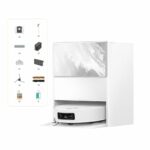
Base station footprints differ considerably. The Dreame bases stand 590.5 mm tall with a 340 mm width and 456.7 mm depth—a vertical, space-efficient design. The Roborock base forms a 450 mm cube, taking up more floor area but with a lower profile. Depending on where you plan to place the base, one form factor may suit your space better than the other.
Real-World Usage Scenarios
For homes with low furniture, the Dreame L50 Pro Ultra's 89 mm height provides access to areas the other two simply can't reach. This model also offers the highest suction and largest battery, though its autonomy is surprisingly shorter than the Qrevo Curv's.
Pet owners will appreciate the anti-tangle brushes on all three robots, though the Dreame models' ability to recognise curtains might prevent entanglement incidents that the Qrevo Curv could experience. The larger number of recognised objects (180 versus 62) may also help in cluttered households with children's toys or varied floor obstacles.
Households that frequently alternate between mopping and vacuuming benefit from the Dreame models' automatic mopa dismount feature. The Qrevo Curv requires manual removal, which isn't difficult but does add a step to your routine.
The Roborock's longer autonomy and higher mopa lift suit larger homes with thick carpets. Its more compact, cube-shaped base might fit better in tight spaces, despite occupying more floor area than the taller Dreame stations.
If you're considering plumbing integration for truly hands-off operation, only the Dreame models support this, though you'll need to purchase the kit separately and arrange installation.
Conclusion: Which One to Choose?
Choose the Dreame L40s Pro Ultra if you want strong performance with a slightly smaller battery at what may be a lower price point than its L50 sibling. It shares most features with the L50 Pro Ultra but accepts the taller 103.8 mm profile and 220-minute runtime. The detergent dispenser and automatic mopa removal make it well-suited to homes that mop frequently.
Choose the Dreame L50 Pro Ultra if low-profile access is essential. At 89 mm tall, it reaches under furniture the others cannot, and its retractable LiDAR contributes to that advantage. The highest suction power and largest battery (despite shorter runtime) make it the most powerful Dreame option, ideal for challenging cleaning environments with pets and varied floor types.
Choose the Roborock Qrevo Curv if you prefer the reliability and app experience of the world's leading robot vacuum brand. Its 240-minute autonomy is the longest here, and the 10-20 mm mopa lift handles thick carpets better. The more compact base design suits certain room layouts, and Roborock's established reputation provides confidence in long-term support and software updates. You'll manage without the detergent dispenser and automatic mopa removal, but gain proven performance and a mature ecosystem.