Introduction
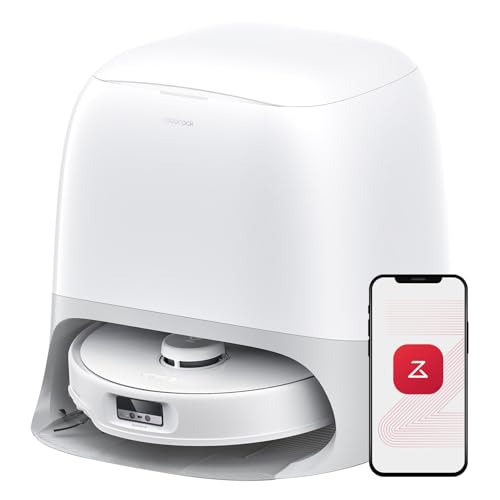
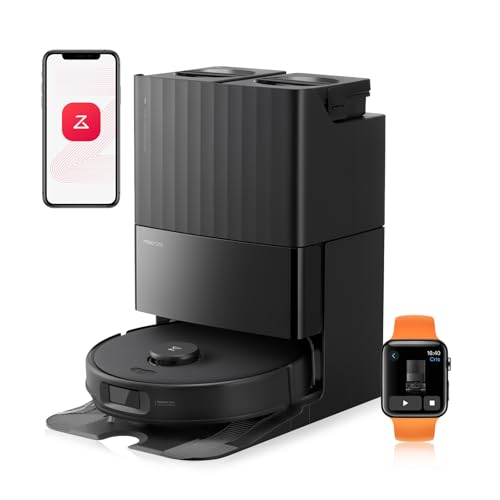
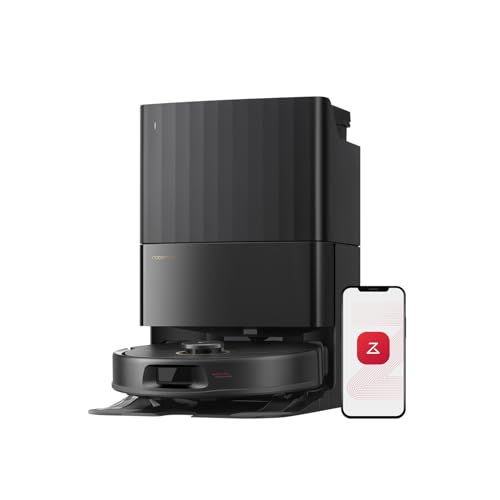
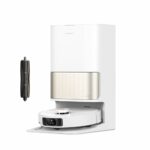
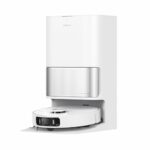
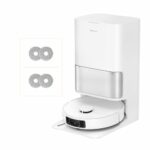
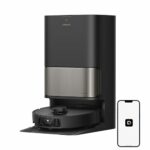
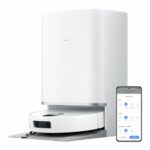
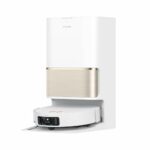
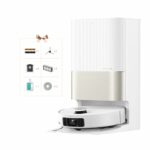
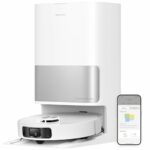
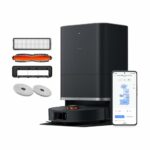
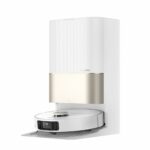
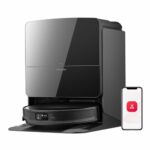
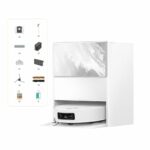
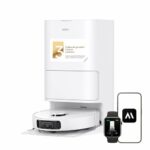
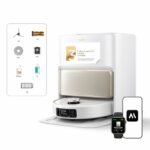
Roborock's 2024 and 2025 lineup brings us three models from the Qrevo family that share the same DNA but differ significantly in their capabilities. The Roborock Qrevo Curv represents the flagship offering from 2024, whilst the Roborock Qrevo Edge S5A arrived the same year as a more streamlined alternative. The Roborock Qrevo S5V completes this trio as a 2025 release, positioning itself as the most accessible option in terms of features.
All three models come equipped with multifunctional bases that handle automatic emptying, mop washing, and drying—essential for anyone seeking a genuinely hands-off cleaning experience. The differences lie in how far each model pushes the boundaries of automation, navigation intelligence, and physical capability. For larger homes with complex layouts, pets, or varied flooring types, these distinctions matter considerably.
Key Differences at a Glance
- The Qrevo Curv delivers 18,500 Pa suction versus 12,000 Pa on the S5V
- Battery capacity ranges from 6,400 mAh (Curv) to 5,200 mAh (Edge S5A and S5V)
- Only the Curv features an elevating main brush and dual AI cameras
- The Curv can climb stepped obstacles, whilst the others manage 20 mm thresholds
- The Edge S5A lacks the side brush extension found on the Curv but retains it over the S5V
- Dirt detection on mops and floors is absent from the S5V
- The Curv includes a built-in voice assistant, remote camera access, and LED night vision
- Base self-cleaning 2.0 technology appears only on the Curv and Edge S5A
- Physical dimensions vary, particularly base footprint and robot height
Power and Suction
The Roborock Qrevo Curv and Edge S5A both deliver 18,500 Pa of suction power, placing them firmly in premium territory for 2024. This level of performance proves particularly effective on medium-pile carpets and for extracting embedded dirt from hard floor grout lines. The S5V steps back to 12,000 Pa—still respectable for daily maintenance, though you'll notice the difference when tackling stubborn debris or pet hair on textured surfaces.
All three models employ Roborock's DuoDivide anti-tangle brush system, which channels hair towards the central suction point rather than wrapping it around the roller. In practice, this design significantly reduces the need to cut away tangled hair with scissors, something anyone with long-haired occupants or pets will appreciate.
Where the Curv distinguishes itself is with its elevating main brush. When mopping, the brush lifts clear of the floor, preventing the transfer of dry debris onto wet surfaces—a detail that elevates cleaning results noticeably. The Edge S5A and S5V lack this refinement, meaning their main brushes remain in contact during wet cleaning cycles.
For edge cleaning, the Curv and Edge S5A both feature an extendable side brush that reaches further into corners and along skirting boards. The S5V uses a fixed side brush, which does a competent job but won't capture debris tucked into tight corners quite as thoroughly. All three models incorporate anti-tangle technology in their side brushes, reducing maintenance frequency.
Mopping Performance
Each model uses a dual rotating mop system with edge extension capability, allowing the mops to reach closer to walls and furniture legs than traditional fixed designs. This matters more than you might expect—most robot mops leave a 1-2 cm gap along edges that requires manual cleaning, but these models reduce that significantly.
Mop elevation differs across the range. The Qrevo Curv lifts its mops between 10-20 mm, providing enough clearance for thicker rugs and ensuring carpets stay completely dry. The Edge S5A and S5V manage 10 mm of lift, sufficient for most low-pile rugs but potentially problematic with plush carpeting. If you have varied floor types throughout your home, this distinction becomes relevant.
The bases on all three models wash mops with hot water at 60°C and dry them with heated air at 45°C—crucial for preventing bacterial growth and eliminating musty odours. During cleaning cycles, the robots return periodically to rinse their mops, ensuring they're not simply spreading dirty water around your floors.
The Curv and Edge S5A incorporate dirt detection technology that monitors both the mops themselves and the floor surface. When the sensors identify heavily soiled areas, the robots automatically increase scrubbing intensity or make additional passes. The S5V cleans according to preset patterns without this adaptive capability, which means it might miss stubborn marks unless you manually designate them for extra attention in the app.
Navigation System
All three models use LiDAR tower navigation combined with obstacle avoidance sensors, creating accurate floor plans and navigating reliably in darkness. Where they diverge is in visual intelligence and environmental awareness.
The Roborock Qrevo Curv stands apart with its dual AI camera system, frontal 3D laser sensor, and LED illumination for low-light conditions. This combination allows it to recognise 62 different object types, including specific pet identification—useful if you want the robot to avoid disturbing sleeping animals or capture photos of your pets during cleaning runs. The remote camera access means you can check in on your home through the robot's vision system, essentially doubling as a mobile security camera.
The Edge S5A and S5V rely on their LiDAR and basic obstacle sensors without camera assistance. They'll avoid furniture and larger objects competently, but won't identify what those objects actually are or adapt their behaviour based on object type. For straightforward homes without pets or complex floor clutter, this simpler approach proves entirely adequate.
All three models run SmartPlan AI cleaning algorithms, which optimise cleaning routes and adjust settings based on room type and previous cleaning data. The Curv benefits from its superior sensor suite to make more nuanced decisions, but the underlying intelligence remains consistent across the range.
Battery and Autonomy
The Qrevo Curv packs a 6,400 mAh battery delivering up to 240 minutes of runtime—enough to cover approximately 300 square metres on a single charge. For larger properties or multi-storey homes, this extended capacity means fewer interruptions for recharging mid-clean.
Both the Edge S5A and S5V use 5,200 mAh batteries rated for 180 minutes of operation. This typically suffices for homes up to 200 square metres, though actual runtime varies depending on floor type, suction power settings, and whether you're vacuuming, mopping, or both simultaneously. The higher suction power on the Edge S5A may drain its battery slightly faster than the S5V when running at maximum settings.
In practice, all three models will automatically return to their bases when battery levels drop, recharge as needed, and resume cleaning where they left off. Unless you're cleaning a particularly expansive area in a single session, the battery differences won't dramatically affect day-to-day use.
Intelligent Features
The Qrevo Curv's ability to climb stepped obstacles sets it apart from its siblings, which handle standard 20 mm thresholds between rooms. This advanced capability means the Curv can navigate more challenging environments, including certain types of door frames or raised flooring transitions that would stop other robots entirely.
Another exclusive feature is the Curv's integrated voice assistant, allowing direct voice commands to the robot without requiring Alexa or Google Home as intermediaries. All three models support external voice assistants, but having the option for standalone operation adds convenience, particularly in areas where your smart speakers might not reach.
Multifunctional Base Station
Each model's base handles automatic dustbin emptying into 2.5-2.7 litre bags (the Curv uses slightly smaller bags at 2.5 litres), hot water mop washing, and heated air drying. Clean water tanks hold 4 litres across the board, whilst dirty water capacity varies from 3 litres (Curv) to 3.5 litres (Edge S5A and S5V).
The Curv and Edge S5A feature Base Self-Cleaning 2.0 technology, which automatically cleans the washing tray where mops are scrubbed. This prevents residue buildup and reduces the frequency of manual base maintenance—typically you'll only need to give it attention every few weeks rather than weekly. The S5V requires more regular manual cleaning of its base tray to maintain hygiene standards.
None of these models include detergent dispensers or UV sterilisation, relying instead on hot water and heated drying to maintain cleanliness. Similarly, none offer plumbed water connections, though this isn't typically necessary given the generous tank capacities.
Physical Dimensions
The robots themselves measure 352-353 mm in diameter, essentially identical. Height varies more noticeably: the S5V stands 96.5 mm tall, the Edge S5A reaches 98 mm, and the Curv measures 103 mm. For homes with low-clearance furniture, these 6.5 mm differences might determine whether a robot can clean beneath certain pieces. If you have sofas or beds with minimal ground clearance, the S5V gains a practical advantage here.
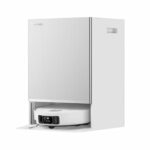
Base station footprints differ considerably. The Curv's base forms a 450 mm cube—substantial and requiring dedicated space, perhaps in a utility room or generous corner. The Edge S5A and S5V use more compact bases measuring 340 mm wide by 487 mm deep and 521 mm tall, fitting more easily into typical home environments whilst still accommodating all necessary tanks and mechanisms.
Real-World Usage Scenarios
For larger homes exceeding 200 square metres, the Curv's extended battery life and superior suction make it the natural choice. Its ability to navigate complex obstacles and climb stepped thresholds suits period properties or homes with varied flooring levels. The dual cameras and pet recognition prove genuinely useful in households with animals, both for avoiding disturbance and capturing candid moments.
The Edge S5A strikes a balance for medium-sized homes where premium suction and extendable side brushes matter, but the additional sensors and voice assistant of the Curv feel excessive. Its more compact base fits better in typical UK homes where space comes at a premium, whilst still delivering thorough cleaning performance and adaptive dirt detection.
The S5V suits smaller properties or those prioritising budget over cutting-edge features. Its lower profile helps it slip under more furniture, and the 12,000 Pa suction handles daily maintenance competently. You'll miss the dirt detection and base self-cleaning 2.0, meaning slightly more hands-on maintenance, but the fundamentals remain solid for straightforward cleaning needs.
Pet owners benefit most from the Curv's anti-tangle brushes combined with maximum suction, whilst the camera system adds peace of mind when away from home. Homes with predominantly hard floors won't notice the suction differences as acutely as those with carpeting, where the S5V's reduced power becomes more apparent.
Conclusion: Which Should You Choose?
Choose the Roborock Qrevo Curv if you have a large home requiring extended battery life, want the most advanced navigation and pet recognition available, need to overcome stepped obstacles, or value the convenience of remote camera access and integrated voice control. The investment brings tangible benefits in automation and capability that justify the premium for demanding environments.
Choose the Roborock Qrevo Edge S5A if you want flagship-level suction and dirt detection in a more compact package, your home sits in the 150-200 square metre range, and you can do without camera-based features. It represents excellent value as a best robot vacuum 2025 contender, delivering most of the Curv's cleaning performance whilst occupying less space.
Choose the Roborock Qrevo S5V if you have a smaller property, furniture with low clearance that demands the slimmest possible robot, and you're comfortable with slightly more hands-on base maintenance. It covers the essentials thoroughly without the advanced intelligence systems, making it the sensible choice when core cleaning matters more than technological sophistication.