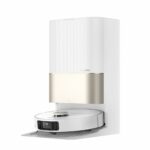
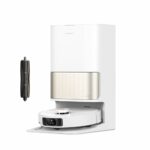
Introduction
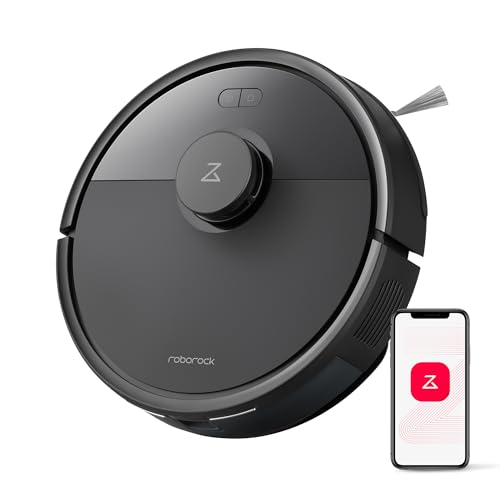
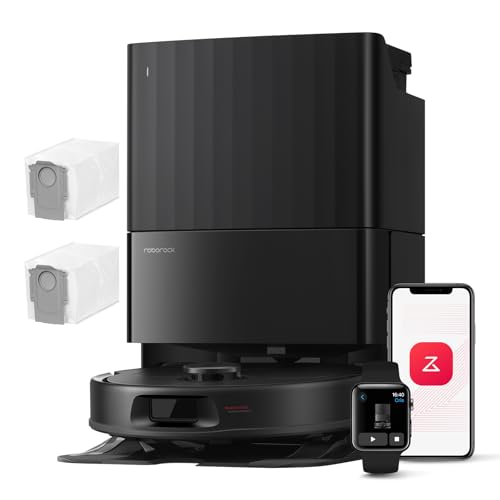
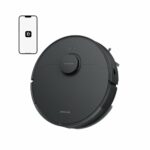
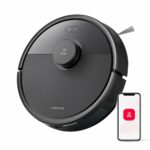
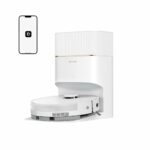
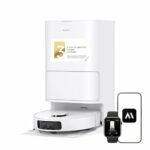
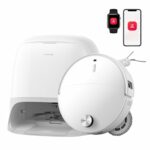
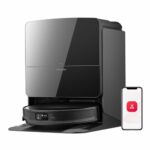
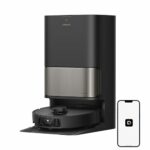
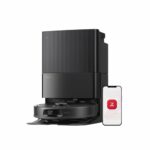
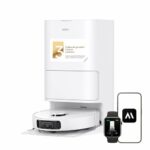
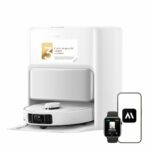
The Roborock Q7 L5 o BF and the Roborock QV 35A represent two distinct approaches within the 2025 catalogue from the world's leading robot vacuum manufacturer. Whilst both models share the same 8,000 Pa suction power, they're designed for quite different user needs and expectations. The Q7 L5 o BF positions itself as a more straightforward option with a simple charging base, making it suitable for those seeking a reliable cleaning solution without the complexity of automated maintenance systems. The QV 35A, meanwhile, steps up considerably with a multifunction base that handles automatic emptying, mop washing, and drying—features that transform the day-to-day experience, particularly for larger homes or users who prefer minimal manual intervention.
Understanding which model suits your home depends largely on how much automation you're after and the type of floors you're dealing with. The Q7 L5 o BF appeals to users comfortable with regular manual maintenance, whilst the QV 35A caters to those who value hands-off operation.
Key Differences at a Glance
- The QV 35A includes a multifunction base with auto-emptying, mop washing with cold water, and cold air drying; the Q7 L5 o BF has only a charging base
- Battery capacity differs significantly: 3,200 mAh in the Q7 L5 o BF versus 5,200 mAh in the QV 35A
- The QV 35A offers 180 minutes of autonomy; no autonomy data available for the Q7 L5 o BF
- Mopping systems vary: static mop on the Q7 L5 o BF versus dual rotating mops with 10 mm lift on the QV 35A
- The QV 35A features obstacle avoidance and SmartPlan 1.0 AI cleaning; the Q7 L5 o BF does not
- Main brush types differ: bristle brush on the Q7 L5 o BF, simple brush on the QV 35A
- The QV 35A includes anti-tangle technology for the side brush; the Q7 L5 o BF does not
- Robot dimensions vary: the Q7 L5 o BF is slightly smaller at 325 mm diameter and 99 mm height, compared to 353 mm and 96.5 mm for the QV 35A
Power and Vacuuming Performance
Both models deliver 8,000 Pa of suction, which provides solid pickup across hard floors and carpets. This level of power handles everyday debris, pet hair, and finer dust without issue. Where they diverge is in the brushing configuration. The Q7 L5 o BF uses a traditional bristle brush, which tends to be effective at agitating dirt but can accumulate hair tangles over time, requiring more frequent manual cleaning. The QV 35A opts for a simple brush design paired with an anti-tangle side brush, which reduces the frequency of maintenance interruptions—a practical advantage if you're dealing with long hair or shedding pets.
Neither model offers brush lift during mopping, nor do they feature extendable side brushes. The side brush on the QV 35A benefits from anti-tangle technology, meaning less time spent cutting away wrapped hair. For homes with pets or family members with long hair, this detail can make a noticeable difference in upkeep.
Mopping Systems
This is where the two models separate most clearly. The Q7 L5 o BF relies on a static mop system, which drags a damp cloth across the floor. It's functional for light maintenance cleaning but doesn't offer the scrubbing action or automated refreshing that more advanced systems provide. The robot's 270 ml water tank gives reasonable coverage, though you'll need to refill and rinse the mop manually after each session.
The QV 35A takes mopping considerably further with dual rotating mops that actively scrub rather than simply wipe. These mops lift by 10 mm when the robot moves onto carpets or rugs, preventing cross-contamination. More importantly, the multifunction base washes the mops with cold water during cleaning cycles and dries them with cold air afterwards. This automation means the robot returns to clean mops each time it resumes mopping, maintaining consistent results throughout the session. The 80 ml onboard water tank is smaller, but the base holds 4 litres of clean water and 3.5 litres for dirty water, so the robot can refresh as needed without your involvement.
For anyone serious about mopped floors rather than just damp-wiping, the QV 35A's system is a substantial upgrade. The Q7 L5 o BF handles light mopping duties but requires hands-on attention between uses.
Navigation Systems
Both robots use 3D LiDAR tower navigation, which maps your home accurately and plans efficient cleaning routes. The Q7 L5 o BF sticks to this core navigation without additional obstacle detection, meaning it relies on bumper sensors to navigate around objects. In practice, this works well in tidy spaces but can lead to occasional bumps with unexpected items like shoes or cables.
The QV 35A adds obstacle avoidance on top of the LiDAR system, allowing it to detect and steer around objects proactively. It also integrates SmartPlan 1.0, which applies AI-driven logic to cleaning patterns, adjusting routes based on room layouts and previous sessions. Neither model includes a front-facing camera, 3D laser sensors, or pet recognition features, so the obstacle avoidance on the QV 35A relies on sensor data rather than visual identification.
For homes with children's toys, pet bowls, or frequently moved furniture, the QV 35A's ability to navigate around obstacles reduces the need for pre-cleaning tidying.
Battery and Autonomy
The battery difference is notable. The Q7 L5 o BF houses a 3,200 mAh battery, whilst the QV 35A packs 5,200 mAh. The QV 35A's autonomy is listed at 180 minutes, which translates to substantial coverage—suitable for homes up to around 150–200 square metres depending on floor types and furniture density. No autonomy figure is available for the Q7 L5 o BF, but the smaller battery capacity suggests it's better suited to smaller spaces or homes where the robot can easily return to recharge mid-clean.
For larger properties or open-plan layouts, the QV 35A's extended runtime reduces the likelihood of needing multiple charging cycles to complete a full clean.
Smart Features
Both models can climb obstacles up to 20 mm, which handles most door thresholds and low-pile rug edges without issue. Neither includes a robotic arm or proprietary voice assistant, though both support external voice control via Alexa and Google Home.
The QV 35A's SmartPlan 1.0 adds a layer of intelligence to cleaning routines, learning from previous sessions to optimise paths and prioritise high-traffic areas. The Q7 L5 o BF follows a more traditional approach, relying on the user to set schedules and zones manually through the app.
Multifunction Base
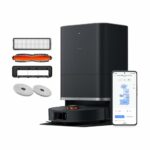
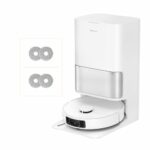
The Q7 L5 o BF comes with a basic charging dock, measuring 160 mm wide, 101 mm tall, and 70 mm deep. It's compact and unobtrusive, but it offers no automated maintenance features. You'll need to empty the 400 ml dustbin on the robot itself and manually clean or replace the mop pad after each mopping session.
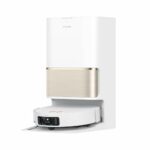
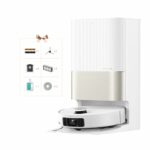
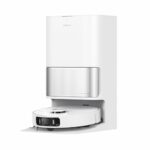
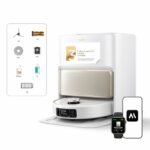
The QV 35A's multifunction base is a different proposition entirely. It measures 340 mm wide, 521 mm tall, and 487 mm deep—considerably larger, so you'll need to allocate floor space accordingly. The base automatically empties the robot's 330 ml dustbin into a 2.7-litre dust bag, washes the mops with cold water from a 4-litre clean water tank, and dries them using cold air. The dirty water collects in a 3.5-litre tank. This setup drastically reduces the frequency of manual intervention, though you'll still need to empty the dust bag and refill or drain the water tanks periodically.
Neither base includes UV disinfection, detergent dispensing, or plumbing connection options. For users prioritising convenience, the QV 35A's base justifies its footprint with genuine time savings.
Dimensions and Footprint
The Q7 L5 o BF measures 325 mm in diameter and stands 99 mm tall, making it slightly more compact than the QV 35A, which spans 353 mm across and sits at 96.5 mm high. The Q7 L5 o BF's lower profile gives it a marginal advantage when navigating under furniture, though the difference of 2.5 mm is unlikely to be decisive in most homes. The smaller diameter also helps in tighter spaces, such as navigating between chair legs or around cluttered areas.
The base dimensions reflect the functional differences: the Q7 L5 o BF's charging dock is minimal, whilst the QV 35A's multifunction station requires dedicated space, ideally in a utility area or corner where its size won't obstruct daily movement.
Real-World Use
In smaller flats or homes where manual maintenance isn't a burden, the Q7 L5 o BF offers solid vacuuming performance without the complexity or cost of automated systems. Its 3,200 mAh battery handles typical single-level properties, and the static mop covers light cleaning duties. You'll need to be comfortable emptying the dustbin regularly and rinsing the mop pad after each use, but the compact base and straightforward operation suit users who prefer simplicity.
The QV 35A makes more sense for larger homes, busy households, or anyone who values minimal manual involvement. The 5,200 mAh battery and 180-minute runtime cover extensive floor areas in a single session, whilst the multifunction base handles mop washing, drying, and dust disposal automatically. The dual rotating mops with 10 mm lift and automated washing deliver consistently cleaner floors compared to static mopping. The obstacle avoidance and SmartPlan AI also reduce the need for pre-cleaning preparation, letting the robot adapt to everyday clutter.
For homes with pets, the QV 35A's anti-tangle side brush and larger dust bag capacity reduce maintenance frequency. The Q7 L5 o BF's bristle brush will require more regular attention if hair accumulation is a concern.
Conclusion: Which One to Choose?
Choose the Roborock Q7 L5 o BF if: you're looking for a straightforward, budget-conscious option with solid suction and basic mopping. It suits smaller homes or flats where manual dustbin emptying and mop maintenance aren't inconvenient, and where the compact base and robot dimensions fit neatly into your space. It's a reliable choice for users who don't mind hands-on upkeep and prefer simplicity over automation.
Choose the Roborock QV 35A if: you want a more hands-off experience with automated dust disposal, mop washing, and drying. The larger battery and 180-minute runtime make it ideal for bigger properties, whilst the dual rotating mops and 10 mm lift deliver better mopping results, especially on hard floors. The obstacle avoidance and SmartPlan AI reduce the need for tidying before each clean, and the anti-tangle side brush cuts down on maintenance if you have pets or long hair in the household. The multifunction base does require more floor space, but it pays back in convenience and cleaning performance.