Introduction
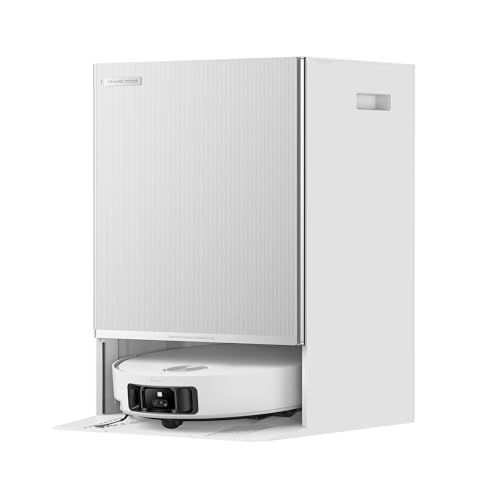
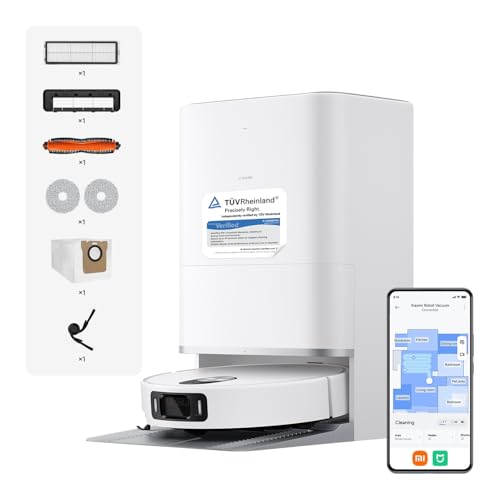
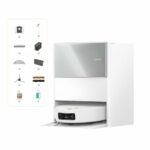
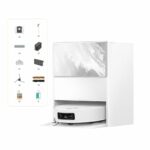
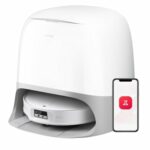
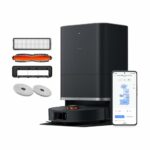
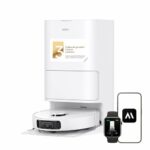
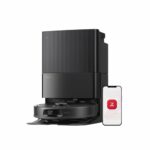
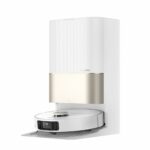
The Dreame Matrix10 Ultra and Xiaomi Robot Vacuum 5 Pro represent two of the most advanced cleaning solutions launched in 2025. Both models belong to the premium segment of robot vacuum cleaners, featuring multifunction bases that handle everything from emptying dust to washing and drying mops. These aren't simple vacuums; they're complete cleaning systems designed to minimise manual intervention.
The Dreame Matrix10 Ultra positions itself as a flagship model with cutting-edge specifications, whilst the Xiaomi Robot Vacuum 5 Pro offers a compelling alternative with solid performance. For households seeking genuine autonomy in floor cleaning, both options deliver considerably more than basic models. The question becomes which features matter most for your specific home environment.
Key Differences at a Glance
- Suction power: 30,000 Pa on the Dreame versus 20,000 Pa on the Xiaomi
- Battery capacity and runtime: 6,400 mAh with 260 minutes on the Dreame compared to 5,200 mAh with 140 minutes on the Xiaomi
- Brush system: Double HyperStream on the Dreame versus TriCut 3.0 on the Xiaomi
- Side brush elevation: present on the Dreame, absent on the Xiaomi
- Hot water floor mopping: 55°C capability on the Dreame, cold water only on the Xiaomi
- Automatic mop removal: the Dreame can detach mops at the base for vacuuming-only sessions
- Detergent system: triple tank on the Dreame, none on the Xiaomi
- Automatic mop replacement: three pairs of mops on the Dreame, manual change required on the Xiaomi
- Object recognition: 240 items for the Dreame versus 200 for the Xiaomi
- Pet and curtain detection: exclusive to the Dreame
- Voice assistant: built-in on the Dreame, external only on the Xiaomi
Suction Power and Brushing
The Dreame Matrix10 Ultra delivers 30,000 Pa of suction power, a significant step up from the Xiaomi's 20,000 Pa. In practical terms, this translates to more effective deep cleaning on carpets and better pickup of embedded debris. The difference becomes especially noticeable on textured surfaces where particles settle into fibres.
Where brush design diverges, the Dreame employs a Double HyperStream system—two brushes anchored at one end that actively prevent hair tangles. The Xiaomi opts for the TriCut 3.0, which combines bristles with integrated blades to cut through tangled hair. Both approaches tackle the common problem of hair wrap, just through different engineering solutions.
Both models can elevate their main brush during mopping to avoid dragging debris across wet floors. However, the Dreame adds side brush elevation as well, meaning it can lift both brushes when mopping. This prevents dirty side brushes from interfering with the mopping process. The Xiaomi's side brush remains lowered throughout. Both feature extensible side brushes for better corner coverage, and both include anti-tangle technology for the side brush.
Mopping Capabilities
Both robots use dual rotating mops, but the Dreame Matrix10 Ultra introduces several enhancements. Its mops extend outwards and incorporate a movement system that helps reach under furniture edges—useful for cleaning beneath cabinet toe kicks and similar spaces. The Xiaomi's mops also extend but without this additional articulation.
Mop elevation differs between the two. The Xiaomi lifts its mops 15 mm, whilst the Dreame manages 10.5 mm. This might seem counterintuitive, but in practice both heights prove sufficient for transitioning onto most domestic rugs and carpets without dragging wet mops across them.
The Dreame's standout feature here is hot water mopping at 55°C. This heats the water used for floor cleaning, which helps dissolve grease and stubborn marks more effectively than cold water alone. The Xiaomi relies on cold water throughout. Both bases wash mops with hot water, and both dry them with heated air to prevent odours and bacterial growth.
Another practical advantage: the Dreame can automatically detach its mops at the base when you only need vacuuming. This means the robot won't carry around unnecessary weight or risk any moisture transfer. The Xiaomi requires manual mop removal for vacuum-only sessions. The Dreame also features automatic mop replacement with three pairs stored in the base, whilst the Xiaomi requires you to change them manually when needed.
Navigation System
Both models employ retractable LiDAR for mapping, paired with dual RGB cameras for AI-powered object recognition. They also share 3D laser sensors at the front for obstacle detection and LED lighting for low-light navigation. Remote camera access is available on both, allowing you to check on your home via the app.
The Dreame Matrix10 Ultra recognises up to 240 different objects, compared to 200 on the Xiaomi Robot Vacuum 5 Pro. More significantly, the Dreame specifically identifies pets and curtains, adjusting its cleaning approach accordingly. This matters if you have cats or dogs that might be startled, or floor-length curtains that could get caught in brushes. The Xiaomi lacks these specific recognition capabilities.
Processing power differs as well. The Dreame runs on an AI Sage 15.0 octa-core processor with its CleanGenius AI system, though the Xiaomi's exact processor isn't specified in the available data. Both detect dirt on mops and floors to trigger additional cleaning passes where needed.
Battery and Runtime
The Dreame Matrix10 Ultra houses a 6,400 mAh battery providing up to 260 minutes of runtime. The Xiaomi Robot Vacuum 5 Pro contains a 5,200 mAh battery with 140 minutes of operation. That's nearly double the runtime on the Dreame—a substantial difference for larger properties or whole-home cleaning sessions without interruption.
For homes exceeding 100 square metres, the extended battery life reduces the likelihood of mid-clean recharging stops. The Dreame can cover more ground in a single session, whilst the Xiaomi may need to return to base and resume cleaning afterwards in larger spaces.
Smart Features
The Dreame Matrix10 Ultra can climb single-level obstacles up to 20 mm, matching the Xiaomi's capability. This allows both robots to transition over door thresholds, carpet edges, and similar barriers without getting stuck.
The Dreame includes its own built-in voice assistant, enabling direct voice commands to the robot itself. The Xiaomi supports external voice assistants like Alexa and Google Home but doesn't have an onboard assistant. For those who prefer speaking directly to the device rather than through a smart speaker, the Dreame offers that option.
Multifunction Base
Both bases handle automatic dust emptying, mop washing with hot water, and mop drying with heated air. The Dreame's base incorporates a 3.5-degree tilt during its self-cleaning cycle to ensure thorough rinsing of the wash tray. The Xiaomi's base also self-cleans but without the specified tilt mechanism.
The Dreame features a triple detergent tank system, allowing for different cleaning solutions for various floor types or cleaning tasks. The Xiaomi has no detergent dispensing capability at all. If you want automated detergent use, that's exclusive to the Dreame.
Dust bag capacity measures 3.2 litres on the Dreame versus 2.5 litres on the Xiaomi. The Dreame also holds more water: 5.5 litres of clean water compared to 4 litres on the Xiaomi, and 4 litres of dirty water versus 3.8 litres. These larger capacities mean less frequent maintenance on the Dreame.
The Dreame offers an optional plumbing connection kit that can be purchased separately, allowing the base to connect directly to water supply and drainage. The Xiaomi doesn't offer this option. Neither model includes integrated plumbing connections as standard.
Dimensions
Both robots measure 350 mm in diameter. Height differs marginally: 89 mm for the Dreame versus 88 mm for the Xiaomi. That single millimetre won't make a meaningful difference when navigating under furniture.
Base dimensions vary more noticeably. The Dreame's base measures 416 mm wide, 590 mm tall, and 457 mm deep. The Xiaomi's base is more compact at 360 mm wide, 572 mm tall, and 470 mm deep. The Xiaomi's narrower width may suit tighter spaces, though it extends slightly deeper. Consider your available floor space when deciding between them.
The Dreame's robot contains a 310 ml dust bin, whilst the Xiaomi's capacity isn't specified in the data. The Dreame holds 80 ml of water onboard; the Xiaomi has an onboard water tank but without a stated capacity.
Real-World Usage Scenarios
For larger homes, the Dreame Matrix10 Ultra's extended battery life and greater suction power provide clear advantages. The 260-minute runtime handles expansive floor plans without interruption, whilst the 30,000 Pa suction tackles deep carpet cleaning more aggressively.
Homes with pets benefit particularly from the Dreame's pet recognition feature and its HyperStream brush system designed to resist hair tangles. The higher suction also helps with pet hair embedded in carpets and rugs.
If you frequently deal with sticky kitchen spills or greasy floors, the Dreame's hot water floor mopping at 55°C offers a genuine cleaning advantage over cold water. The triple detergent system adds another layer of cleaning power for stubborn marks.
The Xiaomi Robot Vacuum 5 Pro suits those with moderately sized homes where 140 minutes of runtime suffices. Its 20,000 Pa suction still delivers strong performance for daily maintenance cleaning. The more compact base may appeal if space is limited, and the absence of detergent tanks simplifies the system for those who prefer straightforward operation.
For households wanting maximum autonomy, the Dreame's automatic mop changing system and larger consumable capacities reduce maintenance frequency. The Xiaomi requires more hands-on involvement for mop changes and has smaller tanks that need refilling sooner.
Conclusion: Which Should You Choose?
Choose the Dreame Matrix10 Ultra if: you have a large home requiring extended runtime, want the most powerful suction available, value hot water floor mopping for better cleaning results, prefer automated detergent dispensing and automatic mop changing, or have pets that benefit from specific recognition features. It's the more comprehensive system with higher specifications across nearly every category.
Choose the Xiaomi Robot Vacuum 5 Pro if: you have a smaller to medium-sized home where 140 minutes of runtime is adequate, want a more compact base station, prefer a simpler system without multiple detergent tanks, or seek a capable premium robot at a potentially lower price point. It delivers strong core performance without the additional complexity of the Dreame's extra features.
For those prioritising absolute autonomy and top-tier specifications, the Dreame Matrix10 Ultra justifies its position as a flagship model. For excellent performance with a more streamlined approach, the Xiaomi Robot Vacuum 5 Pro remains a formidable contender in the 2025 robot vacuum landscape.