✨ VS Analyses · VacuumSpain comparison technology. Explanation created with AI from verified technical data.
Introduction
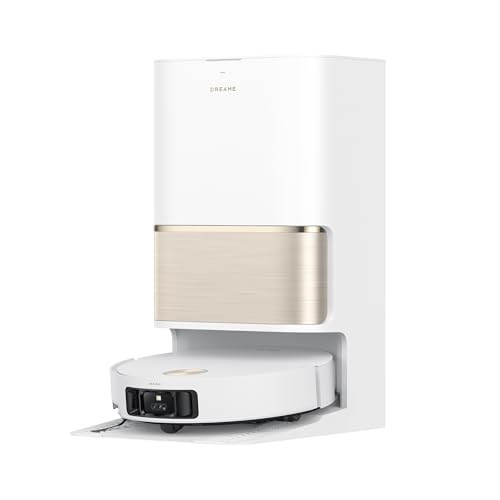
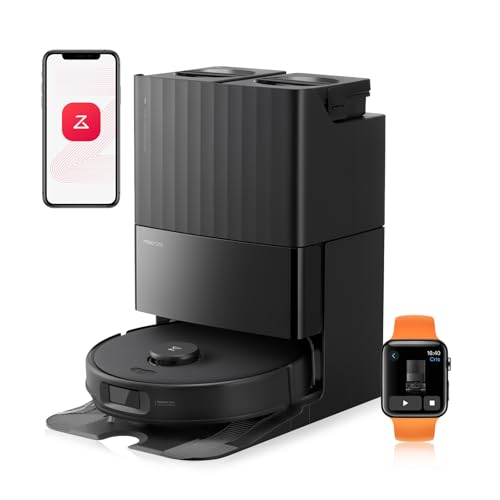
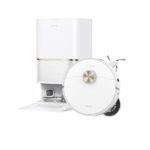
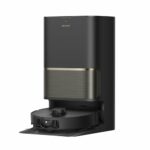
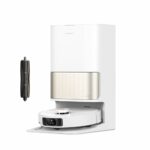
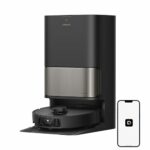
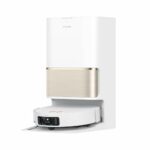
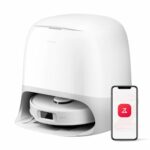
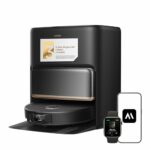
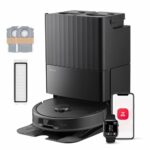
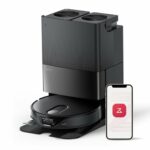
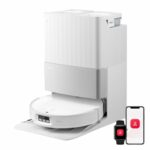
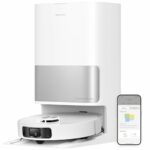
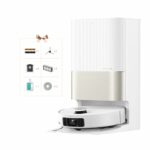
The Dreame L50 Pro Ultra and the Roborock Qrevo Edge S5A represent two distinct approaches to premium robot vacuum cleaning. The Dreame model arrives in 2025 with an emphasis on advanced artificial intelligence and comprehensive automation, whilst the Roborock launched in 2024 with a focus on proven engineering and reliable performance. Both feature multifunctional bases that handle automatic emptying, mop washing with hot water, and hot air drying—essential capabilities for maintaining genuinely clean floors without constant manual intervention.
These models target users seeking minimal involvement in their cleaning routines. The Dreame L50 Pro Ultra brings substantial suction power at 19,500 Pa alongside dual cameras and extensive object recognition, making it particularly suited to households with pets and complex floor plans. The Roborock Qrevo Edge S5A offers 18,500 Pa suction and the brand's signature DuoDivide anti-tangle brush system, appealing to those who value Roborock's established reputation for reliability and streamlined functionality.
Suction Power and Brushwork
The Dreame L50 Pro Ultra generates 19,500 Pa of suction, edging ahead of the Roborock Qrevo Edge S5A's 18,500 Pa. Whilst both figures sit firmly in high-performance territory, that extra thousand pascals can make a tangible difference when tackling embedded dirt in carpet fibres or drawing fine dust from grout lines.
The brush systems reveal fundamentally different engineering philosophies. Dreame employs a dual HyperStream brush configuration—two independently anchored rollers designed to actively prevent hair tangles by channelling debris towards the suction inlet. Roborock counters with its DuoDivide anti-tangle system, which pushes hair towards the central gap for direct extraction. Both approaches effectively minimise the tedious task of cutting away wound hair, though the specific design varies.
A significant practical distinction emerges in brush elevation. The Dreame L50 Pro Ultra lifts both its main roller and side brush when mopping, preventing wet bristles from dragging across already-cleaned floors and avoiding cross-contamination between vacuuming and mopping zones. The Roborock Qrevo Edge S5A keeps its brushes in contact with the floor throughout mopping cycles. This matters particularly when transitioning between carpeted areas and hard floors during a single cleaning session.
Both models feature extensible side brushes that swing outward to capture debris from corners more effectively. Anti-tangle treatment extends to the side brushes on each unit, reducing maintenance frequency.
Mopping Performance
Each robot employs dual rotating mops that spin to scrub floors rather than simply dragging damp pads across surfaces. The Dreame L50 Pro Ultra extends its mops outward and incorporates RoboSwing—a lateral movement that nudges the mop slightly under furniture edges and skirting boards. The Roborock Qrevo Edge S5A also extends its mops for edge cleaning but lacks the RoboSwing articulation.
Mop elevation capabilities are nearly identical: Dreame lifts 10.5 mm, Roborock raises 10 mm. In practical terms, both clear low-pile rugs and transition strips without issue. Neither model heats water within the robot itself for floor mopping—both rely on cold water during the actual cleaning pass.
The bases handle mop washing with hot water, which proves far more effective at breaking down greasy residues and sanitising the pads between cleaning cycles. Both stations also dry the mops using heated air, crucial for preventing mildew odours and bacterial growth in the damp fabric.
A notable convenience feature distinguishes the Dreame: it automatically detaches its mops at the base when you schedule vacuum-only cleaning. The Roborock requires manual mop removal if you want pure vacuuming without the pads attached. For households that frequently alternate between mopping and dry vacuuming, this automation saves repeated trips to the docking station.
Both robots detect soiled areas on floors and dirty mops, triggering additional scrubbing passes or returning to the base for mop rinsing as needed. This adaptive behaviour ensures genuinely clean results rather than mechanically following predetermined patterns.
Navigation Systems
The Dreame L50 Pro Ultra combines a retractable LiDAR turret with dual AI cameras and a 3D laser sensor at the front. This layered approach enables the robot to recognise 180 distinct object types, including pets and curtains, adjusting behaviour accordingly—slowing near a sleeping cat or avoiding fabric that might snag. LED lighting supports the cameras in low-light conditions, and remote camera access lets you check on your home through the robot's perspective.
The Roborock Qrevo Edge S5A relies on a traditional LiDAR turret without camera assistance. It navigates accurately using laser-based mapping and includes obstacle avoidance sensors, but lacks the visual intelligence to identify specific objects or provide remote viewing. The number of recognisable obstacles isn't specified in available data, suggesting a more generalised detection system rather than granular object classification.
For straightforward floor plans without pets or complex obstacles, LiDAR alone proves entirely sufficient. The camera-based intelligence becomes valuable in dynamic environments—homes with children's toys scattered daily, multiple pets, or frequently moved furniture. The Dreame's CleanGenius AI adapts cleaning strategies based on visual input, whilst the Roborock's SmartPlan 2.0 optimises routes using spatial data.
Battery Capacity and Runtime
The Dreame L50 Pro Ultra houses a 6,400 mAh battery delivering 200 minutes of continuous operation. The Roborock Qrevo Edge S5A contains a 5,200 mAh cell rated for 180 minutes. That 20-minute difference may seem modest, but it translates to meaningful coverage in larger homes—potentially an extra 30-40 square metres per charge cycle depending on floor type and cleaning mode intensity.
Neither specification sheet details charging duration, though robots in this category typically require 3-4 hours to fully replenish from empty. In practice, both models resume cleaning automatically after mid-session recharging if the initial battery proves insufficient for the entire floor plan.
The extended capacity of the Dreame proves particularly advantageous in homes exceeding 150 square metres or multi-storey layouts where the robot must cover substantial distances between zones.
Smart Features
The Dreame L50 Pro Ultra climbs simple obstacles up to a specified threshold, whilst the Roborock Qrevo Edge S5A manages 20 mm step heights—sufficient for standard door thresholds and the raised edges of shower trays. This capability prevents the robots from becoming stranded at minor level changes that would halt earlier generations.
The Dreame includes a built-in voice assistant, allowing direct commands to the robot without routing through Alexa or Google Home. The Roborock supports external voice assistants but has no onboard voice interface. For users deeply invested in a particular smart home ecosystem, this distinction may matter little; for those preferring standalone operation, the Dreame offers more flexibility.
Multifunctional Base Stations
Both bases automatically empty dust into sealed bags—3.2 litres for the Dreame, 2.7 litres for the Roborock. The larger bag capacity means slightly less frequent replacement, perhaps every 8-10 weeks instead of 6-8 in typical households.
Clean water reservoirs measure 4.5 litres on the Dreame versus 4 litres on the Roborock; dirty water tanks hold 4 litres and 3.5 litres respectively. These differences prove marginal in daily use—both provide sufficient capacity for several mopping sessions before requiring refilling or emptying.
The Dreame base includes a detergent dispenser that automatically doses cleaning solution during mop washing, eliminating the need to pre-mix solutions or manually add detergent. The Roborock lacks this feature, requiring plain water only or manual detergent addition to the clean water tank.
Self-cleaning mechanisms differ in generation: Dreame employs third-generation automatic tray cleaning, Roborock uses version 2.0. Both scrub the washing tray to prevent residue buildup, though the newer Dreame system theoretically requires less manual intervention over time.
The Dreame offers an optional plumbing connection kit sold separately, allowing permanent water supply and drainage lines to the base. This eliminates tank refilling entirely but requires installation near suitable plumbing. The Roborock has no such option, relying exclusively on manual tank management.
Neither base incorporates UV disinfection, a feature sometimes found on competing models but absent here.
Physical Dimensions
The Dreame L50 Pro Ultra stands 89 mm tall with a 350 mm diameter. The Roborock Qrevo Edge S5A measures 98 mm in height and 352 mm across. That 9 mm height advantage allows the Dreame to slip beneath furniture that would block the Roborock—particularly relevant for modern low-profile sofas and beds that often sit 90-95 mm off the floor. If your furniture clearances hover near that threshold, the Dreame accesses areas the Roborock cannot reach.
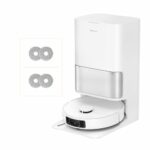
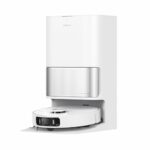
Base station footprints differ slightly: the Dreame measures 340 mm wide, 590.5 mm tall, and 456.7 mm deep, whilst the Roborock spans 340 mm wide, 521 mm tall, and 487 mm deep. The Dreame base rises taller but occupies less floor depth, potentially fitting better against walls in shallow alcoves. The Roborock sits lower but extends further from the wall.
Real-World Usage Scenarios
For homes with pets, the Dreame L50 Pro Ultra offers clear advantages. Its dual cameras specifically recognise animals, adjusting navigation to avoid startling them or colliding with feeding bowls. The higher battery capacity ensures complete coverage of larger pet-friendly homes in a single run, and the detergent dispenser helps neutralise odours during mop cleaning.
In properties with low furniture, the Dreame's 89 mm profile becomes a decisive factor, reaching spaces the 98 mm Roborock simply cannot enter. This matters particularly for thorough cleaning beneath beds, sofas, and modern minimalist cabinetry.
Households prioritising simplicity may appreciate the Roborock's straightforward operation. Without cameras or complex AI systems, there's less potential for software complications, and Roborock's established reputation for reliable app performance and long-term support provides confidence. The DuoDivide brush has proven effective across millions of units, offering predictable anti-tangle performance.
For users willing to invest in the optional plumbing kit, the Dreame transforms into a genuinely hands-off system—no tank refills, no emptying dirty water, just periodic detergent replenishment and dust bag changes every couple of months. This appeals particularly to busy professionals or those with mobility limitations who find tank management burdensome.
The Roborock's slightly lower price point—though not specified in technical data—typically reflects Roborock's market positioning as premium but accessible. Dreame often undercuts Roborock on price whilst matching or exceeding specifications, making the L50 Pro Ultra potentially compelling value given its additional features.
Conclusion: Which to Choose?
Choose the Dreame L50 Pro Ultra if: you have pets and want specific recognition capabilities; your furniture sits low and requires a sub-90 mm robot; you value maximum battery life for large homes; you want automatic mop removal for vacuum-only sessions; detergent dispensing appeals for simplified maintenance; remote camera access interests you for home monitoring; or you plan to install the optional plumbing connection for completely automated operation.
Choose the Roborock Qrevo Edge S5A if: you prefer Roborock's proven reliability and established support network; camera-based features feel unnecessary for your straightforward floor plan; you want excellent anti-tangle performance without the complexity of AI vision systems; your furniture clearances exceed 100 mm; or you prioritise a lower-profile base station that fits in tighter vertical spaces.
Both represent excellent choices for comprehensive automated cleaning. The Dreame pushes technological boundaries with layered sensors and maximum automation, whilst the Roborock delivers refined, dependable performance with fewer variables to manage. Your decision ultimately hinges on whether advanced AI features and maximum autonomy justify potential complexity, or whether proven engineering and simplicity better suit your cleaning needs.