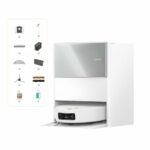
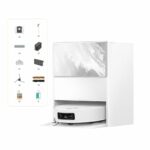
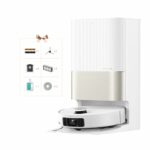
✨ VS Analyze · VacuumSpain comparison technology. AI-generated explanation based on verified technical data.
Introduction
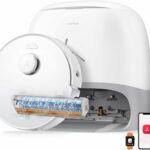
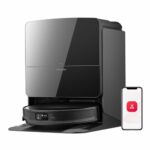
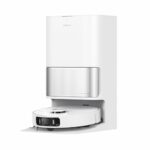
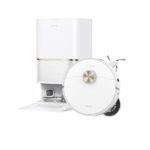
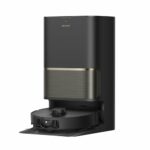
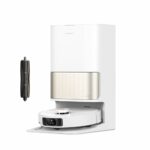
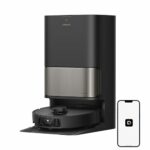
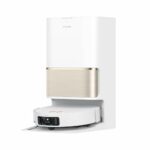
The Dreame L40 Ultra and the DJI Romo S represent two distinct approaches to premium robot vacuum technology. The Dreame model, launched in 2024, builds on the established reputation of a brand known for offering competitive features at accessible price points. DJI, traditionally dominant in the drone market, entered the robot vacuum space in 2025 with the Romo S, bringing fresh engineering perspectives to floor cleaning.
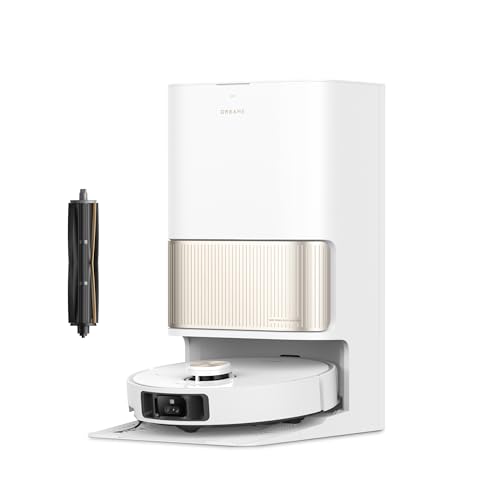
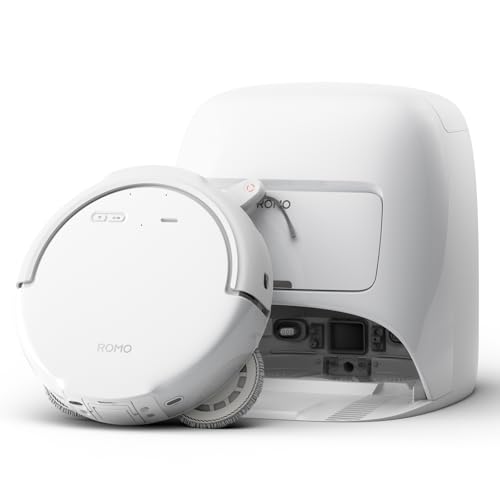
Both models feature multifunctional bases with mop washing and drying capabilities, dual rotating mops, and advanced AI navigation systems. They're designed for users seeking comprehensive automated cleaning with minimal manual intervention. The L40 Ultra measures 103.8mm in height whilst the Romo S sits lower at 98mm, which can make a difference when navigating under furniture. At first glance, these might seem like similar high-end options, but the specifications reveal meaningful differences in suction power, base design, and intelligent features.
Power and Suction
The most striking difference between these models lies in suction capability. The DJI Romo S delivers 25,000 Pa, which absolutely dwarfs the Dreame L40 Ultra's 11,000 Pa. This represents more than double the raw suction force, which translates directly into better performance on carpets and rugs, more effective extraction of embedded dirt, and superior pickup of heavier debris.
Regarding brush systems, the Dreame employs its TriCut 3.0 design, which combines bristles with integrated cutting blades to slice through tangled hair before it wraps around the roller. The DJI uses a Divided Brush configuration that pushes hair towards the central suction channel. Both approaches aim to reduce maintenance time by preventing hair build-up, though they achieve this through different mechanical solutions.
Both robots can elevate their main brushes during mopping to avoid wetting carpets. The side brush configuration reveals a practical difference: the Dreame can lift its side brush when mopping, whilst the DJI cannot. This means the Dreame keeps its side brush dry during wet cleaning, potentially extending its lifespan. Both feature extendable side brushes for better edge cleaning, and both incorporate anti-tangle features – the DJI specifically uses a dual side brush system to achieve this.
Mopping
Both models use dual rotating mops and can extend them to reach edges more effectively. The Dreame incorporates RoboSwing technology, which uses a swaying motion to push mops slightly under furniture edges and skirting boards. The DJI simply states mop extension without specifying this particular movement pattern.
Mop elevation differs slightly: the Dreame lifts its mops 10.5mm, whilst the DJI specification simply confirms elevation without stating the exact height. Both robots can detect dirty areas and adjust their cleaning approach accordingly, whether that's on the floor surface or on the mops themselves.
A significant distinction appears in the base stations. The Dreame L40 Ultra washes its mops with hot water, which helps dissolve grease and sanitise more effectively than cold water alone. The DJI Romo S uses standard temperature washing. Both stations dry the mops with hot air, which accelerates drying and reduces the risk of mildew and unpleasant odours. The Dreame can automatically remove its mops at the base when you only want to vacuum, though the DJI specification doesn't confirm this feature.
Navigation System
The Dreame L40 Ultra uses a third-generation rotating LiDAR turret for spatial mapping, whilst the DJI employs solid-state LiDAR technology. Solid-state systems have no moving parts, which theoretically improves reliability and reduces potential mechanical failure points over time.
Both models incorporate AI cameras for object recognition – the Dreame specifically features dual cameras. The Dreame can identify 100 different obstacle types, including pets and curtains. The DJI specification doesn't confirm the number of recognisable objects or whether it detects curtains specifically. This matters because curtain detection prevents the robot from getting tangled in floor-length drapes, a surprisingly common problem.
The Dreame runs on AI Sage 11.0 Qualcomm processing, whilst DJI hasn't detailed its CPU configuration. Both offer remote camera access through their apps and include LED illumination for operation in dark conditions. The Dreame confirms a voice assistant built into the robot itself, which can be useful for hands-free control without relying on external smart home systems, though both models work with Alexa and Google Home.
Battery and Autonomy
Battery capacity sits at 5,200 mAh for the Dreame and 5,000 mAh for the DJI – fairly similar. Runtime translates to 194 minutes for the Dreame versus 180 minutes for the DJI. In practical terms, this difference is marginal for most homes. Neither specification includes charging time, but with these capacities, you'd typically expect around 4-5 hours for a full charge.
The slightly longer runtime on the Dreame might prove beneficial in larger properties or when tackling particularly thorough cleaning sessions, but for typical residential use, both provide ample autonomy to complete a full home clean on a single charge.
Intelligent Functions
Obstacle climbing capability shows the Dreame can traverse thresholds up to 22mm, whilst the DJI manages 20mm. This 2mm difference might seem trivial, but it can determine whether a robot successfully navigates certain doorway transitions or gets stuck. Neither model includes a robotic arm for object manipulation, and neither features a proprietary voice assistant beyond the Dreame's built-in voice control mentioned earlier.
Multifunctional Base Station
Both bases handle auto-emptying, mop washing, and mop drying. The Dreame uses second-generation self-cleaning technology for its washing tray, whilst the DJI employs a high-pressure nozzle system for the same purpose. Both approaches aim to keep the base hygienic without manual scrubbing.
Neither offers UV disinfection or automatic mop changing. Both include detergent dispensers for adding cleaning solution during the mop washing cycle.
Storage capacity differs noticeably. The Dreame's dust bag holds 3.2L compared to the DJI's 2.4L – that's 33% more capacity, meaning less frequent bag replacement. Clean water tanks measure 4.5L versus 4L, and dirty water tanks are 4L versus 3.2L. These differences add up: the Dreame requires less frequent maintenance intervention overall.
The Dreame offers an optional plumbing connection kit (purchased separately) that allows direct connection to water supply and drainage, essentially eliminating manual tank refilling and emptying. The DJI doesn't offer this option. Whilst the kit isn't included and represents an additional purchase, it's worth knowing if you're planning a truly hands-off setup.
Dimensions
The robots are virtually identical in diameter – 350mm for the Dreame, 351mm for the DJI. Height is where they diverge: 103.8mm versus 98mm. That 5.8mm reduction on the DJI might seem insignificant, but it can mean the difference between fitting under certain sofas, beds, or kitchen cabinets. If you've got furniture with tight clearances, this matters.
Base station footprints differ considerably. The Dreame base measures 340mm wide, 590.5mm tall, and 456.7mm deep. The DJI is wider at 453mm, shorter at 440mm, and slightly shallower at 425mm. The Dreame's taller, narrower profile might suit corner placement better, whilst the DJI's lower, wider stance could fit more easily under wall-mounted cabinets or shelving.
Real-World Use
For homes with thick carpets or rugs, the DJI's 25,000 Pa suction represents a clear advantage. That level of power extracts dirt from carpet fibres far more effectively than the Dreame's 11,000 Pa. If your home is primarily hard flooring, this difference matters less, though higher suction still helps with fine dust and pet hair.
The Dreame's hot water mop washing delivers noticeably cleaner mops, which means better floor hygiene over time. This becomes particularly relevant in homes with children or where floors see heavy foot traffic. The larger dust bag and water tanks reduce maintenance frequency, which suits busy households or people who travel regularly.
Pet owners benefit from both models' anti-tangle brush designs, though the DJI's superior suction picks up more embedded pet hair from carpets. The Dreame's specific pet recognition and larger dust capacity might balance this out depending on your flooring mix.
The DJI's lower profile gives it access to more under-furniture spaces, which can be decisive if you've got low-clearance beds or sofas where dust accumulates. The Dreame's ability to lift its side brush during mopping and its curtain detection suggest slightly more refined obstacle management in complex environments.
Conclusion: Which Should You Choose?
Choose the Dreame L40 Ultra if: you prioritise hot water mop cleaning for better floor hygiene, need larger tank capacities to reduce maintenance frequency, value the option to add plumbing connections later, or want confirmed recognition of 100+ obstacle types including curtains. It suits homes with mostly hard floors where mopping quality matters more than maximum suction, and where you appreciate lower ongoing maintenance demands.
Choose the DJI Romo S if: you need exceptional suction power for thick carpets and rugs, require a lower profile to access tight under-furniture spaces, or want the latest 2025 technology from a brand bringing fresh engineering to the category. The dramatically higher suction makes this the better choice for carpet-heavy homes or those with shedding pets, despite the smaller tank capacities and lack of hot water mop washing.
For mixed flooring with moderate carpet coverage, the DJI's suction advantage likely outweighs the Dreame's mopping refinements. For predominantly hard floors where mopping quality and convenience matter most, the Dreame's hot water washing and larger capacities deliver better long-term value.