Introduction
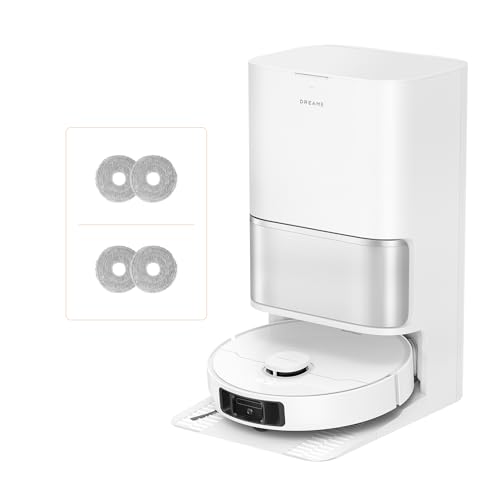
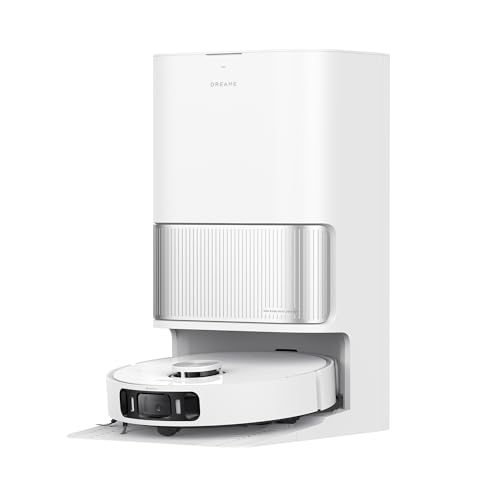
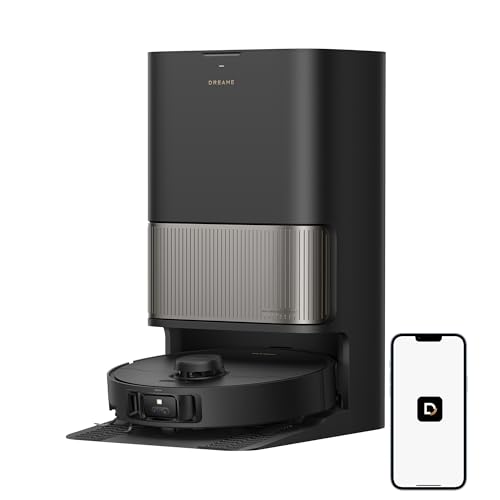
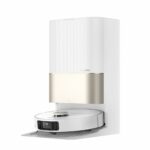
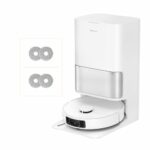
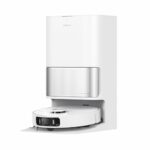
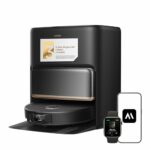
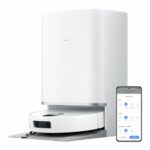
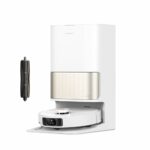
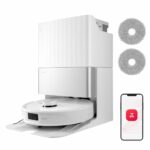
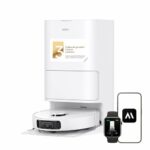
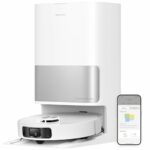
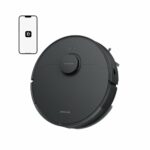
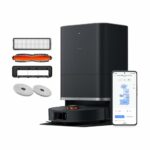
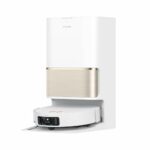
Dreame has positioned three powerful models in its 2025 catalogue that deserve a detailed look. The Dreame L10s Ultra Gen 3, launched in November 2025, arrives as the newest proposal with some intriguing technical updates. The Dreame L40 Ultra AE and Dreame L40s Pro Ultra complete this trio of robot vacuum cleaners with multifunctional bases, each aimed at users seeking a high level of automation in floor maintenance.
All three incorporate self-emptying stations with mop washing and drying capabilities, which makes them suitable for medium to large homes where daily cleaning becomes tedious. The differences between them lie mainly in navigation intelligence, brush configuration and some advanced functions that can tip the balance depending on specific needs.
Key Differences at a Glance
- The L10s Ultra Gen 3 delivers 25,000 Pa suction power versus 19,000 Pa in the other two models
- Only the L10s Ultra Gen 3 lacks an AI camera, whilst the L40s Pro Ultra features a dual camera system
- The L40s Pro Ultra recognises up to 180 obstacles, the L40 Ultra AE identifies 120, and the L10s Ultra Gen 3 doesn't specify this metric
- Side brush elevation during mopping is exclusive to the L40s Pro Ultra
- The L40s Pro Ultra can automatically remove mops at the base for vacuuming-only sessions
- Main brush types differ: SimpliCut on the L10s Ultra Gen 3, TriCut 3.0 on the L40 Ultra AE, and a dual brush system on the L40s Pro Ultra
- The L10s Ultra Gen 3 features a third-generation self-cleaning tray, whilst the L40 Ultra AE uses second-generation technology
- Only the L40s Pro Ultra includes curtain detection and its own voice assistant
- The L40s Pro Ultra can climb simple steps, not just overcome 20 mm obstacles like its counterparts
Suction Power and Brushing
The Dreame L10s Ultra Gen 3 stands out immediately with its 25,000 Pa suction power, a significant jump over the 19,000 Pa found in both the L40 Ultra AE and L40s Pro Ultra. This extra muscle translates into better performance on carpets and rugs, particularly useful in homes with pets where embedded hair and fine dust require more aggressive extraction.
When it comes to the main brush, each model takes a different approach. The L10s Ultra Gen 3 uses a SimpliCut brush, designed to minimise hair tangles through its specific geometry. The L40 Ultra AE equips the TriCut 3.0, which combines bristles with integrated cutting blades to slice through trapped hair during operation. The L40s Pro Ultra goes further with a dual brush system that channels debris towards the suction inlet more efficiently, reducing the chances of hair wrapping around the roller.
Neither the L10s Ultra Gen 3 nor the L40 Ultra AE can lift their main brush during mopping, but the L40s Pro Ultra does. This matters because it prevents the main brush from interfering with wet surfaces or spreading dirt whilst mopping. The side brush tells a similar story: the L10s Ultra Gen 3 and L40s Pro Ultra both feature an extendable side brush to reach into corners more effectively, whilst the L40 Ultra AE lacks this feature. However, only the L40s Pro Ultra can elevate its side brush when mopping and includes anti-tangle technology for this component.
Mopping System
All three robots use dual rotating mops with extension capabilities and Roboswing technology, allowing them to push slightly under furniture edges and along skirting boards. Each model lifts its mops by 10.5 mm when encountering carpets or rugs, enough clearance to avoid wetting most floor coverings during a combined cleaning session.
The base stations wash mops with hot water at 65°C and dry them using hot air at 55°C, ensuring hygiene and preventing unpleasant smells. This is standard across the range. What changes is the dirt detection capability: the L10s Ultra Gen 3 doesn't monitor mop or floor cleanliness during operation, whilst both the L40 Ultra AE and L40s Pro Ultra can detect dirty mops and soiled floors, triggering additional cleaning passes or more frequent mop washing cycles as needed.
The L40s Pro Ultra adds another practical feature: automatic mop removal at the base. When you only need vacuuming, the robot can detach its mops at the station and operate without them, preventing unnecessary wear and keeping the mopping system clean. This isn't available on the other two models, which means mops remain attached even during vacuuming-only routines unless you manually remove them.
Navigation System
Navigation is where these three models diverge most noticeably. The Dreame L10s Ultra Gen 3 relies on LiDAR laser navigation combined with a front-facing 3D laser sensor for obstacle avoidance, but it doesn't include an AI camera. This setup works well for mapping and basic object detection, including pets, but lacks the visual intelligence to identify specific items or allow remote viewing.
The L40 Ultra AE introduces an AI camera alongside the LiDAR system, enabling it to recognise up to 120 different obstacles and providing remote camera access through the app. The addition of LED lighting for night vision means the camera remains functional in low-light conditions, useful if you want to check on pets or simply see what the robot encounters during evening cleaning sessions.
The L40s Pro Ultra takes this further with a dual AI camera configuration, expanding obstacle recognition to 180 objects. It also detects curtains specifically, preventing the robot from getting tangled in hanging fabrics. The dual camera setup provides more accurate spatial awareness and better decision-making when navigating cluttered spaces. Remote camera access and LED night vision are included here as well.
Battery and Autonomy
All three robots share a 5,200 mAh battery capacity. The L10s Ultra Gen 3 achieves 231 minutes of runtime, whilst the L40s Pro Ultra manages 220 minutes. The L40 Ultra AE doesn't specify its autonomy figure, though with the same battery and similar specifications, it likely falls within a comparable range.
In practical terms, 220 to 231 minutes allows coverage of large homes in a single session, typically between 200 and 250 square metres depending on floor type and cleaning mode intensity. The slightly higher runtime of the L10s Ultra Gen 3 might reflect efficiency gains from its newer release date, though the difference won't be noticeable in most real-world scenarios.
Smart Functions
Each robot can overcome obstacles up to 20 mm high, such as door thresholds or thick carpet edges. The L40s Pro Ultra, however, specifies the ability to climb simple steps, suggesting enhanced mobility over more challenging transitions between floor levels. This could prove valuable in split-level homes or properties with sunken living areas.
The L40s Pro Ultra is the only model with its own built-in voice assistant, allowing direct voice commands without relying on external ecosystems. All three models support integration with Alexa and Google Home for those who prefer using established smart home platforms.
Multifunctional Cleaning Base
The base stations are nearly identical in capacity and core functions. Each holds a 3.2-litre dust bag, 4.5 litres of clean water, and 4 litres of dirty water. They all include a detergent dispenser for adding cleaning solution during mop washing cycles. None of the models features UV disinfection, and all require manual water refilling unless you purchase the optional plumbing connection kit, which isn't included as standard.
The key difference lies in the self-cleaning tray technology. The L10s Ultra Gen 3 and L40s Pro Ultra use a third-generation system for cleaning the base's washing tray, whilst the L40 Ultra AE employs second-generation technology. The third-generation system typically offers more thorough rinsing and better prevention of residue build-up, reducing maintenance frequency.
Dimensions
The robots measure 350 mm in diameter, standard for this category. Height varies slightly: the L10s Ultra Gen 3 and L40 Ultra AE stand 97 mm tall, whilst the L40s Pro Ultra reaches 103.8 mm. Those extra millimetres might limit access under very low furniture, though 97 mm already fits beneath most sofas and bed frames.
Base dimensions are virtually identical across the range. Width sits at 340 mm, depth between 456.7 and 457 mm, and height between 590 and 590.5 mm. You'll need roughly the same floor space for any of these stations, so base size won't influence your choice.
Real-World Experience
The Dreame L10s Ultra Gen 3 suits users who prioritise raw suction power and don't need visual navigation features. Its 25,000 Pa output handles thick carpets and heavy pet hair more effectively than the other two models, and the 231-minute battery ensures completion of large cleaning jobs without recharging. The extendable side brush helps with corner coverage, though the lack of AI camera means it won't avoid small objects as intelligently.
The L40 Ultra AE balances automation with smart features. The AI camera and dirt detection provide more adaptive cleaning, adjusting mop washing frequency and identifying obstacles with greater precision. Remote camera access adds peace of mind if you want to monitor your home whilst away. The TriCut 3.0 brush reduces hair tangles effectively, making it a solid choice for pet owners who can accept the lower suction power compared to the L10s Ultra Gen 3.
For households seeking maximum intelligence and flexibility, the L40s Pro Ultra delivers the most comprehensive package. The dual AI camera system, 180-object recognition, and curtain detection minimise intervention. Automatic mop removal means you can switch between mopping and vacuuming modes without manual adjustments. The anti-tangle side brush and ability to climb simple steps add practical benefits for complex floor plans. Its own voice assistant might appeal to those who prefer not to rely on external ecosystems, though the higher robot height could restrict access under some furniture.
Conclusion: Which to Choose?
Choose the Dreame L10s Ultra Gen 3 if you need maximum suction power for carpets and heavy soiling, have a large home that benefits from extended battery life, and don't require AI camera features. It's the best option for pet owners prioritising hair extraction over visual navigation, and the third-generation base cleaning system reduces maintenance effort.
Choose the Dreame L40 Ultra AE if you want a balance between smart features and performance without needing the most advanced functions. The AI camera with remote access provides useful monitoring capabilities, and dirt detection ensures mops stay cleaner during operation. It's suitable for medium to large homes where 19,000 Pa suction proves sufficient, particularly on hard floors and low-pile carpets.
Choose the Dreame L40s Pro Ultra if you want the most intelligent robot vacuum cleaner in this comparison. The dual AI camera, automatic mop removal, and ability to climb steps make it ideal for complex homes with varied flooring and obstacles. It's the top choice for users who value minimal intervention and maximum automation, though the slightly taller profile requires checking clearance under low furniture before purchase.