Introduction
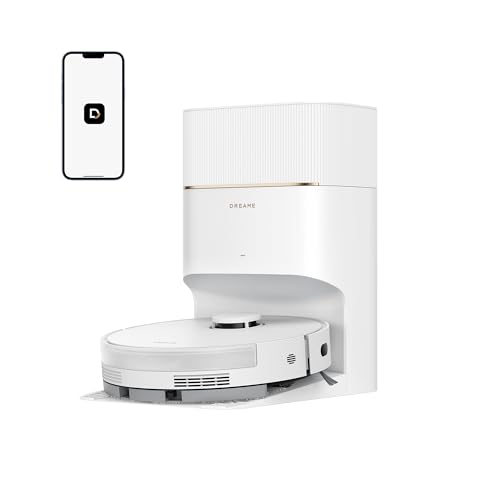
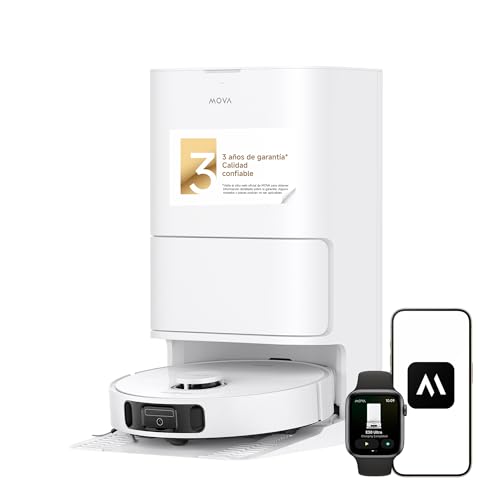
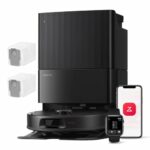
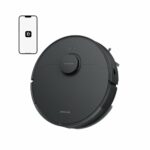
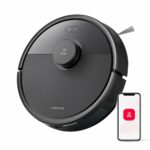
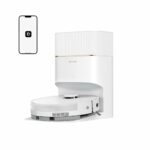
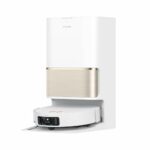
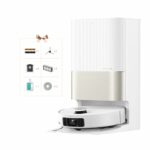
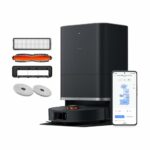
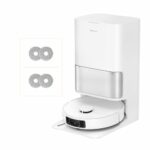
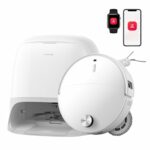
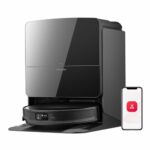
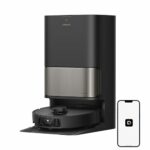
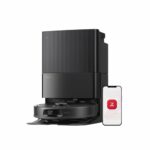
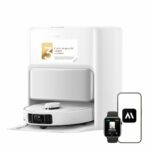
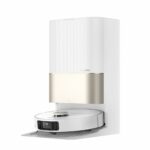
The Dreame D20 Pro Plus arrives in 2025 as a powerful addition to the robot vacuum market, whilst the Mova E30 Ultra, launched in 2024, represents the second brand from Dreame's stable. These two models sit at different points in their respective ranges, with distinct approaches to cleaning performance and user convenience.
The D20 Pro Plus focuses on raw suction power and advanced brushwork, making it suitable for homes where vacuuming performance takes priority. The E30 Ultra, meanwhile, offers a complete multifunctional base station that handles both mop washing and drying—a feature absent from its sibling. This makes it more appealing for households where mopping is as important as vacuuming.
Both robots share identical battery capacity at 5,200 mAh and can tackle obstacles up to 20 mm high, but their cleaning philosophies diverge considerably beyond these basics.
Differences at a Glance
- Suction power: 13,000 Pa versus 7,000 Pa
- Brush system: dual HyperStream design versus single traditional roller
- Mopping method: static mop versus dual rotating mops with 10.5 mm lift
- Base functionality: auto-empty only versus full wash and dry station
- Dust bag capacity: 5 litres versus 3.2 litres
- Side brush features: extensible and anti-tangle versus standard fixed brush
- AI cleaning intelligence: absent versus CleanGenius system
- Pet recognition capability: not available versus included
Power and Vacuuming Performance
The suction gap between these models is substantial. The Dreame D20 Pro Plus delivers 13,000 Pa of suction force, nearly double the 7,000 Pa offered by the Mova E30 Ultra. In practice, this translates to noticeably better pickup on carpets and more effective deep cleaning in textured flooring.
Where the D20 Pro Plus truly distinguishes itself is in the brush department. Its dual HyperStream design features two separate rollers anchored at one end, a configuration specifically engineered to prevent hair entanglement. The E30 Ultra employs a single traditional brush roller, which will require more frequent maintenance in homes with long-haired residents or pets.
The side brush tells a similar story. The D20 Pro Plus includes both an extensible side brush for better corner coverage and anti-tangle technology to reduce hair wrap. The E30 Ultra's side brush remains fixed and lacks anti-tangle features, meaning you'll be cleaning it more regularly.
Neither model offers brush elevation during mopping or main brush lift functionality, so both will engage their rollers continuously during mixed cleaning sessions.
Mopping Capabilities
This is where the tables turn decisively. The Mova E30 Ultra employs dual rotating mops that actively scrub the floor, and crucially, these mops lift 10.5 mm when encountering carpets or rugs. The D20 Pro Plus uses a static mop that simply drags across the floor with no lifting mechanism whatsoever.
More significantly, the E30 Ultra's base station washes the mops with cold water and dries them using cold air after each session. This prevents the mops from sitting damp in the robot, which would otherwise lead to unpleasant odours and bacterial growth. The D20 Pro Plus has no mop washing or drying capability at all—you'll need to manually remove and clean the mop pad after each use.
Both robots use cold water for floor cleaning rather than heated water, and neither can automatically detach their mops at the base station for vacuum-only runs. There's no soil detection for adaptive cleaning on either model.
For anyone serious about maintaining clean hard floors with minimal intervention, the E30 Ultra's multifunctional base makes all the difference between convenient automated mopping and a chore that still requires your involvement.
Navigation System
Both robots navigate using 3D LiDAR towers and include frontal 3D laser sensors for obstacle detection. This gives them solid spatial awareness and effective route planning through complex floor plans.
The Mova E30 Ultra adds CleanGenius AI cleaning intelligence and pet recognition to its repertoire, allowing it to identify animals and adjust its behaviour accordingly. The D20 Pro Plus lacks these AI features entirely.
Neither model includes a front-facing camera, LED lighting for night vision, or remote camera access. Both support external voice assistants like Alexa and Google Home but don't feature proprietary voice control systems.
Battery and Range
Both robots pack identical 5,200 mAh batteries, yet only the D20 Pro Plus specifies its runtime at 285 minutes—likely achievable in low-power modes. The E30 Ultra doesn't publish autonomy figures, though with the same battery capacity and lower suction power, it should deliver comparable or possibly longer runtimes.
Neither manufacturer provides recommended maximum floor area coverage, so you'll need to gauge suitability based on your home size and the robots' ability to return and recharge mid-clean if necessary.
Smart Features
Both models handle 20 mm obstacles with equal capability, useful for transitioning between rooms with slight level changes or crossing over door thresholds and thick rugs.
The E30 Ultra's CleanGenius AI system and pet recognition give it a modest edge in households with animals, as it can theoretically adjust cleaning patterns around pets. The D20 Pro Plus approaches cleaning with a more straightforward, non-adaptive strategy.
Neither robot includes a robotic arm for enhanced object manipulation or a built-in voice assistant—features still reserved for premium flagship models.
Multifunctional Base Station
Here lies the most fundamental divide in this comparison. The D20 Pro Plus base handles only auto-emptying of the dust bin into a generous 5-litre bag. That's the extent of its automation.
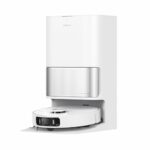
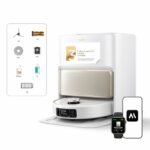
The Mova E30 Ultra base does considerably more. It auto-empties into a smaller 3.2-litre bag, but also washes the robot's mops with cold water and dries them using cold air circulation. The base holds 4.5 litres of clean water and 4 litres of dirty water, giving it substantial autonomy between refills.
Neither base offers self-cleaning of the wash tray, UV disinfection, detergent dispensing, or water line connectivity. Optional plumbing kits aren't available for either model.
The D20 Pro Plus doesn't specify water tank sizes, as its base doesn't handle mop maintenance at all. If you plan to use its mopping function, you'll be filling the robot's 350 ml onboard tank and manually washing the mop pad.
Physical Dimensions
The robots themselves are virtually identical in size. Both measure 350 mm in diameter, with the D20 Pro Plus standing 96.8 mm tall and the E30 Ultra just fractionally taller at 97 mm. This 0.2 mm difference is meaningless in real-world use—both will fit under furniture with similar clearance requirements.
The base stations differ more noticeably. The D20 Pro Plus base measures 298 mm wide, 452 mm tall, and 440 mm deep—a relatively compact footprint suited to tighter spaces. The E30 Ultra's multifunctional station is bulkier at 340 mm wide, 590.5 mm tall, and 456.7 mm deep. That extra height and width accommodate the water tanks and mop washing mechanism.
If floor space is at a premium, the D20 Pro Plus base will tuck away more discreetly. The E30 Ultra's station demands more room but delivers far greater functionality for that footprint.
Real-World Use Scenarios
The Dreame D20 Pro Plus suits homes where vacuuming performance matters most. Its 13,000 Pa suction and dual anti-tangle brushes make it particularly effective in households with pets or residents with long hair. The 500 ml dust bin in the robot and 5-litre base bag mean longer intervals between maintenance.
Mopping with the D20 Pro Plus remains a manual affair. You'll achieve decent results on hard floors, but expect to remove and clean the static mop pad yourself after each session. The 350 ml water tank provides reasonable coverage before requiring a refill.
The Mova E30 Ultra makes more sense for those seeking a genuinely hands-off mopping experience. Its base handles the dirty work of cleaning and drying the mops, and the dual rotating pads provide more effective scrubbing action than a static cloth. The 10.5 mm mop lift protects carpets and rugs automatically.
With a smaller 300 ml dust bin and 3.2-litre base bag, the E30 Ultra requires more frequent bag changes if you're primarily vacuuming large areas. Its 7,000 Pa suction remains adequate for hard floors and low-pile carpets but won't match the D20 Pro Plus on deeper pile or heavily soiled surfaces.
The E30 Ultra's pet recognition and AI cleaning features add convenience for multi-pet households, whilst the D20 Pro Plus relies purely on its mechanical advantages—powerful suction and superior brush design—to handle pet hair.
Conclusion: Which Should You Choose?
Choose the Dreame D20 Pro Plus if: vacuuming performance is your priority, you have thick carpets or rugs, your home includes pets or long-haired family members, you prefer a more compact base station, and you're comfortable manually maintaining the mop. The superior suction and advanced brush system justify this choice for homes where deep cleaning and hair management matter most.
Choose the Mova E30 Ultra if: you want comprehensive automation including mop washing and drying, you have primarily hard floors or low-pile carpets, you value convenience over maximum suction power, and you're willing to sacrifice some dust bag capacity for a complete mopping solution. This model makes sense for anyone seeking the best robot aspirador experience with minimal intervention, particularly if mopping is as important as vacuuming in your routine.
In this comparativa de robots aspiradores, the decision ultimately depends on whether you prioritise raw cleaning power or complete automation. The robot aspirador Dreame D20 Pro Plus wins on suction and brush technology, whilst the robot aspirador Mova E30 Ultra delivers a more rounded, self-sufficient cleaning system. For diferencias entre these models, the base station functionality represents the clearest dividing line—one requires your involvement in mop maintenance, the other handles it entirely on its own.