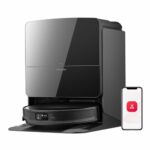
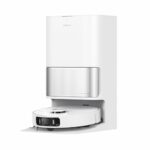
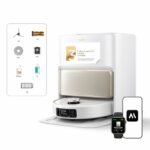
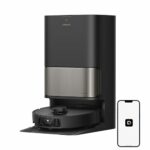
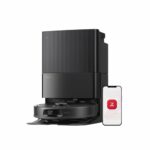
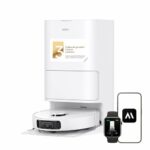
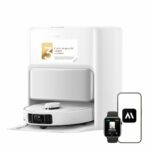
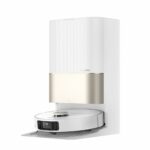
Introduction
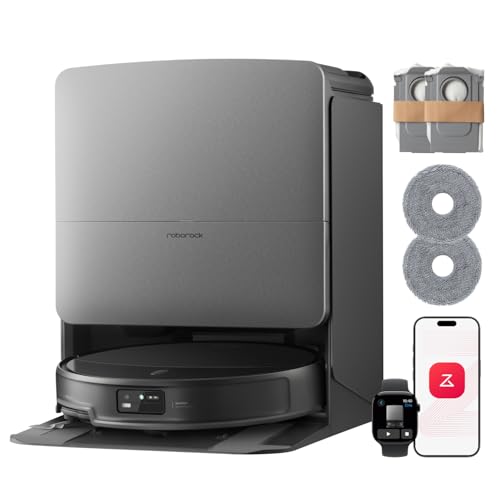
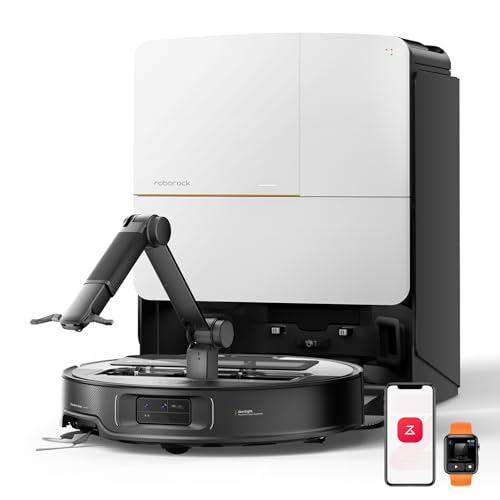
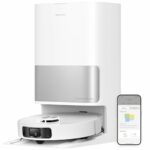
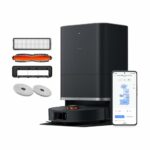
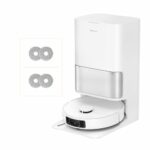
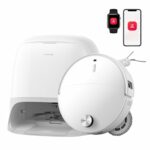
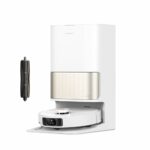
This comparison brings together three high-end models that represent the latest in robotic cleaning technology. The Dreame Aqua 10 Ultra Roller, launched in 2025, introduces an innovative roller-based mopping system that sets it apart from traditional spinning mop designs. Facing it are two models from Roborock: the Saros 20, arriving in February 2026 as the newest addition to the lineup, and the Saros Z70 from 2025, which incorporates a robotic arm for enhanced functionality.
These aren't entry-level devices. Each one features multifunctional bases that handle mop washing and drying, substantial suction power, and advanced AI navigation systems. The choice between them will largely depend on whether you prioritise mopping innovation, raw suction power, or additional features like robotic manipulation capabilities.
Key Differences at a Glance
- The Roborock Saros 20 delivers 36,000 Pa suction, significantly outperforming the Dreame's 30,000 Pa and the Saros Z70's 22,000 Pa
- The Dreame Aqua 10 Ultra Roller uses a unique roller mopping system with 12N pressure, whilst the Roborock models employ dual rotating mops
- Only the Roborock Saros Z70 includes the OmniGrip robotic arm for object manipulation
- The Roborock models can automatically detach their mops at the base for vacuuming-only sessions; the Dreame cannot
- Roborock models mop with warm water; the Dreame uses cold water
- The Dreame stands 97.5 mm tall, whilst both Roborock models measure just 79.8 mm
- The Dreame offers dual detergent tanks versus single tanks in the Roborock models
- Base self-cleaning differs: the Roborock Saros 20 and Z70 clean their washing trays with hot water, the Dreame doesn't include this feature
Power and Suction
The Roborock Saros 20 takes the lead here with 36,000 Pa of suction power, making it the strongest of the three. This represents a substantial advantage over the Dreame Aqua 10 Ultra Roller's 30,000 Pa and an even more pronounced difference compared to the Saros Z70's 22,000 Pa. In practical terms, this extra power becomes noticeable when dealing with embedded dirt in carpets or collecting fine dust particles from hard floors.
Regarding brush technology, the Dreame employs a dual brush system designed to prevent hair tangles, whilst the Roborock Saros 20 features the DuoDivide anti-tangle design that channels debris towards the central suction point. The Saros Z70 uses a standard anti-tangle brush. All three models can raise their main brushes during mopping to avoid dragging dirt across wet floors.
The side brush configurations are identical across all three: each includes an extendable side brush that reaches into corners more effectively, and all can lift their side brushes when mopping to prevent flicking water onto walls or furniture. This uniformity means corner cleaning performance should be comparable across the range.
Mopping
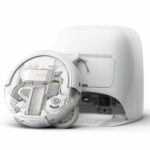
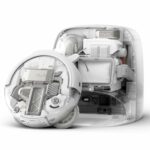
Here's where the Dreame Aqua 10 Ultra Roller diverges most dramatically. Its roller-based mopping system applies 12N of downward pressure, combined with a 14 mm lift capability that includes an additional "tiptoe" function for navigating obstacles. This roller design continuously presents a clean surface to the floor, rotating as it cleans.
The Roborock Saros 20 and Saros Z70 stick with dual spinning mops that can lift between 12-22 mm. Whilst this lacks the roller's continuous cleaning surface, these models compensate by mopping with warm water rather than the cold water used by the Dreame. Warm water generally proves more effective at dissolving grease and sticky residues.
A significant practical difference emerges in how these robots handle vacuuming-only tasks. The Roborock models can automatically remove their mops at the base, allowing them to vacuum without dragging damp mops across carpets. The Dreame cannot do this, meaning you'll need to manually remove the roller if you want a pure vacuuming session.
All three detect dirty mops and dirty floors, triggering additional cleaning passes when needed. Each model also extends its mopping system to reach closer to wall edges. Detection of curtains is present in the Dreame and Saros 20 to avoid wetting fabric, though the Saros Z70 lacks this specific feature.
Navigation System
Navigation technology is sophisticated across all three models. The Dreame Aqua 10 Ultra Roller uses a retractable LiDAR system, whilst the Roborock models employ StarSight 2.0 navigation. Each robot incorporates dual RGB cameras for AI-powered object recognition, frontal 3D laser sensors, and LED lighting for low-light operation.
The Roborock Saros 20 recognises up to 300 different obstacle types, compared to 240 for the Dreame and 108 for the Saros Z70. This broader recognition database means the Saros 20 should handle unusual objects more intelligently, though in typical homes the practical difference may be minimal.
All three offer remote camera access through their apps, allowing you to check on your home whilst away. Pet recognition is standard across the range, useful for avoiding food bowls or sleeping animals. The Dreame runs on AI Sage 15.0 with a quad-core processor, whilst the Saros Z70 uses RR Mason 12.0; specific details for the Saros 20's processor weren't provided.
Battery and Autonomy
Battery capacity is identical at 6,400 mAh across all three models. The Dreame Aqua 10 Ultra Roller provides specific autonomy data: 160 minutes of runtime. Autonomy figures for the Roborock models aren't available, though with equivalent battery capacity, similar runtime would be expected under comparable conditions.
What matters more than raw minutes is how efficiently each robot uses that power. The higher suction of the Saros 20 will naturally consume more energy when running at maximum power, whilst the Dreame's roller mopping system adds its own power demands. In practice, all three should comfortably handle most homes in a single session, returning to base for mop cleaning as needed during the job.
Smart Features
Each robot can climb obstacles up to 20 mm, sufficient for most door thresholds and carpet edges. This capability is standard rather than exceptional at this price point, but it's essential for seamless room-to-room navigation.
The standout feature here belongs exclusively to the Roborock Saros Z70: its OmniGrip robotic arm. This mechanical appendage can manipulate small objects, potentially moving obstacles out of the cleaning path or even performing simple tasks. Neither the Dreame nor the Saros 20 includes this technology, making the Z70 unique in this comparison.
Voice assistant integration is comprehensive. All three models include their own proprietary voice assistants and work with external systems like Alexa and Google Home. This means you can control any of them using your preferred voice platform.
Multifunctional Base
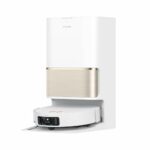
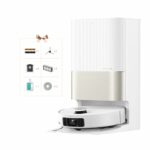
All three bases handle automatic dust emptying, mop washing, and mop drying. The Dreame's 3.2-litre dust bag offers more capacity than the 2.5-litre bags in the Roborock models, meaning less frequent bag replacements. Clean water tanks are uniformly 4 litres, whilst the Dreame's dirty water tank holds 3.5 litres compared to 3 litres for the Roborock models.
Base self-maintenance differs notably. The Roborock Saros 20 and Saros Z70 both clean their own washing trays using hot water, with the Z70 featuring a "2.0" version of this system. The Dreame doesn't include automatic tray cleaning, requiring manual maintenance to prevent buildup and odours.
Mop drying is confirmed with hot air for the Roborock models, accelerating drying and reducing bacterial growth. The Dreame's drying method isn't specified in available data. For mop washing, the Roborock bases heat the water, whilst the Dreame uses cold water—matching their respective floor mopping approaches.
The Dreame distinguishes itself with dual detergent tanks, potentially allowing different cleaning solutions for different floor types or cleaning intensity levels. The Roborock models include single detergent dispensers. The Dreame also offers an optional kit for connecting to household plumbing, though this requires separate purchase and installation.
Dimensions
Height makes the most significant practical difference. The Dreame Aqua 10 Ultra Roller stands 97.5 mm tall, whilst the Roborock Saros 20 and Saros Z70 measure just 79.8 mm. That 17.7 mm difference determines which furniture these robots can clean beneath. Low-profile sofas, beds, and cabinets that the Roborock models navigate easily might block the Dreame entirely.
Diameter varies slightly: 350 mm for the Dreame versus 353 mm for the Roborock models. This 3 mm difference is negligible in practical terms—all three will fit through standard doorways and navigate similar spaces.
Base dimensions show the Dreame occupying more floor space at 420 mm wide, 440 mm deep, and 500 mm tall. The Roborock bases measure 381 mm wide, 475 mm deep, and 488 mm tall. The Dreame's wider but shallower footprint versus the Roborock's narrower but deeper profile means you'll need to measure your intended base location carefully.
Real-World Usage
For homes with multiple floor types, the Roborock Saros 20's superior 36,000 Pa suction provides the best deep-cleaning performance on carpets whilst still handling hard floors effectively. Its warm water mopping and automatic mop removal make it the most versatile option for mixed flooring.
The Dreame Aqua 10 Ultra Roller suits homes prioritising mopping performance, particularly those with large hard floor areas. Its roller system maintains consistent contact and pressure, though the lack of automatic mop removal and cold-water-only operation limits its flexibility. The dual detergent tanks add convenience if you regularly switch between cleaning solutions.
Households with low furniture should favour the Roborock models' 79.8 mm height. This opens up cleaning areas the taller Dreame simply cannot reach, potentially covering significantly more floor space without manual intervention.
Pet owners will find all three models well-equipped with anti-tangle brushes and pet recognition. The Saros 20's higher suction gives it an edge for embedded pet hair in carpets, whilst the Dreame's larger dust bag capacity means fewer interruptions during heavy shedding seasons.
Maintenance commitment varies. The Roborock models' self-cleaning bases reduce hands-on upkeep, whilst the Dreame requires manual tray cleaning. Conversely, the Dreame's larger dust bag needs emptying less frequently. Consider which maintenance tasks you'd rather handle when making your choice.
Conclusion: Which One to Choose?
Choose the Dreame Aqua 10 Ultra Roller if you have predominantly hard floors and want the most innovative mopping technology available. The roller system delivers consistent pressure and coverage, whilst the dual detergent tanks and larger dust bag capacity reduce maintenance frequency. Accept that you'll need to manually clean the base tray and that the 97.5 mm height restricts access under low furniture. This model suits homes where mopping quality outweighs raw suction power.
Choose the Roborock Saros 20 if you want the most powerful cleaning performance in this comparison. Its 36,000 Pa suction, warm water mopping, and self-cleaning base with hot water tray washing deliver the most comprehensive automated cleaning experience. The 79.8 mm profile accesses more areas, and automatic mop removal adds genuine convenience for homes mixing carpets and hard floors. This represents the best all-rounder for demanding households.
Choose the Roborock Saros Z70 if the robotic arm's novelty appeals and you're willing to accept lower suction power. At 22,000 Pa, it's the least powerful here, but the OmniGrip arm offers unique capabilities the others cannot match. You still get warm water mopping, automatic mop removal, and the low 79.8 mm profile. This suits tech enthusiasts and homes with moderate cleaning demands who value innovation over maximum suction.