Introduction
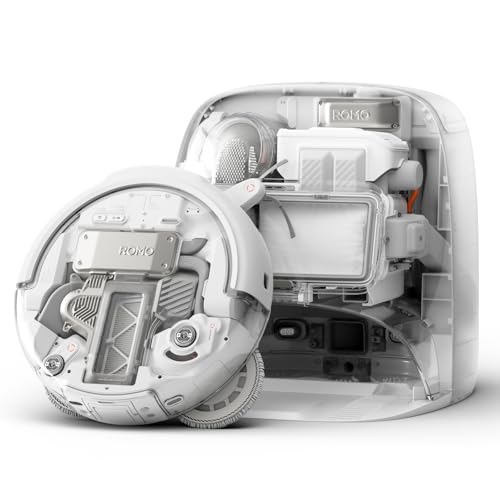
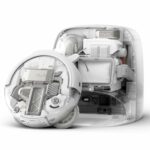
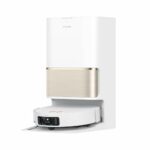
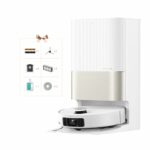
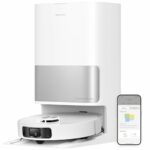
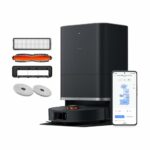
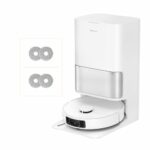
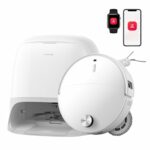
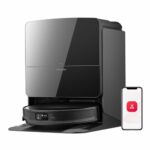
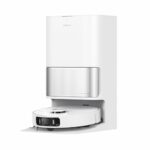
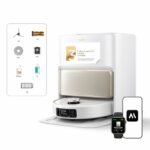
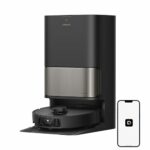
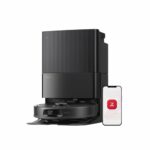
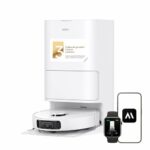
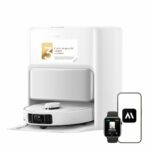
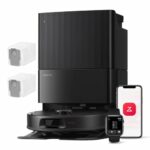
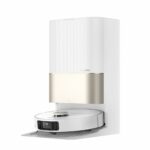
DJI has just entered the robot vacuum market with the Romo P, bringing fresh competition to established players like Dreame. The DJI Romo P (Robot y Base Transparente) arrives in 2025 with a transparent base design and DJI's renowned navigation technology, whilst the Dreame Aqua 10 Ultra Roller also launches this year featuring a unique roller mopping system that sets it apart from traditional rotating mop designs.
Both models represent high-end multifunctional cleaning stations aimed at users wanting minimal maintenance. The DJI model brings 25,000 Pa suction and a divided brush system, whereas Dreame's option pushes suction up to 30,000 Pa and incorporates dual HyperStream brushes. Each robot vacuum targets households seeking comprehensive automated cleaning with hot water mop washing and intelligent navigation.
Key differences at a glance
- The Dreame Aqua 10 Ultra Roller delivers 30,000 Pa suction compared to 25,000 Pa on the DJI Romo P
- DJI uses rotating mops whilst Dreame employs a 12N pressure roller system for scrubbing
- Battery capacity differs: 6,400 mAh in the Dreame versus 5,000 mAh in the DJI
- Dreame's side brush can lift during mopping; the DJI's cannot
- DJI features hot air mop drying and UV disinfection in the base
- Dreame washes mops with hot water; DJI uses cold water for mop cleaning
- The Dreame recognises 240 objects and specifically detects curtains
- Dust bag capacity is larger in the Dreame at 3.2 litres versus 2.4 litres
Power and vacuuming performance
Suction power separates these models noticeably. The Dreame Aqua 10 Ultra Roller reaches 30,000 Pa, giving it a clear advantage over the DJI Romo P's 25,000 Pa. For homes with thick carpets or pets that shed heavily, this extra power can make a tangible difference in deep cleaning performance.
The brush systems take different approaches. DJI equips its model with a Divided brush design, whilst Dreame opts for dual HyperStream brushes. Both manufacturers claim anti-tangle properties, which matters considerably if you live with long-haired family members or pets. The HyperStream design anchors two brushes at one end, creating a configuration that actively prevents hair wrapping.
Both robots can lift their main brush when mopping to avoid dragging debris across wet floors. However, the side brush behaviour differs: Dreame's side brush elevates during mopping, whereas the DJI's remains at floor level. This might seem minor, but it prevents the side brush from flicking water around or creating streaks on already-cleaned areas.
Each model includes an extendable side brush for better corner coverage. In practice, this means the brush extends outward when the robot detects it's near walls or corners, sweeping debris more effectively from tight spaces.
Mopping systems
Here's where these robots diverge significantly. The DJI Romo P uses two rotating mops that extend to reach edges, a fairly conventional approach. The Dreame Aqua 10 Ultra Roller takes a different path entirely with its roller system that applies 12N of downward pressure whilst scrubbing. Think of it like the difference between wiping with a cloth versus scrubbing with a brush—the roller actively agitates stubborn marks.
Both extend their mopping components to clean right up to skirting boards. Mop lifting is present on each model, though Dreame specifies 14 mm lift height plus carpet detection, ensuring the roller stays well clear of rugs. The DJI also lifts its mops but doesn't state the exact height.
Neither robot mops with hot water from an internal tank—both use cold water during actual floor cleaning. The temperature difference comes at the base station. Dreame washes its roller with hot water, which helps dissolve grease and sanitise more effectively. DJI washes its mops with cold water but compensates with hot air drying and UV disinfection in the base.
That UV disinfection on the DJI model targets bacteria on the mops after washing. The Dreame doesn't specify UV treatment. DJI also includes an automatic nozzle for cleaning the washing tray itself, reducing manual maintenance. Dreame's base lacks this self-cleaning feature for the tray.
Both detect dirt on mops and floors, triggering additional cleaning passes or mop washes when needed. This adaptive behaviour means the robots don't just follow a preset routine—they respond to actual cleaning conditions.
Navigation systems
DJI fits a solid-state LiDAR system, whilst Dreame uses a retractable LiDAR unit. Both create accurate floor plans and navigate efficiently. The solid-state version on the DJI potentially has fewer moving parts that could wear over time, though retractable units lower the robot's profile slightly when not actively scanning.
Camera systems differ in specification. The DJI Romo P has AI camera capability, whereas Dreame specifies dual RGB cameras. Dreame's setup recognises 240 different objects, allowing it to identify and avoid specific items like shoes, cables, pet waste, and even curtains. The curtain detection is particularly useful—the robot won't get tangled in long drapes. DJI doesn't specify the number of objects it can identify.
Dreame confirms pet recognition, helpful if you want the robot to avoid disturbing sleeping animals or to document your pet's location via the app. This detail isn't confirmed for the DJI model. Both offer remote camera access, letting you check on your home through the robot's camera feed, and both include LED lighting for navigation in dark spaces.
The Dreame runs on AI Sage 15.0 with an octa-core processor, giving it considerable computing power for real-time decision making. DJI hasn't specified its processor details. Both robots use AI for intelligent cleaning patterns and stain recognition.
Battery and autonomy
Battery capacity favours the Dreame significantly: 6,400 mAh compared to 5,000 mAh in the DJI. Surprisingly, this doesn't translate to longer runtime. The DJI achieves 180 minutes of operation, whilst the Dreame manages 160 minutes. The DJI's lower suction power likely contributes to its greater efficiency per mAh.
For most homes, either runtime proves sufficient. The robots return to base automatically when needed, recharge, then resume where they left off. The extra capacity in the Dreame provides more headroom for intensive cleaning sessions with maximum suction and mopping simultaneously.
Smart features
Obstacle climbing differs between models. The DJI Romo P can manage 20 mm steps, whilst Dreame specifies its robot handles "simple steps" but doesn't give an exact measurement. This matters for homes with raised thresholds between rooms or slight level changes.
Dreame includes its own voice assistant, allowing direct voice commands to the robot without needing external smart speakers. Both models integrate with Alexa and Google Home for those preferring established ecosystems.
Multifunction cleaning base
Both bases automatically empty the robot's dustbin, wash the mopping components, and dry them afterwards. The DJI station holds a 2.4-litre dust bag, whilst Dreame's accommodates 3.2 litres—roughly a month's difference in maintenance frequency for average homes.
Water tank sizes are nearly identical: 4 litres clean water in both, with 3.2 litres dirty water capacity in the DJI and 3.5 litres in the Dreame. Both include dual detergent tanks, letting you use different cleaning solutions for various floor types or cleaning needs.
DJI's base dries mops with hot air, speeding up the process and reducing odour risk. The Dreame's drying method isn't specified. That automatic tray cleaning system on the DJI base keeps the washing area hygienic without manual scrubbing.
Dreame offers an optional connection kit for plumbing the base directly to water supply and drainage. This kit is sold separately and eliminates the need to refill and empty tanks manually. The DJI doesn't offer this option.
Size and dimensions
The robots themselves are virtually identical in footprint. The DJI measures 351 mm diameter and stands 98 mm tall. Dreame's dimensions are 350 mm diameter and 97.5 mm height—a negligible 0.5 mm shorter. Either robot should fit under most furniture, though you'll want to measure your lowest sofas or bed frames if clearance is tight.
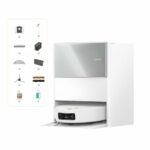
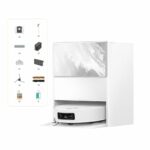
Base stations differ more noticeably. The DJI base is 453 mm wide, 440 mm tall, and 425 mm deep. Dreame's station measures 420 mm wide, 500 mm tall, and 440 mm deep. The Dreame base is narrower but considerably taller, whilst the DJI spreads wider but sits lower. Consider your available floor space and any overhead cabinets when choosing placement.
Real-world usage scenarios
For homes with pets that shed, the Dreame's higher suction and HyperStream brushes offer stronger performance, particularly on carpets. The 6,400 mAh battery also provides more power reserve for intensive cleaning. The 240-object recognition helps avoid pet toys and feeding bowls scattered about.
If you prioritise hygiene and low maintenance, the DJI's hot air mop drying, UV disinfection, and automatic tray cleaning reduce hands-on upkeep. The transparent base design also lets you see water levels and maintenance needs at a glance.
The Dreame's roller mopping system suits homes with stubborn floor stains or textured tiles where scrubbing action helps. Hot water mop washing tackles grease better than cold water, useful in kitchens. The optional plumbing kit (purchased separately) appeals to those wanting truly hands-free operation.
Larger homes benefit from the Dreame's bigger dust bag capacity, extending the time between bag changes. The DJI's longer runtime per charge might complete cleaning cycles with fewer interruptions despite the smaller battery.
Conclusion: which robot vacuum to choose?
Choose the DJI Romo P (Robot y Base Transparente) if you value maximum hygiene features like UV disinfection and hot air drying, want a base that cleans its own washing tray automatically, or prefer the transparent design to monitor maintenance needs easily. It suits those who prioritise low-maintenance operation and don't mind slightly less suction power.
Choose the Dreame Aqua 10 Ultra Roller if you need stronger suction for deep carpet cleaning or heavy pet hair, want the scrubbing action of the roller mop for stubborn floor stains, or have a larger home that benefits from the bigger dust bag capacity. It's ideal for households with pets, thanks to 240-object recognition and curtain detection. Consider it especially if you're interested in the optional plumbing connection for completely autonomous operation.