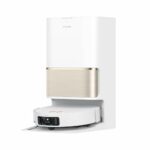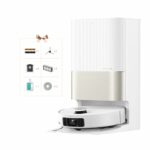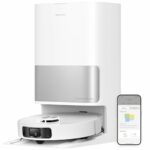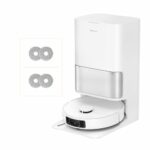
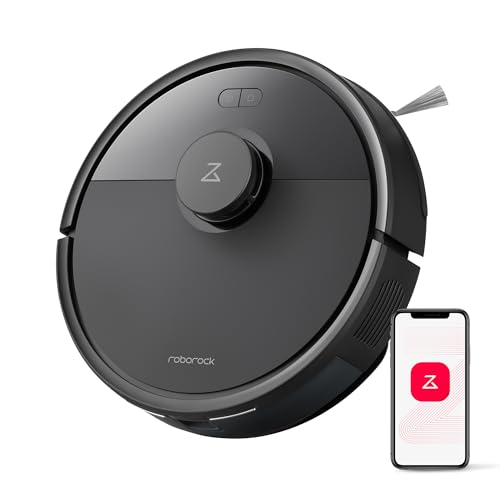
Roborock Q7 L5 o BF
4,0
Overall score (0-10)
Power and Battery
3,5
Brushing System
1,8
Mopping System
0,9
Cleaning Base
0,0
Navigation and Intelligence
1,9
📋 Full Technical Specifications
General Information
| Brand | Roborock |
| Release date | 2025 |
Power and Battery
| Suction power | 8.000 Pa |
| Battery capacity | 3.200 mAh |
| Runtime | — |
| Battery performance | — |
Brushing System
| Main brush | Anti-tangle bristle brush |
| Lifting main brush | No |
| Lifting side brush | ✗ No |
| Extendable side brush | ✗ No |
| Anti-tangle side brush | ✗ No |
Mopping System
| Mopping type | Static mop |
| Mop extension | No |
| Mop lifting | No |
| Floor mopping temperature | Cold water |
| Detach mops at base | ✗ No |
| Mop dirt detection | ✗ No |
| Floor dirt detection | ✗ No |
Cleaning Base
| Auto-emptying dust bin | No |
| Mop washing | No |
| Mop drying | No |
| Self-cleaning wash tray | ✗ No |
| UV disinfection | ✗ No |
| Detergent tank | ✗ No |
| Automatic mop changing | No |
| Dust bag capacity | — |
| Clean water tank | — |
| Dirty water tank | — |
| Plumbing connection kit | ✗ No |
| Integrated plumbing connection | ✗ No |
Navigation and Intelligence
| Navigation system | 360° LiDAR turret |
| Obstacle avoidance | No |
| AI camera | No |
| Front 3D laser sensor | ✗ No |
| No. of recognised obstacles | No |
| Pet recognition | ✗ No |
| Curtain detection | ✗ No |
| Remote camera access | ✗ No |
| Night vision LED | ✗ No |
| AI intelligent cleaning | ✗ No |
| AI stain recognition | ✗ No |
| CPU / Algorithm | ? |
Advanced Features
| Step-climbing ability | 20 mm |
| Robotic arm | ✗ No |
| Built-in voice assistant | No |
| External voice assistant (Alexa, Google Home...) | Yes |
Robot Tanks
| Robot dust bin | 400 ml |
| Robot water tank | 270 ml |
Robot Dimensions
| Robot diameter | 325 mm |
| Robot height | 99 mm |
Base Dimensions
| Base width | 160 mm |
| Base height | 101 mm |
| Base depth | 70 mm |
Introduction
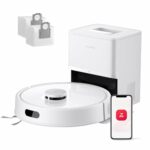
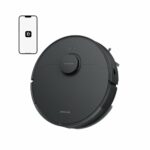
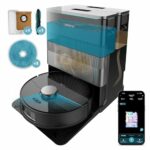
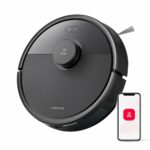
The Roborock Q7 L5 or BF arrives on the market in 2025 as a balanced proposition within the catalogue of the world's leading brand in cleaning robotics. We are looking at a robot vacuum cleaner with advanced laser navigation and basic mopping capability, designed for those seeking to automate household tasks without excessive complications or disproportionate investments.
Power and Cleaning System
The suction power reaches 8.000 Pa, a figure that in practice allows it to tackle both fine dust and heavier debris on short-pile carpets and hard floors with ease. The system incorporates an anti-tangle bristle brush that notably reduces the accumulation of long hairs and fibres, something especially useful if you live with pets or have long hair. This type of brush requires some periodic maintenance, but its design facilitates manual cleaning when necessary. The robot features a conventional side brush that sweeps effectively towards the suction inlet, although it does not have extendable systems or specific anti-tangle technology in this component. For homes with moderate daily dirt accumulation, the assembly is more than sufficient.
Mopping System
Mopping is carried out using a static mop with cold water, a simple system that drags away surface dirt but does not aspire to professional results. The integrated water tank has a capacity of 270 ml, which allows it to cover medium-sized rooms without constant refills. It should be borne in mind that the mops do not lift or extend, so when moving from carpets to hard floors you will need to be vigilant or configure restricted zones. There is also no automatic mop washing in the base, so after each use you will need to remove and clean them by hand. It is a complementary mopping system, ideal for maintaining already clean floors or removing adhered dust, but it does not replace a traditional mop when there are ingrained stains.
Navigation and Intelligence
Navigation relies on a 360-degree LiDAR turret that maps the environment with precision and plans efficient routes. This laser system allows the robot to move with ease even in low-light conditions, something that camera-based models sometimes fail to achieve. It does not incorporate active obstacle avoidance or a camera with artificial intelligence, which means that small objects on the floor can pose a problem if not picked up beforehand. There is also no pet recognition or intelligent stain detection. In practice, it works well in tidy homes where the floor is clear, but it requires some collaboration from the user to avoid cables, socks or scattered toys.
Battery Life and Practical Use
The battery has a capacity of 3.200 mAh, sufficient to complete cleaning sessions in medium-sized flats without the need for intermediate recharges. The robot overcomes height differences of up to 20 mm, which allows it to move between rooms with small steps or climb onto thick carpets without getting stuck. The internal dust container reaches 400 ml, a tight figure that requires frequent emptying if the home accumulates a lot of dirt or if there are pets that shed hair. It is compatible with external voice assistants such as Alexa or Google Home, facilitating control through simple commands without the need to constantly open the app.
Base and Maintenance
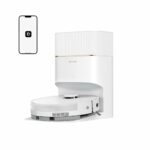
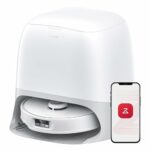
The charging base is compact, with dimensions of 160 mm wide, 101 mm high and 70 mm deep, taking up little space in any corner. It does not include a self-emptying system, so maintenance of the dust container falls entirely on the user. There is also no automatic mop washing or drying, which implies manual intervention after each mopping session. For those who do not mind dedicating a few minutes to basic maintenance, it does not pose a major inconvenience, but it is worth knowing before making a decision.
Conclusion
The Roborock Q7 L5 or BF fits well in small or medium-sized homes where precise laser navigation and occasional mopping without pretensions are valued. It is a sensible option for those seeking to automate daily cleaning without excessive technical complications, provided that a one hundred per cent autonomous model in terms of maintenance is not expected.