Introduction
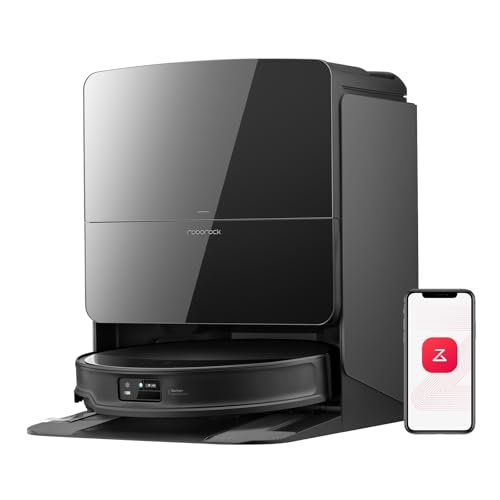
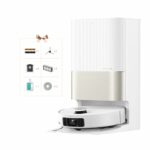
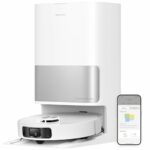
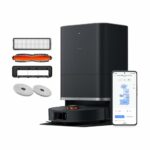
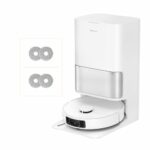
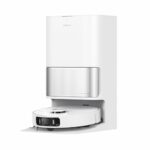
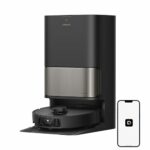
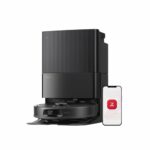
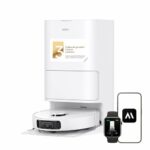
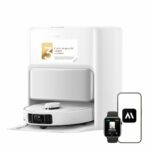
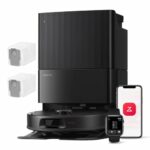
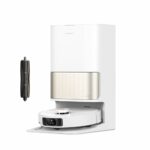
Roborock has launched three premium models in 2025 that represent the cutting edge of robotic cleaning technology. The Roborock Qrevo Curv 2 Pro, Roborock Saros 10R, and Roborock Saros Z70 share the same year of release but target slightly different user needs through variations in power, navigation systems, and advanced features.
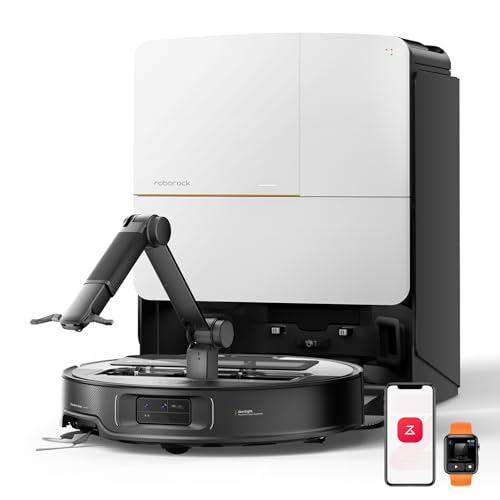
All three models come equipped with multifunctional bases that handle automatic emptying, mop washing, and drying—essential for maintaining genuinely clean floors without constant manual intervention. The Qrevo Curv 2 Pro stands out with its retractable LiDAR and exceptional suction power, whilst the Saros 10R offers a balanced specification at what's likely a more accessible price point. The Saros Z70 introduces a robotic arm—a feature that fundamentally changes what a robot vacuum can accomplish.
These robots suit medium to large homes where automation matters. Anyone tired of emptying dustbins or rinsing dirty mops will appreciate the comprehensive base stations. Households with pets, varied floor types, or simply high cleanliness standards will find genuine value in the advanced navigation and cleaning intelligence built into these machines.
Differences at a Glance
- Suction power ranges from 18,500 Pa (Saros 10R) to 25,000 Pa (Qrevo Curv 2 Pro)
- Navigation systems differ: retractable LiDAR versus StarSight 2.0
- Only the Saros Z70 includes the OmniGrip robotic arm
- The Qrevo Curv 2 Pro recognises 200 obstacles; the Saros models identify 108
- Mop elevation varies: 7-17mm on the Qrevo Curv 2 Pro versus 12-22mm on both Saros models
- Warm water mopping available only on the Saros 10R and Z70
- Side brush elevation absent on the Qrevo Curv 2 Pro but present on both Saros models
- Detergent dispenser included only in the Saros 10R and Z70
- Base dimensions and self-cleaning technology differ across models
Power and Suction
The Roborock Qrevo Curv 2 Pro delivers 25,000 Pa of suction—considerably more than the Saros 10R's 18,500 Pa or the Saros Z70's 22,000 Pa. In practical terms, this translates to better deep-cleaning performance on carpets and more effective pickup of fine dust embedded in textile fibres. For homes with rugs or carpeted bedrooms, that extra power makes a tangible difference.
All three robots feature the DuoDivide Anti-Tangle brush system, which channels hair and debris towards the central suction point rather than wrapping it around the roller. This design proves especially valuable in households with pets or long-haired residents, reducing the frequency of manual brush maintenance.
Each model can lift its main brush during mopping to prevent wet carpets, and all include an extendable side brush for better corner coverage. The key distinction lies in side brush elevation: the Saros 10R and Z70 can raise their side brushes when mopping, preventing them from flicking dirty water onto skirting boards. The Qrevo Curv 2 Pro lacks this feature, though its side brush remains anti-tangle.
Mopping
Every model uses dual rotating mops that extend to reach edges—a significant improvement over fixed mopping pads that leave a gap along walls. Mop elevation differs noticeably: the Qrevo Curv 2 Pro lifts its mops 7-17mm, whilst both Saros models achieve 12-22mm. That extra height on the Saros range helps when transitioning onto thicker rugs or crossing substantial door thresholds.
Water temperature presents another distinction. The Qrevo Curv 2 Pro mops with cold water, whereas the Saros 10R and Z70 use warm water for floor cleaning. Warm water dissolves grease and sticky residues more effectively—something you'll notice when tackling kitchen floors or spills involving oils.
All three robots wash their mops at the base with hot water and dry them using warm air, which prevents odours and bacterial growth. They can also detect dirty mops and re-wash them, plus identify particularly soiled areas on the floor for repeated passes. Each model can automatically remove its mops at the base when you want vacuuming only, avoiding unnecessary water usage.
The Saros 10R and Z70 include a detergent dispenser in their bases, adding cleaning solution during mop washing. The Qrevo Curv 2 Pro doesn't offer this, relying solely on hot water for mop maintenance. For most homes, hot water alone proves sufficient, but the detergent option adds an extra level of hygiene.
Navigation System
Navigation technology separates these models clearly. The Qrevo Curv 2 Pro employs a retractable LiDAR system that allows the robot to measure just 79.8mm tall—the same height as the Saros models—but with the advantage of traditional laser mapping precision. When the LiDAR retracts, the robot can slip under lower furniture.
The Saros 10R and Z70 use StarSight 2.0 navigation, which combines dual AI cameras with 3D laser sensors. This vision-based approach enables more nuanced object recognition. The Qrevo Curv 2 Pro can identify 200 different obstacles, whilst the Saros models recognise 108. In practice, this means the Qrevo Curv 2 Pro might handle a more chaotic environment with greater precision, though 108 objects still covers the vast majority of household items.
All three feature dual AI cameras, 3D frontal laser sensors, pet recognition, and LED lighting for night-time navigation. Remote camera access lets you check on your home or pets whilst away. None of the models detect curtains specifically, but their general obstacle avoidance handles hanging fabrics reasonably well.
Battery and Autonomy
Each robot houses a 6,400 mAh battery—a generous capacity by industry standards. The Qrevo Curv 2 Pro manages 290 minutes of runtime, whilst the Saros 10R achieves 180 minutes. Autonomy data isn't available for the Saros Z70, though its battery capacity matches the others.
That 110-minute difference between the Qrevo Curv 2 Pro and Saros 10R likely reflects the higher power consumption of the 25,000 Pa suction system versus the 18,500 Pa motor. For larger homes—say, 200 square metres or more—the extended runtime of the Qrevo Curv 2 Pro means fewer mid-clean returns to the base for recharging.
Smart Features
All three robots can climb obstacles up to a certain height—described as simple steps—making them capable of crossing standard door thresholds and transitioning between rooms without assistance.
The defining feature of the Saros Z70 is its OmniGrip robotic arm. This mechanical appendage can grasp and move small objects, potentially clearing lightweight obstacles from the cleaning path or even performing basic tidying tasks. Neither the Qrevo Curv 2 Pro nor the Saros 10R includes this technology, which remains rare in the robot vacuum market.
Each model features its own voice assistant alongside compatibility with Alexa and Google Home. The built-in assistant allows for direct voice commands without relying on external smart home ecosystems—useful if you prefer not to connect everything to cloud services.
Multifunctional Base Station
Every base automatically empties the robot's dustbin into a 2.5-litre bag, washes mops with hot water, and dries them using warm air. The capacity of 4 litres for clean water and 3 litres for dirty water matches across all models, providing enough reserves for several cleaning sessions before refilling becomes necessary.
The Qrevo Curv 2 Pro features version 3.0 of the self-cleaning tray system, whilst both Saros models use version 2.0. The newer iteration likely offers improved cleaning of the base's internal components, reducing maintenance frequency. Neither version requires UV disinfection, which none of these models include.
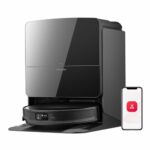
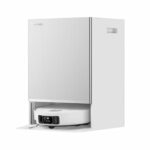
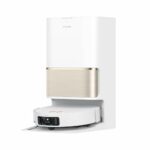
Base dimensions vary significantly. The Qrevo Curv 2 Pro's base measures 450mm in width, height, and depth—a perfect cube. The Saros 10R and Z70 bases are narrower at 381mm wide but taller at 488mm and deeper at 475mm. The Qrevo Curv 2 Pro's square footprint demands more floor space, whilst the Saros bases fit more easily into corners despite their greater height.
None of these models supports direct plumbing connection, nor do they offer optional kits for water line integration. You'll need to manually refill clean water and empty dirty water periodically.
Dimensions
The robots themselves measure almost identically: 352-353mm in diameter and 79.8mm tall. That sub-80mm height allows them to clean beneath most sofas, beds, and cabinets—a critical consideration for thorough whole-room coverage.
The Qrevo Curv 2 Pro sits at 352mm diameter, marginally smaller than the 353mm of the Saros models, though this 1mm difference won't affect real-world navigation. All three maintain the same low profile, so furniture clearance remains consistent across the range.
As mentioned, base station footprints differ more substantially. If floor space is limited, the narrower Saros bases may prove easier to accommodate, despite their additional height. The Qrevo Curv 2 Pro's cubic base looks more symmetrical but claims a larger area.
Real-World Performance
For homes with heavy pet shedding or thick carpets, the Qrevo Curv 2 Pro's 25,000 Pa suction and extended 290-minute runtime deliver superior deep-cleaning capability. The higher obstacle recognition count also helps in cluttered spaces where children's toys or scattered items create navigation challenges.
The Saros 10R suits households seeking a balanced specification without paying for extreme power or robotic arms. Its warm water mopping, detergent dispenser, and side brush elevation provide comprehensive floor care, whilst 180 minutes of battery life handles most medium-sized homes comfortably. The narrower base fits more discreetly into utility areas.
The Saros Z70 appeals to early adopters intrigued by the robotic arm's potential. Beyond that unique feature, it shares the Saros 10R's warm water mopping and detergent system. The arm might prove genuinely useful for picking up small items like socks or pet toys, though its practical value depends heavily on your household's typical floor clutter.
All three models handle hard floors, tiles, and parquet effectively thanks to their dual rotating mops and edge extension. The warm water option on the Saros models gives them a slight edge on greasy kitchen floors. Carpet performance favours the Qrevo Curv 2 Pro due to its higher suction, though the Saros Z70's 22,000 Pa remains very capable.
Conclusion: Which to Choose?
Choose the Roborock Qrevo Curv 2 Pro if maximum suction power matters most to you. Homes with deep-pile carpets, multiple pets, or large floor areas benefit from the 25,000 Pa motor and 290-minute runtime. The 200-object recognition suits busy households where floors accumulate varied items. The retractable LiDAR offers proven navigation reliability, and the version 3.0 base self-cleaning represents the most advanced maintenance system in this comparison.
Choose the Roborock Saros 10R if you want comprehensive mopping features without paying for extreme specifications. Warm water mopping, the detergent dispenser, and side brush elevation deliver excellent floor care for medium-sized homes. The narrower base fits more easily into tighter spaces, and the 18,500 Pa suction handles everyday dirt and pet hair effectively. This model likely represents the best value in the range for most users.
Choose the Roborock Saros Z70 if the robotic arm genuinely solves a problem in your home. If you frequently find small obstacles preventing your robot from completing its route, the OmniGrip technology could reduce manual intervention. Beyond the arm, this model matches the Saros 10R's mopping capabilities and adds the latest RR Mason 12.0 algorithm for potentially smarter cleaning decisions. It's the option for those who want the newest technology and don't mind paying for innovation.
All three represent excellent choices for 2025, reflecting Roborock's position as a leading manufacturer. Your decision ultimately depends on whether you prioritise raw power and endurance, balanced features and value, or cutting-edge robotic capabilities.