Introduction
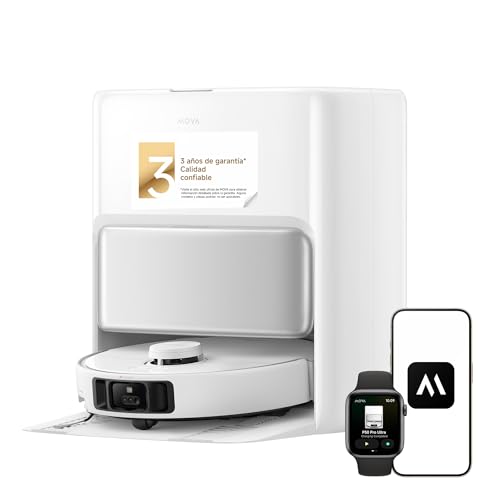
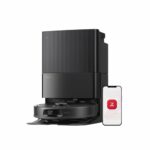
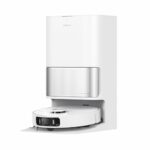
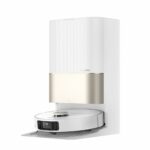
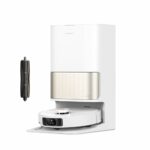
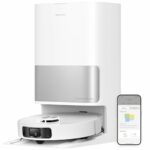
The Mova P50 Pro Ultra and the Mova S70 Roller represent two distinct approaches to automated floor cleaning from the same manufacturer. The P50 Pro Ultra launched in 2025 as a comprehensive solution built around dual rotating mops and extensive AI capabilities, whilst the S70 Roller arrived in March 2026 introducing a 270mm roller system that fundamentally changes how mopping is handled. Both models share the same 5,200mAh battery capacity and 22mm obstacle-climbing ability, yet their cleaning methodologies differ considerably.
The P50 Pro Ultra targets users seeking maximum automation with features like automatic mop removal and AI-powered dirt detection. The S70 Roller, meanwhile, focuses on a more streamlined approach with its roller-based mopping system and lower profile design. Understanding which cleaning philosophy suits your home better requires examining how these differences translate into real-world performance.
Power and Suction
The suction power gap between these models is substantial. The Mova S70 Roller delivers 28,000Pa compared to the P50 Pro Ultra's 19,000Pa—a difference that becomes particularly relevant when dealing with deeply embedded dirt in carpets or textured flooring. This 47% increase in raw suction capability gives the newer model a clear advantage for households with pets or high-traffic areas where debris accumulates quickly.
The P50 Pro Ultra employs a TriCut 3.0 main brush combining bristles with integrated cutting blades designed to slice through tangled hair. This brush can lift itself during mopping to prevent cross-contamination between dry and wet cleaning. The S70 Roller uses a simpler main brush design without the cutting mechanism, and crucially, this brush cannot elevate during mopping operations. In practice, this means the P50 Pro Ultra maintains cleaner separation between vacuuming and mopping functions.
Both models feature identical side brush configurations: extensible designs that reach into corners, elevation capability during mopping, and anti-tangle construction. This parity means edge cleaning performance should remain consistent between the two, with neither holding an advantage along skirting boards or room perimeters.
Mopping
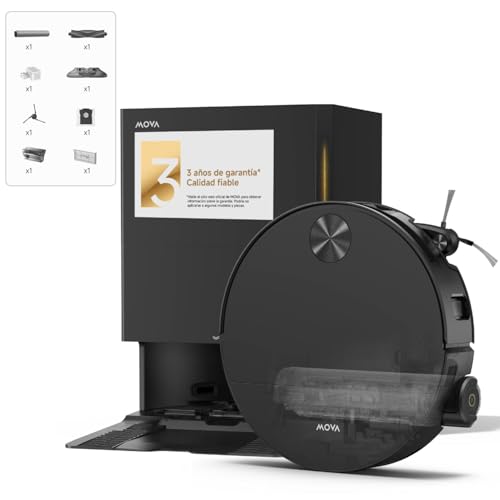
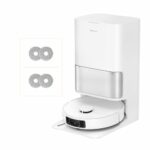
The mopping systems represent the most fundamental divergence between these robot aspirador Mova models. The P50 Pro Ultra uses dual rotating mops with RoboSwing technology—a mechanism that shifts the robot's rear section to push mops slightly under furniture edges and wall bases. These mops extend to reach borders and lift 10.5mm when encountering carpets. The S70 Roller replaces this entirely with a 270mm roller that spans nearly the full width of the robot, offering continuous contact across a wider cleaning path. This roller lifts 12mm, providing slightly better carpet avoidance.
The P50 Pro Ultra can automatically dismount its mops at the base when you want vacuum-only operation, eliminating the need to manually remove wet pads. The S70 Roller lacks this function, meaning its roller remains attached regardless of cleaning mode. For homes with mixed flooring where you frequently switch between mopping and vacuuming, this becomes a meaningful convenience factor.
Dirt detection capabilities differ markedly. The P50 Pro Ultra monitors both mop cleanliness and floor dirtiness, automatically returning to re-clean areas or re-wash its mops when sensors detect insufficient cleaning. The S70 Roller includes neither detection system, following predetermined cleaning patterns without adaptive response to visible dirt levels. Both bases wash mops with hot water and dry them using heated air, though the P50 Pro Ultra specifies third-generation automatic tray cleaning whilst the S70 Roller simply confirms the feature exists.
Navigation System
The Mova P50 Pro Ultra employs a 3D LiDAR turret combined with dual AI cameras that recognise up to 160 different obstacle types. This dual-camera setup includes LED lighting for night-time navigation and enables remote camera access through the app—essentially letting you use the robot as a mobile home monitor. The system specifically identifies pets and curtains, adjusting cleaning behaviour accordingly.
The S70 Roller uses CovertSense dToF navigation with a frontal 3D laser sensor but eliminates the camera system entirely. Whilst it still avoids obstacles effectively through laser-based detection, it cannot visually identify what those obstacles are, nor does it offer remote viewing capabilities. The number of recognisable obstacles isn't specified for this model. Without camera-based intelligence, features like pet recognition, curtain detection, and LED night vision simply aren't present.
This represents a clear trade-off: comprehensive AI-powered spatial awareness versus a more privacy-focused, camera-free approach. For users uncomfortable with cameras in their robot aspirador, the S70 Roller provides peace of mind whilst maintaining solid navigation performance through laser technology alone.
Battery and Autonomy
Both models share identical 5,200mAh battery packs, yet only the P50 Pro Ultra specifies its runtime: 210 minutes on a single charge. The S70 Roller's autonomy remains unconfirmed in available data. Neither model lists charging time or maximum recommended floor area, making direct endurance comparisons incomplete.
Given the S70 Roller's significantly higher suction power, it likely consumes energy faster during intensive vacuuming, potentially offsetting the battery capacity parity. The P50 Pro Ultra's confirmed 210-minute runtime should comfortably handle homes up to approximately 200 square metres, though actual coverage depends on floor complexity and cleaning mode selection.
Intelligent Features
The P50 Pro Ultra integrates CleanGenius AI for intelligent cleaning pattern optimization and includes AI-powered stain recognition that adjusts mopping intensity for stubborn marks. It also features a proprietary voice assistant alongside compatibility with Alexa and Google Home, allowing voice control through multiple platforms.
The S70 Roller strips away these AI-driven features entirely. It supports external voice assistants but lacks its own built-in assistant, AI cleaning optimization, or stain recognition capabilities. This simpler approach reduces the learning curve and potential technical complications, though it sacrifices adaptive cleaning intelligence.
Both models handle 22mm obstacles identically—sufficient for standard door thresholds and thick carpet transitions. Neither includes robotic arm functionality.
Multifunction Cleaning Base
Both bases auto-empty dust into 3.2-litre bags and wash mops with hot water before drying them with heated air. The critical difference lies in the detergent reservoir: the P50 Pro Ultra includes one, automatically dispensing cleaning solution during mop washing for enhanced cleaning results. The S70 Roller omits this reservoir, relying solely on hot water for mop maintenance.
Water capacity varies between models. The P50 Pro Ultra base holds 4 litres of clean water and 3.5 litres of dirty water, whilst the S70 Roller increases these to 5 litres clean and 4.5 litres dirty. This gives the newer model approximately 25% greater water capacity, potentially extending the interval between manual refills during extended mopping sessions.
The robot reservoirs themselves show inverse sizing. The P50 Pro Ultra carries 300ml of dust and 80ml of water onboard, compared to the S70 Roller's 240ml dust and 150ml water capacity. The S70 Roller's larger onboard water tank suits its roller system, which likely consumes water more continuously than spinning mops.
Neither base offers UV disinfection or integrated plumbing connections, and optional connection kits aren't available for either model.
Dimensions
The height difference proves significant for furniture clearance. The Mova S70 Roller measures just 90mm tall—nearly 14mm lower than the P50 Pro Ultra's 103.8mm profile. This slimmer design allows the S70 Roller to access spaces beneath low-clearance furniture that would block the earlier model. Both share a 350mm diameter, maintaining similar manoeuvrability through doorways and around furniture legs.
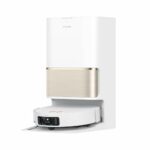
Base dimensions tell a different story. The P50 Pro Ultra's base measures 420mm wide, 470mm tall, and 458mm deep—a substantially larger footprint than the S70 Roller's 340mm width, 503mm height, and 255mm depth. The S70 Roller's base occupies nearly 40% less floor space despite being slightly taller, making it considerably easier to position in tighter utility areas or kitchen corners.
Real-World Usage Experience
For larger homes exceeding 150 square metres, the P50 Pro Ultra's confirmed 210-minute runtime and automatic mop removal system streamline maintenance across extended cleaning sessions. The detergent dispenser ensures consistently effective mop washing without manual intervention, whilst AI dirt detection prevents the robot from missing heavily soiled areas.
Pet owners face an interesting choice in this comparativa de robots aspiradores. The P50 Pro Ultra's TriCut 3.0 brush actively cuts through pet hair and its cameras recognise animals to adjust cleaning patterns, but the S70 Roller counters with 47% more suction power to extract embedded fur from carpets. The camera-based pet recognition adds convenience by avoiding feeding bowls or toys, though the higher suction ultimately matters more for deep carpet cleaning.
Homes with varied furniture heights benefit from the S70 Roller's 90mm profile, particularly if you have beds, sofas, or cabinets with minimal clearance. The 14mm height reduction opens access to spaces the P50 Pro Ultra simply cannot reach. Conversely, if your furniture already provides adequate clearance, the P50 Pro Ultra's elevated main brush during mopping prevents the unpleasant scenario of dragging a wet brush across carpets.
Privacy-conscious users may prefer the S70 Roller's camera-free operation, whilst those valuing remote home monitoring or detailed obstacle identification will appreciate the P50 Pro Ultra's dual-camera system. The practical impact of AI features like CleanGenius depends on floor complexity—open-plan spaces see less benefit than homes with numerous rooms and furniture arrangements where adaptive routing improves efficiency.
Conclusion: Which Should You Choose?
Choose the Mova P50 Pro Ultra if: You want maximum automation with automatic mop dismounting for vacuum-only sessions, value AI-driven dirt detection and stain recognition, need remote camera access for home monitoring, prefer the convenience of automatic detergent dispensing, or have furniture with adequate clearance where the TriCut 3.0 brush's anti-tangle design matters more than raw suction power. This mejor robot aspirador 2025 suits larger homes where the confirmed 210-minute runtime and comprehensive AI features justify the higher profile and larger base footprint.
Choose the Mova S70 Roller if: You prioritise maximum suction power for deep carpet cleaning, need the slimmest possible profile to access low-clearance furniture, prefer a camera-free robot for privacy reasons, value the larger water tanks for extended mopping sessions, or want the most compact base that occupies minimal floor space. The roller mopping system provides excellent coverage across hard floors, whilst the 28,000Pa suction tackles embedded debris more aggressively than the earlier model. This option works particularly well for homes under 120 square metres with mixed flooring and low furniture where accessing tight spaces matters more than AI-powered convenience features.