Introduction
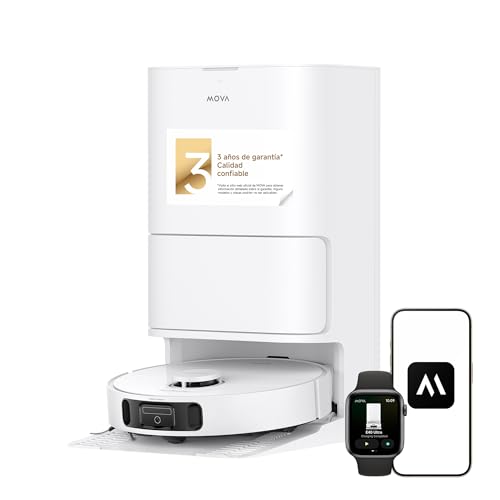
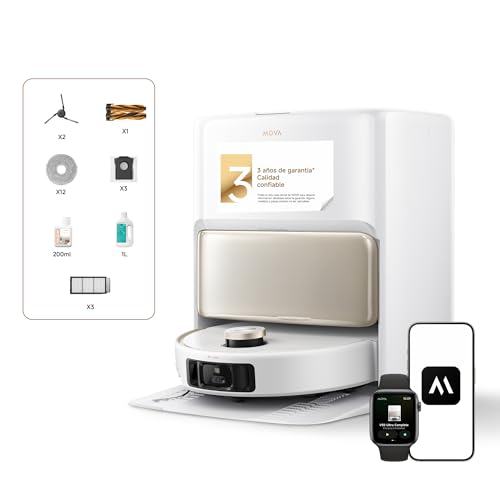
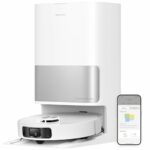
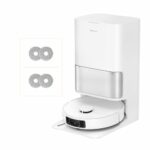
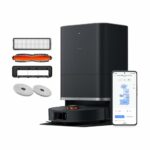
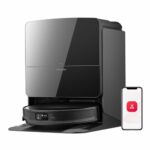
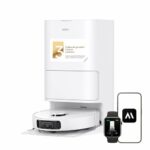
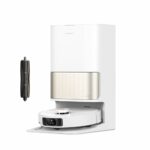
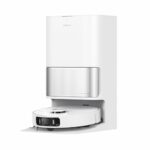
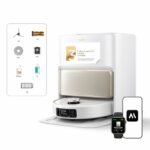
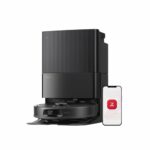
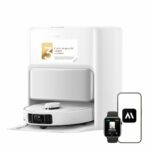
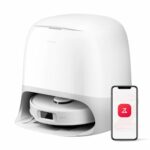
The Mova E40 Ultra and Mova V50 Ultra represent the brand's 2025 lineup, both positioned as premium cleaning solutions with multifunctional bases that handle the complete cleaning cycle. Whilst they share the same foundational approach—combining vacuuming and mopping with automated maintenance—the V50 Ultra pushes several boundaries further with enhanced intelligence and cleaning capabilities.
These models suit medium to large homes where automated floor care is a priority. The E40 Ultra delivers solid performance at what's likely a more accessible price point, whilst the V50 Ultra targets users who want cutting-edge technology and minimal intervention in their cleaning routine.
Power and Vacuuming
The suction gap between these robots is substantial. The E40 Ultra delivers 19,000 Pa, which handles everyday debris and pet hair competently across hard floors and carpets. The V50 Ultra steps up to 24,000 Pa—a 26% increase that translates to noticeably better performance on textured surfaces and deeper carpet pile.
Where the cepillo principal differs dramatically is in design philosophy. The E40 Ultra uses a single anti-tangle brush, effective enough for most households but still prone to occasional hair wrap with heavy shedding pets. The V50 Ultra employs Mova's HyperStream dual brush system, with two brushes anchored at one end that actively resist hair entanglement. In practice, this means less frequent maintenance and more consistent suction performance.
The V50 Ultra adds brush elevation during mopping—both the main roller and side brush lift clear of wet floors, preventing cross-contamination and keeping brushes dry. The E40 Ultra lacks this refinement. The V50 Ultra also features an extendable side brush that reaches deeper into corners, something absent on the E40 Ultra. Both models include anti-tangle technology on their side brushes.
Mopping
Both robots use dual rotating mops with extension capabilities and RoboSwing movement to reach edges and slightly under furniture. Mop lift is identical at 10.5 mm, sufficient for low-pile rugs and transitional strips.
The real divide appears in water temperature. The E40 Ultra washes mops with cold water at the base—adequate for light maintenance but less effective against sticky residues or kitchen grime. The V50 Ultra heats water to 55°C during both mop washing and actual floor mopping, breaking down grease and sanitising surfaces far more effectively. This heated approach makes a tangible difference on tile and sealed stone floors.
The V50 Ultra can automatically detach its mops at the base when you only need vacuuming, avoiding unnecessary wear. It also detects dirt levels on both the mops themselves and the floor surface, adjusting cleaning intensity or triggering repeat passes. The E40 Ultra operates without these sensors, following preset patterns regardless of actual soil levels.
Navigation System
Navigation architecture separates these models significantly. The E40 Ultra uses a traditional raised LiDAR turret with 3D laser obstacle detection—proven and reliable, but adds to the robot's overall height. The V50 Ultra integrates retractable LiDAR that tucks away when not needed, contributing to its slimmer 89.5 mm profile.
The V50 Ultra incorporates dual AI cameras that recognise up to 200 different obstacles, including specific detection for curtains to avoid entanglement. You can access these cameras remotely, essentially using the robot as a mobile home monitor. It includes LED illumination for low-light navigation. The E40 Ultra has no camera system whatsoever—it relies purely on laser and structural sensors, which limits object recognition capabilities.
Both models feature CleanGenius AI for intelligent route planning and recognise pets to adjust behaviour accordingly. However, the V50 Ultra's AI-powered stain recognition allows it to identify and target specific marks, whilst the E40 Ultra follows programmed cleaning logic without visual assessment.
Battery and Autonomy
Battery capacity favours the V50 Ultra with 6,400 mAh against the E40 Ultra's 5,200 mAh—a 23% advantage. This translates to 220 minutes of runtime versus 210 minutes, though the difference is modest in real-world terms. Both models handle large floor plans comfortably, returning to base for recharging mid-clean if necessary before resuming where they left off.
Smart Features
Obstacle climbing differs meaningfully. The E40 Ultra manages 20 mm thresholds—enough for standard door bars and minor transitions. The V50 Ultra tackles single-step obstacles, suggesting enhanced climbing geometry and motor torque, useful in split-level homes or properties with sunken living areas.
The V50 Ultra includes a proprietary voice assistant, allowing direct verbal commands without relying on external ecosystems. Both robots integrate with Alexa and Google Home, but having an onboard assistant adds convenience when your phone isn't nearby.
Multifunction Base
Both bases handle auto-emptying into 3.2-litre dust bags, mop washing, and mop drying with heated air to prevent odours. Water tank sizes are nearly identical—the E40 Ultra holds 4.5 litres clean and 4 litres dirty water; the V50 Ultra reverses this slightly with 4 litres clean and 3.5 litres dirty.
What sets the V50 Ultra apart is its third-generation self-cleaning base tray system, which automatically flushes and scrubs the washing platform to prevent biofilm and residue build-up. The E40 Ultra requires manual tray cleaning. The V50 Ultra also includes dual detergent tanks for different floor types or cleaning solutions, whilst the E40 Ultra offers detergent dispensing as an optional purchase.
UV disinfection appears exclusively on the V50 Ultra's base, targeting bacteria on mops between cleaning cycles. Neither model supports plumbed water connection out of the box, nor do optional kits exist for these particular models.
Dimensions
The robots share identical 350 mm diameters, but height tells a different story. The E40 Ultra stands 97 mm tall due to its traditional LiDAR turret, limiting access under lower furniture. The V50 Ultra's retractable laser system brings height down to 89.5 mm, slipping beneath more sofas, beds, and cabinets—a practical advantage in homes with European or minimalist furniture.
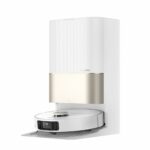
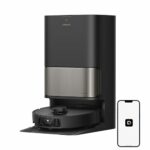
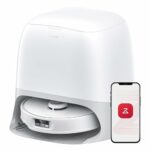
Base footprints diverge considerably. The E40 Ultra measures 340 mm wide, 590.5 mm tall, and 456.7 mm deep—a taller, narrower profile. The V50 Ultra spreads to 420 mm wide but compresses to 470 mm tall with 458 mm depth. The V50 Ultra's base demands more wall width but fits under counters more easily. Consider your docking location carefully.
Real-World Experience
For homes with multiple pets, the V50 Ultra's dual HyperStream brushes and higher suction make daily hair management noticeably easier. The heated mopping also tackles paw prints and feeding area spills more thoroughly. The E40 Ultra handles pet homes adequately but requires more frequent brush maintenance.
In larger properties, the V50 Ultra's superior battery, stair-climbing ability, and AI-driven stain detection streamline whole-home cleaning with less supervision. The camera access adds peace of mind when checking on pets remotely. The E40 Ultra covers similar square footage but without the adaptive intelligence that adjusts to actual conditions.
For maintenance-averse users, the V50 Ultra's self-cleaning base tray, automatic mop detachment, and dirt sensors reduce hands-on intervention to occasional detergent refills and dust bag changes. The E40 Ultra still automates most tasks but needs periodic manual tray cleaning and lacks the adaptive features that minimise unnecessary mopping or repeat passes.
Conclusion: Which to Choose?
Choose the Mova E40 Ultra if: you want capable automated cleaning without the premium attached to advanced AI and camera systems. It suits homes with standard furniture heights, moderate pet shedding, and users comfortable with occasional manual base maintenance. The cold-water mopping works well on lightly soiled hard floors, and the traditional LiDAR navigation proves reliable if not cutting-edge.
Choose the Mova V50 Ultra if: you prioritise the best robot aspirador Mova offers in 2025. The heated mopping, dual AI cameras, retractable LiDAR for low-clearance access, and third-generation self-cleaning base justify the investment for larger homes, heavy pet traffic, or anyone seeking minimal intervention. The built-in voice assistant, remote camera access, and adaptive cleaning intelligence make it a strong contender as the mejor robot aspirador 2025 for users who value autonomous operation and superior mopping results. Homes with varied floor types and furniture that sits low to the ground will appreciate the practical advantages this model delivers.