Introduction
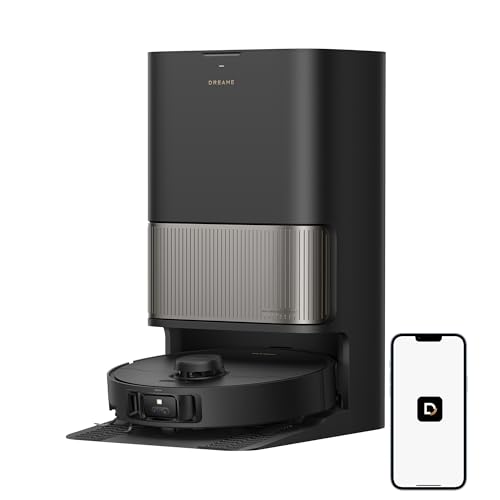
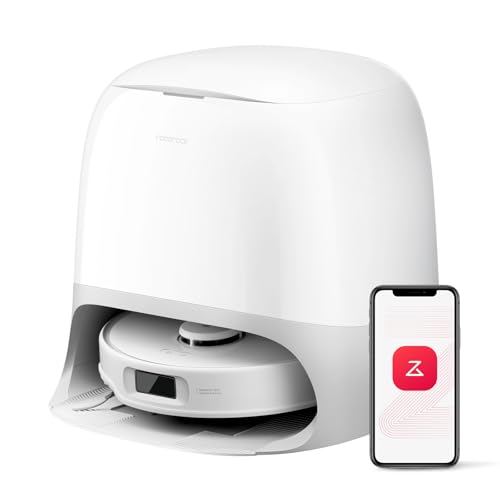
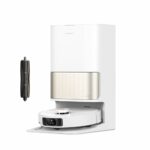
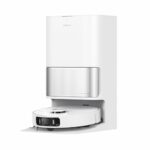
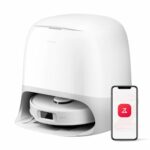
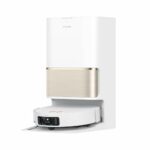
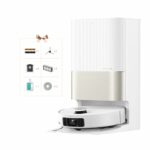
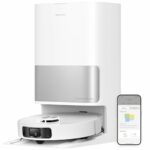
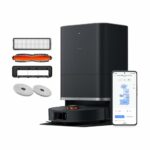
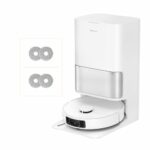
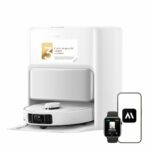
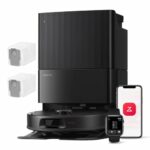
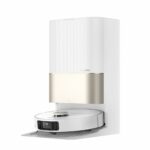
The Dreame L40s Pro Ultra and Roborock Qrevo Curv S5X represent two of the most advanced cleaning solutions available right now. The Dreame model arrives in 2025 as a feature-packed flagship, whilst the Roborock launched in 2024 as part of their premium Qrevo range. Both are top-tier robot vacuum cleaners with multifunctional bases that handle everything from self-emptying to mop washing and drying.
These aren't basic models. They're designed for households that want minimal intervention and maximum cleaning performance. With suction power approaching 19,000 Pa, dual rotating mops, and sophisticated AI navigation, they target users with larger homes, mixed flooring types, and perhaps pets that shed. The Dreame L40s Pro Ultra pushes things further with dual cameras and voice assistant capabilities, whilst the Roborock focuses on proven reliability with its Mason 11.0 algorithm and SmartPlan 2.0.
Key Differences at a Glance
- The Dreame delivers 19,000 Pa suction versus 18,500 Pa on the Roborock
- Dreame offers 220 minutes of autonomy compared to 180 minutes on the Roborock
- Dreame uses a Doble Cepillo HyperStream main brush; Roborock employs DuoDivide Antienredos
- Only the Dreame can elevate its main brush during mopping
- Dreame lifts mops 10.5 mm; Roborock manages 10 mm
- Dreame automatically removes mops at the base for vacuum-only sessions; Roborock does not
- Dreame features dual AI cameras, 3D laser sensor, pet recognition, curtain detection, and remote camera access
- Dreame includes a detergent tank; Roborock does not
- Dreame has a 3.2-litre dust bag versus 2.5 litres on the Roborock
- Dreame's clean water tank holds 4.5 litres, dirty water 4 litres; Roborock holds 4 litres clean, 3 litres dirty
- Dreame offers an optional pipe connection kit; Roborock does not
- Dreame includes its own voice assistant; Roborock relies on external assistants
- Roborock is slightly shorter at 98 mm versus 103.8 mm on the Dreame
- Dreame's base is taller and narrower; Roborock's base is more compact overall
Power and Suction
Suction power sits at 19,000 Pa on the Dreame L40s Pro Ultra, edging out the Roborock Qrevo Curv S5X at 18,500 Pa. It's a modest difference on paper, but every bit counts when dealing with embedded dirt in carpets or fine dust on hard floors.
The main brush systems differ notably. Dreame employs a Doble Cepillo HyperStream design, which uses two brushes anchored at one end to minimise hair tangles. Roborock counters with its DuoDivide Antienredos brush, engineered to push hair towards the central suction channel. Both approaches aim to reduce maintenance, though the HyperStream configuration tends to handle long hair particularly well in practice.
Where the Dreame pulls ahead is brush elevation. It can raise the main brush during mopping, preventing wet carpet fibres from being swept and keeping the brush cleaner. The Roborock lacks this feature. Similarly, the Dreame lifts its side brush when mopping, whilst the Roborock does not. Both models have extendable side brushes for better corner coverage, and both feature anti-tangle designs on the side brush.
For homes with pets or long-haired occupants, these elevation and anti-tangle features matter. The Dreame's ability to lift both main and side brushes means less cross-contamination between vacuuming and mopping modes.
Mopping
Both robots use dual rotating mops, which spin to scrub floors rather than just dragging a damp cloth. The Dreame extends its mops with a movement system called Roboswing, allowing it to reach slightly under furniture edges and into corners. The Roborock also extends its mops but without the culeo motion.
Mop lift is 10.5 mm on the Dreame versus 10 mm on the Roborock. That extra half-millimetre might sound trivial, but it can mean the difference between clearing a low-pile rug or dragging wet mops across it. Neither model heats the water for floor mopping—both use cold water—but their bases wash mops with hot water and dry them with warm air to prevent odours and bacterial growth.
A standout feature on the Dreame is automatic mop removal at the base. When you want to vacuum only, the robot docks, removes its mops, and heads out without them. The Roborock keeps its mops attached, which can be less convenient if you're switching between tasks frequently. Both detect dirt on mops and on floors, triggering rewashes or additional passes as needed.
Navigation System
Navigation hardware separates these two models significantly. The Dreame L40s Pro Ultra integrates dual AI cameras, a frontal 3D laser sensor, and LED lighting for night vision. It recognises up to 180 different objects, including pets and curtains, and allows remote camera access via the app. This makes it useful not just for cleaning but for checking in on pets or monitoring rooms when you're away.
The Roborock Qrevo Curv S5X relies on a 3D LiDAR turret and obstacle avoidance sensors but omits the camera suite. It doesn't offer pet recognition, curtain detection, or remote viewing. What it does provide is Roborock's RR Mason 11.0 CPU and SmartPlan 2.0 intelligence, which have a proven track record for efficient route planning and reliable obstacle handling.
The Dreame's CleanGenius system uses AI to adapt cleaning patterns based on room type and dirt levels. The Roborock's approach is more conservative but highly dependable. If you value camera-based monitoring and advanced object recognition, the Dreame is the clear choice. If you prefer a no-nonsense, laser-focused navigation system without cameras, the Roborock delivers that with confidence.
Battery and Autonomy
Both robots carry a 5,200 mAh battery, but runtime differs. The Dreame manages 220 minutes on a single charge, whilst the Roborock runs for 180 minutes. That 40-minute gap translates to roughly 60–80 square metres of additional coverage, depending on cleaning mode and floor type.
For larger homes, the Dreame's extended autonomy means fewer mid-clean returns to the base. The Roborock's 180 minutes is still ample for most properties, but multi-level homes or open-plan layouts benefit from the extra stamina the Dreame provides.
Smart Features
The Dreame L40s Pro Ultra can step over obstacles up to a single-step height, though the exact measurement isn't specified. The Roborock Qrevo Curv S5X climbs obstacles up to 20 mm, which is useful for transitioning between rooms with raised thresholds or low door bars.
Voice control differs too. The Dreame includes its own voice assistant, allowing you to issue commands directly to the robot without relying on external ecosystems. The Roborock works with Alexa and Google Home but doesn't have a built-in assistant. This can be a convenience factor if you prefer not to route commands through a smart speaker.
Multifunctional Base
Both bases handle auto-emptying, mop washing with hot water, and mop drying with warm air. The Dreame's base features third-generation self-cleaning for the wash tray, whilst the Roborock uses version 2.0. In practice, this means the Dreame's base requires less manual scrubbing over time.
The Dreame includes a detergent tank, dispensing cleaning solution during mop washes. The Roborock lacks this, so you'd need to add detergent manually to the water tank if desired. The Dreame also offers an optional pipe connection kit, purchasable separately, to link the base to plumbing for continuous water supply and drainage. The Roborock doesn't support this.
Dust bag capacity is 3.2 litres on the Dreame versus 2.5 litres on the Roborock. Clean water tanks hold 4.5 litres and 4 litres respectively; dirty water tanks are 4 litres and 3 litres. These differences mean the Dreame requires less frequent refilling and emptying, which matters in larger households or if you run the robot daily.
Dimensions
The Roborock is slightly shorter at 98 mm compared to the Dreame's 103.8 mm. That 5.8 mm difference can determine whether the robot fits under low-clearance furniture like sofas or bed frames. Diameter is nearly identical—350 mm on the Dreame, 352 mm on the Roborock—so neither has an advantage navigating tight spaces.
Base dimensions vary more. The Dreame's base measures 340 mm wide, 590.5 mm tall, and 456.7 mm deep. The Roborock's base is 450 mm in all three dimensions, forming a more cube-like footprint. The Dreame's base is taller but narrower, which might fit better against walls in tight utility areas. The Roborock's compact, symmetrical design can be easier to tuck into corners.
Real-World Use
For homes with pets, the Dreame's dual cameras and pet recognition add a layer of intelligence, avoiding bowls and toys more reliably. Its HyperStream brush and elevated main brush during mopping also reduce hair transfer. The Roborock's DuoDivide brush is effective with hair, but without brush elevation, you'll need to clean it more often if you frequently switch between vacuuming and mopping.
Larger properties benefit from the Dreame's 220-minute autonomy and bigger consumable capacities. You'll spend less time managing the robot and more time enjoying clean floors. The Roborock's 180 minutes is still solid for medium-sized homes, and its shorter height gives it access to more furniture.
If you value camera-based monitoring—checking on pets, elderly relatives, or simply seeing what the robot encounters—the Dreame's remote camera access is a unique feature. The Roborock doesn't offer this, focusing instead on pure cleaning performance without the surveillance angle.
Maintenance-wise, the Dreame's automatic mop removal and third-generation base cleaning reduce hands-on upkeep. The Roborock requires you to manually remove mops if you want to vacuum only, and its base cleaning system, whilst effective, demands a bit more attention over time.
Conclusion: Which to Choose?
Choose the Dreame L40s Pro Ultra if: you want the longest autonomy, the most advanced AI navigation with dual cameras and pet recognition, automatic mop removal for vacuum-only sessions, a detergent tank in the base, and the option to connect to plumbing in the future. It's ideal for large homes, households with pets, and users who appreciate cutting-edge smart features like remote camera access and a built-in voice assistant.
Choose the Roborock Qrevo Curv S5X if: you prioritise a lower profile for slipping under furniture, prefer Roborock's proven reliability and track record, and don't need camera-based monitoring or automatic mop removal. It's a strong fit for medium to large homes where you value straightforward operation, excellent cleaning performance, and a more compact base footprint. The Roborock's Mason 11.0 CPU and SmartPlan 2.0 deliver dependable results without the bells and whistles.
In the end, the Dreame pushes boundaries with features that enhance convenience and intelligence, whilst the Roborock focuses on doing the fundamentals exceptionally well. Your choice depends on whether you value innovation and extra autonomy or prefer a battle-tested platform with a slightly sleeker profile.