Introduction
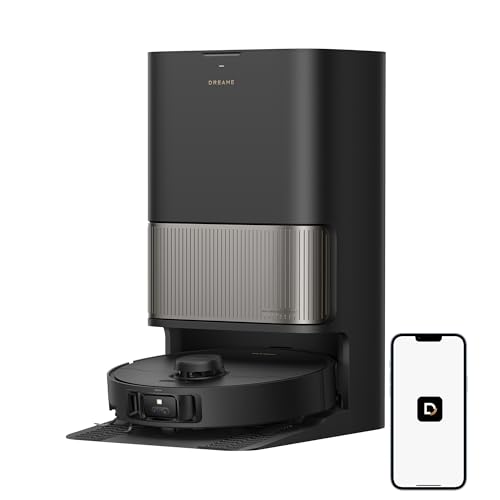
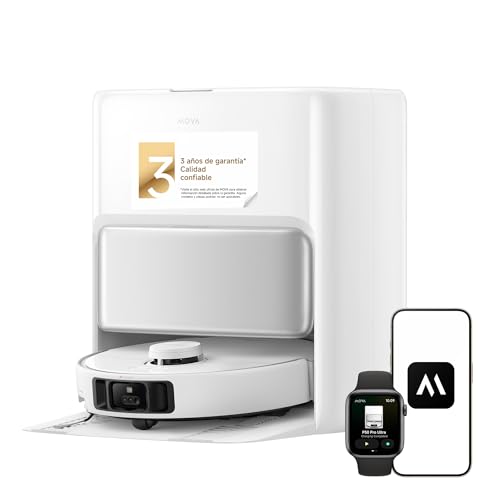
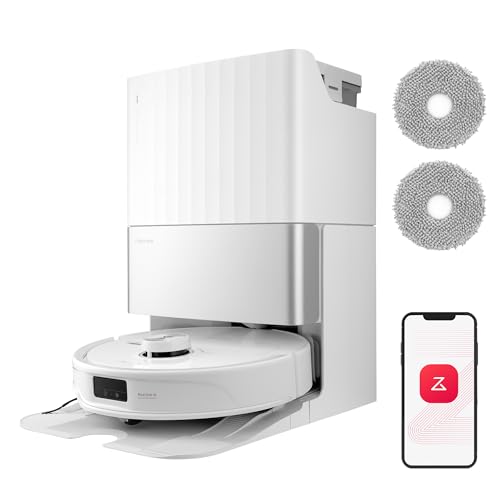
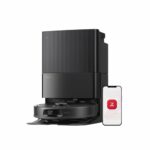
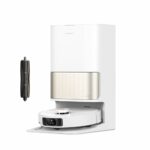
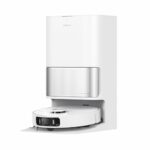
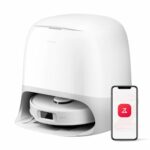
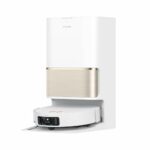
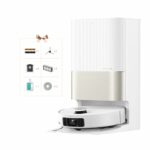
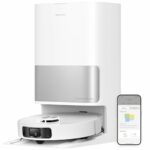
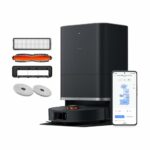
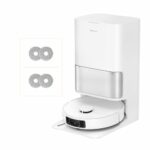
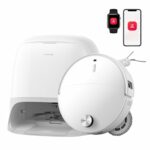
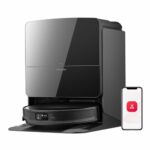
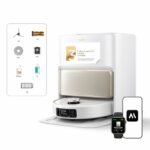
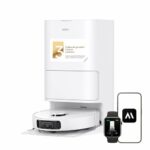
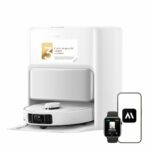
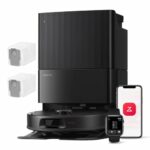
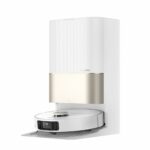
This comparison brings together three flagship models from 2025 and late 2024: the Dreame L40s Pro Ultra, the Mova P50 Pro Ultra, and the Roborock Qrevo Master. All three represent the premium tier of robot vacuum cleaners with multifunction docking stations, designed for users who want comprehensive automated cleaning without daily intervention. The Dreame and Mova models share the same launch year and several technical similarities, which makes sense given that Mova operates as Dreame's second brand. The Roborock Qrevo Master, released in 2024, remains a strong contender from the world's leading robot vacuum manufacturer.
These aren't entry-level devices. Each one targets households seeking powerful suction, intelligent mopping, and advanced navigation. The differences lie in specific details that can make one model more suitable than another depending on your home layout, flooring types, and cleaning priorities.
Key Differences at a Glance
- The Dreame and Mova deliver 19,000 Pa suction; the Roborock offers 10,000 Pa
- Dreame and Mova feature side brush anti-tangle technology and elevation during mopping; Roborock lacks both
- Dreame uses dual HyperStream brushes; Mova employs TriCut 3.0; Roborock opts for dual DuoDivide brushes
- Only Dreame and Mova can automatically remove mops at the base for vacuum-only sessions
- Dreame and Mova include detergent dispensers; Roborock does not
- Dreame recognises 180 obstacles; Mova identifies 160; Roborock detects 62
- Dreame and Mova detect curtains; Roborock cannot
- Dreame offers a 3.2-litre dust bag and 4.5-litre clean water tank; Mova provides 3.2 litres for dust and 4 litres for water; Roborock has 2.7 litres for dust and 4 litres for water
- Dreame's base measures 340 mm wide and 590.5 mm tall; Mova's is 420 mm wide and 470 mm tall; Roborock's is 340 mm wide and 521 mm tall
- Dreame can handle obstacles up to a single step; Mova manages 22 mm; Roborock clears 20 mm
- Dreame includes an optional plumbing connection kit (sold separately); neither Mova nor Roborock offers this
Power and Suction
Suction power sets the Dreame L40s Pro Ultra and Mova P50 Pro Ultra apart from the Roborock Qrevo Master straight away. Both Dreame and Mova deliver 19,000 Pa, nearly double the Roborock's 10,000 Pa. In practice, this translates to more effective deep cleaning on carpets and better pickup of embedded debris on hard floors.
The main brush design varies across all three. Dreame uses its dual HyperStream system, which features two brushes anchored at one end to prevent hair tangles. Mova opts for TriCut 3.0, combining bristles with cutting blades to slice through tangled hair. Roborock employs its dual DuoDivide brushes, designed to push hair towards the central suction opening. All three can lift their main brushes when mopping, preventing wet carpet contact.
Side brush functionality shows clearer distinctions. The Dreame and Mova models both extend their side brushes to reach corners more effectively and lift them during mopping to avoid dragging dirty water across cleaned areas. They also feature anti-tangle technology for the side brush. The Roborock Qrevo Master extends its side brush but cannot lift it or prevent tangles as effectively. For homes with pets or long-haired residents, the Dreame and Mova configurations offer practical advantages.
Mopping
All three models use dual rotating mops. The Dreame L40s Pro Ultra and Mova P50 Pro Ultra extend their mops with a swinging motion (RoboSwing) to reach edges and clean along skirting boards more thoroughly. The Roborock Qrevo Master extends its mops but without the swinging mechanism. Mop elevation differs slightly: Dreame and Mova lift theirs 10.5 mm, whilst Roborock manages 10 mm. These small differences matter when crossing from hard floors to rugs.
Where Dreame and Mova pull ahead is automatic mop removal at the base. Both can detach their mops entirely when you only need vacuuming, avoiding the hassle of manual removal. The Roborock cannot do this, meaning you'll need to remove the mops yourself if you want a vacuum-only session.
All three wash their mops with hot water at the base and dry them with warm air to prevent odours. They also detect dirt on the mops themselves and on the floor, triggering additional passes when needed. The Dreame and Mova models benefit from third-generation automatic tray cleaning, whilst the Roborock uses version 1.0. This means less manual maintenance for the Dreame and Mova bases.
Navigation System
Each model uses a LiDAR turret combined with dual AI cameras and front-facing 3D laser sensors. All three can recognise pets, avoid obstacles, and operate in low light thanks to LED illumination. Remote camera access is available across the board, useful for checking in on pets or monitoring your home.
The real difference lies in object recognition capability. The Dreame L40s Pro Ultra identifies 180 different obstacles, the Mova P50 Pro Ultra recognises 160, and the Roborock Qrevo Master detects 62. In homes cluttered with toys, cables, or furniture, the Dreame and Mova models navigate with greater precision. Both also detect curtains and adjust their cleaning approach accordingly, something the Roborock cannot do.
Dreame and Mova both use CleanGenius AI for intelligent cleaning decisions, whilst Roborock relies on its SmartPlan system. The Dreame and Mova models also feature AI-based stain recognition, automatically intensifying mopping over visible marks. The Roborock lacks this specific function.
Battery and Autonomy
All three robots share the same 5,200 mAh battery capacity, but runtime varies. The Dreame L40s Pro Ultra runs for 220 minutes, the Mova P50 Pro Ultra manages 210 minutes, and the Roborock Qrevo Master lasts 180 minutes. For larger homes, those extra 30 to 40 minutes can mean completing a full clean without returning to recharge mid-session.
Smart Features
Obstacle-climbing ability differs noticeably. The Dreame L40s Pro Ultra can handle a single step, the Mova P50 Pro Ultra clears 22 mm, and the Roborock Qrevo Master manages 20 mm. Homes with raised thresholds or uneven flooring transitions will benefit from the Mova's slightly superior clearance.
All three include their own voice assistants and integrate with Alexa and Google Home. None feature a robotic arm, a function still reserved for even higher-end models.
Multifunction Cleaning Base
Each base empties the robot's dust bin, washes and hot-air dries the mops, and stores clean and dirty water. The Dreame L40s Pro Ultra and Mova P50 Pro Ultra both include detergent dispensers, automatically adding cleaning solution during mop washing. The Roborock Qrevo Master does not have this feature, requiring manual addition of detergent if desired.
Dust bag capacity favours the Dreame and Mova at 3.2 litres each, compared to the Roborock's 2.7 litres. This means slightly less frequent bag changes. Clean water tanks measure 4.5 litres for Dreame, 4 litres for Mova, and 4 litres for Roborock. Dirty water tanks are 4 litres for Dreame, 3.5 litres for Mova, and 3.5 litres for Roborock. The Dreame's larger clean water capacity suits homes with extensive hard flooring.
Dreame offers an optional plumbing connection kit, sold separately, allowing the base to refill and drain automatically. Neither Mova nor Roborock provides this option. Whilst it's an additional purchase, it's worth noting for users seeking maximum convenience.
Dimensions
The robots themselves are nearly identical in size. Dreame and Mova measure 350 mm in diameter and 103.8 mm tall. Roborock is 353 mm wide and 103 mm tall. These minor differences won't affect furniture clearance meaningfully.
Base dimensions vary more. The Dreame base is 340 mm wide, 590.5 mm tall, and 456.7 mm deep. The Mova base is wider at 420 mm but shorter at 470 mm, with a depth of 458 mm. The Roborock base measures 340 mm wide, 521 mm tall, and 487 mm deep. The Mova's wider footprint may require more floor space, whilst its lower height could fit under counters or shelves where the others cannot. The Dreame's taller profile demands more vertical clearance.
Real-World Use
For large homes, the Dreame L40s Pro Ultra's extended runtime, larger dust bag, and bigger clean water tank reduce interruptions and maintenance frequency. Its superior obstacle recognition and curtain detection make it well-suited to complex layouts with varied furnishings.
The Mova P50 Pro Ultra offers similar capabilities at a potentially lower price point, given Mova's positioning as Dreame's value-oriented brand. Its slightly shorter runtime and smaller water tanks are offset by strong suction, anti-tangle brushes, and automatic mop removal. The wider base requires more space but its lower height might suit specific installation areas.
The Roborock Qrevo Master remains a solid choice for those prioritising brand reputation and proven reliability. Its lower suction power and reduced obstacle recognition count may not matter in simpler home environments. However, the absence of a detergent dispenser, curtain detection, and automatic mop removal could feel limiting for users seeking comprehensive automation.
Homes with pets benefit from all three models' anti-tangle main brushes, but the Dreame and Mova's side brush anti-tangle technology adds another layer of convenience. The Dreame and Mova's AI stain recognition also helps tackle pet-related messes more effectively.
Conclusion: Which Should You Choose?
Choose the Dreame L40s Pro Ultra if you want maximum autonomy, the largest water and dust capacities, and the most advanced obstacle recognition. It's ideal for large homes with complex layouts, multiple pets, or heavy foot traffic. The optional plumbing kit (sold separately) offers future-proofing for those willing to invest in total automation.
Choose the Mova P50 Pro Ultra if you're looking for flagship features at a more accessible price point. It delivers nearly identical performance to the Dreame, with only minor compromises in runtime and tank sizes. The wider, shorter base suits specific installation spaces, and the 22 mm obstacle clearance is the best here. It's a strong contender for households seeking value without sacrificing core functionality.
Choose the Roborock Qrevo Master if you prefer an established brand with proven reliability and don't need the highest suction power or most advanced AI features. It's well-suited to smaller homes, simpler floor plans, or users who prioritise straightforward operation over cutting-edge automation. The lack of a detergent dispenser and automatic mop removal means slightly more manual involvement, but the overall cleaning performance remains dependable.