Introduction
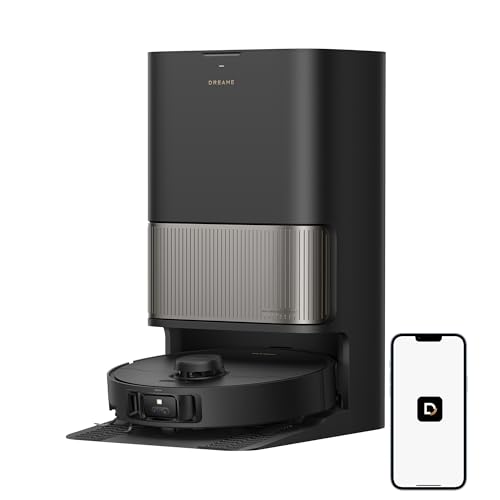
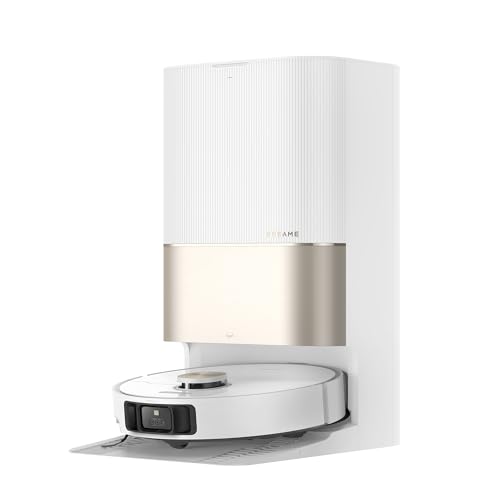
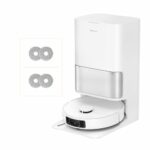
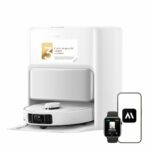
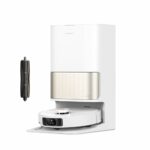
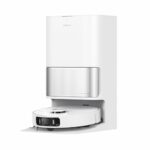
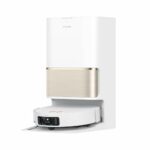
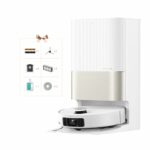
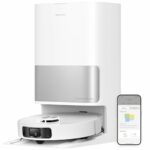
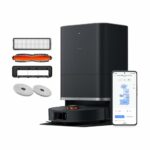
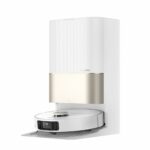
Dreame's premium range presents two compelling options for those seeking a high-performance cleaning solution. The L40s Pro Ultra represents the brand's 2025 flagship, whilst the X40 Ultra from 2024 remains a formidable contender. Both models feature multifunction bases that handle washing and drying of mops, alongside automatic dust emptying – essential features for anyone wanting genuinely hands-free operation.
These aren't entry-level devices. They're designed for users who demand comprehensive automation and advanced navigation. The dual rotating mops, extendable side brushes, and AI-powered cameras place them firmly in premium territory. For larger homes with mixed flooring and perhaps pets to navigate around, either could prove a worthwhile investment.
Differences at a Glance
- The L40s Pro Ultra delivers 19,000 Pa suction versus 12,000 Pa on the X40 Ultra
- Dual HyperStream brushes on the L40s Pro Ultra compared to a single brush system on the X40 Ultra
- The X40 Ultra packs a larger 6,400 mAh battery against 5,200 mAh
- L40s Pro Ultra offers 220 minutes runtime, whilst X40 Ultra manages 194 minutes
- The newer model recognises 180 obstacles versus 120 on the X40 Ultra
- L40s Pro Ultra includes its own voice assistant; the X40 Ultra doesn't
- Third-generation base self-cleaning on the L40s Pro Ultra versus second-generation on the X40 Ultra
- Height differs: 103.8 mm for the L40s Pro Ultra, 97 mm for the X40 Ultra
- The L40s Pro Ultra can tackle simple steps, whilst the X40 Ultra manages 22 mm obstacles
Suction Power and Brushing
The most striking technical difference lies in suction capability. With 19,000 Pa, the L40s Pro Ultra delivers substantially more power than the X40 Ultra's 12,000 Pa. In practice, this translates to more effective deep cleaning of carpets and better pickup of fine dust from hard floors. For homes with rugs or carpeted areas, the extra muscle matters.
The brushing system tells an equally interesting story. Dreame equipped the L40s Pro Ultra with dual HyperStream brushes – two counter-rotating units anchored at one end, designed specifically to prevent hair tangles. The X40 Ultra uses a simpler single-brush configuration. Households with long-haired residents or shedding pets will appreciate how the dual-brush setup reduces maintenance time.
Both models feature elevating main brushes that lift during mopping, preventing wet bristles from spreading dirt. The side brushes on each can extend outward to reach into corners and retract when not needed, whilst also lifting during wet cleaning. Anti-tangle technology applies to the side brushes on both devices.
Mopping Performance
Dual rotating mops feature on both the L40s Pro Ultra and X40 Ultra, spinning to scrub rather than simply dragging across floors. Each model extends its mops outward using Dreame's RoboSwing technology – a swivelling motion that pushes the pads along edges and slightly under furniture kickboards.
Mop elevation reaches 10.5 mm on both robots, sufficient to transition onto low-pile rugs without soaking them. When you need pure vacuuming, the bases automatically remove the mop assemblies, preventing any cross-contamination between tasks.
The bases wash mops with hot water during cleaning cycles, ensuring the robot returns to the floor with genuinely clean pads rather than spreading dirty water around. After finishing, hot air drying prevents bacterial growth and musty smells – a detail that becomes important after a few weeks of use. Both stations include detergent dispensers for enhanced cleaning results.
Dirt detection works at two levels: sensors on the mops themselves identify when they're saturated with grime, whilst floor sensors spot heavily soiled areas requiring extra passes. The L40s Pro Ultra benefits from third-generation base self-cleaning, an advancement over the second-generation system in the X40 Ultra, though both maintain hygiene without manual intervention.
Navigation Systems
LiDAR turrets top both robots, providing 360-degree laser mapping for accurate room layouts. Dual AI cameras work alongside 3D laser sensors at the front, creating a comprehensive obstacle detection system. LED lighting enables the cameras to function in darkness, useful for scheduled night-time cleaning.
The L40s Pro Ultra recognises 180 different obstacle types compared to 120 on the X40 Ultra. This broader recognition library means fewer stuck situations and better adaptation to cluttered environments. Both identify pets and curtains specifically, avoiding entanglement or distressing animals.
CleanGenius AI powers the intelligent cleaning decisions on each model, analysing room types and adjusting suction or water flow accordingly. Remote camera access lets you check on your home through either robot's front-facing camera. The L40s Pro Ultra adds its own voice assistant to the package, allowing direct commands without relying solely on external services like Alexa or Google Assistant, which both models support.
Battery Life and Coverage
Battery capacity favours the X40 Ultra at 6,400 mAh versus 5,200 mAh in the L40s Pro Ultra. Yet runtime tells a different tale: the newer model achieves 220 minutes compared to 194 minutes. The L40s Pro Ultra evidently manages power more efficiently, squeezing more operating time from a smaller cell.
For most homes, either duration proves ample. The robots return to base when needed, recharge, and resume where they left off. The efficiency gains in the L40s Pro Ultra might translate to fewer mid-clean charging breaks in larger properties.
Smart Features
Obstacle climbing capabilities differ notably. The X40 Ultra can mount thresholds up to 22 mm high, whilst the L40s Pro Ultra handles simple steps – though the exact height isn't specified, this suggests capability beyond standard door thresholds. Homes with split-level rooms or raised areas might find the newer model more versatile.
The integrated voice assistant on the L40s Pro Ultra represents a functional addition, letting you issue commands directly without phone or smart speaker intermediaries. The X40 Ultra requires external voice assistants for hands-free control.
Multifunction Base Stations
Both bases handle the complete cleaning cycle: emptying the robot's 300 ml dust container into 3.2-litre bags, washing mops with hot water from 4.5-litre clean tanks, and drying them with heated air. Dirty water collects in 4-litre tanks. Detergent dispensers automate the addition of cleaning solution during mop washing.
The third-generation self-cleaning on the L40s Pro Ultra's base represents an incremental improvement over the second-generation system in the X40 Ultra. Both keep the washing tray hygienic, though the newer iteration likely does so more thoroughly.
Optional connection kits for plumbing integration are available for each model, eliminating manual tank refilling and emptying. These kits require separate purchase and aren't included as standard – worth noting if you're considering permanent installation.
Physical Dimensions
At 350 mm diameter, both robots match standard sizing for premium models. Height differs: the X40 Ultra measures 97 mm compared to 103.8 mm for the L40s Pro Ultra. That 6.8 mm difference could determine whether the robot fits beneath certain furniture pieces. Low-clearance sofas or bed frames might accommodate the X40 Ultra whilst blocking the newer model.
The bases share identical footprints at 340 mm wide, 456.7 mm deep, and 590.5 mm tall. You'll need the same floor space regardless of which model you choose. Both robots carry 80 ml water reservoirs onboard for mopping between base visits.
Real-World Usage Scenarios
For homes with pets, the L40s Pro Ultra's dual HyperStream brushes and higher suction make it the stronger choice. Hair management improves significantly with the twin-brush system, whilst the extra suction power pulls embedded fur from carpets more effectively.
The X40 Ultra's lower profile suits properties with tight furniture clearances. If your sofas, beds, or cabinets sit close to the floor, those extra millimetres matter. The 97 mm height opens access to spaces the taller model simply can't reach.
Larger homes benefit from the L40s Pro Ultra's extended runtime and superior obstacle recognition. The additional 26 minutes of operation and broader object library mean less supervision and fewer interruptions. Smaller flats or apartments won't fully utilise these advantages – the X40 Ultra's capabilities suffice for compact layouts.
Anyone requiring the most powerful cleaning available should lean toward the L40s Pro Ultra. The 19,000 Pa suction tackles demanding scenarios – thick carpets, ground-in dirt, or homes in dusty environments – more capably than 12,000 Pa manages.
Conclusion: Which Should You Choose?
Choose the Dreame L40s Pro Ultra if: You need maximum suction power for deep carpet cleaning, have pets that shed heavily, want the latest obstacle recognition technology, prefer longer runtime for extensive properties, or value having an integrated voice assistant. The dual-brush system and third-generation base cleaning represent meaningful upgrades for demanding households.
Choose the Dreame X40 Ultra if: Low furniture clearance is a priority in your home, you're working with a tighter budget but still want premium features, or your property doesn't require the absolute highest suction levels. The larger battery and lower profile make it well-suited to standard homes without extreme cleaning challenges. It remains an excellent robot aspirador despite being a year older.
Both represent serious investments in automated cleaning. The L40s Pro Ultra pushes performance boundaries, whilst the X40 Ultra delivers comprehensive functionality at a potentially lower price point. Consider your specific challenges – pet hair, furniture height, home size – when making the final decision.