Introduction
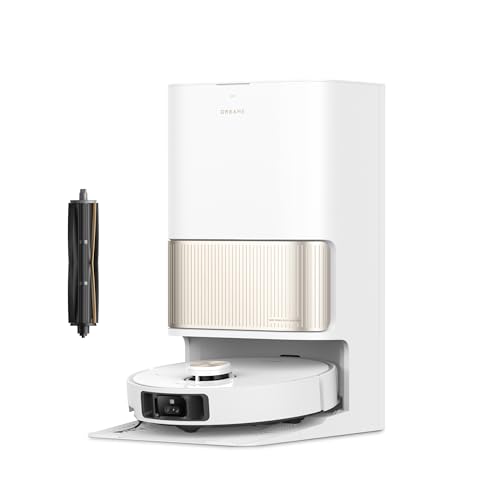
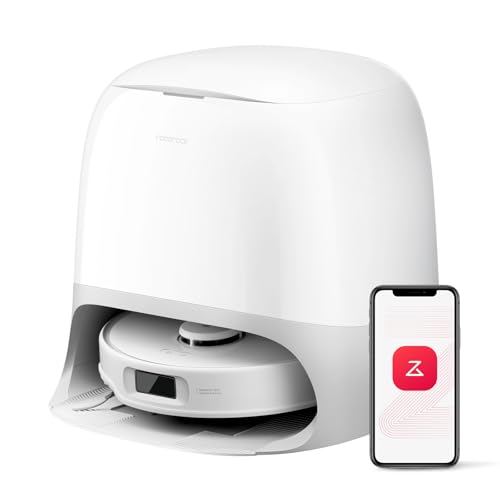
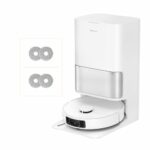
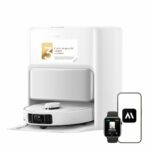
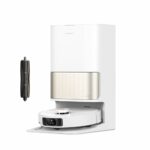
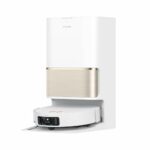
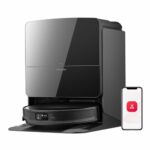
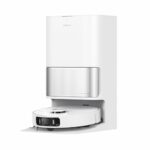
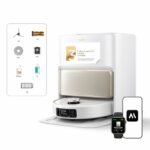
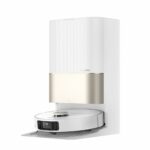
The Dreame L40 Ultra and Roborock Qrevo Curv S5X represent two of the most advanced robot vacuum cleaners launched in 2024. Both models feature comprehensive multifunctional bases that handle everything from dust emptying to mop washing and drying, positioning them firmly in the premium segment of the market. These aren't basic cleaning robots—they're designed for users who want minimal intervention and maximum automation in their floor care routine.
What sets these models apart is their approach to intelligent cleaning. The Dreame L40 Ultra leans heavily into AI-powered features with dual cameras and extensive object recognition, whilst the Roborock Qrevo Curv S5X focuses on raw suction power and reliable performance. Both are suitable for larger homes with mixed flooring, though their different strengths will appeal to different priorities.
Key Differences at a Glance
- Suction power: Roborock delivers 18,500 Pa versus Dreame's 11,000 Pa
- Camera system: Dreame includes dual AI cameras with remote access; Roborock has none
- Brush lifting: Dreame lifts both main and side brushes during mopping; Roborock doesn't
- Mop removal: Dreame automatically removes mops at the base for vacuum-only mode
- Detergent dispenser: Only the Dreame includes an integrated detergent tank
- Base capacity: Dreame offers larger reservoirs (4.5L clean water, 3.2L dust bag)
- Robot height: Roborock sits lower at 98mm versus Dreame's 103.8mm
- Voice assistant: Dreame features its own built-in voice assistant
Power and Suction
The suction power gap between these models is substantial. The Roborock Qrevo Curv S5X generates 18,500 Pa of suction—nearly 70% more than the Dreame L40 Ultra's 11,000 Pa. In practical terms, this translates to superior performance on carpets and rugs, particularly when dealing with embedded dirt or pet hair in deeper pile fibres.
Where the Dreame compensates is in brush technology and adaptability. Its TriCut 3.0 main brush combines bristles with cutting blades to tackle tangled hair, whilst the Roborock employs a DuoDivide anti-tangle design that channels debris towards the central suction point. Both approaches work well, though the TriCut system requires slightly more maintenance to keep the cutting elements clear.
A significant advantage for the Dreame L40 Ultra is its ability to lift both the main brush and side brush during mopping. This prevents wet brushes from flinging dirty water across your floors—a common issue with robots that can't raise their brushes. The Roborock lacks this feature entirely, which can compromise mopping quality in practice. Both models feature extendable and anti-tangle side brushes for effective edge cleaning.
Mopping System
Both robots use dual rotating mop pads and can extend them to reach edges more effectively. The Dreame L40 Ultra includes RoboSwing functionality, which allows the robot to shift its body position and push the mop slightly under furniture edges and overhangs. The Roborock Qrevo Curv S5X also extends its mops but without the body movement feature.
Mop lifting capabilities are nearly identical—the Dreame raises its pads 10.5mm whilst the Roborock manages 10mm. Either height is sufficient to clear most low-pile rugs and prevent wet pads from dragging across carpets. Both models detect dirt on their mops and on the floor, triggering rewashes or additional passes when needed.
The standout difference lies in mop management. The Dreame L40 Ultra can automatically remove its mop pads at the base, allowing it to switch to vacuum-only mode without manual intervention. This is genuinely useful if you want the robot to clean carpeted areas after mopping hard floors. The Roborock requires you to manually remove the mops if you don't want them dragging across carpets, even when lifted.
Both bases wash mops with hot water and dry them using heated air, which helps prevent bacterial growth and unpleasant odours. The Dreame includes a detergent dispenser in its base, automatically adding cleaning solution during mop washing. The Roborock lacks this feature, so you'll need to add detergent to the clean water tank if you want enhanced cleaning power.
Navigation System
This is where the Dreame L40 Ultra pulls significantly ahead. It features dual AI cameras, a 3D laser sensor at the front, and LED lighting for night-time navigation. The system recognises up to 100 different object types, including pets and curtains, and allows remote camera access through the app. You can essentially use the robot as a mobile security camera when away from home.
The Roborock Qrevo Curv S5X takes a more traditional approach with its 3D LiDAR tower and obstacle avoidance sensors, but without any camera system. It still navigates effectively and avoids obstacles, but lacks the visual intelligence and remote viewing capabilities of the Dreame. For some users, this is actually preferable—not everyone wants cameras roaming their home.
Both models feature intelligent cleaning algorithms that adapt to your home layout. The Dreame runs CleanGenius AI whilst the Roborock uses SmartPlan 2.0. In practice, both systems create efficient cleaning routes and remember room layouts between sessions. The Dreame's AI Sage 11.0 processor enables spot recognition for targeted cleaning, which the Roborock doesn't offer.
Battery and Autonomy
Battery capacity is identical at 5,200 mAh, but runtime differs slightly. The Dreame L40 Ultra manages 194 minutes on a single charge versus 180 minutes for the Roborock Qrevo Curv S5X. The difference likely stems from the Roborock's significantly higher suction power, which naturally consumes more energy.
For most homes, either runtime is more than adequate. Both robots will automatically return to base for recharging if they run low during a cleaning session, then resume where they left off. The slightly longer runtime of the Dreame might matter in very large properties, but for typical homes up to 250 square metres, both perform complete cleaning cycles without interruption.
Smart Features
The Dreame L40 Ultra can climb obstacles up to 22mm high, whilst the Roborock Qrevo Curv S5X manages 20mm. Both heights are sufficient for most door thresholds and carpet edges, though the extra 2mm might help the Dreame navigate slightly taller transitions.
A unique feature of the Dreame is its integrated voice assistant, allowing direct voice commands without relying on external systems. Both robots also support Alexa and Google Home for smart home integration, but the Dreame's own assistant provides an additional control option when your phone isn't to hand.
Multifunctional Base Station
Both bases handle the complete cleaning cycle: emptying dust, washing mops with hot water, and drying them with heated air. They both feature second-generation self-cleaning systems for the wash tray, reducing maintenance requirements.
The Dreame L40 Ultra has notably larger capacity across the board. Its dust bag holds 3.2 litres versus 2.5 litres in the Roborock, the clean water tank is 4.5 litres versus 4 litres, and the dirty water reservoir is 4 litres versus 3 litres. These differences mean less frequent emptying and refilling, particularly beneficial for larger homes or users who run multiple cleaning cycles between maintenance sessions.
The Dreame also offers an optional plumbing connection kit (purchased separately) that allows the base to connect directly to water supply and drainage. This eliminates manual refilling entirely, though it requires professional installation. The Roborock doesn't offer this option at all.
Dimensions
The Roborock Qrevo Curv S5X is the slimmer option at 98mm tall, compared to the Dreame L40 Ultra's 103.8mm. That 5.8mm difference could determine whether the robot fits under certain furniture pieces. If you have sofas, beds or cabinets with tight clearances, the Roborock has a better chance of accessing those spaces.
Diameter is virtually identical—350mm for the Dreame versus 352mm for the Roborock. Both robots navigate through standard doorways and around furniture without difficulty.
Base station dimensions differ significantly. The Dreame's base measures 340mm wide, 590.5mm tall and 456.7mm deep—a relatively tall and narrow footprint. The Roborock base is more compact overall at 450mm in all three dimensions, forming a more cube-like shape that may fit better in tight spaces.
Real-World Usage Experience
For homes with pets, the Roborock's superior suction power gives it an edge on carpets and rugs, particularly during shedding season. However, the Dreame's camera-based pet recognition and ability to lift brushes during mopping makes it more adaptable to homes where pets roam freely during cleaning cycles.
Larger properties benefit from the Dreame's bigger reservoir capacities and slightly longer battery life, reducing the frequency of manual intervention. The automatic mop removal feature is genuinely useful in mixed-flooring homes, allowing seamless transitions between hard floors and carpeted areas without manual adjustments.
The Roborock's lower profile makes it the better choice for homes with lots of low-clearance furniture. Its simpler approach—no cameras, no voice assistant—appeals to users who prioritise straightforward functionality and privacy over advanced AI features.
Maintenance requirements are similar for both models, though the Dreame's larger dust bag means less frequent replacements. The detergent dispenser in the Dreame's base provides genuinely better mopping results without additional effort, whilst Roborock users need to remember to add cleaning solution to the water tank manually.
Conclusion: Which Should You Choose?
Choose the Dreame L40 Ultra if: you want maximum automation with automatic mop removal, integrated detergent dispensing, and larger reservoir capacities. It's ideal for tech enthusiasts who appreciate AI features like dual cameras, extensive object recognition, and remote viewing. The built-in voice assistant and optional plumbing connection kit offer convenience features the Roborock simply can't match. Best suited to larger homes with mixed flooring where the ability to seamlessly switch between mopping and vacuuming matters.
Choose the Roborock Qrevo Curv S5X if: raw cleaning power is your priority, particularly on carpets and rugs. The 18,500 Pa suction significantly outperforms the Dreame on deeper pile surfaces. Its lower profile helps it access spaces under furniture that the taller Dreame might miss. The more compact base station fits better in tight spaces, and the absence of cameras appeals to privacy-conscious users. It's the straightforward, powerful option for those who want excellent cleaning results without the additional AI complexity.
For homes with mostly hard flooring and a preference for smart features, the Dreame L40 Ultra offers better overall convenience. For carpet-heavy homes or users who need maximum suction and prefer a lower robot profile, the Roborock Qrevo Curv S5X delivers superior performance where it counts most.