Introduction
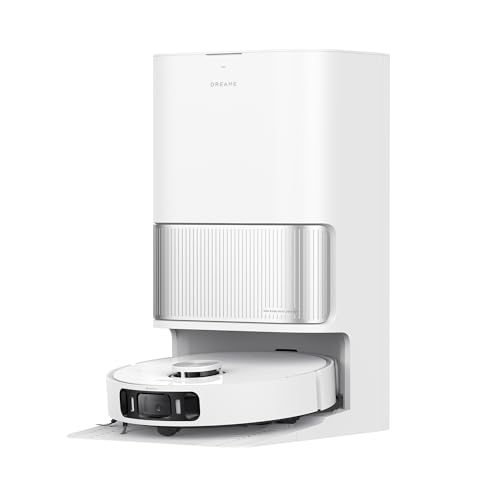
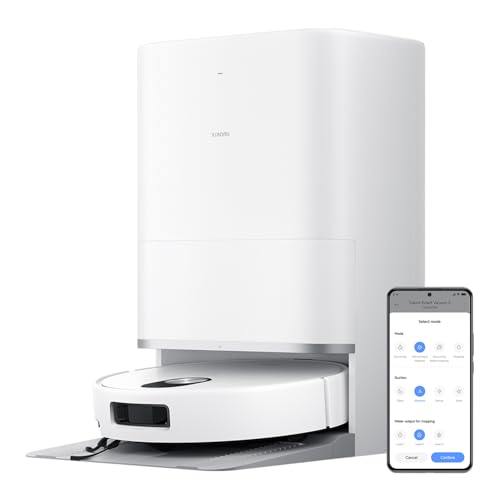
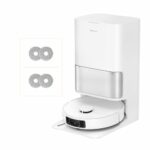
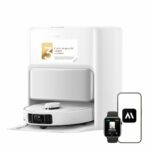
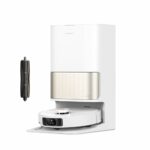
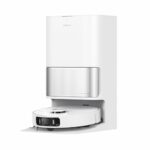
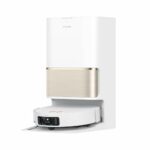
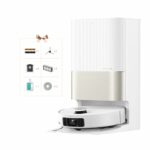
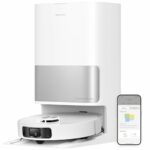
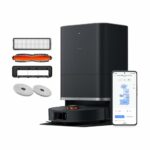
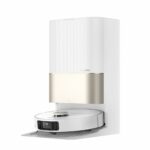
The Dreame L40 Ultra AE and the Xiaomi Robot Vacuum 5 represent two compelling options within the 2025 robot vacuum market. Both models arrive equipped with multifunction bases that handle everything from self-emptying to mop washing and drying, positioning them as complete cleaning solutions rather than basic vacuums. These aren't entry-level devices—they're designed for users who want minimal intervention and maximum cleaning performance across both hard floors and carpets.
The Dreame model brings a camera-based AI system into the mix, whilst Xiaomi opts for a more streamlined approach with retractable LiDAR. Both share the same TriCut 3.0 brush technology and dual rotating mops, but their approaches to edge cleaning, obstacle detection, and base functionality reveal distinct philosophies. Understanding these differences matters when you're investing in a robot that will handle your daily cleaning routine.
Key Differences at a Glance
- The Xiaomi Robot Vacuum 5 delivers 20,000 Pa suction versus 19,000 Pa in the Dreame L40 Ultra AE
- Dreame includes an AI camera with remote access and LED night vision; Xiaomi doesn't
- Xiaomi features an extendable and anti-tangle side brush; Dreame's side brush lacks these features
- The Dreame lifts its main brush during mopping; Xiaomi cannot
- Xiaomi raises mops 15 mm compared to Dreame's 10.5 mm elevation
- Dreame detects dirt on both mops and floors for targeted re-cleaning; Xiaomi lacks this capability
- The Dreame base holds a detergent dispenser; Xiaomi's base doesn't
- Dreame's base offers second-generation tray self-cleaning; Xiaomi has standard self-cleaning
- Larger capacity across the board for Dreame: 3.2L dust bag versus 2.5L, plus bigger water tanks
- The Xiaomi unit sits 9 mm lower at 88 mm height versus 97 mm
Power and Vacuuming Performance
Suction power tips slightly in Xiaomi's favour at 20,000 Pa against the Dreame's 19,000 Pa. In practical terms, this 1,000 Pa difference won't dramatically alter everyday cleaning performance on hard floors, but it might provide a marginal edge when tackling ground-in dirt on carpets or pulling debris from grout lines.
Both robots employ the TriCut 3.0 brush system, which combines bristles with cutting blades to slice through tangled hair rather than letting it wrap endlessly around the roller. This makes maintenance considerably easier for homes with long hair or pets.
The side brush situation diverges notably. Xiaomi's extendable side brush reaches further into corners and along edges, whilst also featuring anti-tangle properties. Dreame's side brush remains fixed without these enhancements. For homes with complex furniture layouts or tight corners, Xiaomi's approach delivers more thorough edge cleaning during vacuuming.
Dreame counters with a feature Xiaomi lacks: main brush elevation during mopping. When the L40 Ultra AE switches to wet cleaning, it lifts the main roller to prevent it dragging dirty water across carpets or interfering with the mopping process. Xiaomi's brush stays in position throughout.
Mopping Systems
Both models deploy dual rotating mops that spin against the floor rather than simply dragging a damp cloth behind them. This active scrubbing action makes a genuine difference on sticky spills and dried-on marks.
Dreame incorporates its Roboswing technology alongside mop extension, allowing the robot to shift its body slightly and push the mop pad under furniture edges and skirting boards. Xiaomi offers mop extension but without the swinging motion. In tight spaces around chair legs or cabinet bases, Roboswing helps the Dreame reach areas that would otherwise require manual cleaning.
Mop lift height becomes relevant when transitioning between hard floors and carpets. Xiaomi raises its mops 15 mm, whilst Dreame manages 10.5 mm. That extra 4.5 mm clearance means Xiaomi handles thicker rugs and carpet transitions with less risk of dragging damp mops across fabric surfaces.
The Dreame L40 Ultra AE stands alone with dirt detection technology that monitors both the mops themselves and the floor being cleaned. When the sensors identify particularly dirty areas or detect that the mops need attention, the robot adjusts its cleaning pattern or returns to the base for mop washing. Xiaomi cleans according to its programmed routine without this adaptive behaviour. For kitchens prone to spills or homes with muddy paw prints, Dreame's system provides more thorough results without manual intervention.
Navigation Systems
Navigation architecture differs fundamentally between these two models. The Dreame L40 Ultra AE combines a 3D LiDAR turret with an AI camera, LED illumination for low-light conditions, and the ability to recognise 120 different obstacle types. This includes specific detection for pets, allowing the robot to avoid disturbing sleeping animals or navigating around feeding bowls.
Remote camera access means you can check in on your home through the Dreame's front-facing lens via the smartphone app. The LED lighting ensures the camera functions effectively even in darker rooms or at night.
Xiaomi takes a different route with retractable LiDAR and 3D laser sensors but no camera system. There's no remote viewing capability, no LED illumination, and no specific pet recognition. The obstacle avoidance functions through laser-based detection rather than visual identification. This approach still maps accurately and avoids collisions, but it lacks the contextual awareness that camera-based AI provides.
For users who value privacy or simply don't need visual monitoring, Xiaomi's sensor-only approach might actually be preferable. Those who want to check on pets remotely or appreciate the robot's ability to identify specific objects will find Dreame's camera system worthwhile.
Battery and Autonomy
Both robots pack identical 5,200 mAh batteries. Xiaomi specifies 140 minutes of runtime, whilst Dreame hasn't published autonomy figures. In practice, both should handle medium to large homes without requiring mid-clean recharging, though actual runtime depends heavily on suction settings, floor type, and whether the robot is vacuuming, mopping, or doing both simultaneously.
The 20 mm obstacle-climbing capability shared by both models means they'll mount standard door thresholds and floor transitions without assistance.
Smart Features
Dreame's CleanGenius AI system and Xiaomi's intelligent cleaning both adapt to floor conditions and room layouts, learning optimal cleaning routes over time. Neither robot includes a built-in voice assistant, but both integrate with Alexa and Google Home for voice control through external smart speakers.
The camera on the Dreame L40 Ultra AE enables more sophisticated object recognition and remote monitoring, which translates into smarter navigation decisions when encountering unexpected obstacles like shoes, cables, or pet toys scattered across the floor.
Multifunction Base Capabilities
Both bases handle the core functions: self-emptying the dust compartment, washing mops with hot water, and drying them with heated air. These features ensure the robot returns to each cleaning session with empty bins and fresh mops, dramatically reducing maintenance frequency.
Dreame's base incorporates second-generation tray self-cleaning, which means the platform where mop washing occurs cleans itself more thoroughly than standard systems. The base also includes a detergent dispenser that automatically adds cleaning solution during mop washing. Xiaomi's base washes mops effectively but without automatic detergent dispensing.
Storage capacity favours Dreame across the board. The dust bag holds 3.2 litres versus Xiaomi's 2.5 litres—meaningful if you prefer longer intervals between bag changes. Clean water capacity measures 4.5 litres in the Dreame base compared to 4 litres in Xiaomi's, whilst dirty water tanks measure 4 litres and 3.8 litres respectively. These differences might seem marginal, but they add up to fewer refills and emptying cycles over a month of cleaning.
Dreame offers an optional plumbing connection kit that can be purchased separately, allowing the base to fill and drain automatically from your home's water supply. Xiaomi doesn't provide this option. Whilst it's an additional purchase rather than an included feature, it represents a potential upgrade path for users wanting truly hands-off operation.
Physical Dimensions
The Xiaomi Robot Vacuum 5 measures 88 mm tall—9 mm lower than the Dreame L40 Ultra AE at 97 mm. This difference matters when navigating under low-clearance furniture. If your sofas, beds, or cabinets sit close to the floor, that extra clearance could determine whether the robot cleans underneath or gets stuck trying.
Both robots share a 350 mm diameter, so they'll navigate doorways and between furniture legs identically.
Base dimensions reveal Xiaomi's unit running slightly wider (360 mm versus 340 mm) and deeper (470 mm versus 456.7 mm), whilst Dreame's base stands taller (590.5 mm versus 572 mm). Neither base is particularly compact, so both require dedicated floor space in a utility area, kitchen corner, or bathroom. The height difference might matter if you're placing the base under a countertop or shelf.
Real-World Usage Scenarios
For larger homes where the robot needs to cover extensive floor areas before returning to base, both models' 5,200 mAh batteries should suffice. Xiaomi's 140-minute runtime specification suggests it'll handle spacious properties without mid-clean charging stops.
Households with pets benefit more from the Dreame L40 Ultra AE. The AI camera recognises animals and adjusts behaviour accordingly, whilst the dirt detection system responds to muddy paw prints or scattered litter. The detergent dispenser also helps tackle the organic residues pets leave behind. Xiaomi cleans effectively but without these pet-specific considerations.
If your home features low-profile furniture, Xiaomi's 88 mm height grants access to spaces the 97 mm Dreame cannot reach. Measure your furniture clearances before deciding—those 9 millimetres make a practical difference.
The extendable side brush on Xiaomi proves valuable in homes with complex floor plans, lots of furniture, or challenging corner configurations. Dreame's Roboswing and mop extension excel along walls and under overhanging cabinets during mopping, but Xiaomi's approach delivers more thorough dry vacuuming along edges.
For users who travel frequently or want to check on their homes remotely, Dreame's camera access provides peace of mind. The LED night vision means you can monitor your property even after dark. Privacy-conscious users might prefer Xiaomi's sensor-only approach.
Conclusion: Which Should You Choose?
Choose the Dreame L40 Ultra AE if you want comprehensive dirt detection that adapts cleaning intensity to actual floor conditions, value remote camera access for home monitoring or checking on pets, prefer the convenience of automatic detergent dispensing, need Roboswing technology for cleaning under furniture edges, or want larger base capacity to reduce maintenance frequency. The second-generation base cleaning and main brush elevation during mopping also make this model suited to homes where cleanliness standards are particularly high.
Choose the Xiaomi Robot Vacuum 5 if you need maximum suction power at 20,000 Pa, have low-clearance furniture requiring the 88 mm profile, want superior edge cleaning during vacuuming thanks to the extendable side brush, prefer 15 mm mop lift for thicker carpets, or simply don't need camera-based features. This model delivers excellent cleaning performance at a typically lower price point whilst maintaining all the essential multifunction base capabilities.
For homes with pets and a preference for smart monitoring, Dreame edges ahead. For those prioritising raw suction, edge performance, and fitting under furniture, Xiaomi presents the stronger case. Both represent capable, feature-rich options within the 2025 robot vacuum landscape.