Introduction
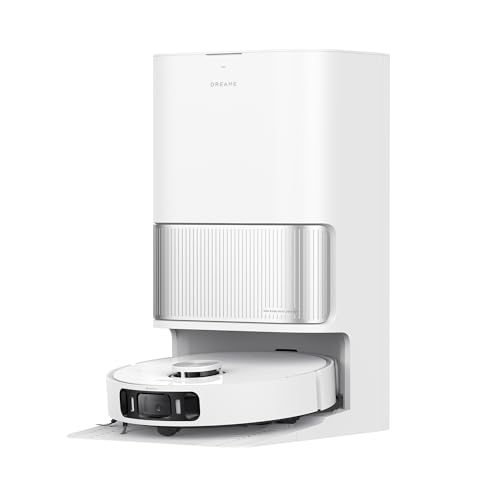
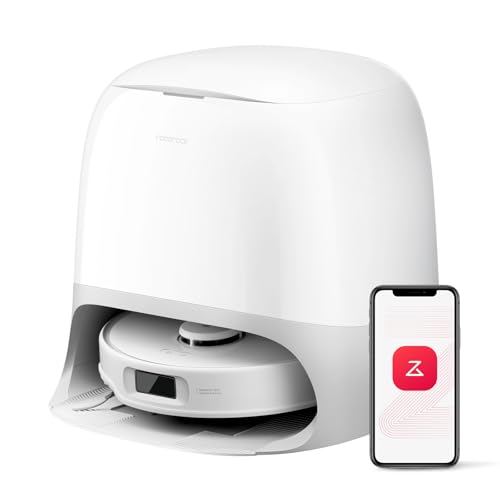
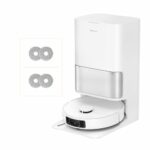
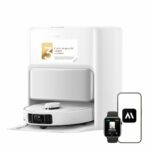
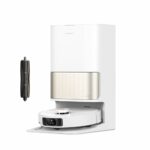
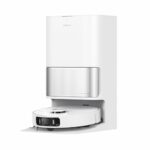
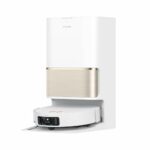
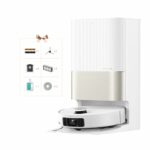
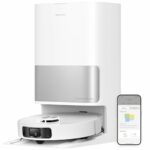
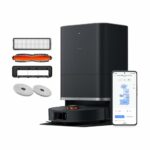
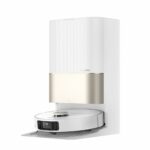
When looking for a top-tier robot vacuum in 2025, the Dreame L40 Ultra AE and the Roborock Qrevo Curv S5X represent two distinct approaches to automated cleaning. The Dreame arrives as a 2025 model with cutting-edge AI features, whilst the Roborock launched in 2024 as a proven performer from the world's leading brand in this category. Both units feature multifunction bases that handle everything from self-emptying to mop washing and drying, making them suitable for users who want minimal maintenance.
These models sit firmly in the premium segment. They're designed for medium to large homes where autonomy matters and where you'd expect the robot to handle complex layouts without constant supervision. The differences between them, though sometimes subtle on paper, can significantly affect daily use depending on your specific needs.
Key Differences at a Glance
- The Dreame L40 Ultra AE delivers 19,000 Pa suction versus 18,500 Pa on the Roborock
- Dreame features an AI camera with remote access and LED night vision; Roborock lacks this
- Roborock uses a DuoDivide anti-tangle brush; Dreame opts for TriCut 3.0
- The Dreame can elevate its main brush during mopping; Roborock cannot
- Roborock includes an extendable and anti-tangle side brush; Dreame's side brush is fixed
- Dreame offers 10.5 mm mop lift versus 10 mm on the Roborock
- Dreame's base includes a detergent dispenser; Roborock does not
- Dreame provides larger capacity tanks: 3.2L dust bag, 4.5L clean water, 4L dirty water
- Roborock's base is more compact (450×450×450 mm) compared to Dreame's taller design
- Dreame supports an optional plumbing connection kit (sold separately)
Power and Suction
The Dreame L40 Ultra AE edges ahead with 19,000 Pa of suction power, a 500 Pa advantage over the Roborock Qrevo Curv S5X's 18,500 Pa. In practical terms, this translates to slightly better performance on thick carpets or when dealing with embedded dirt in textile fibres. That said, both figures sit well above what you'd need for typical hard floors and low-pile rugs.
Where the brush systems diverge is in their design philosophy. The Dreame uses a TriCut 3.0 brush, which combines bristles with integrated blades to slice through tangled hair. The Roborock counters with its DuoDivide anti-tangle brush, a unique design that channels debris towards the centre suction point to minimise hair wrap. For homes with long-haired residents or shedding pets, the DuoDivide arguably has the edge in reducing maintenance frequency.
The Dreame can lift its main brush during mopping, preventing the roller from dragging wet dirt across already-cleaned floors. The Roborock doesn't offer this feature, which might matter if you regularly switch between vacuuming and mopping in the same session.
Regarding side brushes, Roborock takes a different approach. Its side brush extends to reach into corners more effectively and features anti-tangle properties. The Dreame's side brush remains fixed and lacks anti-tangle design. For edge cleaning and corner debris, this gives the Roborock a tangible advantage.
Mopping Performance
Both models use dual rotating mop pads, but they implement edge coverage differently. The Dreame L40 Ultra AE employs an extending mop system combined with RoboSwing technology—a swaying motion that allows the mop to reach slightly under furniture lips and skirting boards. The Roborock also extends its mops for edge cleaning but doesn't include the swaying mechanism.
Mop elevation differs by half a millimetre: 10.5 mm on the Dreame versus 10 mm on the Roborock. This small difference rarely matters in real-world use, as both clear standard carpet thresholds and low-pile rugs without dragging wet pads across them.
Both robots detect dirt on the floor and on the mops themselves, triggering additional cleaning passes or returning to the base for mop washing when needed. This adaptive behaviour ensures consistently clean mops throughout the mopping cycle.
The base stations wash mops with hot water and dry them using heated air, preventing odours and bacterial growth. Neither model can automatically detach its mops at the base for vacuum-only runs, so you'll need to remove them manually if you want to skip mopping entirely.
Navigation System
Both robots use a 360-degree LiDAR turret for mapping and navigation, ensuring accurate room layouts and efficient cleaning paths. The Dreame L40 Ultra AE, however, adds a front-facing AI camera with 3D laser sensors, enabling it to recognise up to 120 different obstacle types. This includes specific detection for pets, which can be useful if you want the robot to avoid disturbing sleeping animals or to capture photos of your pets during cleaning.
The camera on the Dreame supports remote access, effectively turning the robot into a mobile home monitoring device. It also features LED lighting for improved vision in dim conditions. The Roborock Qrevo Curv S5X lacks all these camera-based features, relying instead on its LiDAR and sensors for obstacle avoidance.
For AI-driven cleaning strategies, the Dreame uses CleanGenius AI whilst the Roborock employs SmartPlan 2.0. Both systems analyse room types and adjust cleaning intensity accordingly, though the specifics of their algorithms differ. The Roborock runs on its RR Mason 11.0 processor, whilst Dreame hasn't specified its CPU details.
Battery and Autonomy
Both models pack identical 5,200 mAh batteries. The Roborock specifies 180 minutes of runtime, whilst Dreame hasn't published autonomy figures. In practice, runtime varies significantly depending on suction power, mopping mode, and floor type, so manufacturer estimates often differ from real-world performance.
Neither brand provides charging time data. What matters more for large homes is whether the robot can resume cleaning after recharging mid-session—a feature both models support through their intelligent mapping systems.
Smart Features
Both robots can climb obstacles up to 20 mm high, allowing them to transition between rooms with raised thresholds or mount thick rugs without getting stuck. This capability is standard in premium models and works reliably in typical home environments.
Voice control through Alexa and Google Home is available on both units, letting you start, stop, or send the robot to specific rooms using voice commands. Neither model includes its own built-in voice assistant or a robotic arm for advanced object manipulation.
Multifunction Base Station
The Dreame L40 Ultra AE's base offers several capacity advantages. Its dust bag holds 3.2 litres compared to 2.5 litres on the Roborock, meaning less frequent bag changes—especially relevant for allergy sufferers who want to minimise dust exposure. The clean water tank is 4.5 litres versus 4 litres, and the dirty water tank is 4 litres versus 3 litres. These differences add up over time, particularly in larger homes with extensive hard flooring.
The Dreame includes a detergent dispenser built into its base, automatically adding cleaning solution during mop washing. The Roborock lacks this feature, so you'd need to add detergent manually to the water tank if you want enhanced cleaning performance.
Both bases feature second-generation self-cleaning for the wash tray, reducing mould and residue build-up. Neither includes UV disinfection or automatic mop changing systems. The Dreame offers an optional plumbing connection kit (sold separately) for continuous water supply and drainage, though this isn't integrated as standard. The Roborock doesn't support plumbing connections at all.
Physical Dimensions
The robots themselves are nearly identical in size. The Dreame measures 350 mm in diameter and 97 mm tall, whilst the Roborock is 352 mm wide and 98 mm high. That single millimetre height difference is functionally irrelevant—both should fit under standard furniture with around 10 cm clearance.
The base stations tell a different story. The Roborock's base forms a neat 450 mm cube, making it easier to tuck into corners or alcoves. The Dreame's base is narrower at 340 mm wide but significantly taller at 590.5 mm and deeper at 456.7 mm. If you're short on vertical space or want a more discreet base, the Roborock's compact footprint works better. The Dreame's taller design accommodates its larger tanks but demands more clearance.
Real-World Usage Scenarios
For homes with pets, the choice depends on priorities. The Roborock's DuoDivide brush and anti-tangle side brush require less frequent cleaning, whilst the Dreame's higher suction and pet recognition camera offer different advantages. If your pet sheds heavily, the Roborock's maintenance-friendly brushes likely matter more than an extra 500 Pa of suction.
In large homes, the Dreame's bigger tanks mean fewer interruptions for emptying and refilling, and the optional plumbing kit could eliminate manual tank maintenance entirely. The Roborock's published 180-minute runtime provides a clearer sense of coverage, though both robots handle recharge-and-resume without issue.
If you value smart home integration beyond basic cleaning—such as remote monitoring via camera or detailed obstacle recognition—the Dreame's AI features deliver functionality the Roborock simply doesn't offer. For users who prefer straightforward operation without camera-based features, the Roborock's proven reliability and compact base might feel like a better fit.
The detergent dispenser on the Dreame removes one maintenance step, keeping mops fresher without manual intervention. The Roborock's extendable side brush, however, cleans edges and corners more thoroughly, which can be noticeable in kitchens or along skirting boards.
Conclusion: Which One to Choose?
Choose the Dreame L40 Ultra AE if: you want the latest AI camera features including remote access and pet recognition; you prefer larger tank capacities to reduce maintenance frequency; you're interested in adding a plumbing connection in the future; or you value the convenience of an integrated detergent dispenser and slightly higher suction power.
Choose the Roborock Qrevo Curv S5X if: you prioritise anti-tangle brush technology for easier maintenance; you need a more compact base station that fits tighter spaces; you prefer proven reliability from the market-leading brand; or you don't need camera-based features and want a straightforward, highly effective cleaning robot with excellent edge performance thanks to its extendable side brush.
For large homes with pets and a preference for cutting-edge AI, the Dreame L40 Ultra AE offers compelling advantages. For those seeking a reliable, low-maintenance solution with superior brush design and a space-efficient base, the Roborock Qrevo Curv S5X remains an excellent choice in 2025.