Introduction
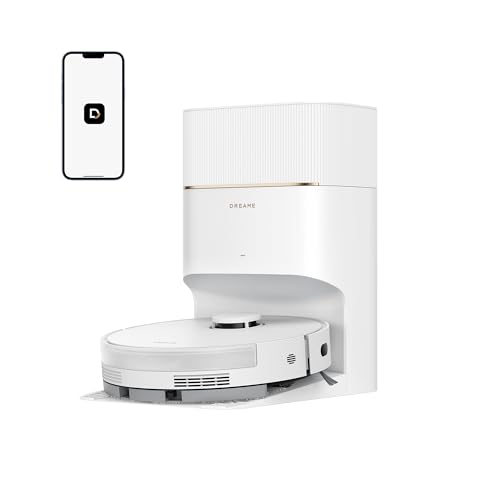
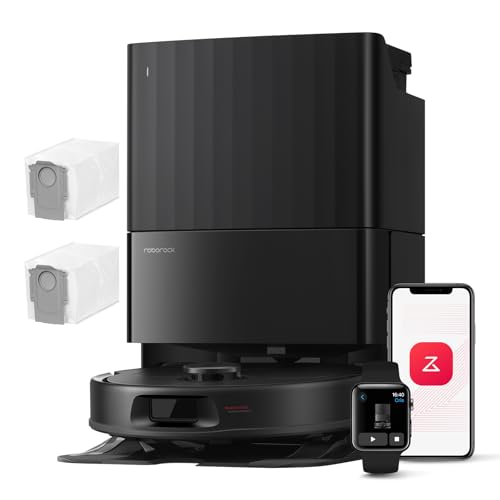
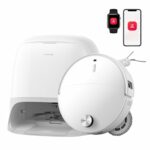
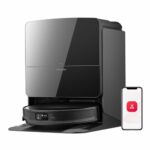
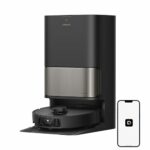
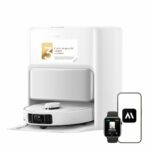
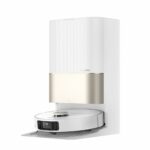
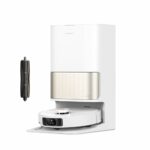
The Dreame D20 Pro Plus and Roborock QV 35A represent two fresh approaches to robot vacuum cleaning in 2025, each targeting users who want automated floor maintenance without constant intervention. The Dreame model positions itself as a high-suction machine with extended battery life, whilst the Roborock brings its characteristic multifunctional base station to the table. Both share the same battery capacity at 5,200 mAh, yet they diverge significantly in how they handle cleaning tasks and what kind of maintenance support they offer through their respective docking stations.
These aren't entry-level machines. The Dreame focuses on raw vacuuming power and prolonged runtime, making it suitable for larger homes where thorough dust collection matters most. The Roborock takes a different route, integrating mop washing capabilities at the base and incorporating smart planning features that adapt cleaning routines automatically. Understanding these fundamental differences helps clarify which household scenarios each robot serves best.
Differences at a Glance
- Suction power: 13,000 Pa (Dreame) versus 8,000 Pa (Roborock)
- Runtime: 285 minutes for the Dreame against 180 minutes for the Roborock
- Main brush: dual HyperStream design on the Dreame, single brush on the Roborock
- Side brush: extensible on the Dreame, fixed on the Roborock
- Mopping system: static mop (Dreame) versus dual rotating mops (Roborock)
- Mop elevation: absent on the Dreame, 10 mm lift on the Roborock
- Base station: auto-emptying only (Dreame) versus multifunctional with mop washing and drying (Roborock)
- Dust bag capacity: 5 litres (Dreame) versus 2.7 litres (Roborock)
- Navigation: 3D laser sensor present on Dreame, absent on Roborock
- Smart cleaning: SmartPlan 1.0 exclusive to Roborock
- Robot dust bin: 500 ml (Dreame) versus 330 ml (Roborock)
- Robot water tank: 350 ml (Dreame) versus 80 ml (Roborock)
Power and Suction Performance
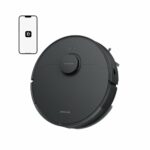
The Dreame D20 Pro Plus delivers 13,000 Pa of suction, a substantial figure that places it well above the Roborock QV 35A's 8,000 Pa. In practical terms, this translates to better pickup on carpets and more effective removal of fine particles embedded in textile fibres. The Dreame's dual HyperStream brush system uses two independently anchored brushes that minimise hair tangles whilst maintaining contact with the floor surface. The Roborock relies on a single brush design, which still handles everyday debris competently but lacks the anti-tangle advantages of the dual setup.
Side brush configuration also differs. The Dreame includes an extensible side brush that reaches further into corners and along skirting boards, improving edge cleaning performance. The Roborock's side brush remains fixed in position. Both models feature anti-tangle technology on their side brushes, reducing the frequency of manual maintenance. Neither robot elevates its main or side brush during mopping, which means the brushes remain in contact with the floor throughout the cleaning cycle.
Mopping Capabilities
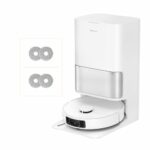
Mopping represents one of the clearest dividing lines between these two machines. The Dreame D20 Pro Plus uses a static mop pad attached to the underside of the robot. This pad drags across hard floors, relying on downward pressure and the robot's movement to clean. The Roborock QV 35A employs dual rotating mops that spin as the robot moves, generating mechanical scrubbing action that tackles dried-on marks more effectively than static pressure alone.
The Roborock can lift its mops by 10 mm when it detects carpet or when returning to the base, preventing wet contact with textiles and reducing cross-contamination. The Dreame lacks mop elevation entirely, which limits its suitability for mixed-floor homes where carpets and hard surfaces coexist. Neither model extends its mops outward to reach edges, nor do they automatically detach mops at the base when switching to vacuum-only mode.
Water supply differs too. The Dreame carries a 350 ml water tank onboard, allowing for extended mopping sessions before refilling becomes necessary. The Roborock's robot-mounted tank holds just 80 ml, but this smaller capacity matters less because the base station supplies water during the cleaning cycle. Both use cold water for floor mopping, without heated water delivery to the cleaning surface.
Navigation Systems
Both robots navigate using 3D LiDAR turrets that map rooms and plan efficient cleaning routes. The Dreame D20 Pro Plus adds a 3D laser sensor at the front, enhancing obstacle detection and allowing the robot to recognise objects in its path with greater precision. The Roborock QV 35A omits this additional sensor, relying instead on its LiDAR turret and bump sensors for navigation and avoidance.
Neither robot includes a front-facing camera, LED illumination for low-light conditions, or remote camera access. Pet recognition and curtain detection features are absent from both models. The Roborock does incorporate SmartPlan 1.0, an AI-driven cleaning intelligence system that analyses room layouts and adjusts cleaning patterns accordingly. The Dreame lacks comparable smart planning functionality, following more traditional room-by-room cleaning logic.
Battery Life and Runtime
The Dreame D20 Pro Plus achieves 285 minutes of runtime from its 5,200 mAh battery, significantly outlasting the Roborock QV 35A's 180-minute autonomy despite sharing identical battery capacity. This extended runtime proves valuable in larger properties where a single cleaning session needs to cover extensive floor areas without interruption. The Roborock's shorter runtime still suffices for most homes, particularly given its ability to recharge and resume cleaning automatically.
Neither manufacturer provides charging time specifications, and maximum recommended coverage area isn't listed for either model. The difference in runtime suggests the Dreame operates more conservatively with power consumption, possibly through lower motor speeds or less aggressive brush action, though the higher suction figure complicates this interpretation.
Smart Features
Both robots can climb obstacles up to 20 mm in height, handling standard door thresholds and low-profile transitions between rooms without assistance. Neither model includes a robotic arm for object manipulation or a proprietary voice assistant. External voice control through Alexa and Google Home works with both machines, allowing basic commands like start, stop, and return to dock.
The Roborock's SmartPlan 1.0 system represents its standout intelligent feature, automatically adjusting cleaning strategies based on room type and accumulated usage data. The Dreame relies on user-defined schedules and manual zone configuration through its app.
Multifunctional Base Station
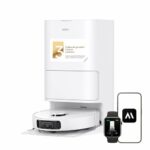
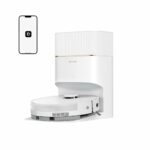
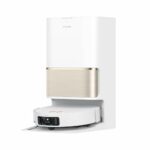
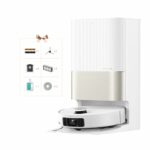
The base station comparison reveals fundamentally different approaches. The Dreame D20 Pro Plus includes an auto-emptying dock that transfers collected dust from the robot's 500 ml bin into a 5-litre disposable bag. This larger bag capacity means less frequent replacements, typically every two to three months depending on household conditions. The base doesn't wash or dry mops, leaving that maintenance task to the user.
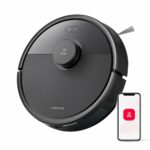
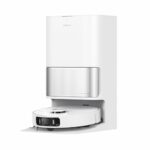
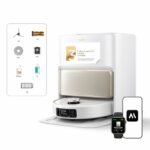
The Roborock QV 35A's base station handles auto-emptying into a smaller 2.7-litre bag, requiring more frequent changes. However, it adds mop washing with cold water from a 4-litre clean water tank, depositing dirty water into a 3.5-litre waste tank. After washing, the base dries the mops using cold air circulation, preventing odour development and bacterial growth. This multifunctional capability transforms the mopping experience, as the robot returns periodically during cleaning to wash its mops, ensuring it always works with relatively clean pads rather than spreading diluted dirt across floors.
Neither base includes automatic bandeja cleaning, UV disinfection, detergent dispensing, or plumbing connection options. No kit for aftermarket plumbing connection is available for either model.
Physical Dimensions
The robots measure nearly identically. The Dreame spans 350 mm in diameter and stands 96.8 mm tall. The Roborock measures 353 mm across and 96.5 mm high. This 0.3 mm height advantage for the Roborock makes no practical difference when navigating under furniture; both clear typical sofa and bed clearances with equal ease.
Base station footprints diverge more noticeably. The Dreame's dock measures 298 mm wide, 452 mm tall, and 440 mm deep, creating a more compact profile. The Roborock base requires 340 mm width, 521 mm height, and 487 mm depth, demanding more floor and vertical space. This difference matters in tighter utility areas or when positioning the base in a cupboard or alcove.
Real-World Usage Scenarios
The Dreame D20 Pro Plus suits homes prioritising vacuuming performance over mopping sophistication. Its superior suction and extended runtime make it effective in larger properties with predominantly hard floors or low-pile carpets. The 500 ml dust bin and 5-litre base bag handle substantial debris volumes before requiring attention. Pet owners benefit from the dual HyperStream brush design that resists hair tangles, though the static mop and lack of base washing mean mopping remains a secondary function requiring manual pad maintenance.
The Roborock QV 35A targets users who want genuinely hands-off mopping alongside competent vacuuming. The rotating mops and base station washing system deliver consistently better mopping results than static pads, particularly valuable for kitchens and bathrooms where spills and sticky residues accumulate. The 10 mm mop lift protects carpets and rugs in mixed-floor layouts. Smaller homes suit its 180-minute runtime well, whilst the compact robot water tank matters less given the base's 4-litre reservoir. The SmartPlan feature adapts to cleaning patterns over time, potentially improving efficiency without user input.
For households with pets, the Dreame's higher suction and larger dust capacity handle shedding more effectively. The Roborock's mop maintenance automation, however, saves time that might otherwise go toward cleaning pads by hand after each use.
Conclusion: Which Robot Suits You?
Choose the Dreame D20 Pro Plus if: Your priority is powerful vacuuming across large floor areas, you have pets that shed heavily, or you prefer longer cleaning cycles without interruption. The extensible side brush improves corner cleaning, and the massive 5-litre dust bag reduces maintenance frequency. Accept that mopping remains basic and requires manual pad care.
Choose the Roborock QV 35A if: You want a complete mopping solution with minimal intervention, value the convenience of automatic mop washing and drying, or have mixed flooring where mop lift prevents carpet wetting. The rotating mops and multifunctional base deliver superior mopping results, whilst SmartPlan adapts cleaning strategies automatically. The smaller dust bag and shorter runtime suit compact to medium-sized homes.
Ultimately, this comparison between robot aspirador Dreame and robot aspirador Roborock models comes down to whether vacuuming power or mopping automation matters more. The Dreame D20 Pro Plus excels as a vacuuming specialist with endurance for expansive properties. The Roborock QV 35A balances both functions more evenly, with standout mopping capabilities that justify its multifunctional base. Consider your floor types, home size, and willingness to handle mop maintenance when deciding which better fits your cleaning routine.