Introduction
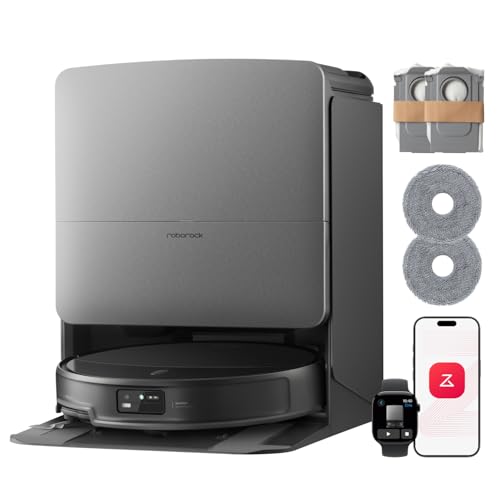
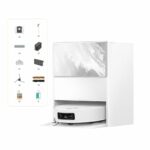
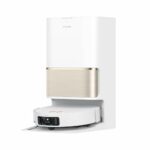
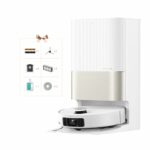
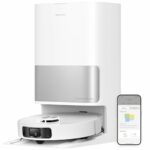
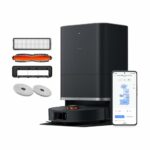
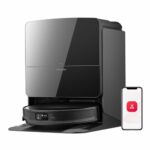
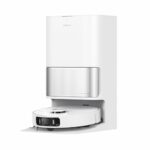
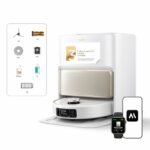
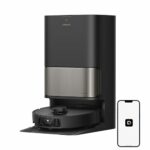
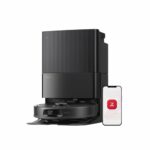
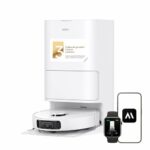
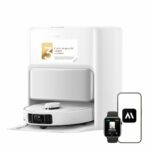
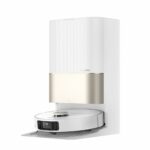
The Dreame Aqua 10 Ultra Roller and the Roborock Saros 20 represent two cutting-edge approaches to automated home cleaning launched in 2025 and early 2026 respectively. Whilst Dreame opts for a distinctive roller-based mopping system, Roborock maintains its refined dual rotating mop design. These aren't budget models—they're premium cleaning stations designed for homeowners who want comprehensive automation without compromise.
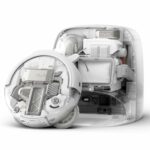
The Dreame model introduces a unique double HyperStream brush system paired with a 12N pressure roller for mopping, targeting those who prioritise deep scrubbing action. Meanwhile, the Saros 20 arrives with Roborock's latest StarSight 2.0 navigation and an impressively low profile at just under 80mm tall, making it particularly suited to homes with low-clearance furniture. Both machines feature multifunctional bases that handle everything from self-emptying to mop washing, though their execution differs in meaningful ways.
Differences at a Glance
- The Roborock Saros 20 delivers 36,000 Pa suction versus 30,000 Pa in the Dreame
- Dreame uses a 12N pressure roller for mopping; Roborock employs dual rotating mops
- The Saros 20 stands at 79.8mm tall—nearly 18mm lower than the Dreame's 97.5mm
- Roborock can automatically dismount its mops at the base for vacuum-only cleaning
- Dreame includes dual detergent tanks versus a single tank in the Saros 20
- The Aqua 10 Ultra Roller offers a larger 3.2L dust bag compared to 2.5L
- Roborock provides hot air mop drying and hot water tray self-cleaning
- Dreame's robot holds 220ml dust and 160ml water; Roborock carries 270ml dust but only 69ml water
- The Saros 20 recognises 300 obstacle types versus 240 in the Dreame
Suction Power and Brushwork
Suction capability separates these two models straight away. The Roborock Saros 20 generates 36,000 Pa, giving it a noticeable edge over the Dreame's 30,000 Pa. In practice, this translates to better performance on carpets and more effective deep cleaning when dealing with embedded dirt or pet hair.
The brush systems take different philosophies. Dreame's double HyperStream design uses two independently anchored brushes that actively prevent hair tangles—a real advantage for pet owners. Roborock counters with its DuoDivide anti-tangle system, which channels hair towards the central suction point rather than wrapping around bristles. Both approaches work well, though the HyperStream configuration tends to require less manual intervention.
Each robot elevates its main brush during mopping and features an extendable side brush that reaches into corners. The side brushes also lift when mopping to avoid flicking water around. These shared features mean both machines handle the transition between vacuuming and mopping intelligently.
Mopping Systems
This is where the most striking difference emerges. The Dreame Aqua 10 Ultra Roller abandons traditional flat mops entirely, instead using a continuously rotating roller with 12 Newtons of downward pressure. This mimics the action of a traditional floor scrubber and excels at shifting dried-on stains. The roller extends to reach edges and can lift 14mm to clear low obstacles, with an additional curtain avoidance feature.
The Roborock Saros 20 sticks with dual rotating mops but refines the execution. These mops extend for edge cleaning and lift between 12-22mm depending on the situation. More significantly, the Saros 20 can completely detach its mops at the base when you only want to vacuum—something the Dreame cannot do. If you're cleaning a fully carpeted floor, the Roborock handles this more elegantly.
Water temperature matters more than many realise. The Saros 20 uses warm water to mop floors, which helps dissolve grease and grime more effectively than the cold water system in the Dreame. That said, the Dreame's roller design with high pressure can compensate through mechanical action alone.
Both robots detect dirty areas and adjust their cleaning approach accordingly, making multiple passes when sensors identify stubborn marks. This adaptive behaviour works well in kitchens and high-traffic zones.
Navigation Technology
Navigation systems in both models are sophisticated, though Roborock's StarSight 2.0 edges ahead in raw capability. The Saros 20 recognises 300 different obstacle types compared to 240 in the Dreame. Both use dual RGB cameras with LED illumination for night operation, and both offer remote camera access through their respective apps.
The Dreame runs its AI Sage 15.0 Octa-core processor paired with CleanGenius AI for intelligent route planning. Roborock's SmartPlan 3.0 similarly learns your home's layout and optimises cleaning sequences. In real-world use, you'd struggle to notice significant differences in navigation accuracy between the two—they're both excellent at avoiding chair legs, cables, and pet toys.
Laser 3D sensors sit at the front of each robot, helping them judge distances to furniture and walls with millimetre precision. Pet recognition works reliably on both, and they'll detect and avoid curtains rather than getting tangled.
Battery Life and Coverage
Battery capacity matches at 6,400 mAh in both robots. Dreame claims 160 minutes of runtime, though Roborock hasn't specified an equivalent figure. In practice, battery life depends heavily on suction settings and whether you're mopping simultaneously. The higher suction power of the Saros 20 may draw more current, potentially offsetting any efficiency gains.
Neither manufacturer provides surface area recommendations in the available data, but robots with this battery capacity typically handle homes up to 250-300 square metres comfortably, returning to base for recharging if needed before resuming work.
Smart Features
Both robots can climb single obstacles up to 20mm high, allowing them to traverse door thresholds and move between rooms without getting stuck. Neither includes a robotic arm—that remains the preserve of even more premium models.
Each machine features its own voice assistant alongside compatibility with Alexa and Google Home. This means you can issue commands directly to the robot or integrate it into broader smart home routines. The voice assistants prove genuinely useful for quick commands like "clean the kitchen" without opening an app.
Multifunctional Base Stations
The base stations handle the dirty work, but their capabilities differ in important ways. The Dreame Aqua 10 Ultra Roller washes its roller with hot water, which helps sanitise and clean more thoroughly. However, information about mop drying isn't fully specified. The Roborock Saros 20 definitely dries its mops with hot air, speeding up the process and preventing bacterial growth and odours.
Roborock takes maintenance further with automatic hot water cleaning of the washing tray itself—something the Dreame base doesn't offer. This reduces manual cleaning requirements and keeps the base station fresher over time.
The Dreame provides dual detergent tanks, allowing you to use different cleaning solutions for different floor types or cleaning tasks. The Roborock includes a single detergent dispenser. Whether you need two tanks depends on your home—if you have both sealed hardwood and tiles that benefit from different products, the Dreame's setup offers flexibility.
Dust bag capacity favours the Dreame at 3.2 litres versus 2.5 litres in the Saros 20. You'll empty the Dreame's bag less frequently, which matters in homes with heavy shedding pets or lots of tracked-in dirt. Clean water tanks match at 4 litres, but the Dreame's dirty water tank holds slightly more at 3.5 litres compared to 3 litres.
Dreame offers an optional plumbing connection kit that you purchase separately, allowing the base to refill and drain automatically. The Roborock doesn't provide this option at all. For most households, manual filling works fine, but if you want truly hands-free operation for weeks at a time, the Dreame's optional kit could appeal.
Physical Dimensions
Height makes the most significant practical difference here. The Roborock Saros 20 measures just 79.8mm tall, allowing it to slip under sofas, beds, and cabinets that the 97.5mm-tall Dreame simply cannot reach. If you have low furniture, this 17.7mm difference determines whether you'll need to clean those areas manually or let the robot handle them.
Diameter varies minimally—350mm for the Dreame versus 353mm for the Roborock. Neither has a meaningful advantage in tight spaces. Weight isn't specified, but given similar battery and component sizes, they likely feel comparable when you need to carry them upstairs.
Base station footprints differ slightly. The Dreame measures 420mm wide, 500mm tall, and 440mm deep. The Roborock comes in at 381mm wide, 488mm tall, and 475mm deep. The Dreame base is wider and taller but less deep; the Roborock base is narrower and shorter but extends further from the wall. Consider your available floor space when deciding where these substantial stations will live.
Real-World Performance
For homes with multiple floor types, the Dreame's dual detergent system and powerful roller action suit households with varied flooring—perhaps tiles in the kitchen, sealed hardwood in living areas, and vinyl in bathrooms. The roller excels at scrubbing textured tiles where flat mops can miss grout lines.
Pet owners will appreciate both machines' anti-tangle brush systems, though the Roborock's higher suction gives it an edge on carpets where fur embeds deeply. The larger dust bag in the Dreame means less frequent emptying during shedding season.
The Roborock's low profile makes it essential for anyone with platform beds, modern low-profile sofas, or floor-mounted radiators. If your furniture sits close to the ground, the Saros 20's ability to clean underneath saves considerable manual effort.
Maintenance requirements feel lower on the Roborock thanks to automatic tray cleaning and confirmed hot air drying. The Dreame's larger dust bag reduces one maintenance task but potentially increases others. The ability to remove mops entirely on the Roborock streamlines vacuum-only sessions in carpeted areas.
Conclusion: Which Should You Choose?
Choose the Dreame Aqua 10 Ultra Roller if: you want the most aggressive mopping action available, particularly for textured tiles or stubborn dried-on stains. The roller design genuinely scrubs rather than just wiping. It's also the better choice if you have varied flooring that benefits from different cleaning solutions, thanks to dual detergent tanks. The larger dust bag suits homes with heavy dirt accumulation or multiple shedding pets, and the optional plumbing kit offers a path to even greater automation if you're willing to invest in installation.
Choose the Roborock Saros 20 if: you have low-clearance furniture that demands a sub-80mm profile—this alone might make the decision for you. The higher suction power delivers better carpet performance, whilst warm water mopping and hot air drying provide more thorough cleaning and faster drying times. Automatic mop removal makes sense if you have mixed carpet and hard floors, and the self-cleaning base tray reduces your maintenance burden. The ability to recognise 300 obstacles provides slightly more refined navigation, though both systems navigate expertly. Roborock's reputation for reliable hardware and polished app experiences adds confidence to the purchase.
Both represent significant investments in home automation. Your decision ultimately hinges on whether you prioritise the Dreame's distinctive roller mopping and larger capacities, or the Roborock's lower profile, higher suction, and more automated maintenance systems.