Introduction
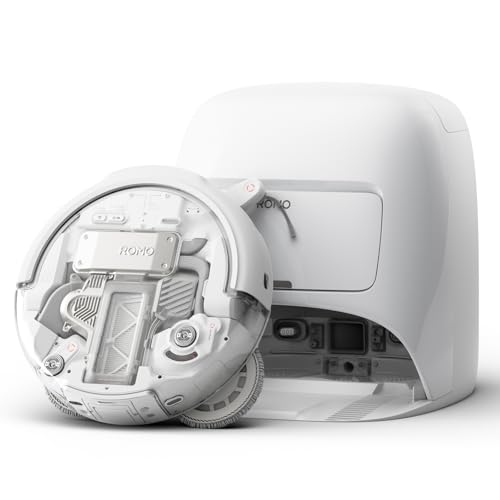
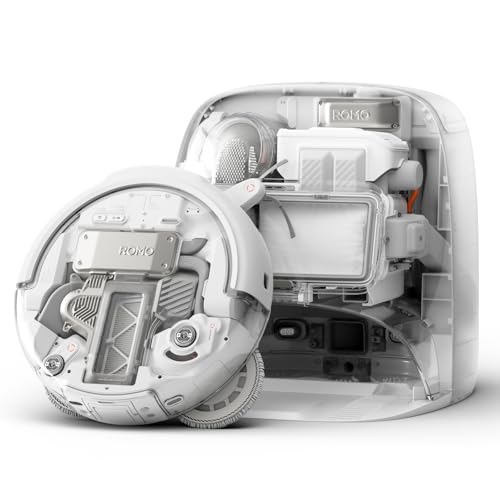
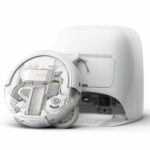
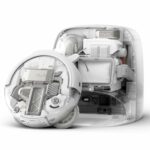
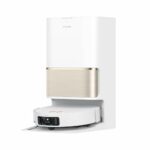
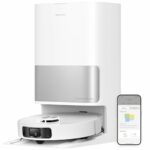
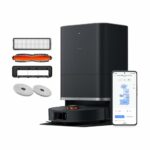
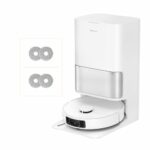
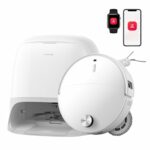
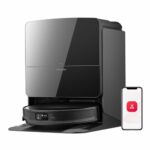
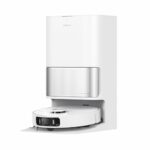
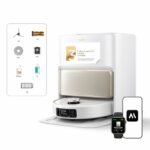
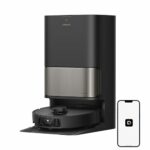
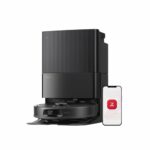
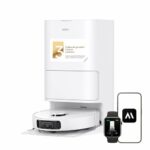
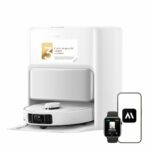
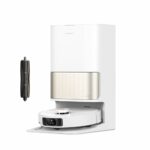
DJI has entered the robot vacuum market in 2025 with two versions of their Romo system, both featuring distinctive transparent designs that showcase the internal technology. The DJI Romo A (Robot Transparente) offers just the robot itself, whilst the DJI Romo P (Robot y Base Transparente) extends the transparent aesthetic to include a matching multifunctional base station. These aren't budget offerings—they represent DJI's attempt to bring their expertise in robotics and imaging technology into home cleaning.
Both models deliver 25,000 Pa of suction power and share identical core specifications, making this less about raw performance differences and more about whether the enhanced base features justify the price difference. For anyone looking at a robot aspirador DJI for the first time, understanding what separates these two becomes crucial.
Key Differences at a Glance
- The Romo P includes UV disinfection in the base station; the Romo A does not
- The Romo P features a dual detergent tank system, whilst the Romo A has a single tank
- Transparent base design is exclusive to the Romo P model
Power and Suction
There's absolutely no difference in suction performance between these models. Both deliver 25,000 Pa, which sits comfortably in the upper tier of what's available for a robot aspirador in 2025. The identical Divided Brush system helps prevent hair tangles—something worth noting if you're dealing with long hair or pets.
The main brush lifts automatically during mopping, preventing wet carpet disasters. Both models also feature extendable side brushes that swing out to reach into corners more effectively. DJI has equipped each with dual anti-tangle side brushes, though these don't lift during mopping. In practice, this means you'll get thorough corner coverage during vacuuming, with the same cleaning architecture regardless of which model you choose.
This is genuinely a case where the cleaning performance on floors will be indistinguishable between the two options.
Mopping
The mopping systems are identical on the robots themselves. Both use dual rotating mops that extend to reach edges, and both can lift those mops by 20 mm when transitioning to carpets or rugs. The water used for floor mopping remains cold in both cases—there's no heated water reservoir in the robots for tackling stubborn marks.
What becomes interesting is the base station behaviour. Both models wash the mops with hot air drying to prevent odours and bacterial growth. The automatic cleaning of the wash tray uses adjustable nozzles in both versions, keeping the base hygienic without manual intervention.
Dirt detection works on both the mops themselves and the floor surface, triggering additional cleaning passes when needed. This intelligent approach means the robots don't just follow a predetermined pattern—they respond to actual conditions.
Navigation System
Navigation hardware is completely identical. Both rely on solid-state LiDAR for mapping, combined with an AI camera and 3D laser sensors at the front for obstacle avoidance. The LED lighting enables the camera to function even in darkness, and you can access the camera remotely through the app on either model.
AI-driven cleaning intelligence analyses room layouts and recognises stains, adjusting cleaning patterns accordingly. For a comparativa de robots aspiradores, it's worth noting that DJI has clearly invested heavily in the vision and navigation systems—their background in drone technology shows through here.
Neither model will struggle with complex floor plans or cluttered rooms. The 20 mm obstacle climbing capability handles typical thresholds and carpet edges without issue.
Battery and Autonomy
Identical 5,000 mAh batteries provide up to 180 minutes of runtime in both models. That's sufficient for larger homes, though the exact coverage will depend on floor type, suction settings, and whether you're mopping simultaneously.
When the battery depletes, both return to base automatically and resume cleaning after recharging. There's no advantage to either model in terms of how long they can operate or how quickly they recharge.
Smart Features
The 20 mm climbing ability applies to both models, handling standard door thresholds and transitioning between hard floors and thicker rugs. Neither includes a robotic arm—DJI has focused on core cleaning performance rather than experimental features.
Voice assistant compatibility extends to external services like Alexa and Google Home on both models, allowing integration into existing smart home setups. The remote camera access adds a security dimension beyond just cleaning monitoring.
Multifunctional Base Station
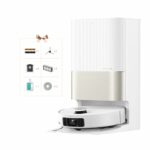
Here's where the models diverge meaningfully. Both provide auto-emptying into a 2.4-litre dust bag, mop washing, and hot air drying. Water tank capacities match at 4 litres for clean water and 3.2 litres for dirty water. The automatic tray cleaning system operates identically.
The Romo P adds UV disinfection to the base station, providing an additional hygiene layer for the wash water and tray area. Whether this matters depends on your household—homes with young children crawling on floors or particular hygiene concerns might value this.
More practically significant is the dual detergent tank system in the Romo P versus the single tank in the Romo A. Having two separate detergent reservoirs allows you to use different cleaning solutions for different floor types or cleaning tasks without manually swapping products. If you have both hard floors and sealed wood requiring different treatments, this becomes genuinely useful rather than just a spec sheet advantage.
Neither model offers plumbed water connections or optional kits for such installation, so you'll be manually refilling both regardless of which you choose.
Dimensions
The robots measure identically at 351 mm diameter and just 98 mm tall. That low profile should slip under most furniture without issues, reaching areas many competing models simply can't access.
Base stations share the same footprint: 453 mm wide, 440 mm tall, and 425 mm deep. You'll need to allocate the same floor space regardless of model choice. The transparent design of the Romo P base might influence where you're willing to position it—some will appreciate the aesthetic, others might prefer it tucked away.
The 260 ml onboard dust capacity in both robots means they'll need to return to base fairly frequently during whole-home cleans, though this happens automatically.
Real-World Usage
For larger homes, the 180-minute battery life provides adequate coverage, and the automatic resumption after charging means you don't need to babysit the cleaning process. The identical 25,000 Pa suction handles daily dirt, pet hair, and typical household debris across both hard floors and carpets.
The anti-tangle brush systems make these suitable for homes with pets or long-haired occupants—a common pain point with robot aspirador models that DJI has clearly addressed. The extendable side brushes improve edge cleaning, though the mops handle this task even more thoroughly during wet cleaning.
Mop lifting and the ability to climb 20 mm obstacles means mixed-floor homes won't require manual intervention to prevent carpet soaking or help the robot over transitions. The hot air mop drying prevents the musty smell that plagued earlier robot mop designs.
The dual detergent system in the Romo P becomes most valuable in homes with varied flooring—perhaps tile in bathrooms and kitchen, sealed wood in living areas, and carpets in bedrooms. Being able to maintain separate cleaning solutions without manual swapping reduces hassle over time.
UV disinfection adds peace of mind rather than dramatically changing cleaning results, but for households particularly concerned about bacteria—perhaps with crawling infants or immunocompromised family members—it's a tangible benefit.
Conclusion: Which to Choose?
Choose the DJI Romo A (Robot Transparente) if you want the full cleaning performance and smart features without paying extra for UV disinfection and dual detergent tanks. This makes sense for smaller homes, single floor types, or anyone who simply doesn't need the additional base features. You're getting identical vacuuming and mopping performance, the same navigation intelligence, and the same battery life.
Choose the DJI Romo P (Robot y Base Transparente) if you have multiple floor types requiring different cleaning solutions, value the UV disinfection for hygiene reasons, or appreciate the transparent base aesthetic. Homes with both hard flooring and sealed wood will benefit most from the dual detergent system. The UV feature adds value for households with young children or particular cleanliness standards.
For anyone seeking the mejor robot aspirador 2025 from DJI's range, the decision comes down to whether those base station enhancements justify the price premium. The cleaning performance itself remains identical—you're paying for convenience features and hygiene additions rather than better results on your floors.