Introduction
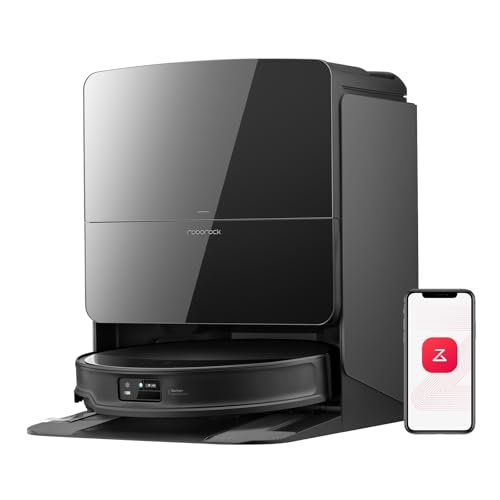
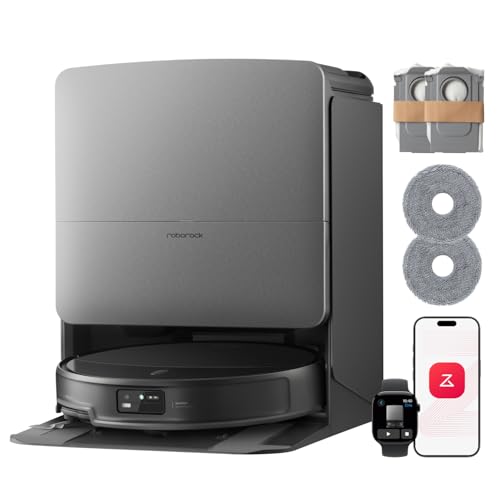
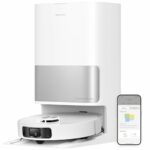
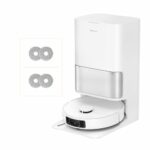
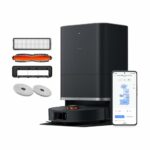
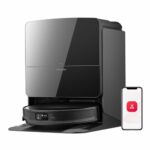
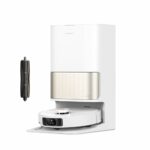
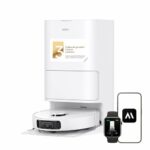
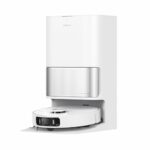
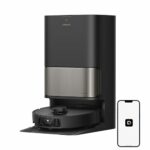
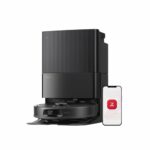
The Roborock Saros 10R and Roborock Saros 20 represent the latest evolution in premium robotic cleaning technology from the world's leading manufacturer. Launched in 2025 and February 2026 respectively, these models sit at the pinnacle of Roborock's range, both featuring the advanced StarSight 2.0 navigation system and comprehensive multifunctional bases that handle everything from dust extraction to mop washing and drying.
Both robots are designed for users who demand complete automation and minimal intervention. With their 6,400 mAh batteries, dual rotating mops, and intelligent cleaning algorithms, they're built for medium to large homes where thorough cleaning across multiple surface types is essential. The main question becomes: is the technological leap between these two generations worth considering?
Power and Suction
The most striking difference in this comparison lies in raw suction capability. The Roborock Saros 10R delivers 18,500 Pa, which already places it firmly in premium territory. However, the Saros 20 doubles this figure to reach 36,000 Pa – exceptional performance that puts it among the most powerful domestic robots available.
In practical terms, this translates to noticeably better performance on carpets, particularly high-pile surfaces, and more efficient pickup of embedded debris. Homes with pets that shed heavily will benefit from this extra power, as will anyone dealing with fine dust or allergens that require thorough extraction.
Both models feature Roborock's DuoDivide anti-tangle main brush, which channels hair and debris towards the central suction point rather than wrapping it around the roller. This design significantly reduces maintenance time. The main brush lifts automatically during mopping to prevent wet contamination, whilst the side brush also elevates to avoid dragging dirt across freshly mopped floors.
The side brush extends to reach into corners more effectively, and both models include anti-tangle technology here too. For homes with long hair or pet fur, these features make a tangible difference to weekly upkeep.
Mopping System
The mopping configuration is identical between these robots. Each uses dual rotating mops that extend outwards to clean right up to skirting boards and edges – something that distinguishes Roborock from many competitors who leave a gap around room perimeters.
Mop lift reaches between 12-22 mm, sufficient to clear most short-pile rugs and transition strips. When the robot detects carpet, it raises the pads automatically to prevent wetting. Both models can also remove the mops entirely at the base station, allowing pure vacuuming sessions without any mopping hardware attached.
Water temperature during floor mopping uses warm water, which helps dissolve sticky residues and grease more effectively than cold water systems. Dirt detection works on two levels: sensors monitor both mop cleanliness and floor contamination, triggering additional passes or mop washes when needed.
This intelligent approach means the robots don't simply follow a fixed pattern – they adapt based on what they encounter, rewashing areas that remain dirty and returning to the base to clean their mops whenever sensors detect excessive soiling.
Navigation System
Both robots run StarSight 2.0, Roborock's advanced navigation platform that combines dual cameras with 3D laser sensors. This multi-layered approach allows precise mapping, real-time obstacle avoidance, and detailed room recognition.
Where they diverge is in processing capability and learned intelligence. The Roborock Saros 10R recognises 108 different obstacle types, whilst the Saros 20 extends this to 300. This expanded library means the newer model can identify and appropriately respond to a far wider range of household objects – from specific furniture types to smaller items that might otherwise be bumped or pushed.
Curtain detection appears exclusively on the Saros 20. This allows it to navigate around hanging fabric without becoming tangled, something the 10R lacks. For homes with floor-length curtains or draped furniture throws, this matters.
The AI cleaning intelligence has also evolved. SmartPlan 2.0 on the 10R already offers intelligent scheduling and room-specific cleaning strategies, but SmartPlan 3.0 on the Saros 20 takes this further with more sophisticated pattern recognition and adaptive learning. The processor in the 10R runs RR Mason 11.0, though the specific chipset in the Saros 20 isn't detailed.
Both models include LED illumination for night-time vision, remote camera access via the app, and recognition of pets. This last feature is particularly useful for avoiding food bowls, toys, and sleeping animals.
Battery and Autonomy
Battery capacity sits at 6,400 mAh for both robots, providing substantial runtime. The Roborock Saros 10R specifies 180 minutes of autonomy, though equivalent data for the Saros 20 isn't available. Given the significantly higher suction power of the newer model, runtime may vary depending on cleaning mode and surface type.
In practical use, both robots will comfortably handle large homes in a single session. Should the battery deplete mid-clean, they return to the base, recharge, and resume where they left off – standard behaviour for premium models but worth noting for anyone with particularly expansive floor areas.
Smart Functions
Step-climbing ability differs slightly between the two. The Roborock Saros 10R manages simple steps up to 3 cm, whilst the Saros 20 increases this to 4 cm. That extra centimetre can be significant for homes with thicker door thresholds, raised hearths, or uneven floor transitions between rooms.
Both robots include their own voice assistant, allowing direct communication without needing external smart speakers, though they also integrate with Alexa and Google Home for those who prefer ecosystem-wide control.
Neither model features a robotic arm – a technology still rare in domestic robots and typically reserved for experimental or ultra-premium releases.
Multifunctional Base Station
The base stations share most specifications: 2.5-litre dust bags, 4-litre clean water tanks, and 3-litre dirty water tanks. Both handle automatic dust extraction, mop washing, and mop drying, with detergent dispensing included.
The key difference lies in the self-cleaning mechanism. The Roborock Saros 10R uses version 2.0 of the tray cleaning system, whilst the Saros 20 employs hot water for this process. Washing the base tray with heated water helps dissolve grease and organic residue more effectively, reducing bacterial growth and lingering odours.
Mop drying uses hot air on both models, which accelerates drying time and prevents mildew formation – essential for maintaining hygiene between cleaning sessions.
Neither base offers UV disinfection or integrated plumbing connection, and no optional kit for water line installation is available. This means manual refilling and emptying of water tanks remains necessary, though the generous capacities reduce frequency.
Dimensions
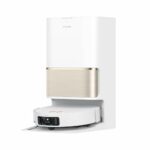
Physical dimensions are identical. Both robots measure 353 mm in diameter and stand 79.8 mm tall – low enough to slip beneath most furniture whilst remaining substantial enough to house the necessary hardware.
The base stations also share identical footprints: 381 mm wide, 488 mm tall, and 475 mm deep. This consistency means either model will occupy the same floor space, which helps when planning installation locations.
The robot's onboard tanks hold 270 ml for dust and 69 ml for water – standard for models that rely primarily on base station capacity rather than extended onboard storage.
Real-World Usage Experience
For larger homes, particularly those exceeding 150 square metres, the Saros 20's doubled suction power and enhanced obstacle recognition make a noticeable difference. The ability to identify three times as many objects means fewer interruptions and more confident navigation through cluttered spaces.
Pet owners will appreciate the stronger suction for embedded fur, especially on carpets and rugs where hair works its way deep into fibres. The anti-tangle brush system on both models already minimises maintenance, but the Saros 20's extra power ensures more thorough extraction in the first place.
Homes with varied flooring – hardwood, tile, laminate, and carpet – benefit from the adaptive intelligence in both models, though the Saros 20's SmartPlan 3.0 refines this further. Automatic surface detection and power adjustment happen seamlessly, with appropriate mop lift on carpets and increased suction where needed.
The hot water base cleaning on the Saros 20 proves valuable for households where the robot runs daily or multiple times per week. Keeping the base station hygienic without manual intervention reduces long-term maintenance effort.
For homes with floor-length curtains, room dividers, or hanging decorations, curtain detection on the Saros 20 prevents the frustration of tangled fabric and interrupted cleaning cycles – something the 10R cannot guarantee.
Conclusion: Which Should You Choose?
Choose the Roborock Saros 10R if: you want premium automated cleaning without needing absolute cutting-edge performance. The 18,500 Pa suction handles most domestic scenarios comfortably, the 108-object recognition covers typical household obstacles, and the price difference compared to the Saros 20 may be significant. For smaller to medium homes without complex layouts or heavy pet shedding, this model delivers excellent results with minimal compromise.
Choose the Roborock Saros 20 if: you have a large home with multiple surface types, heavy pet hair, or complex floor plans with numerous obstacles. The 36,000 Pa suction makes a tangible difference on carpets and for deep cleaning, whilst the 300-object recognition and curtain detection reduce interruptions and improve coverage. The hot water base cleaning maintains better hygiene over time, and the 4 cm step-climbing ability handles more challenging thresholds. This is the better choice for demanding environments where maximum automation and performance justify the investment.
Those with extensive curtain use, particularly floor-length drapes in multiple rooms, will find the Saros 20's curtain detection alone worth considering. Similarly, homes approaching or exceeding 200 square metres benefit from the enhanced processing power and more sophisticated navigation algorithms that come with SmartPlan 3.0.