Introduction
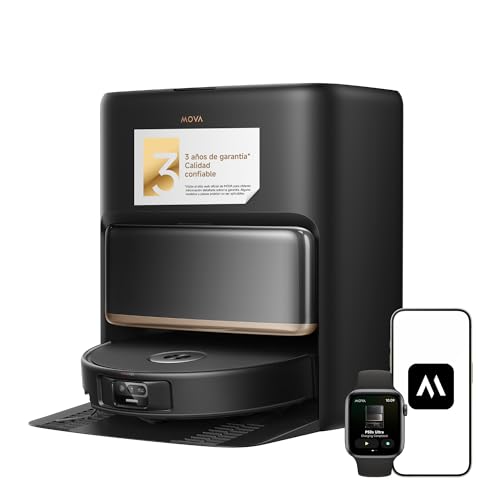
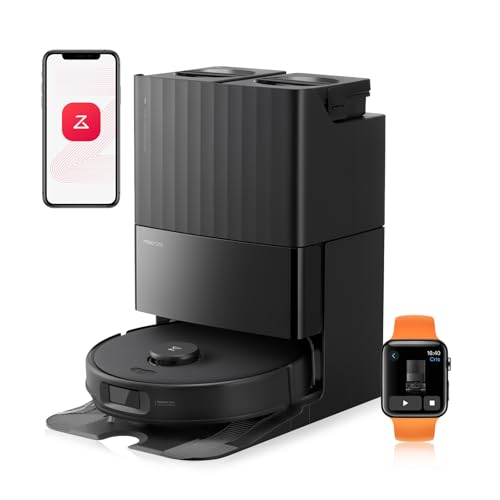
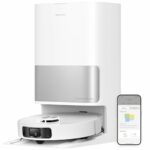
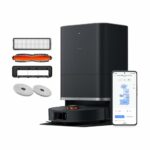
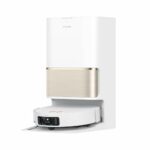
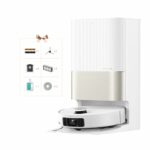
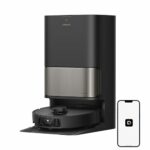
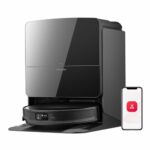
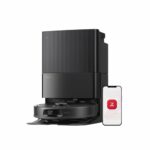
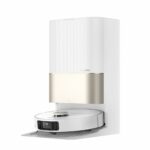
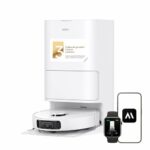
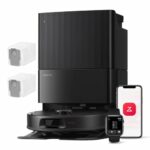
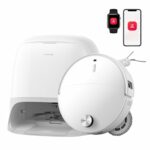
The Mova P50s Ultra represents the 2025 generation of premium robot vacuum cleaners, whilst the Roborock Qrevo Edge S5A arrived in 2024 as part of Roborock's established high-end range. Both models feature comprehensive cleaning systems with rotating dual mops and multifunction docking stations that handle the maintenance tasks automatically.
These aren't entry-level machines. The Mova P50s Ultra pushes boundaries with 24,000 Pa suction power and a dual camera AI system, targeting users who want the latest technology. The Roborock Qrevo Edge S5A offers proven performance at 18,500 Pa with Roborock's refined software experience. For larger homes with pets or anyone seeking minimal manual intervention, either could work well, though their approaches differ considerably.
Key Differences at a Glance
- The Mova delivers 24,000 Pa suction versus 18,500 Pa on the Roborock
- Only the Mova P50s Ultra features a dual AI camera system with remote access
- The Mova's main brush lifts during mopping; the Roborock's stays down
- Mova includes UV disinfection and detergent dispenser in its base; Roborock doesn't
- The Roborock stands 98 mm tall; the Mova measures just 82.5 mm
- Mova automatically removes mops at the base for vacuum-only cleaning
- Battery capacity reaches 6,400 mAh in the Mova versus 5,200 mAh in the Roborock
Power and Vacuuming
Suction power separates these models immediately. The Mova P50s Ultra generates 24,000 Pa, which gives it a clear advantage for deep carpet cleaning and extracting debris from textured surfaces. The Roborock Qrevo Edge S5A produces 18,500 Pa, still substantial for most households but noticeably less aggressive on thick rugs.
Both manufacturers have tackled the hair-tangling problem differently. The Mova employs a dual-brush system called HyperStream, designed specifically to prevent hair wrapping around the roller. Roborock's DuoDivide brush uses a split design that channels hair toward the central suction point. In practice, both systems reduce maintenance compared to traditional bristle brushes, though the HyperStream configuration tends to require slightly less frequent cleaning.
The side brush setup shows more variation. Whilst both models feature extendable side brushes for better corner coverage and anti-tangle designs, only the Mova P50s Ultra lifts its side brush during mopping. This prevents the brush from flicking dirty water around whilst the robot cleans. The Roborock keeps its side brush down throughout all cleaning modes.
A notable distinction: the Mova raises its main brush by 10.5 mm when mopping, ensuring the roller doesn't interfere with wet cleaning or pick up moisture. The Roborock Qrevo Edge S5A doesn't lift its main brush at all during mopping cycles. For homes that frequently use the mopping function, this could affect how thoroughly the floor gets wet without vacuum interference.
Mopping System
Both robots use dual rotating mops that spin to scrub floors rather than simply dragging a damp cloth behind them. The Mova P50s Ultra extends its mops outward and incorporates a swaying motion—what Dreame brands call Roboswing—allowing it to reach slightly under cabinet overhangs and into tight corners. The Roborock also extends its mops for edge cleaning but without the additional swaying movement.
Mop lift height differs marginally: 10.5 mm on the Mova versus 10 mm on the Roborock. This extra half-millimetre won't transform carpet protection, but it does provide slightly more clearance for thicker rugs.
Here's where the Mova pulls ahead functionally: it can automatically detach its mops at the base when you want vacuum-only cleaning. The Roborock Qrevo Edge S5A requires manual mop removal if you prefer not to have them attached during pure vacuuming sessions. For households that alternate between mopping and vacuuming frequently, this automation saves repeated trips to the dock.
Both models detect dirty areas on the floor and adjust their cleaning accordingly, making additional passes where sensors identify concentrated mess. They also monitor mop cleanliness and return to the base for washing when needed. The intelligence is comparable, but the Mova's automatic mop removal gives it a convenience edge.
Navigation System
Navigation technology diverges significantly between these models. The Mova P50s Ultra uses FlashPulse navigation combined with a dual AI camera system and a frontal 3D laser sensor. This setup enables it to recognise up to 200 different obstacle types, including pets and curtains. The dual cameras also provide remote access, letting you check on your home through the robot's eyes.
The Roborock Qrevo Edge S5A relies on a 3D LiDAR turret—the raised bump you'll see on top—without an AI camera. It still avoids obstacles effectively using its sensors, but it won't identify specific objects like pets or recognise curtains to avoid tangling. There's no remote camera access either.
The Mova includes LED lighting for improved vision in darker spaces, helping its cameras function properly under furniture or in dim corners. The Roborock doesn't need this since it doesn't depend on cameras for navigation.
For pet owners who want to monitor their animals remotely or check that the robot isn't stuck somewhere awkward, the Mova's camera system offers genuine utility. The Roborock focuses purely on reliable navigation without the smart home monitoring features. Both approaches work, but they serve different user priorities.
Battery and Autonomy
Battery capacity favours the Mova P50s Ultra with 6,400 mAh compared to the Roborock's 5,200 mAh. The Roborock provides 180 minutes of runtime, which translates to substantial coverage for most homes. Autonomy data isn't available for the Mova, though its larger battery suggests comparable or longer operation between charges.
The practical impact matters more in larger properties where the robot needs to cover extensive floor area in a single session. Both models will comfortably handle typical three or four-bedroom homes, but the Mova's extra capacity could prove useful in sprawling layouts or when tackling particularly demanding cleaning tasks that drain power faster.
Smart Features
Obstacle climbing capability differs noticeably. The Roborock Qrevo Edge S5A manages 20 mm obstacles—tall enough for most door thresholds and typical floor transitions. The Mova P50s Ultra handles single-step obstacles, though the exact height isn't specified.
The Mova includes its own voice assistant built into the robot, allowing direct interaction without needing external smart speakers. The Roborock Qrevo Edge S5A works with Alexa and Google Home but doesn't have an integrated assistant. Whether this matters depends on how you prefer to control your devices; some users appreciate talking directly to the robot, whilst others already have smart home ecosystems established.
Both models integrate AI-driven cleaning intelligence. The Mova's CleanGenius system analyses floor types and adjusts cleaning parameters automatically. Roborock's SmartPlan 2.0 and RR Mason 11.0 algorithm handle similar optimisation, learning your home's layout and adapting cleaning strategies over time.
Multifunction Docking Station
Both bases handle the essential maintenance: automatic dustbin emptying, mop washing with hot water, and mop drying with warm air. These features transform the ownership experience by eliminating most manual cleaning tasks.
The Mova P50s Ultra's base includes third-generation self-cleaning for its washing tray, whilst the Roborock uses version 2.0. In practical terms, this means the Mova's base requires less frequent manual cleaning of the washing mechanism itself.
Two features distinguish the Mova's dock: UV disinfection and a detergent dispenser. The UV system sanitises the mop washing area, potentially reducing bacteria growth between cleaning cycles. The detergent tank automatically adds cleaning solution during mop washing, eliminating the need to manually add cleaner to the water tank. The Roborock Qrevo Edge S5A lacks both features, requiring plain water for mop washing and no UV treatment.
Dust bag capacity reaches 3.2 litres in the Mova's base versus 2.7 litres in the Roborock's. This translates to less frequent bag changes, though both should last several weeks in typical households. Water tank sizes match at 4 litres for clean water and 3.5 litres for dirty water.
Neither model offers integrated water pipe connection or optional connection kits, so both require manual refilling and emptying of water tanks.
Dimensions
Height makes a substantial difference when it comes to cleaning under furniture. The Mova P50s Ultra measures 82.5 mm tall, whilst the Roborock Qrevo Edge S5A stands at 98 mm. That 15.5 mm difference determines whether the robot can access the space beneath low-clearance sofas, beds, and cabinets.
If your furniture sits close to the floor, the Mova's lower profile opens up cleaning areas the Roborock simply cannot reach. The Roborock's extra height comes from its raised LiDAR turret, necessary for its navigation system.
Diameter is nearly identical: 350 mm for the Mova versus 352 mm for the Roborock. Neither has an advantage navigating tight spaces or fitting through doorways.
Base dimensions vary more noticeably. The Mova's dock measures 420 mm wide, 470 mm tall, and 458 mm deep. The Roborock's base is narrower at 340 mm but taller at 521 mm and deeper at 487 mm. The Mova's base has a squatter, wider footprint, whilst the Roborock's is more vertically oriented. Your available floor space will determine which fits better.
Real-World Usage Scenarios
For larger homes with multiple floor types, the Mova P50s Ultra's higher suction power and larger battery make it better equipped for extended cleaning sessions. The automatic mop removal also suits households that vacuum daily but mop less frequently, eliminating the need to manually detach mops between tasks.
Pet owners gain specific advantages with the Mova's dual camera system and pet recognition capability. Being able to check remotely on animals whilst the robot cleans provides peace of mind. Both models handle pet hair well thanks to their anti-tangle brush designs, though the Mova's higher suction gives it an edge on embedded fur in carpets.
The Roborock Qrevo Edge S5A suits homes with standard furniture clearances where its 98 mm height won't limit access. Its proven navigation system and Roborock's established app ecosystem appeal to users who prioritise reliability over cutting-edge features. The absence of a detergent dispenser means you'll need to add cleaning solution manually to the water tank if you want more than plain water mopping.
For homes with low-clearance furniture, the Mova's 82.5 mm height becomes crucial. It can clean spaces the Roborock cannot physically enter, potentially covering significantly more floor area in furniture-dense rooms.
Conclusion: Which Should You Choose?
Choose the Mova P50s Ultra if: you want maximum suction power for deep carpet cleaning, your home has low-clearance furniture requiring a shorter robot, you value the convenience of automatic mop removal and detergent dispensing, or you're interested in remote camera monitoring and advanced AI obstacle recognition. The UV disinfection and third-generation base cleaning appeal if you prioritise hygiene.
Choose the Roborock Qrevo Edge S5A if: you prefer Roborock's established reliability and refined app experience, your furniture clearances accommodate the 98 mm height, you don't need camera monitoring or built-in voice assistance, and you're comfortable with the 18,500 Pa suction level which remains strong for most households. It's a thoroughly capable robot aspirador without the additional complexity of camera systems.
Both represent serious investments in home cleaning automation. The Mova pushes technological boundaries with higher specifications and newer features, whilst the Roborock delivers proven performance from a market-leading brand. Your decision ultimately rests on whether you prioritise cutting-edge capability or established reliability, and whether specific features like camera access or furniture clearance matter in your particular home layout.