Introduction
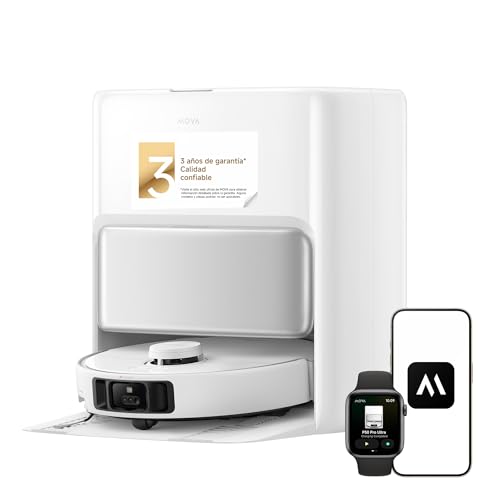
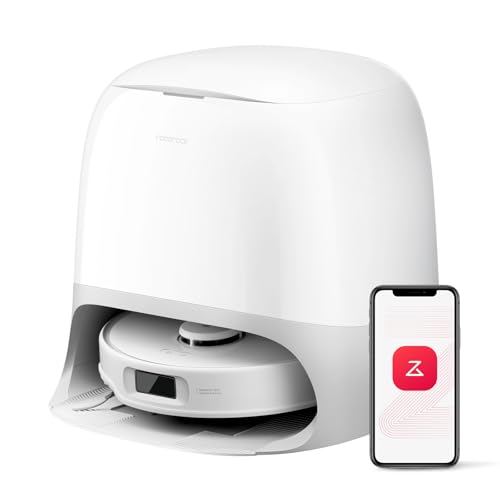
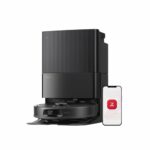
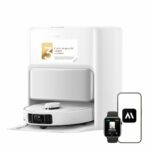
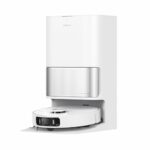
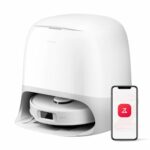
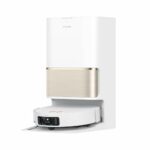
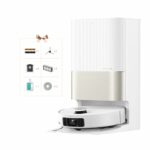
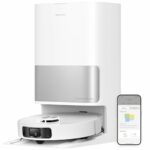
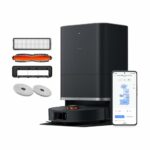
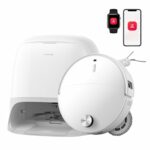
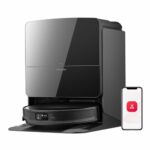
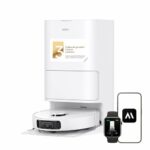
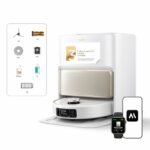
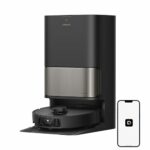
The Mova P50 Pro Ultra and the Roborock Qrevo Curv S5X represent two premium approaches to automated home cleaning. The Mova arrives in 2025 as part of Dreame's secondary brand, packing aggressive specifications and innovative features. The Roborock, launched in 2024, comes from the world's leading robot vacuum manufacturer, bringing proven reliability and refined engineering.
These aren't entry-level models. Both feature multifunctional bases that wash and dry mops, powerful suction exceeding 18,000 Pa, and advanced navigation systems. They're designed for users who want comprehensive cleaning automation without daily intervention, suitable for medium to large homes with mixed flooring types.
The differences between them reveal distinct philosophies: one prioritises cutting-edge features and maximum capability, whilst the other focuses on balanced performance and established reliability.
Power and Suction
The Mova P50 Pro Ultra delivers 19,000 Pa of suction power, edging ahead of the Roborock Qrevo Curv S5X's 18,500 Pa. In practice, this 500 Pa difference might be imperceptible during daily cleaning, but could matter when tackling ground-in dirt on carpets or extracting debris from grout lines.
More significant is the brush design. The Mova uses a TriCut 3.0 system, combining bristles with cutting blades to slice through tangled hair. The Roborock counters with its DuoDivide brush, which channels hair towards the central suction point to prevent wrapping around the roller. Both approaches tackle the same problem differently—the TriCut actively cuts, whilst the DuoDivide redirects.
A notable advantage for the Mova: its main brush lifts during mopping. This prevents the roller from getting wet and dragging moisture across floors you've just cleaned. The Roborock's brush stays in contact with the floor throughout. Both models feature side brushes that extend to reach corners, and these brushes include anti-tangle technology. However, only the Mova can elevate its side brush during mopping, keeping it dry and preventing it from flinging water droplets against skirting boards.
Mopping
Both robots use twin rotating mops that spin to scrub floors. The Mova extends its mops and incorporates a swinging motion to reach closer to edges and slightly under furniture overhangs. The Roborock also extends its mops but without the additional swinging movement.
Mop elevation reaches 10.5mm on the Mova versus 10mm on the Roborock. That half-millimetre won't make much practical difference when crossing onto carpets or rugs, but the Mova's ability to automatically detach its mops at the base does. When you want to vacuum without any mopping, the Mova handles this autonomously. The Roborock requires manual removal.
Both bases wash mops with hot water and dry them using heated air, preventing odours and bacterial growth. The Mova's base features third-generation self-cleaning for the wash tray, whilst the Roborock uses version 2.0 of this technology. More importantly, the Mova includes a detergent dispenser that adds cleaning solution during mop washing. The Roborock relies on water alone, which limits its ability to break down grease or stubborn marks.
When sensors detect particularly dirty areas, both robots will re-scrub or return with clean mops. This intelligence ensures consistent results across the entire floor surface.
Navigation System
The Roborock Qrevo Curv S5X uses a LiDAR turret combined with its SmartPlan 2.0 system and RR Mason 11.0 processing. This proven setup maps accurately and navigates efficiently, though it lacks visual sensors beyond basic obstacle detection.
The Mova P50 Pro Ultra takes a different approach entirely. It combines LiDAR with dual AI cameras, a frontal 3D laser sensor, and LED lighting for night vision. This sensor array allows it to recognise up to 160 different obstacle types, identify pets specifically, detect curtains to avoid tangling, and even spot stains on floors for targeted cleaning. The CleanGenius AI system processes all this visual information.
Perhaps most unusually, the Mova offers remote camera access. You can view through the robot's cameras from your phone, essentially using it as a mobile home monitor. The Roborock provides no equivalent feature.
For homes with pets that might leave unexpected messes, or households wanting visual verification of cleaning progress, the Mova's camera system offers clear advantages. The Roborock delivers reliable navigation without these extras, which some users might prefer for privacy reasons.
Battery and Autonomy
Both models carry identical 5,200 mAh batteries, yet the Mova extracts 210 minutes of runtime compared to the Roborock's 180 minutes. That's an extra half-hour of cleaning per charge, likely due to more efficient power management or less demanding baseline operation.
For properties around 200-250 square metres, either robot should complete a full clean on a single charge. The Mova's extended autonomy provides more headroom for larger homes or when tackling particularly demanding cleaning sessions with maximum suction and intensive mopping.
Smart Features
The Mova P50 Pro Ultra can climb obstacles up to 22mm high, whilst the Roborock Qrevo Curv S5X manages 20mm. This affects their ability to mount thick rugs, transition strips, or raised door thresholds. The 2mm difference might determine whether a robot confidently crosses into another room or gets stranded.
Voice control works differently between them. Both integrate with Alexa and Google Home for standard commands. The Mova goes further with its own built-in voice assistant, allowing direct interaction without external smart speakers. This can be convenient for quick commands or status checks when you're near the robot.
Multifunction Base
The Mova's base holds a 3.2-litre dust bag versus 2.5 litres in the Roborock. For homes with heavy shedding or frequent cleaning cycles, this means less frequent bag replacement—perhaps every two months instead of six weeks.
Both bases carry 4-litre clean water tanks, but the Mova's dirty water tank holds 3.5 litres compared to 3 litres. That extra capacity matters during extended mopping sessions, as the robot won't need to pause cleaning because the waste tank has filled prematurely.
The inclusion of a detergent dispenser in the Mova's base enhances cleaning effectiveness, particularly on kitchen floors or high-traffic areas where water alone struggles with grease or ground-in dirt. The Roborock's water-only approach still cleans effectively but won't tackle stubborn residues as thoroughly.
Neither model offers UV sterilisation or integrated plumbing connections, though these features remain rare even in premium segments.
Dimensions
The Roborock Qrevo Curv S5X stands 98mm tall, making it 5.8mm lower than the Mova P50 Pro Ultra at 103.8mm. This might seem trivial, but it determines whether a robot can access under sofas, bed frames, or kitchen cabinets. Measure your furniture clearances—if you have pieces sitting at 100-103mm, only the Roborock will fit beneath them.
Diameter differs minimally: 350mm for the Mova versus 352mm for the Roborock. Both navigate standard doorways and furniture spacing without difficulty.
The Mova's base measures 420mm wide, 470mm tall, and 458mm deep. The Roborock's base is more cubic at 450mm in all dimensions. The Mova's narrower width but greater height might suit tighter alcoves, whilst the Roborock's more compact height could fit under wall-mounted cabinets more easily. Consider your intended base location before choosing.
Real-World Usage
For larger homes exceeding 150 square metres, the Mova's extended battery life and larger dust capacity reduce maintenance frequency. The additional suction power helps when dealing with multiple floor types, particularly if you have both hard floors and several carpeted rooms.
Households with pets benefit from either robot's anti-tangle brushes, but the Mova's ability to recognise animals specifically means it can adjust behaviour around them—perhaps reducing suction to avoid startling nervous cats, or identifying pet-related messes for targeted cleaning. The Roborock cleans thoroughly but treats all obstacles identically.
If you regularly cook and need to tackle kitchen floor grease, the Mova's detergent dispenser delivers noticeably better results than water-only mopping. For homes where mopping mainly addresses dust and light dirt, the Roborock's water-based system suffices.
The Roborock's lower profile suits homes with low-clearance furniture, whilst the Mova's extra sensors and cameras provide peace of mind for users wanting visual confirmation of cleaning or concerned about the robot disturbing delicate items.
Conclusion: Which to Choose?
Choose the Mova P50 Pro Ultra if: you want maximum features and cutting-edge technology, have a larger home requiring extended battery life, need the detergent dispenser for thorough floor cleaning, value the remote camera access for home monitoring, or have pets and want AI-powered recognition. It's the more ambitious option, packed with innovations that genuinely enhance cleaning capability.
Choose the Roborock Qrevo Curv S5X if: you prioritise proven reliability from the market leader, have furniture with limited clearance requiring the lower 98mm profile, prefer a robot without cameras for privacy reasons, or want established performance without experimental features. It delivers comprehensive cleaning through refined engineering rather than feature proliferation.
For most users seeking a premium robot vacuum in 2025, the Mova P50 Pro Ultra offers better value through its additional capabilities—particularly the detergent tank, camera system, and extended autonomy. The Roborock remains the safer choice if you value brand heritage and want a robot that fits under more furniture, but you'll sacrifice several genuinely useful features to get there.